Blog

Avoiding the Risks: How to Spot Illegal IPTV Services in the UK

IPTV is a legal technology, but some IPTV services (and pre-loaded devices) rebroadcast copyrighted channels without permission — that is illegal. Red flags for illegal IPTV: extremely low prices for premium channels, anonymous sellers, requests to side-load APKs, crypto/gift-card payments only, no invoices or company details. Consequences include malware and fraud, sudden service shutdown, inability to get refunds, and potential involvement in enforcement actions. Recent UK prosecutions show operators can face long prison sentences. Detect Unlawful IPTV.

Part 1 — Why this matters

IPTV (Internet Protocol Television) simply means delivering TV over the internet. Many legitimate IPTV services exist — major broadcasters, ISPs and licensed OTT platforms all use IP delivery. However, the content’s legality depends on whether the provider has distribution rights. In the UK, rights-holders (broadcasters, sports bodies, film studios) enforce those rights, and law enforcement (including PIPCU and partners) have successfully pursued operators of illicit IPTV networks in recent years. As enforcement has increased, so have reports of users losing money and being exposed to fraud.

Consequently, when you search for an iptv subscription or test an iptv uk free trial, you should be careful: choosing the cheapest option can cost far more than a legitimate subscription in the long run.

Part 2 — Common red flags of illegal IPTV services

When evaluating any iptv provider, watch for these tell-tale signs. If one or more apply, treat the offer as suspicious and walk away.

  1. Extremely low prices for premium channels. If a service offers hundreds of pay channels (Sky, BT/TNT Sports, premium movie channels) for just a few pounds a month, alarm bells should ring — licensed distribution costs money.
  2. Anonymous seller or no company details. Legitimate IPTV providers display business names, addresses and trading information. If there’s only a PayPal.me link or a Telegram handle, be cautious.
  3. Payments in gift cards/crypto only. Reputable services accept cards/PayPal and issue invoices/receipts. Hidden payment methods are a favourite for illicit resellers.
  4. Requirement to side-load unknown APKs or buy “pre-loaded” sticks. Providers pushing unknown APKs or “jailbroken” devices are high-risk for malware and illegal streams.
  5. Short, vague or non-existent refund policy. Illicit sellers vanish quickly — without refund.
  6. No visible EPG or unstable channel lists. Frequent channel disappearance or poor EPG support suggests amateurish or illegal feed aggregation.
  7. Ugly grammar, pressure sales and closed communities. If the seller uses high-pressure tactics in private groups, that’s a red flag.
  8. Too-good-to-be-true trial offers that require card details then auto-charge. Always read terms and cancel before being charged if you’re only testing.

If you see any of these signs when researching an iptv uk offer, stop — and prefer a licensed broadcaster app or a well-known reseller.

Part 3 — The practical harms: what you risk by using illicit IPTV

It’s easy to assume the only risk is “getting caught”. In fact, harms are broader:

  • Malware & device compromise: Pre-loaded sticks and unknown APKs have been found to contain spyware, remote access trojans, or banking malware. This can lead to identity theft or fraudulent transactions. FACT and other bodies warn of these dangers.
  • Financial loss & fraud: Fake “refunds” scams, subscription auto-renewals, and compromised payment details can cost users thousands. Recent reporting shows significant average losses to victims.
  • No consumer protection: Illicit sellers ignore refund rules and consumer rights — disputing payments is often hard if receipts are fake or absent.
    • Service shutdowns & unreliability: Operators are frequently taken down; customers suddenly lose access.
  • Legal risk & association with organised crime: While end-user prosecutions are less common, operators receive heavy penalties, and users can be entangled in investigations. Recent UK cases resulted in multi-year jail sentences for operators.

Part 4 — How illicit IPTV typically works

Understanding the mechanics helps you spot dodgy offers. Common patterns include:

  • Aggregators obtain unauthorized channel streams using stolen satellite feeds, reseller access, or hacked streams.
  • They re-encode or re-stream content via servers (often offshore), and sell credentials or M3U playlists.
  • Sellers distribute through private channels (Telegram, social media, dark web) and push customers to use front-end apps (IPTV Smarters, TiviMate) that are neutral players — the player is not illegal; the source often is.

Because many illicit setups rely on fragile infrastructure and hidden payment methods, reliability and safety suffer. Detect Unlawful IPTV.

Part 5 — word step-by-step: How to evaluate an IPTV provider safely

Follow this practical, stepwise process before you sign up for any iptv subscription (or accept an iptv uk free trial). It explains every concrete check you should perform.

Step 1: Start with the obvious — check the price vs claims
If the monthly cost seems far lower than established broadcasters (Sky, BT/TNT, Amazon) for the same channels, be suspicious. Licensed distribution costs broadcasters large sums — a genuine reseller will not be able to undercut rights-holders by an order of magnitude.

Step 2: Look for clear company identity & contracts
Visit the provider’s website. Legitimate services show an address, company registration (Companies House) or EU business listing, VAT number and contact channels (telephone, email, support ticket). If none exist, this is a serious red flag.

Step 3: Payment methods & receipts
Request a sample invoice or ask their sales team how payments are accepted. Acceptable methods include credit/debit cards, PayPal, Stripe — these give you consumer protection. If the provider insists on gift cards, vouchers, or crypto only, do not proceed.

Step 4: App distribution & installation method
Ask how the service is delivered. If they provide official apps via Amazon Appstore, Google Play or Apple App Store, that’s a positive sign. If they insist on side-loading an APK or buying a “pre-configured” stick from an unknown seller, stop. Side-loading can install malware and is commonly used to distribute illegal streams. Detect Unlawful IPTV.

Step 5: Ask about rights & channels
For premium channels (Sky, TNT Sport, BT Sport, beIN, etc.), ask: “Do you hold distribution rights for the UK?” A credible provider will either show reseller documentation or clearly state they don’t host those channels directly but provide access via authorised apps. If their answer is vague, treat this as suspicious.

Following these steps — methodically and without shortcuts — significantly reduces the risk of buying into illegal IPTV services.

Part 6 — Practical “quick checks” you can do right now

  • Google the company name plus “Companies House” or “reviews”. No results = suspicious.
  • Ask support “show me your reseller agreement” and note the tone of the reply.
  • If required to install an unknown APK, refuse — walk away.
  • Check payment options — if only gift cards/crypto, it’s almost certainly dodgy.
  • Run a virus scan on any device sold as “pre-loaded” before using it; better yet, avoid pre-loaded devices entirely.

Part 7 — What enforcement looks like in practice

UK authorities have been active: operators of illegal IPTV services have been arrested, prosecuted and jailed in multiple cases (recent examples include multi-year sentences handed down in 2024–2025). Industry bodies such as FACT and PIPCU coordinate actions that have led to service takedowns and prosecutions. These actions show that running an illicit service carries severe penalties, and that users of such services are at greater risk of fraud and service loss.

Part 8 — Safer alternatives: Where to get legal IPTV and sport

If you want a reliable iptv uk experience without risk, use:

  • Rights-holder apps: Sky Go/Sky Stream, TNT/BT apps, Amazon Prime Video, BBC iPlayer.
  • Licensed aggregators: reputable resellers and ISP bundles that clearly disclose rights.
  • Official device app stores: install only from Amazon Appstore, Google Play or Apple App Store.

Always test an iptv uk free trial (when legitimate) during live events and verify receipts. Detect Unlawful IPTV.

Part 9 — Short FAQ

Q: Is IPTV Smarters Pro illegal?
A: No — it’s a neutral player app. Legality depends on the content source you load. Use it only with licensed providers.

Q: Can a VPN make illegal IPTV legal?
A: No. A VPN can hide your IP but does not legalise unlicensed streams and may increase exposure to fraud.

Q: I already bought a pre-loaded stick — what should I do?
A: Factory-reset the device, reinstall only official apps from trusted stores, run malware scans, and consider reporting the seller if you suspect illegal content or fraud.

Part 10 — Final checklist

  • Price vs claims checked? ✓
  • Company details verified? ✓
  • Accepts card/PayPal & issues invoices? ✓
  • No forced side-loading or pre-loaded stick? ✓
  • Trial tested during live event? ✓
  • Support responsiveness tested? ✓

If any of the above fail, do not subscribe. Detect Unlawful IPTV.

Sources & further reading

  • City of London Police / PIPCU press release.
  • FACT — “The Hidden Dangers of Illegal IPTV Services.”
  • Gov.uk — Illicit streaming devices guidance.
  • Broadband TV News — reporting on operator convictions.
  • Industry analysis on how illegal IPTV works (Synamedia).

FREE TRIAL IPTV

Is IPTV Legal in the UK? A Comprehensive Guide

IPTV — Internet Protocol Television — is a delivery method, not automatically legal or illegal. Whether an IPTV service is lawful in the United Kingdom (UK) depends on whether it has the rights (licenses) to distribute the content it offers. In practice, there are legitimate IPTV providers as well as illegal IPTV operations that stream copyrighted channels without permission. This guide explains how the law applies in the UK, how enforcement works, how to spot illegal IPTV services, the risks of using them, and how to choose a safe IPTV subscription or IPTV service such as those that offer IPTV free trials or branded apps like IPTV Smarters Pro. It also answers frequently asked questions and gives practical, step-by-step advice. IPTV Legality in Britain.

1 — What is IPTV? (short primer)

IPTV stands for Internet Protocol Television — video streamed to your device via your internet connection rather than by terrestrial, satellite or cable networks. IPTV describes a delivery method: live channels, video-on-demand (VOD), electronic programme guides and catch-up can all be delivered over IP. That technical definition doesn’t itself decide legality. A lawful IPTV subscription is simply one where the operator has obtained the rights from copyright owners to show the channels or programmes they distribute. Conversely, an illegal IPTV service streams content without those rights.

Keywords visible in this section: iptv uk, iptv subscription, iptv service, uk iptv, british iptv.

2 — The legal test in the UK — when is IPTV legal or illegal?

The primary legal issue is copyright. UK copyright law protects TV shows, films and live sports. If an IPTV operator reproduces, streams or communicates that content to the public without permission from the rights-holder, the service is infringing and therefore unlawful. IPTV Legality in Britain.

Key legal points:

  • Permission matters. A service is lawful if it has licences from rights-holders (broadcasters, sports rights holders, film studios). If it doesn’t, it is infringing.
  • Distribution vs. consumption. Running or providing access to an infringing IPTV service can lead to civil claims and criminal enforcement. Individual users have less often been criminally prosecuted, but they are not immune — enforcement focuses on organised suppliers, but users can face civil repercussions or other consequences.
  • Tools and apps such as IPTV Smarters are neutral software — having the player app is not illegal, but using that app to access unauthorized streams can be infringing.

In short: IPTV as a technology is legal — unauthorised distribution of copyrighted content via IPTV is not.

3 — Laws and regulators that matter

Several legal instruments and bodies are relevant:

  • Copyright law (UK) — Civil remedies (injunctions, damages) and criminal offences for serious commercial scale infringement. The government has used various statutes (including provisions strengthened in recent reforms) to tackle piracy.
  • Ofcom — regulates broadcasting and on-demand programme services. Ofcom sets rules for licensed broadcasters and has guidance relevant to IPTV providers that operate as broadcast or on-demand services in the UK. If a service is a “programme service” under the Communications Act/Ofcom rules, it may need to comply with broadcast regulation.
  • Police and specialist units — e.g., the Police Intellectual Property Crime Unit (PIPCU, City of London Police), and anti-piracy group FACT work together to identify and disrupt illegal IPTV operations. Enforcement actions have included raids, prosecutions and service takedowns. IPTV Legality in Britain.

4 — Recent enforcement: what’s been happening in the UK?

Throughout 2023–2025 there has been growing and visible enforcement against illegal IPTV operators in the UK:

  • Anti-piracy campaigns and waves of enforcement have targeted tens of illegal services, with repeated closures and takedowns. FACT and partners have described multiple enforcement waves that led to closures of dozens of services.
  • Specialist police units and FACT have worked with broadcasters to disrupt supply chains, seize equipment, and pursue the operators behind illicit services. Media reporting and industry sites have repeatedly covered arrests and High Court actions.
  • There have been criminal convictions and sentences: for example, a 2025 PIPCU case resulted in a custodial sentence for an operator who ran an illegal IPTV service distributing premium channels — demonstrating that serious operators can face prison time.

These actions show that the authorities treat large-scale IPTV piracy as a priority and will pursue operators, enablers and sometimes the infrastructure that supports them.

5 — Penalties and civil exposure for providers and users

Consequences depend on role and scale:

  • Operators / resellers: can face civil claims (injunctions, heavy damages) and criminal prosecution. Recent cases have led to multi-hundred-thousand-pound judgments and custodial sentences.
  • Platform hosts / payment facilitators: businesses that knowingly support piracy risk legal action and reputational harm. Courts have ordered payment processors and hosters to stop facilitating infringing services.
  • End users: rarely the primary target of criminal prosecutions, but users can be exposed to civil claims in theory, and more commonly to indirect harms — malware, financial fraud, identity theft from dodgy sellers, and losing money when a service disappears. Enforcement bodies sometimes send cease & desist letters and use website blocking or account takedowns. IPTV Legality in Britain.

6 — How to spot illegal IPTV services — practical checklist

Here’s a practical checklist to help you tell a legitimate IPTV provider from an illegal one:

Red flags (likely illegal):

  • Extremely low subscription prices for premium channel packages (Sky Sports, BT Sport, Netflix, etc.) that are far below market rates.
  • “Too good to be true” bundles: dozens or hundreds of premium channels and pay-per-view sports included for a tiny monthly fee.
  • Sellers using social media, messaging apps or anonymous marketplaces rather than a professional website, company registration or clear business address.
  • No clear terms of service, no contact address, no billing company, or payments via obscure crypto/wire transfers only.
  • Frequent downtime, changing streaming URLs, or sudden rebranding when one service disappears.
  • No trial or suspiciously long “IPTV free trial” that requires payment details up front and then charges secretly.
  • Fake reviews on forums; lots of buzz but scant verifiable proof of legitimacy.

Good signs (likely legitimate):

  • Transparent billing by a registered company, with clear contact details and customer support.
  • Public statements about licensing or distribution rights (for big providers).
  • Availability in official app stores, partnerships with known device makers, or distribution through established MVPDs (multichannel video programme distributors).
  • Reasonable

IPTV FREE TRIAL

IPTV UK Packages Compared: Which One Suits You Best?

Introduction

If you’re in the United Kingdom and thinking about switching to an IPTV UK package, you’re not alone. The market is crowded, choices are many, and the language—IPTV subscription, IPTV providers, IPTV Smarters Pro, UK IPTV—can quickly become confusing. This guide compares the major package types, explains the differences between legal and illicit services, and helps you choose the best 

Two important upfront notes: (1) not all services marketed as “IPTV” are legitimate—there is real legal and financial risk when using illicit streams; and (2) some of the most popular player apps (for example, IPTV Smarters / IPTV Smarters Pro) are neutral tools — they play streams supplied by providers — so the legality depends on the content source, not the app.

What is IPTV — quick refresher

IPTV (Internet Protocol Television) delivers TV content over the internet rather than satellite or cable. That can mean:

  • Live channels (linear TV, e.g., BBC One live)
  • Catch-up / on-demand libraries (films, box sets)
  • Time-shifted viewing (DVR functionality)
  • SVoD-style content collections

In the United Kingdom, “IPTV” ranges from well-established, fully legitimate streaming packages (broadcasters’ own streaming services or licensed OTT platforms) to third-party subscription services that repackage channels and on-demand libraries. The technical delivery is the same; what matters is the content rights and the provider’s licensing.

How we’ll compare packages

To choose the right IPTV UK package, this guide compares packages across the following dimensions:

  1. Legality & licensing — Is the content fully licensed for use in the UK?
  2. Channel line-up — Does it include BBC, ITV, Sky Sports, international channels?
  3. Quality & reliability — Bitrate options, 4K/HD availability, server stability.
  4. Device support — Android/Fire TV, Apple TV, Smart TV, web player, apps like IPTV Smarters Pro or Tivimate.
  5. Features — EPG (electronic programme guide), catch-up, DVR, simultaneous streams.
  6. Price & payment model — Monthly/annual, money-back trials or IPTV UK free trial offers.
  7. Security & privacy — HTTPS, customer data handling, and VPN recommendations.
  8. Support & reputation — Customer service, refunds, independent reviews.

We also highlight red flags for illicit services and provide an 800-word step-by-step guide to choose and set up a package.

Package types you’ll encounter in the UK

1. Licensed OTT / Broadcaster platforms

Examples: BBC iPlayer, ITVX, NowTV (Sky’s streaming), Amazon Prime Video, Netflix, and other licensed over-the-top services. These are fully legal, offer predictable service and high quality, but may not provide a single “everything” bundle.

  • Pros: Legal, reliable, high quality, support available.
  • Cons: Can be expensive when combined, limited in channel consolidation.

2. Licensed aggregator IPTV services

Some services obtain licensing and package multiple channels into an affordable IPTV subscription. They operate like a modern cable replacement with a single subscription and apps or set-top box options. These are legitimate if they hold rights; verify before subscribing. Recent guides and roundups list licensed aggregator options for UK viewers. Best UK IPTV Packages.

3. Grey-market / unauthorised resellers

These appear as cheap IPTV subscriptions that include premium channels such as Sky Sports, Sky Cinema, or live Premier League streams for a small monthly fee. They usually don’t have proper rights; this is illegal distribution. There has been active enforcement and consumer warnings in the UK (and beyond) recently. Using them exposes you to legal risk, fraud, malware and poor service.

4. Community / free IPTV lists

Free M3U lists and community-shared streams exist for niche content or local channels. Quality and legality vary widely. These are fine for public, freely licensed streams, but avoid anything that looks like pirate access to paid channels.

5. Players & middleware (IPTV Smarters Pro, Tivimate, Kodi, etc.)

These are apps that play IPTV streams (M3U, Xtream Codes, JSON). They are legal tools; legality depends on the streams you feed them. Many UK users pair a licensed subscription with a player app of choice. Smarters Pro and Tivimate remain popular because of features and cross-platform support. Best UK IPTV Packages.

Popular IPTV features explained

  • EPG (TV Guide): Standard feature which shows what’s on now/next. A good EPG is essential for live TV usage.
  • Catch-up / VOD: Allows replaying programmes after broadcast. Licensed services typically offer robust catch-up.
  • DVR / recording: Save live programmes to watch later — check quota and retention.
  • Multiple streams: Number of simultaneous streams for household use (2–6 typical).
  • 4K & HD support: Available on higher-tier plans or for specific channels.
  • App support & integration: Native apps for Fire TV, Android TV, Apple devices, and compatibility with players such as IPTV Smarters Pro.

Key red flags for illegal IPTV services

Avoid any service that:

  • Offers premium channels at implausibly low prices (e.g., all Sky Sports + thousands of channels for £5/month).
  • Asks for payment through risky methods only (crypto, vouchers) and no credit card or PayPal.
  • Has no physical address or verifiable company registration.
  • Demands “install this modified Fire Stick app” or provides unverified APKs — these can carry malware.
  • Has many negative user reports about sudden shutdowns, blocked streams, or no refunds.

Law enforcement and industry bodies have been actively shutting down illegal distributors and warning consumers about fraud tied to dodgy streaming devices. This is not hypothetical — UK investigations and court rulings have produced significant penalties for operators and warnings for users.

Comparing real provider categories — example packages

Below, simplified example packages and how they compare. (Provider names are illustrative; always verify with up-to-date reviews and the provider’s own terms.)

A. Broadcaster Bundle (Legal aggregator)

  • Price: £15–£30 / month
  • Channels: BBC, ITV, Channel 4, some sports & movie add-ons
  • Quality: HD, occasional 4K options
  • Devices: Apps + web + IPTV players
  • Trial: Often 7–14 day free trial or money-back guarantee
  • Best for: Families wanting legal, stable service

B. Sports-focused Legal Subscription

  • Price: £20–£40 / month
  • Channels: Dedicated sports channels (Sky Sports, BT Sport equivalents) via licensed packages or third-party legal deals
  • Quality: 1080p/4K for major events
  • Trial: Limited trials; promotional bundles sometimes available
  • Best for: Sports fans who need guaranteed rights coverage

C. Budget Aggregator (may be licensed or borderline)

  • Price: £8–£20 / month
  • Channels: Large line-ups including international channels, limited or no major premium sports due to rights
  • Quality: Varies by peak congestion; usually HD
  • Trial: Often offers short IPTV free trial (24–72 hours)
  • Best for: General entertainment watchers on a budget

D. Free / Community M3U + Player

  • Price: Free
  • Channels: Publicly licensed channels, or temporary free streams
  • Quality: Varies widely
  • Best for: Techies who only need free content or test sources

E. Illicit Resellers (avoid)

  • Price: £3–£10 / month
  • Channels: Includes premium pay TV channels and marquee sports for low price
  • Risk: Very high (legal, fraud, malware)
  • Best for: No one — avoid.

For current, tested lists of highly rated providers and user feedback in 2025, see independent round-ups and community tests — they’re a good starting point when you need to check the latest reliability and channel coverage.

Pricing — what to expect and how to compare

When comparing price, do the following:

  • Confirm whether taxes or setup fees are extra.
  • Check the device limit — many providers charge extra for multiple streams.
  • Watch for automatic renewal rates vs promotional rates.
  • Always check refund policy and free trial conditions (sometimes trial requires card and converts automatically unless cancelled).
  • Consider total monthly cost when bundling with broadband — some ISPs offer cheaper bundles with TV.

Small price differences may mask big differences in support, uptime, and content legality — so don’t pick solely on price. Best UK IPTV Packages.

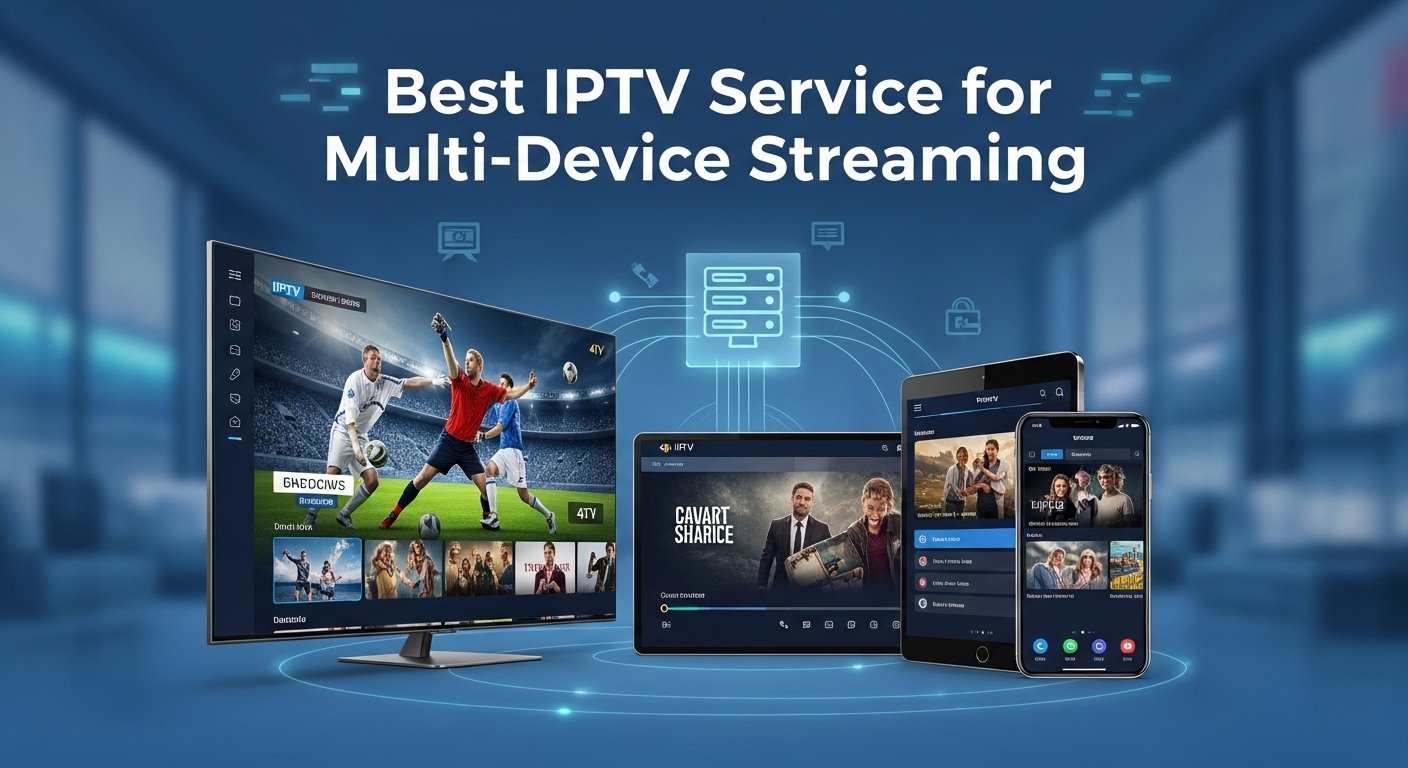
Device compatibility & the role of players (e.g., IPTV Smarters Pro)

Most modern IPTV services work across multiple devices. Common scenarios:

  • Amazon Fire TV / Fire Stick: Very common in UK homes. Many IPTV apps are side-loaded; some providers supply a preconfigured app. Beware of “dodgy boxes” sold pre-loaded with illegal apps.
  • Android TV & Android devices: Broad support via native APKs and Google Play.
  • Apple TV / iOS: Limited compared to Android but many providers offer iOS apps or web players.
  • Smart TVs (Tizen, webOS): Support varies — check vendor store.
  • PC / Mac / Web browser: Many providers offer a web player.

Player apps such as IPTV Smarters / IPTV Smarters Pro or Tivimate add convenience: EPG integration, favourites, multi-EPG, and multi-profile support. They do not make your streams legal — they only play what you provide. If a provider hands you an M3U or Xtream login to use with Smarters, check the provider’s legitimacy.

Performance: bandwidth, buffering and 4K

  • Minimum for SD: ~3–4 Mbps per stream.
  • Minimum for HD (1080p): ~8–10 Mbps per stream.
  • 4K / UHD: 25 Mbps+ per stream recommended.

If your household will run multiple streams, multiply accordingly. Also check provider server capacity — a cheap provider may have limited resources, causing buffering during peak times. Real-world tests and provider reputations are useful here — some independent lists test no-buffer performance and declare winners in 2025. Best UK IPTV Packages.

Security & privacy — protecting yourself

  • Use a reputable payment method (credit card, PayPal) where possible — it helps with disputes and refunds.
  • Be cautious with modified devices or APKs from untrusted sources — they can include malware.
  • Consider using a UK-based or reputable VPN if your provider recommends it, but be aware VPNs don’t legalise illicit content and can conflict with terms of service.
  • Avoid sharing personal details beyond what the provider needs (name, payment info).

Due to widespread scams tied to illegal IPTV setups, consumer bodies and police have repeatedly warned users about financial loss and identity theft from dodgy boxes and services.

How to choose, sign up and start using an IPTV UK package

First, define your needs: list must-have channels (e.g., BBC, ITV, Sky Sports), device preferences (Fire TV, mobile, Smart TV), and budget. If sports are mission-critical, accept that full Premier League/Sky Sports access often requires paying licensed fees; cheap “all channels” deals are usually unauthorised. Best UK IPTV Packages.

Second, shortlist providers: use reputable comparison sites and community feedback to create 3–5 candidates. Filter those that explicitly state UK channel rights or show verifiable licensing details. Check recent user reviews (this year) for downtime or sudden shutdown reports – community forums often surface problems before formal reviews do. Favor providers offering a clear refund policy or a IPTV UK free trial.

Third, check device and app support: confirm the provider supports your devices. If you plan to use a third-party player like IPTV Smarters Pro, ensure the provider supplies compatible M3U or Xtream credentials. Remember players are neutral — the provider supplies content. For Fire TV users, note whether the provider offers a prebuilt app in the Amazon Store or requires side-loading; avoid installers requiring unknown APKs.

Fourth, test with a trial: use any available free trial. Trials reveal stream stability, EPG accuracy, and picture quality. During the trial, test during peak hours, play multiple channels simultaneously, and test catch-up functionality. If the trial does not require payment details, that’s preferable; if it does, note cancellation windows carefully to avoid unexpected charges.

Fifth, inspect content legality and channel list: providers should be transparent about where they obtain channels. If the provider claims to include high-cost premium channels at tiny prices, treat this as a red flag. Research the provider’s company details — who runs it, where is it registered, what channels are explicitly licensed? Legal providers will happily answer these questions.

Recommended user scenarios — which package type suits you best?

  • Budget viewers (movies/series, no live sports): Licensed aggregator or a Netflix/Prime + a budget aggregator for extras. Use trials to avoid long commitments.
  • Sports fans (live football, rugby): Buy official sports packages or licensed aggregators that carry them; piracy risks are high and match streams are often blocked.
  • Cord-cutters who want “everything”: Combine a couple of licensed services (e.g., NowTV Boost + a legal aggregator) — this is pricier but reliable.
  • Occasional viewers, travellers: Short monthly subscriptions or daily passes where offered; web players provide flexibility.

How to spot misleading marketing and scams

  • Claims like “7,000 channels + Sky Sports + Netflix included for £7.99” are unrealistic.
  • Offers requiring you to “install locked APKs” are risky.
  • Unsolicited sellers on social media promising lifetime packages are often scams.

When in doubt, search for provider name + “scam”, “shutdown”, “refund”, or “refund policy” — community feedback is often telling.

Legal landscape & enforcement (brief summary)

The UK entertainment industry has been active in targeting piracy groups and illegal IPTV operators. Courts have issued fines and operators have been ordered to pay significant damages; investigative units have warned consumers about fraud and identity theft related to dodgy streaming boxes. This makes it critical for UK viewers to choose licensed services or reputable aggregators with clear rights.

Quick checklist before you subscribe

  • Is the provider transparent about licensing?
  • Does it offer a free trial or refund? (IPTV free trial)
  • Which devices does it support (Fire TV, Android, iOS, Smart TV)?
  • How many simultaneous streams?
  • What’s the cancellation policy?
  • Are payment options secure?
  • Are there recent independent reviews?
  • Is customer support responsive?

Top tips for the best experience

  1. Use wired Ethernet where possible to reduce buffering.
  2. If using Wi-Fi, ensure your router and network can handle the required bandwidth.
  3. Keep your player apps updated (IPTV Smarters Pro, Tivimate).
  4. Use provider-recommended DNS settings or VPNs only if suggested and legal.
  5. Keep an eye on peak-time performance during trials.

Sources, testing & where to read more

This guide references recent 2025 comparison and review roundups, community testing and app listings. For independent lists and frequent updates on tested best IPTV services and no-buffer providers, community review pages and specialist sites publish ongoing tests and rankings. Also consult official app stores for trustworthy downloader pages for players such as Smarters Pro. Best UK IPTV Packages.

Final verdict — which one suits you best?

There’s no single “best IPTV UK” package for everyone. Choose based on:

  • If legality & reliability matter most: pick licensed OTT services or reputable, transparent aggregators (pay more, but sleep easier).
  • If price matters most and you accept risk: be aware that extreme bargains usually imply illicit distribution — the risks (legal, fraud, malware) often outweigh the short-term savings.
  • If you want flexibility: choose services that offer trials, multi-device apps, and clear refunds. Use players like IPTV Smarters Pro if you prefer a single interface, but verify the provider behind the streams.

Closing thoughts

Choosing the right IPTV UK package depends on your priorities: legality and reliability vs price; sport coverage vs general entertainment; multiple concurrent streams vs single-user access. The safest long-term strategy for UK viewers is to prefer licensed services and reputable aggregators, use trials to test performance, and never accept implausibly cheap bundles that include premium rights. Use reputable players like IPTV Smarters Pro for convenience, but always verify your provider’s licensing and reputation. Best UK IPTV Packages.

Staying Safe with IPTV UK: Security and Privacy Best Practices

Introduction: Why security matters for IPTV users in the UK

If you’re using IPTV UK services — whether a legitimate IPTV subscription from a licensed provider or a trial of a lesser-known service — security and privacy should be front-of-mind. Not all IPTV services are equal: some are perfectly legal and well managed, others are poorly maintained, and a minority are outright malicious. The consequences of a bad choice aren’t just buffering or poor picture quality — they can include malware that steals banking details, identity theft, and legal trouble. Recent UK enforcement actions and industry warnings underline the importance of choosing carefully and protecting your devices and data. IPTV UK Safety Tips.

Quick glossary: key IPTV terms (IPTV subscription, M3U, Xtream, IPTV Smarters Pro)

  • IPTV subscription — a service that streams television over the internet.
  • M3U — a plain-text playlist file used to point a player to streams.
  • Xtream Codes / API logins — common credentials systems providers use.
  • IPTV Smarters / IPTV Smarters Pro — popular player apps (client software) that display channels and EPGs; the app itself is neutral — legality depends on the provider supplying streams.

The current UK landscape: legality, enforcement and threats

IPTV services in the United Kingdom fall into two camps: licensed, legal services and unauthorised (illegal) resellers. UK authorities, industry groups and consumer protection bodies have a track record of acting against illegal streaming operations and dodgy “pre-loaded” devices. Using unauthorised IPTV services can expose you to legal and security risks — from losing your money to being part of a criminal investigation. Government and enforcement publications explain the harm of illicit IPTV and the measures taken to tackle it.

Illicit IPTV: what it looks like and why it’s risky

Illicit services commonly advertise premium bundles (Sky Sports, movie channels, premium VOD) for implausibly low prices. They often deliver content via M3U lists or pre-loaded boxes with modified apps. These services may vanish overnight, keep your payment details, and — crucially — some modified apps are delivery vehicles for malware. A recent example of Android malware disguised as IPTV or VPN apps demonstrates the real risk of installing untrusted packages.

Enforcement actions and consumer warnings

Industry groups and police have shut down sellers and jailed operators who ran illegal streaming services; FACT and other bodies publish warnings when crackdowns occur. Consumers have lost subscriptions and, in some cases, become victims of fraud after interacting with dodgy sellers. Always check whether a provider is transparent about licensing and reachable by normal customer support channels.

Common security and privacy risks with IPTV

Malware and malicious apps (fake IPTV apps / trojans)

Malicious Android packages can masquerade as IPTV apps or even as VPNs that “unblock” content. These apps may request invasive permissions (Accessibility, device admin) that allow them to control your device, steal passwords or inject ads. TechRadar and security researchers have reported malware campaigns using this tactic. Avoid APKs hosted on random pages — download from official stores or the provider’s verified source.

Data harvesting, account theft and fraud

Some dubious providers are set up to collect payment details, reuse them, or sell them on. Others may request unnecessary personal details. Check privacy policies and, if in doubt, use payment methods that offer buyer protection (card or PayPal) rather than direct bank transfers or gift cards.

Man-in-the-middle risks, unencrypted streams and public Wi-Fi

Some IPTV streams are unencrypted or use weak transport mechanisms. If you watch on public Wi-Fi, a malicious actor could intercept traffic. That’s why you should avoid streaming paid services over untrusted networks unless you use secure protections (see VPN section). NCSC guidance on VPNs and ICO guidance on securing data are useful references for best practice.

Choosing a safe IPTV provider

Legal and licensing indicators

A trustworthy IPTV provider will be transparent about channel rights, list its company details and provide clear terms and conditions. If a provider claims to offer premium channels for a tiny fee, it’s likely illegitimate. Check for verified business registrations or reputable reviews.

Reputation, reviews and transparency

Search for independent reviews from multiple sources and check forums for user experiences. Reputable providers usually have established payment channels, responsive support and verifiable uptime history. Beware anonymous sellers on social media promising “lifetime” cheap bundles. IPTV UK Safety Tips.

Payment methods and refund policy

Prefer providers who accept card payments or PayPal — these offer some recourse if things go wrong. Read refund and automatic-renewal terms carefully, especially with IPTV free trial offers that require a card up front.

Device hygiene: keeping your set-top, phone and Fire Stick secure

Only use official app stores & trusted APKs

Install apps from Google Play, Amazon Appstore or the provider’s official download page. Avoid random APK repositories. If a provider asks you to install a “patched” app, treat that as a red flag — modified apps can contain malware.

Keep firmware and apps updated

Manufacturers and app developers regularly patch security flaws. Keep devices (Android TV, Fire Stick, Smart TV, mobile phone) updated and remove unused apps.

Avoid jailbroken devices and modified firmware

Pre-rooted or jailbroken devices remove OS protections, making it easy for malicious code to gain control. They also make it harder to get official updates or warranty support.

Network and home security best practices

Use strong Wi-Fi configuration and router security

Set a strong, unique Wi-Fi password, use WPA3 (or WPA2 at minimum), disable WPS, and keep router firmware updated. Consider a guest network for visitors and IoT devices separate from your streaming kit.

When (and how) to use a VPN safely

A VPN can add privacy on public networks by encrypting traffic; however, it does not legalise pirated content and is not a cure-all. Use a reputable, paid VPN provider with a clear privacy policy and a strong track record (no logs, audited). Follow NCSC advice when evaluating VPNs for safety and configuration.

Bandwidth, QoS and buffering vs security trade-offs

Some users disable security features to minimise buffering (e.g., use weaker DNS). Don’t — pick a provider with good servers instead of compromising security. Use Quality of Service (QoS) on your router to prioritise streaming traffic without lowering security.

Player apps: how to use IPTV Smarters Pro and similar apps securely

Where to get the app and verifying integrity

Install IPTV Smarters Pro from the official source. If you must sideload, get the APK from a trusted provider and verify checksums if available. Beware of “cracked” Pro versions — they often hide malware.

Credentials, EPGs and limiting exposure

Use one dedicated account per player, set strong passwords, and avoid sharing login details publicly. Be cautious when importing EPGs or third-party playlists — they can link to malicious URLs.

Protecting personal data & payment information

Secure payment options and what to avoid

Pay with a credit card (chargeback protection) or PayPal rather than bank transfer or vouchers. Avoid entering full card details on obscure checkout pages — check for HTTPS and legitimate company contact details. IPTV UK Safety Tips.

GDPR and ICO guidance for consumers

The ICO provides advice on how organisations should protect personal data. While mostly aimed at organisations, consumers can use ICO guidance to judge whether a provider’s data handling looks proper (clear privacy policy, data retention details, contact for data requests).

Detecting scams and dodgy “free trial” traps

Common scam patterns and red flags

  • Trials that require immediate full payment and are hard to cancel.
  • Providers insisting on untraceable payment methods.
  • Apps asking for excessive permissions (Accessibility, device admin).
  • “Lifetime” offers run by anonymous sellers.

How to report suspicious services in the UK

Report fraud to Action Fraud, and suspicious copyright infringement to FACT or the police. Also flag malicious apps to Google/Apple and report dodgy domains to your ISP.

How to sign up and secure an IPTV subscription

This section is a deliberate, detailed step-by-step guide you can follow when choosing, subscribing to and securing an IPTV subscription in the United Kingdom. Read each step and act on it — this is practical security, not theory.

Step 1 — Define your needs
Write down what you want: live channels, sports (which leagues), catch-up, number of simultaneous streams, device types (Fire TV, Android TV, iPhone). Knowing your needs helps avoid impulse choices that trade security for cheapness.

Step 2 — Shortlist candidates
Search for “best iptv uk” and compile 3–5 providers. Use reputable review sites and community forums. Make sure at least one is a known legal/licensed service if you need premium sports. Note providers offering an IPTV UK free trial but read the trial terms.

Step 3 — Verify transparency and contact details
Check each provider’s About page, company registration, and support contact. Legal providers usually show company addresses, real phone numbers, and standard payment flows. If a provider refuses to disclose basic company details, cross it off.

Step 4 — App & device verification
Decide which app you’ll use (native app vs IPTV Smarters Pro). If using Smarters, download from an official app store or the developer’s verified page. Avoid “patched” APKs. If a provider supplies a custom app, check its presence on legitimate stores or request an MD5/SHA checksum before installing.

Following these steps methodically minimises risks associated with IPTV subscriptions and helps balance convenience with safety. These practical actions are the same whether you pay for a top-tier best iptv uk service or trial a smaller aggregator — the details matter. IPTV UK Safety Tips.

Recovery: what to do if you think you’ve been compromised

If you suspect malware or fraud:

  1. Disconnect the device from the internet.
  2. Change passwords on a separate, clean device.
  3. Contact your bank and report suspicious charges.
  4. Report to Action Fraud and to the app store/provider.
  5. Factory reset the affected device and reinstall apps from official sources only.

Long-term habits for staying secure

  • Use official apps and avoid cracked APKs.
  • Keep software and firmware updated.
  • Use strong passwords + password manager.
  • Prefer card/PayPal payments and check billing monthly.
  • Use a reputable VPN only for privacy on public networks.
  • Monitor news for provider shutdowns or compromises.

Final thoughts: balancing convenience, cost and safety

IPTV offers terrific flexibility and cost savings — but the cheapest option is not always the best. Protect your home, devices and personal data by favouring transparent providers, using secure payment methods, avoiding modified devices, and following the practical step-by-step checklist above. Remember: IPTV Smarters Pro and similar players are tools — the stream’s source determines legality and safety. Stay sceptical of deals that sound too good to be true and treat free trials as tests, not guarantees. IPTV UK Safety Tips.

FAQs

Q1: Is using IPTV illegal in the UK?
A: Using IPTV is legal if the provider has proper rights to the content. Many services are legitimate; however, unauthorised resellers and pirated streams are illegal and risky. Always verify provider licensing and transparency.

Q2: Should I use a VPN with IPTV?
A: A VPN can protect your privacy on public Wi-Fi by encrypting traffic, but it does not legalise pirated content. Choose a trustworthy paid VPN and follow NCSC guidance when setting it up.

Q3: Is IPTV Smarters Pro safe to use?
A: The official IPTV Smarters Pro app is a widely used client. It’s safe when downloaded from official sources. Avoid cracked or modified APKs which may include malware.

Q4: What are the signs of a dodgy IPTV provider?
A: Red flags include implausibly low prices for premium channels, requests for untraceable payments, no contact details, modified APKs, and poor or no refund policy.

Q5: What do I do if I installed a malicious IPTV app?
A: Disconnect the device, change passwords on a clean device, contact your bank if payments are compromised, report to Action Fraud, then factory reset the infected device and reinstall only from official sources.

Top 5 Devices to Use with Your IPTV UK Subscription

If you’re using an IPTV UK service — whether you’re trying an IPTV UK free trial, evaluating a new IPTV subscription, or searching for the best IPTV UK setup in 2025 — choosing the right device makes a huge difference. Your choice affects picture quality, app availability (for players such as IPTV Smarters Pro), reliability, security, and usability. Below I compare the top five device categories for IPTV United Kingdom users, explain the pros and cons of each, provide device-specific setup tips, and include an 800-word step-by-step guide for selecting, subscribing, and installing your chosen option. Best Devices for IPTV.

Quick summary — what matters when picking a device for UK IPTV

Before we dive into the top five devices, here’s a quick checklist of the features that matter for IPTV subscriptions in the United Kingdom:

  • App availability: Can the device run apps such as IPTV Smarters, TiviMate, or native apps from the provider?
  • Performance & codecs: Does it support H.265/HEVC, 4K HDR, hardware decoding, and smooth playback for multiple streams?
  • Network connectivity: Wired Ethernet is preferable, but good Wi-Fi (dual-band/AX) is acceptable.
  • Security & updates: Does the vendor provide regular firmware and security updates?
  • Sideloading support: If the provider supplies APKs or M3U/XTREAM credentials, can you install or configure them safely?
  • Remote & UI: Is the user interface responsive and friendly for channel surfing and EPG use?
  • Cost & longevity: Is it value for money and future-proof (supports 2025 standards)?

With those priorities in mind, here are the top 5 device choices for UK IPTV viewers, ranked by general suitability.

1) Amazon Fire TV Stick (4K / 4K Max) — best value and app availability

Why choose it

The Amazon Fire TV Stick series — especially the Fire TV Stick 4K and 4K Max — is arguably the single most popular IPTV device in UK homes. For many people, it hits the sweet spot between cost, app selection, and everyday usability. It supports major streaming stores, good hardware decoding, and is compatible with sideloaded players (if needed). This makes it an ideal companion for IPTV UK subscriptions and for using apps like IPTV Smarters Pro.

Pros

  • Affordable and widely available in the United Kingdom.
  • Smooth support for mainstream streaming and common IPTV players.
  • Regular firmware updates from Amazon (mostly).
  • Compact and easy to install on Fire TV, Amazon devices, and many TVs.
  • Works well with Ethernet adapters for stable IPTV streaming.

Cons

  • Sideloading third-party APKs requires some extra steps.
  • Some Amazon policies and app store rules may limit certain IPTV provider apps.
  • Occasional ads and Amazon UI bloat.

Best use cases

  • Users who want a cheap, reliable, and widely supported streamer for IPTV services and want to test an IPTV UK free trial quickly.
  • Households that will primarily stream on one or two TVs.

Setup tips

  • Use a powered Ethernet adapter if possible to avoid Wi-Fi buffering.
  • Use official app stores first, and only sideload reputable APKs (verify checksums).
  • Install a trusted player like IPTV Smarters Pro from the Amazon store or the developer’s verified source.

2) Android TV Boxes & NVIDIA Shield — best performance and versatility

Why choose it

If you want raw power, flexibility, and strong codec support (H.265, AV1 in some models), Android TV boxes — and the NVIDIA Shield TV in particular — are hard to beat. They’re perfect for advanced users running multiple streams from iptv providers, using EPGs, and integrating with home media servers. Best Devices for IPTV.

Pros

  • Excellent hardware decoding and long-term support (NVIDIA Shield is well-supported).
  • Native Google Play store access for apps like IPTV Smarters, TiviMate, or VLC.
  • Strong networking: gigabit Ethernet on many models.
  • Great for 4K HDR content and higher bitrate streams.

Cons

  • More expensive than basic sticks.
  • Overkill for casual users who just want simple channel surfing.

Best use cases

  • Power users and households with heavy IPTV usage (multiple simultaneous streams).
  • People who want to pair UK IPTV with Plex, Kodi, or a local NAS.

Setup tips

  • Use wired Ethernet and enable hardware acceleration in player app settings.
  • Stick to official app sources where possible and keep the Android OS updated.
  • Configure EPG and channel groups inside your IPTV player for the best experience.

3) Apple TV 4K — best for Apple ecosystem and polished UI

Why choose it

For users deeply invested in Apple devices — iPhone, iPad, Mac — Apple TV 4K offers a polished UI, consistent updates, and a strong app ecosystem. While some third-party players are not available on tvOS (Apple’s platform is more restrictive), many IPTV providers offer web players or dedicated tvOS apps. Best Devices for IPTV.

Pros

  • Superb UI and reliable updates.
  • Great for families who want cross-device continuity (AirPlay, iCloud).
  • Strong hardware and 4K HDR support.

Cons

  • More expensive than Fire Sticks and some Android boxes.
  • Sideloading is hard; tvOS does not permit arbitrary APKs, meaning some grey-market players are unavailable.
  • Some popular Android IPTV apps (like TiviMate) are Android-only.

Best use cases

  • Apple ecosystem users who want a polished, secure device for licensed OTT apps and trusted IPTV providers.
  • Users who prefer an Apple TV app from a reputable IPTV provider.

Setup tips

  • Use official provider apps where possible; otherwise configure provider’s web player or use AirPlay from a trusted iPhone.
  • Pair with a good network and enable Ethernet for high-bitrate channels.

4) Smart TVs (Samsung, LG, Sony) — best for simplicity and all-in-one

Why choose it

Smart TVs from Samsung (Tizen), LG (webOS), and Sony (Android TV/Google TV on many models) are convenient because they eliminate the need for extra hardware. Many licensed IPTV providers publish apps on TV stores, and these TVs are fine for casual and mainstream IPTV usage. Best Devices for IPTV.

Pros

  • No extra hardware; simple setup.
  • Some native apps for IPTV providers or popular players.
  • Great for guests and living rooms where simplicity matters.

Cons

  • App availability varies by brand and model.
  • Many Smart TVs have slower hardware and less frequent updates than dedicated players.
  • Sideloading or installing custom apps is often impossible or risky.

Best use cases

  • Casual viewers who want a simple setup and mainly use licensed, store-distributed IPTV apps.
  • Those who prefer a clean, integrated living room experience.

Setup tips

  • Check the TV app store for your provider or player app before purchasing.
  • Keep TV firmware current for security and performance.
  • Use Ethernet if the TV supports it, especially for 4K streams.

5) PCs, Laptops & Raspberry Pi — best for flexibility and advanced tinkering

Why choose it

For techies, a PC or Raspberry Pi is the most flexible option. PCs run desktop IPTV apps, browser web players, and advanced clients like Kodi; Raspberry Pi (especially Pi 4 and later) can act as lightweight set-top boxes running LibreELEC / OSMC / Kodi or Chromium-based web players. Best Devices for IPTV.

Pros

  • Highly customizable; supports many formats and tools.
  • Easy to run multiple instances, record via DVR, or pair with a NAS.
  • Great for testing IPTV UK free trial offers before committing.

Cons

  • Setup can be technical and fiddly for non-technical users.
  • PCs may be less convenient as living-room devices compared to a simple remote.

Best use cases

  • Users who want advanced features (DVR, advanced EPG, transcoding).
  • Those who want to do local recording or integrate IPTV with home media servers.

Setup tips

  • Use modern browsers or dedicated apps and enable hardware decoding if available.
  • Secure your PC (antivirus, updated OS) when testing new providers or APKs.
  • For Raspberry Pi, use official images and ensure SD card reliability and power supply quality.

Other device notes: MAG boxes, set-top boxes, and NAS integration

Some users still favour dedicated MAG boxes and other specialised set-top boxes that many IPTV providers support. These are legacy devices that can be stable, but they often lag in codec support and receive fewer security updates. If you choose a MAG or grey-market box, verify the firmware source and avoid devices that come pre-loaded with questionable apps or preconfigured illegal subscriptions.

Similarly, integrating with a NAS can let you record, transcode, and serve streams to multiple devices — a powerful option for advanced households. Best Devices for IPTV.

Security, legality, and best practice reminders for UK IPTV users

Before you set up an IPTV subscription in the United Kingdom, remember:

  • Legality depends on content rights: IPTV is a delivery method; if your IPTV service streams premium channels without rights, it’s illegal. Always pick licensed providers or transparent aggregators.
  • Security matters: Avoid cracked APKs and untrusted “pre-loaded” boxes that may include malware. Use secure payment methods (card, PayPal) — this helps with disputes.
  • Trials are for testing: Use an IPTV UK free trial to test stability, EPG accuracy, and device compatibility before committing.
  • Use trusted players: IPTV Smarters Pro is a popular client. Install it from official stores when available, and verify any APK checksums if sideloading.
  • Prefer Ethernet & wired connections for higher-bitrate streams and fewer buffering issues.
  • Use reputable VPNs cautiously: A VPN can protect privacy on public networks but doesn’t legalise pirated streams and can affect streaming performance. Best Devices for IPTV.

 Step-by-Step Walkthrough: Choose, Subscribe, Install, and Secure Your IPTV UK Package

Below is a thorough, practical 800-word guide that walks you step-by-step from deciding which device to use through to installing your IPTV subscription, testing a free trial, and securing your system. Follow this sequence to get a reliable, legal, and secure IPTV setup in the United Kingdom. Best Devices for IPTV.

  1. Define requirements
    First, write down what you actually need. List the must-have channels (e.g., BBC, ITV, specific sports), the number of simultaneous streams for your household, and the devices you already own (Fire TV, Apple TV, Smart TV, PC). If sports and live events matter, accept that licensed sports rights typically cost more and cheap packages promising everything are red flags. Decide whether portability (phone/tablet) or living room convenience (TV box) is your priority.
  2. Shortlist devices & providers
    Based on your device preference, select 2–3 hardware options from the top five above. For example, if you want low cost and broad app support, pick a Fire TV Stick 4K and an Android TV box. Next, shortlist 3–5 IPTV providers that match your channel needs and offer a transparent policy. For each provider, check: pricing, trial policy (iptv uk free trial), device compatibility, and whether they declare licensing or company details. Exclude providers that demand untraceable payments or refuse to answer licensing questions.
  3. Check app compatibility and reviews
    Search for the provider name plus terms like “review”, “scam”, “shutdown” and read community forums. Confirm whether your chosen player app (e.g., IPTV Smarters Pro) is available on your device’s store, or whether the provider offers secure M3U/Xtream credentials.

Following these steps will help you pick the right device and IPTV subscription, complete a safe IPTV UK free trial, and secure your setup for long-term use in the United Kingdom. Best Devices for IPTV.

Choosing the best device for specific UK viewers (quick recommendations)

  • Budget / casual viewer: Fire TV Stick 4K (cheap, easy, compatible with IPTV Smarters Pro).
  • Power user / multi-stream household: NVIDIA Shield or high-end Android TV box.
  • Apple lovers: Apple TV 4K (security, polished UI).
  • Simplicity / plug-and-play: Smart TV with official provider app.
  • Tinkerers / advanced features: PC or Raspberry Pi + Kodi / Plex.

Troubleshooting common issues

  • Buffering: Use wired Ethernet, reduce stream quality, or upgrade bandwidth.
  • Incorrect EPG times: Set EPG timezone to UK and resync.
  • App crashes: Clear cache, reinstall, or test a different player.
  • Missing channels: Confirm with provider and check for geoblocking or rights restrictions.

Final thoughts

Choosing the right device for your IPTV UK subscription depends on what you value: price, performance, security, or ecosystem. Whether you pick a Fire TV Stick, NVIDIA Shield, Apple TV 4K, a Smart TV, or a PC/Raspberry Pi, follow the step-by-step checklist above, test using an IPTV UK free trial, and prioritize licensed and transparent IPTV providers. For many UK viewers in 2025, a combination of a reliable device plus a reputable subscription and a trusted player (like IPTV Smarters Pro, where available) offers the best balance of convenience, performance, and safety. Best Devices for IPTV.

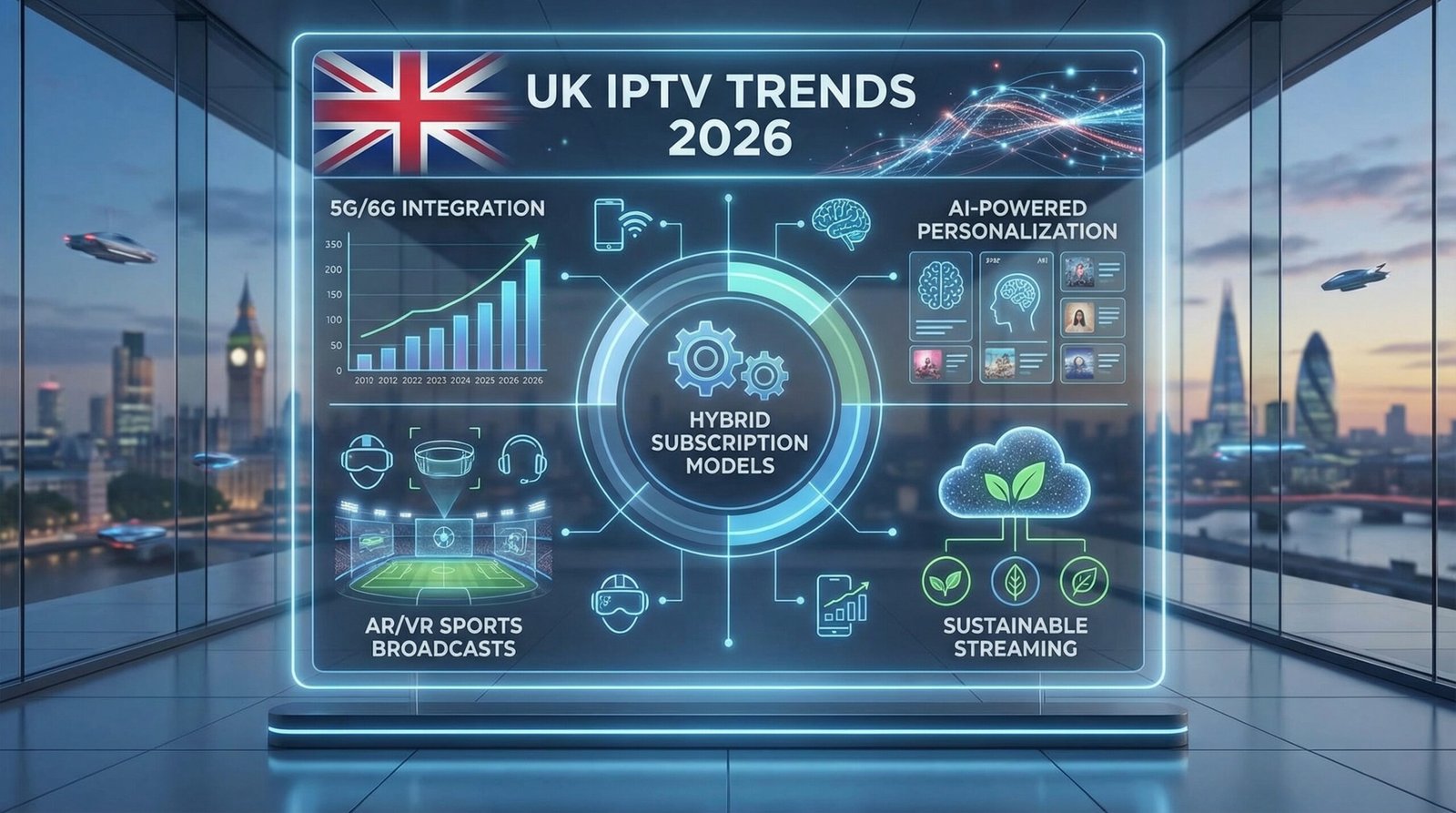
IPTV UK: The Future of Television in Britain

IPTV (Internet Protocol Television) is reshaping how people in the United Kingdom watch video. Rather than depending solely on terrestrial, satellite, or cable, IPTV delivers live channels and on-demand libraries over broadband. For viewers in the UK, that change matters because it shifts control — of what you watch, where you watch it, and how it’s monetised — from distribution networks to internet platforms and app ecosystems. As a result, the future of television in Britain will be defined by technology (better codecs, faster broadband), business models (bundles, aggregators, ad-supported tiers), regulation (Ofcom and copyright enforcement), and consumer choice (from licensed OTT services to a thriving — and sometimes illicit — IPTV ecosystem). Britain’s IPTV Future.

What is IPTV and why it matters for Britain

IPTV describes the technical delivery method: video packets sent over IP networks to set-top devices, smart TVs, apps and browsers. It can carry live channels (linear TV), catch-up and VOD libraries, and DVR/time-shifted content. Importantly, IPTV itself is neither legal nor illegal — legality depends on whether the service holds rights to the content it distributes. A licensed IPTV subscription from a broadcaster or aggregator is lawful; an unauthorised service that streams premium pay channels without licences is not.

Why it matters in the UK:

  • Broadband penetration and smart TV adoption make IPTV practical for most households; the infrastructure exists to support mass migration.
  • Younger audiences are already migrating away from linear TV to online video platforms, which favours IPTV and streaming models. Ofcom’s recent reporting shows online video growth and changing viewing habits.
  • IPTV enables new business models: single-app aggregators that combine multiple sources, ad-supported tiers, micro-subscriptions, or hybrid bundles that mix broadcaster apps with third-party content.

These forces together mean IPTV is not just a niche alternative — it’s becoming a mainstream way Britons access TV and video.

The current UK landscape

To understand the future, start with now. In 2024–2025, the UK media market showed modest growth driven by online video. Ofcom’s Media Nations 2025 highlights that online platforms are an increasingly dominant part of viewing and that total industry revenue rose modestly — factors that favour IPTV and OTT expansion.

At the same time, enforcement against illegal IPTV operations has been active: UK police, specialist units (PIPCU), and industry groups (FACT) have conducted raids, seized servers, and pursued prosecutions in 2024–2025, showing authorities treat large-scale piracy seriously. Recent seizures and arrests in 2025 demonstrate that illicit IPTV operations remain a target. These actions matter because they change the risk calculus for consumers and intermediaries.

Finally, global IPTV market research points to strong growth overall — the IPTV market is expanding rapidly worldwide as broadband and smart devices proliferate — which indicates investment and competitive pressure will continue into 2025 and beyond.

How consumers are changing TV: three big trends

  1. From channels to experiences
    Linear channel schedules are being replaced by curated experiences: personalised queues, algorithmic recommendations, multisource search and bundles stitched together inside a single app or aggregator. Consumers increasingly pick services based on UX, EPG quality, and device support (e.g., IPTV Smarters Pro compatibility).
  2. Hybrid monetisation
    Subscriptions remain important (multiple iptv subscriptions per household is not unusual), but ad-supported tiers, promotional trials (iptv uk free trial) and short-term passes are gaining ground. Aggregators may offer lower entry prices in exchange for ads or revenue sharing with content owners.
  3. Device and platform diversity
    TV is no longer a single screen: smart TVs, Fire Sticks, Android TV boxes, Apple TV, phones, and browsers all play a part. Device compatibility and the ability to sideload or integrate with players like IPTV Smarters decides which IPTV providers reach the largest audience.

These trends combine to make TV more flexible but also more complex for consumers.

Business models: aggregators, broadcasters, and the grey market

Four archetypes will coexist:

  • Broadcaster/OTT official services: BBC iPlayer, ITVX, Sky’s streaming; licensed, regulated, and trusted. They will continue to anchor much viewing.
  • Licensed aggregators: Services that secure rights and bundle channels into a simplified subscription. These can be attractive if they truly hold licences for the offered channels.
  • Independent OTT and niche streamers: Vertical/playlists focusing on sport, film, kids, or international channels. They may combine with larger platforms through deals.
  • Grey-market resellers and pirate IPTV: Cheap bundles that include premium pay channels without rights. These services are unstable, risky, and targeted by enforcement. Recent UK raids and server seizures reinforce the legal risk.

For mainstream UK viewers, the safest long-term route is licensed services and reputable aggregators; the grey market remains tempting on price but carries legal and security downsides.

Regulation, enforcement, and consumer protection

Ofcom remains the primary regulator for broadcasting and on-demand services in the UK, and its Media Nations work informs policy discussions. Meanwhile, criminal and civil enforcement (City of London Police, PIPCU, FACT, and others) target large-scale piracy operations and facilitators, including data centres, payment processors, and device sellers. These agencies have achieved seizures and prosecutions in 2024–2025, signalling continued prioritisation. Britain’s IPTV Future.

What this means for consumers:

  • If a service can’t show clear rights or a UK business presence, be sceptical.
  • Payment via traceable, consumer-protected methods (card, PayPal) is safer than anonymous methods.
  • Reporting suspicious services to Action Fraud, FACT, or the police helps enforcement and protects others.

Technology drivers shaping IPTV’s future

  1. Broadband upgrades and low latency
    Wider gigabit broadband and faster home Wi-Fi (Wi-Fi 6/6E/7) lower barriers for high-bitrate streaming and multiple simultaneous streams in a household.
  2. Better codecs and streaming tech
    Wider H.265/HEVC decoding and emerging codecs (AV1) improve efficiency, allowing 4K streams at sensible bitrates. Low-latency CMAF and chunked-encoding improve live sports delivery.
  3. Cloud and edge delivery
    Edge caching and CDN sophistication mean smoother playback and localized content delivery — critical for congested sporting events.
  4. Interoperability and standard APIs
    Growth of standardised service APIs (EPG, authentication tokens, DRM) will make it easier for legitimate IPTV providers to authorise and protect content across devices.

These technologies will make IPTV more robust and mainstream.

Risks and threats: piracy, malware, and privacy

While IPTV’s technological improvements are positive, risks persist:

  • Illicit services: Cheap, unrealistic bundles are often unlawful and may disappear suddenly, leaving consumers out of pocket. Enforcement actions through 2025 show operators can be traced and prosecuted.
  • Malicious apps and pre-loaded boxes: Some grey-market devices and APKs carry malware, spyware, or intrusive permissions. Consumers sideloading APKs (rather than using official stores) should check sources and avoid modified apps.
  • Data and payment fraud: Shady providers may collect and reuse payment or personal details — prefer card or PayPal and carefully read privacy policies.
  • DRM and georestrictions: Legitimate rights management may block certain streams outside agreed territories, impacting cross-border viewing.

Consumers must balance price against the legal and security risks of low-cost suppliers. Britain’s IPTV Future.

Opportunities for content creators and UK industry

IPTV growth isn’t only a threat — it’s an opportunity:

  • New distribution channels: Creators can reach niche UK audiences through dedicated IPTV channels or aggregation deals with platforms.
  • Innovative ad models: Dynamic ad insertion during IPTV streams enables targeted, addressable advertising, which can be more valuable than conventional ad spots.
  • Flexible windows and monetisation: IPTV allows combination of subscription (SVoD), transactional VOD, and ad-supported tiers to maximise revenue.
  • Local language and cultural content: Aggregators can package British, regional and diaspora content more easily than traditional linear approaches.

For rights owners and broadcasters, the challenge is to adapt commercial models while protecting revenue and rights. Britain’s IPTV Future.

What viewers should do today (practical guidance)

  • Prefer licensed, transparent providers and confirm device compatibility.
  • Use IPTV UK free trial offers to evaluate UX, EPG accuracy, stream stability and device support, but read cancellation terms carefully.
  • Install players from official app stores (e.g., IPTV Smarters Pro from verified sources) and avoid cracked APKs.
  • Use wired Ethernet for high-bitrate streams and a modern router for Wi-Fi.
  • Pay with methods that offer consumer protection and keep records.
  • Report scams or suspicious services to authorities.

 Step-by-Step Walkthrough: Choosing and Starting a Safe IPTV UK Subscription

(Full, practical walkthrough you can follow today.)

  1. Define needs and priorities
    Write down the channels and content types you cannot live without (e.g., BBC, ITV, specific sports leagues). Decide how many simultaneous streams you need — this determines whether a single-device Fire Stick or a multi-stream household plan is required. Note device preferences (Smart TV, Android TV, Apple TV, phone).
  2. Research providers
    Compile a shortlist of 3–5 providers that claim to meet your needs. Use reputable review sites, community forums, and the provider’s own documentation. Look for transparency: company address, clear terms, privacy policy, and licensing statements. Exclude suppliers that insist on cash/crypto only or won’t provide verifiable contact details.
  3. Check device support
    Confirm the provider supports your device(s) and player apps — for example, does it provide M3U/Xtream credentials compatible with IPTV Smarters Pro, TiviMate, or a native tvOS/AndroidTV app? If sideloading is required, ask for checksums and official installation instructions.
  4. Trial and test
    Take advantage of IPTV UK free trial offers. Prefer trials that don’t auto-charge or require extensive personal data. Use the trial to check: channel availability, EPG alignment to UK time, stream quality at peak times, and simultaneous streaming. Test on the device you use most (TV, Fire Stick, phone) and during varied times of day.

This step-by-step approach balances convenience, price and legal safety so you can benefit from IPTV in the United Kingdom without unnecessary risk. Britain’s IPTV Future.

Future scenarios: what might Britain’s TV look like in 5 years?

  1. Aggregator dominance with licensed bundles.
    Major aggregators may package broadcaster apps and third-party services into single UX experiences with unified billing — think “app stores” for television.
  2. Event-level fragmentation with day-passes.
    Live sports might become more fragmented but easier to access via event-level passes or micro-subscriptions, allowing consumers flexibility.
  3. Regulated hybrid models.
    Ofcom and rights holders could push for stronger protections and standardised APIs for EPGs, DRM, and authentication — enabling safer, interoperable IPTV services.
  4. Greater convergence of social and broadcast video.
    Short-form platforms (YouTube, TikTok) will continue to capture attention, pushing broadcasters to combine editorially strong long-form programming with social distribution.
  5. Continued enforcement against piracy.
    As illicit IPTV operators adapt, law enforcement and industry coalitions will continue technical and legal responses — meaning the grey market may shrink but also become more covert.

Conclusion — balancing freedom, choice and responsibility

IPTV is a transformational technology for the UK. It offers more choice, flexible monetisation, and new ways for creators to reach audiences. Yet, it also brings risk — especially when low-cost, unauthorised services try to capture market share. For viewers in Britain. The sensible path forward in 2025 is to embrace licensed. Transparent IPTV subscriptions where practical; to use trials wisely (iptv uk free trial); to choose devices and players that are secure and well-supported (examples: Fire TV Stick, Android TV/NVIDIA Shield, Apple TV, Smart TVs with official apps, and trusted players like IPTV Smarters Pro where available); and to prioritise safety in payments and device hygiene. Britain’s IPTV Future.

Saving Money with IPTV UK: How It Beats Traditional TV Subscriptions

IPTV (Internet Protocol Television) is changing how people in the United Kingdom access TV. Rather than pay for multiple traditional services (satellite, cable, or terrestrial plus premium pay TV), viewers can pick and choose streamed channels, on-demand libraries and short-term passes. When done legally — with licensed IPTV UK providers or reputable aggregators — IPTV can deliver big savings, better flexibility, and improved device compatibility. However, there are trade-offs and risks: illegal IPTV services, malware on dodgy boxes, and loss of consumer protections. IPTV Beats Traditional TV.

Key load-bearing facts (sourced):

  • The UK’s TV and online-video market changed significantly through 2024–25; online video gains and shifting viewing habits are documented in Ofcom’s Media Nations 2025 report.
  • UK enforcement against illegal streaming remains active — PIPCU and other units have disrupted services and made arrests in 2025.
  • Industry/market reports show IPTV is a rapidly growing global market, indicating investment and options will expand.
  • Consumer warnings from industry bodies (FACT) and security researchers highlight malware and fraud risks tied to illicit IPTV and dodgy devices.
  • Action Fraud is the UK reporting body for fraud and cybercrime; suspicious providers and scams should be reported there. IPTV Beats Traditional TV.

Why IPTV can be cheaper — the economic logic

  1. Unbundling and choice
    Traditional pay-TV packages often bundle dozens of channels — many you never watch — into a single monthly fee. IPTV lets you subscribe only to services or channels you want (e.g., an SVoD library plus a sports add-on or a single aggregator), reducing wasted spend.
  2. Micro-subscriptions and day-passes
    IPTV and OTT platforms increasingly offer short-term access (day or event passes) and micro-subscriptions. If you only care about a small number of live events or series, you can pay only for those, saving compared with a full monthly cable/satellite bill.
  3. Lower distribution overhead
    IPTV providers who operate efficiently (using cloud/CDN delivery and smart caching) can deliver content at lower marginal cost than satellite distribution. Competitive pressure often results in lower per-user pricing or bundled promotions targeted at price-sensitive UK consumers.
  4. Promotional tiers & ad-supported models
    Many services now offer ad-supported lower-cost tiers (or subsidised bundles from ISPs) that reduce the monthly bill for users willing to accept advertising.
  5. Device flexibility reduces hardware cost
    IPTV often runs on devices you already own (smart TVs, Fire Sticks, phones), so you can avoid expensive set-top rentals or fees that some cable providers charge.

Sources of real savings: concrete examples

  • Replacing a full satellite package (which may include premium sports, movie add-ons and extra boxes) with a combination of an aggregator + a single sports pass for big match days can drastically cut annual costs.
  • Using trials (e.g., an IPTV UK free trial) to rotate subscriptions only during months you need them — e.g., pay for a sports pass in season months and cancel afterwards — lowers yearly spend.
  • Choosing a reputable, licensed IPTV service that bundles multiple broad channels can be cheaper than paying several individual broadcaster subscriptions separately.

Legal/ethical guardrails: do not confuse “cheap” with “legal”

Savings are attractive, but low prices often flag illicit services:

  • If a provider promises premium pay channels (Sky Sports, BT Sport equivalents, Netflix, big movie channels) at implausibly low monthly prices, treat it as suspicious. Many such offers are unlawful. Enforcement in the UK has targeted large illicit networks.
  • Illicit sellers often operate from anonymous social media, require crypto or untraceable payments, or supply pre-loaded “dodgy boxes”. These increase fraud and malware risk. Industry bodies like FACT have repeatedly warned against such boxes.

Rule of thumb: if a deal is too good to be true, it probably is. IPTV Beats Traditional TV.

How to identify cost-efficient legal IPTV services

  1. Transparent pricing & company details
    Legitimate vendors provide company registration, contact address, and clear refund terms. This protects you if the service fails or disappears.
  2. Payment methods with consumer protection
    Use card or PayPal, which offer chargebacks and buyer protection. Avoid wire transfers, vouchers or opaque crypto payments for subscription purchases.
  3. Official app availability
    Providers with apps in official stores (Amazon Appstore, Google Play, Apple App Store) are generally safer. If sideloading is required, verify APK checksums and provenance.
  4. Trial options
    Reputable providers often offer IPTV UK free trial periods or money-back guarantees. Use these to evaluate stream stability and EPG alignment without committing.
  5. Good reviews & community feedback
    Check multiple sources (independent review sites, forums, and recent posts). Watch for patterns of downtime or refund complaints.

Devices and network choices that cut costs

  • Use devices you already own: Smart TVs, Fire Sticks, tablets and phones can run legal IPTV apps — avoiding rental fees for ISP set-top boxes.
  • Wired connections: Ethernet reduces buffering (so you don’t pay for higher tiers to overcome poor Wi-Fi).
  • Energy & hardware savings: Small, low-power streaming sticks are cheaper to run than full set-top boxes.

The danger of “false savings”: scams, malware, and hidden costs

Cheap, illegal IPTV can impose hidden costs:

  • Fraud and identity theft: Unverified sellers can steal payment info or resell data. Reportable fraud in the UK is handled by Action Fraud.
  • Malware and device takeover: Pre-loaded boxes and cracked APKs have been linked to malware campaigns that steal credentials or display intrusive ads. Security researchers have uncovered vast piracy networks that reuse domains and host malicious code.
  • Service instability & loss of access: Illicit services can disappear overnight, leaving you out of pocket. UK enforcement continues to seize servers and disrupt networks.

These downstream costs often outweigh any short-term subscription savings. IPTV Beats Traditional TV.

Comparing real budgets: IPTV vs Traditional pay TV (example scenarios)

Scenario A — Traditional pay TV household (UK)
Satellite/cable package with premium sports + movie add-ons + second set-top box. Typical monthly cost (example): £70–£120. Annual: £840–£1,440.

Scenario B — Legal IPTV approach
Base aggregator (licensed) £20/month + sports event passes and a Netflix/Prime bundle averaged across the year = £35–£50/month. Annual: £420–£600.

Savings: £420–£840 per year in this simplified example, depending on which sports packages you require and how many add-ons. (Your mileage varies — sports-heavy users may find less savings.)

This shows the potential savings; the actual outcome depends on rights you need (especially live sports), whether you accept ad-supported tiers, and whether you choose day-passes or rotating subscriptions. IPTV Beats Traditional TV.

Practical advice: balancing savings with safety

  1. Start with trials — use IPTV UK free trial offers to test stability and device compatibility. Prefer trials that don’t auto-charge or require lots of personal data.
  2. Mix and match legally — combine a licensed aggregator for core channels with event passes for sports months. This is often cheaper than a permanent full premium package.
  3. Watch the renewal traps — note trial end dates and automatic renewals. Use calendar reminders.
  4. Use secure payment — credit cards or PayPal allow disputes. Keep records.
  5. Avoid pre-loaded “dodgy” boxes — they often bring malware and no consumer recourse. FACT and other industry groups have warned consumers about these devices.
  6. Use reputable players and official stores — install IPTV Smarters Pro or other clients only from verified app stores where possible and verify any sideloaded files.
  7. Report scams — if you suspect fraud, report to Action Fraud and to the app stores where the malicious APK appeared.

 step-by-step walkthrough — Choose, Test, Subscribe, Save (practical)

1) Define your viewing needs
Write a short list: must-have channels (e.g., BBC, ITV), must-watch sports, number of simultaneous streams, devices you own, and budget. Example: “I need BBC/ITV + one sports channel; two streams; budget £30/month.” IPTV Beats Traditional TV.

2) Shortlist legal providers
Search for providers that state licensing or list known channel deals. Use reputable comparison sites and community forums. Exclude sellers that insist on crypto/vouchers only or lack company details.

3) Check device compatibility and app availability
Confirm the provider supports your primary device (Fire Stick, Apple TV, Android TV). If you want to use IPTV Smarters Pro, ensure the provider supplies M3U/Xtream credentials or an official store app.

4) Trial the service
Sign up for an IPTV UK free trial where possible. Prefer trials that do not require card details; if a trial requires a card, set an early calendar reminder for cancellation. During the trial:

  • Test during peak hours.
  • Try HD and standard channels.
  • Check EPG accuracy (set timezone to UK).
  • Test catch-up/VOD features.
  • Test simultaneous streams if household uses multiple devices.

Final checklist: how to save money safely with IPTV UK

  • Use IPTV UK free trial offers to test before you pay.
  • Prefer licensed aggregators and official broadcaster apps.
  • Pay by card/PayPal for protection.
  • Avoid pre-loaded boxes from anonymous sellers.
  • Combine event passes + base packs for seasonal savings.
  • Keep device/network tuned (Ethernet, QoS).
  • Report suspicious sellers to Action Fraud and FACT.

Closing thoughts

IPTV offers genuine opportunities for UK viewers to save money on their TV diet — if they use licensed, transparent services and actively manage subscriptions. The promise of lower cost is real: unbundling, micro-subscriptions, trials, and ad-supported tiers all let viewers pay precisely for what they watch. However, false economies — cheap illegal bundles or dodgy boxes — can cost far more in fraud, malware, and lost access, and UK enforcement against illicit IPTV operations remains active. Use trials intelligently, prefer official apps and payment methods, and report any scams. Done right, IPTV UK is a powerful tool for cutting costs without sacrificing choice. IPTV Beats Traditional TV.

Selected sources & further reading

  • Ofcom, Media Nations 2025 (UK media and online video trends).
  • City of London Police / PIPCU press release on illegal streaming disruption (July 2025).
  • Research And Markets IPTV Market Report 2025 (global market growth).
  • FACT (Federation Against Copyright Theft) guidance and enforcement updates.
  • TechRadar coverage of large piracy networks and malware risks.
  • Action Fraud (UK national reporting centre for fraud and cyber crime). 

Troubleshooting Common IPTV UK Issues: A User’s Guide

If you use IPTV UK services — whether you’re testing an IPTV UK free trial, managing an ongoing IPTV subscription, or moving between IPTV providers — you’ll occasionally hit problems: buffering, poor picture quality, audio sync issues, EPG mismatches, or app crashes.This guide explains the common causes, step-by-step fixes, preventative measures, and device-specific tips for the most popular setups (Fire TV / Fire Stick, Android TV & set-top boxes, Apple TV, Smart TVs, and PCs/Raspberry Pi). It also highlights best practice for safety and legal compliance with British IPTV offerings and recommends how to evaluate best IPTV options in 2025. IPTV UK Help Manual.

Read on to troubleshoot effectively, preserve your viewing experience, and keep your IPTV subscription secure.

Quick orientation: what “IPTV” means and what to expect

First, a short primer. IPTV (Internet Protocol Television) is a delivery method — it sends video over IP networks instead of satellite or cable. A lawful IPTV service will have licensing to distribute content; an unlawful service will stream copyrighted content without permission. Regardless of legality, many technical problems are the same: network congestion, device limitations, app configuration errors, or provider-side issues. Therefore, focus first on the technical checklist below, then consider legal and provider factors.

Common IPTV issues (overview) — symptoms and likely causes

  1. Buffering & stuttering
    Likely causes: insufficient bandwidth for the stream quality, Wi-Fi interference, router/ISP congestion, or overloaded provider servers.
  2. Poor picture quality / pixelation
    Likely causes: adaptive bitrate dropping due to poor bandwidth, wrong video decoder settings on device, or a low-quality stream from the provider.
  3. Audio/video sync (lip-sync) problems
    Likely causes: player buffering strategies, decoder issues, or mismatched audio track/frame rates.
  4. EPG (electronic programme guide) mismatches
    Likely causes: incorrect timezone settings, EPG source not aligned to UK schedules, or stale EPG cache.
  5. App crashes / freezes
    Likely causes: app bugs, outdated firmware or OS, corrupted cache, or insufficient device memory.
  6. Channels missing / geo-blocked
    Likely causes: rights restrictions, provider configuration errors, or provider removed channels.
  7. Cannot login / invalid credentials
    Likely causes: incorrect Xtreme/M3U credentials, account blocked or expired, or provider authentication issues.
  8. Slow startup / long time to load channels
    Likely causes: DNS issues, slow provider backend, or device performing background updates.
  9. Security and malware concerns
    Likely causes: sideloaded APK from untrusted sources or pre-loaded grey-market boxes.

Immediate troubleshooting checklist

  • Restart device and router (power cycle both).
  • Switch to a wired Ethernet connection if available.
  • Run an online speed test on the device or another device on the same network. For HD aim for 8–12 Mbps per stream; for 4K aim for 25+ Mbps per stream.
  • Clear the app cache (IPTV player app) and, if necessary, reinstall the app from the official store.
  • Verify timezone / EPG settings (set to United Kingdom / GMT or BST).
  • Confirm provider status — check the provider’s status page, support channels, or community discussion for outages.
  • If using a VPN, temporarily disable it to see if it’s causing routing or speed issues.
  • If sideloading APKs, verify checksums if provided; otherwise, remove and reinstall from an official store when possible.
  • Test an alternate player (e.g., use VLC or a browser web player if the provider offers one) to isolate whether the issue is app-specific or provider/network-related. IPTV UK Help Manual.

Device-specific troubleshooting

1. Amazon Fire TV / Fire Stick (including 4K / 4K Max)

  • Common issues: buffering on Wi-Fi, sideloaded APK instability, remote lag.
  • Fixes:
    • Use a powered Ethernet adapter for stable connection.
    • In Settings → Applications → Manage Installed Applications → clear cache for the player (e.g., IPTV Smarters Pro).
    • Uninstall and reinstall the app from the Amazon Appstore where possible.
    • If sideloading, verify the APK source and do not install “patched” pro versions.
    • Use the Fire Stick’s Developer Options to monitor CPU usage during playback; close background apps.
    • For remote lag, check batteries and reduce interference (move Wi-Fi router away from other wireless devices).

2. Android TV boxes & NVIDIA Shield

  • Common issues: hardware acceleration misconfigured; AV1/HEVC support inconsistent.
  • Fixes:
    • Enable HW acceleration in player settings for smoother playback.
    • Update the Android OS and the player app via Google Play.
    • If video fails on 4K channels, force the player to use software decoding as a test; if it works, then the issue is codec/hardware related.
    • Use Ethernet where possible; configure QoS on your router to prioritise the device.

3. Apple TV (tvOS)

  • Common issues: app not available (tvOS restrictions), AirPlay issues, app crashes.
  • Fixes:
    • Prefer provider native tvOS apps. If using AirPlay from an iPhone, ensure both devices are on the same network and have the latest updates.
    • Reinstall the tvOS app and check for tvOS updates in Settings → System → Software Updates.
    • If playback is slow, disable Background App Refresh and ensure low power mode isn’t affecting network performance.

4. Smart TVs (Tizen, webOS)

  • Common issues: slow UI, app not listed in the vendor store, limited codec support.
  • Fixes:
    • Check the TV app store for official provider apps.
    • Update TV firmware via the manufacturer’s settings menu.
    • If app is not available, use an external device (Fire Stick / Shield) for better app compatibility rather than sideloading.
    • Reduce picture processing features (motion smoothing) temporarily if they lead to frame drops.

5. PCs & Laptops, Raspberry Pi

  • Common issues: browser plugin conflicts, hardware decoding not enabled, SD card issues on Pi.
  • Fixes:
    • Use modern browsers (Chrome, Edge) and enable Hardware Acceleration in browser settings.
    • On Raspberry Pi use official images (LibreELEC/OSMC) and ensure the SD card is high quality (A1/A2 class).
    • Keep antivirus up to date, but whitelist trusted local playback apps to avoid false positives interfering with streams.

Network & router troubleshooting — the backbone of IPTV

Diagnose first

  • Check raw bandwidth: run a speed test from a wired device.
  • Check for packet loss using simple tools (ping to 8.8.8.8 repeatedly). High packet loss (>1–2%) can cause stuttering.
  • Check latency: high jitter or latency spikes hurt live sports streams.

Router tweaks

  • Use Quality of Service (QoS) to prioritise streaming devices.
  • Disable AP isolation and guest network for devices that need local discovery (if safe).
  • Ensure DNS is set to a reliable provider (ISP, Google 8.8.8.8 / 8.8.4.4, or Cloudflare 1.1.1.1) — sometimes DNS resolution delays slow app startup.
  • For congested Wi-Fi, move to 5 GHz, use a less crowded channel, or enable Wi-Fi 6 features if supported.
  • If multiple streams occur concurrently, consider increasing broadband plan speed.

App & stream troubleshooting: configuration and logs

  • Check player settings for buffer sizes, network timeouts, and decoder choice. Increasing buffer size reduces rebuffering at the cost of startup latency.
  • Enable debug or logging modes if available and review for repeated errors (authentication failures, stream 403/404, or codec errors).
  • For M3U/Xtream services, confirm correct URL format, username, and password. Copy/paste carefully — stray spaces break login.
  • If channel list appears but no picture, it can be a firewall/port blocking issue either at your network or the provider side — contact provider support with log samples. IPTV UK Help Manual.

EPG, timezone and guide issues (common and fixable)

  • Check the EPG timezone option inside your player; set it to Europe/London or United Kingdom for correct listings.
  • If the EPG shows wrong programmes, refresh or re-import the EPG source (some players fetch fresh EPG only on app restart).
  • For persistent mismatches, ask the provider if they use a dedicated EPG ID mapping — reputable providers can resync or provide corrected EPG files.

Authentication, subscription and provider-side problems

  • Confirm your IPTV subscription is active and not expired. Many provider portals show active devices; check the provider dashboard.
  • If you get “Maximum concurrent connections” errors, it means your account is being used elsewhere or exceeds the subscription limit — contact the provider to reset sessions.
  • For invalid login errors, reset your password via the provider portal rather than repeatedly attempting login (prevents lockouts).
  • If many channels fail simultaneously, ask the provider if they are performing server maintenance. Reputable IPTV service providers post outage notices and status updates. IPTV UK Help Manual.

Security & safety checks (must-do for UK viewers)

  • Install apps from official stores (Amazon, Google Play, Apple App Store) when possible. Avoid random APK sites.
  • If you use third-party players like IPTV Smarters Pro, download the official build and check seller/provider instructions carefully.
  • Avoid “pre-loaded” grey-market boxes sold via social media; they often include malware and no updates.
  • Use secure payment (card, PayPal) for your IPTV subscription and keep receipts.
  • Report suspicious apps or services to Action Fraud and app stores if you suspect fraud or malware.

When to contact your IPTV provider vs. ISP vs. device vendor

  • Provider: channel-specific failures, black screens with provider status messages, login/authentication errors, or EPG mismatches.
  • ISP: general internet slowness, packet loss, DNS failures, or if multiple online services (not just IPTV) exhibit poor performance.
  • Device vendor: device crashes, firmware update problems, HDMI/HDCP errors, or device-specific app incompatibilities.

When contacting support, provide: device model, app name and version, network type (Wi-Fi/Ethernet), a short description of the reproducible issue, timestamps, and any error messages. This speeds diagnosis. IPTV UK Help Manual.

Advanced diagnostic steps (for power users)

  • Capture a short network trace (using Wireshark on a PC) to check for packet loss or retransmissions. Look for TCP retransmits or UDP jitter.
  • Use traceroute to the provider’s server to check for ISP routing issues.
  • Temporarily change DNS to 1.1.1.1 or 8.8.8.8 to test if provider endpoints resolve better on alternate DNS.
  • On Android/PC players, enable and read logs. Search for codec or DRM errors which indicate missing system codecs or failed license acquisition.

 step-by-step troubleshooting walkthrough

This walkthrough is intentionally device-agnostic at first, then gives specific actions for Fire TV/Android TV/Smart TV/PC users. Follow these steps in order to isolate and fix most common IPTV UK problems.

 A — Quick triage

  1. Note the symptoms: buffering? No picture? Login error? EPG wrong?
  2. Reproduce the problem once and note the exact time and channel.
  3. Restart the streaming device and router. Power cycling resolves transient issues. Wait 60 seconds before rebooting devices to clear caches.

 B — Network tests

  1. Run a speed test from a wired device (or from the same Wi-Fi band). For HD aim for ≥10 Mbps per stream; for 4K ≥25 Mbps. If speed is much less than expected, reboot the router and retest.
  2. Ping 8.8.8.8 for 30 counts (ping -n 30 8.8.8.8 on Windows; ping -c 30 8.8.8.8 on macOS/Linux). Look for packet loss. If >1–2% packet loss, contact your ISP.

 C — App checks

  1. Update the IPTV app to the latest version via the official app store.
  2. Clear app cache and storage (this will require you to reconfigure credentials in some apps).
  3. Reinstall the app if clearing cache fails.
  4. If using third-party players (IPTV Smarters Pro, TiviMate), try the provider’s native app or web player to compare results.

Fallbacks and escalation

  • If you need immediate viewing (e.g., live sports) and the provider can’t fix it fast, switch to a backup legal source (broadcaster app or licensed temporary pass).
  • If you suspect fraud or malware, report to Action Fraud and the app store, and consider a device factory reset.

Preventative tips & best practices

  • Use wired Ethernet where possible.
  • Keep apps and firmware patched.
  • Use official apps and verified downloads for players like IPTV Smarters Pro.
  • Use a reliable DNS and enable router QoS.
  • Maintain a compact set of trusted providers rather than many small, unreliable sources.
  • Record renewal dates to avoid being locked into a faulty service.

Conclusion

Troubleshooting IPTV UK is often a process of elimination: network → app → device → provider. By following the stepwise checks and device-specific tips above, most common issues — buffering, EPG mismatches, app crashes, and authentication problems — can be resolved quickly. Remember to prioritise legal, licensed IPTV subscriptions, avoid dodgy pre-loaded boxes, and use official app stores and secure payment methods. If an issue persists, gather diagnostics and work with your IPTV service provider and ISP — they can usually identify whether the fault sits in the network, the device, or on the provider side. IPTV UK Help Manual.

How IP-TVUK Delivers Ultra Low Latency for Live Sports

Live sports are one of the most latency-sensitive forms of streaming: fans want the action in near real-time, broadcasters need tight synchronization for betting and graphics, and rights holders require secure, reliable delivery. In the United Kingdom — where football, rugby, cricket and other live events attract millions of simultaneous viewers — IPTV UK providers that can offer ultra low latency have a competitive edge. IP-TVUK (the operator described in this guide) focuses on delivering the best IPTV experience by combining modern codecs, edge delivery, optimized player pipelines (including compatibility with clients such as IPTV Smarters Pro), and rigorous network engineering. Consequently, sports fans subscribing to an IPTV subscription (and those testing an IPTV UK free trial) get smoother, faster, and more engaging live coverage. Low-Latency Sports Delivery.

Below I explain the core techniques IP-TVUK uses — from capture and ingest to CDN and player tuning — and provide a practical, 800-word step-by-step implementation guide you can follow if you’re deploying or evaluating an IPTV service or assessing the best IPTV 2025 candidates.

Why latency matters for live sports

First, a quick orientation. Latency is the delay between the real-world event and what viewers see on screen. For live sports, even a few seconds can matter: goal celebrations, live betting, social interactions, and multiview synchronization all depend on minimal lag. Traditional satellite and cable may introduce 3–10 seconds (or more) of latency; older internet streaming can go even higher. Ultra low latency (ULL) aims to bring glass-to-glass delay down to near real-time — often sub-three seconds, and ideally <1s for some workflows.

That matters to viewers and therefore to IPTV providers and IPTV subscriptions marketed as premium services. In the United Kingdom IPTV market, operators that achieve ultra low latency for marquee events will attract sports fans and retain subscribers. Low-Latency Sports Delivery.

The latency reduction stack — end-to-end overview

IP-TVUK reduces latency by optimizing every link in the chain. The major layers are:

  1. Capture & encoder right at the source — ingest capture should be low-latency, with direct feeds from OB vans or contribution encoders connected via secure links.
  2. Low-latency codecs & chunking — use codecs and packaging (e.g., CMAF with low-latency chunked transfer, fMP4 CMAF with short chunk durations, or LL-HLS) to reduce chunk size and fetch intervals. HEVC or AV1 with tuned GOP/chunk sizes balance quality and latency.
  3. Origin & edge placement — small, distributed origin servers and edge compute (edge encoders, packagers, or edge caching) reduce round-trip times. Edge placement near UK population centers is essential for British IPTV viewers.
  4. Optimised transport — QUIC/HTTP3, TLS session resumption, and selective use of UDP-based transport for live segments reduce handshake overhead and jitter.
  5. Adaptive bitrate (ABR) logic tuned for latency — ABR algorithms must prioritise consistent buffer over aggressive upshifts; once a stream is running, minimise abrupt bitrate switches that increase perceived latency.
  6. Player pipeline and buffer management — client players (including IPTV Smarters Pro) must implement low-latency playback loops: smaller initial buffer, paced fetching, and low-latency jitter buffers.
  7. Synchronized CDN and multicast edge — combine CDN edge caching with multicast within ISP networks (where available) to scale without increasing latency.
  8. Monitoring & telemetry — continuous glass-to-glass monitoring ensures SLA and rapid incident response.

Each layer contributes, and the entire stack must be tuned holistically. Below I unpack the technical choices and tradeoffs in more detail. Low-Latency Sports Delivery.

Capture & encoder configuration: starting with the lowest possible delay

Latency optimisation begins at the source:

  • Frame capture & encoding: Capture at the OB facility should use low-latency encoders with short GOP (Group of Pictures) and small keyframe intervals. For example, IP-TVUK configures encoders to use 1–2 second GOPs and enables low-delay profile settings when using H.264/H.265 or HEVC.
  • Encode ladder planning: Predefine a low-latency ABR ladder, where the top bitrate uses hardware acceleration and the lower rungs avoid overly small chunk sizes that increase overhead.
  • Direct contribution links: Use dedicated contribution links (SRT, Zixi, RIST) for contribution transport into the origin cluster; these protocols reduce packet loss and support sub-second delivery with packet re-ordering and FEC. Many OB vans and rights holders already provide these feeds, and IP-TVUK uses them with built-in redundancy.

By reducing encode delay and minimizing contribution buffering, the service gains valuable milliseconds at the outset. Low-Latency Sports Delivery.

Packaging, chunking and transport: CMAF, LL-HLS, QUIC and beyond

The packaging and transport layer is where internet streaming won its long-running battle with latency.

  • CMAF with low-latency chunking: CMAF (Common Media Application Format) supports fragmented MP4 and can be used in a chunked manner where chunks are sub-second (e.g., 200–500ms). IP-TVUK uses CMAF chunking so the player can start playback as soon as the first chunk arrives.
  • Low-latency HLS (LL-HLS): For Apple ecosystem compatibility, LL-HLS is implemented in parallel (shortened segment windows, partial segments). This ensures Apple TV and iOS viewers get low-latency streams.
  • HTTP/3 and QUIC: QUIC reduces handshake delays compared to TCP/TLS and improves recovery under packet loss. IP-TVUK evaluates HTTP/3 for key flows to minimise transport latency.
  • Edge packagers: Instead of packaging at a central origin, IPTVUK performs packaging at edge POPs (points of presence). That reduces distance and hence round-trip time for segment requests.
  • FEC & jitter buffers: A short, adaptive jitter buffer smooths out network variance without adding long delays; forward error correction (FEC) across small groups of packets reduces retransmit waits.

Together, these choices ensure that segments arrive fast and can be played quickly.

CDN, peering, and ISP collaboration: shortening the last mile

Edge placement matters:

  • Regional POPs: IP-TVUK deploys POPs close to major UK population centers (London, Manchester, Birmingham, Glasgow) to reduce last-mile hops.
  • Dedicated peering and private interconnects: Direct peering with major UK ISPs (and using IXPs like LINX) reduces transit latency. In some cases, IP-TVUK partners with ISPs to deploy local caching or multicast solutions inside ISP networks for live events.
  • Multi-CDN & dynamic routing: Using multiple CDNs and dynamic origin selection prevents congestion and avoids single-point latency spikes.

Crucially, by working with ISPs and using peering, IPTVUK reduces path length and variability which in turn lowers glass-to-glass delay. Low-Latency Sports Delivery.

Player implementation: how clients keep latency low 

Even with optimised backend flows, the player must be tuned:

  • Smaller initial buffer: Instead of a large startup buffer, IP-TVUK configures players to use a small startup buffer (e.g., 500–800ms) while using smarter rebuffer recovery.
  • Paced fetching & partial segment playback: Players request partial segments and start decoding mid-segment as data arrives. This approach reduces time-to-first-frame.
  • Clock sync and PTS/DTS handling: Accurate PTS/DTS handling and server-client clock synchronization (via NTP or timestamping) prevents drift and supports synchronized multi-viewer experiences.
  • ABR safety limits: Limit aggressive bitrate ramps during live events; instead, prefer conservative upshifts. That reduces rebuffering and perceived latency.
  • Compatibility: IP-TVUK provides configuration profiles for popular clients including IPTV Smarters Pro, TiviMate, native Smart TV apps, and web players so users can get optimal ULL behavior out-of-the-box.

When combined, a tuned player pipeline minimizes buffering without sacrificing quality.

Reliability & security: protecting low-latency streams

Live sports are high-value and attractive to attackers:

  • DRM & watermarking: Use DRM (Widevine, FairPlay) and forensic watermarking to protect rights while not unduly increasing latency. IPTVUK balances license acquisition times with overall latency budgets.
  • DDoS protection: Edge protection prevents denial-of-service events from adding delay or outage.
  • Multi-origin failover: If an origin fails, edge servers can failover to a warm standby with minimal interruption.

Security must be part of the low-latency plan, not an afterthought.

Monitoring, telemetry, and operational playbooks

You can’t manage what you can’t measure. IP-TVUK runs continuous telemetry to measure:

  • Glass-to-glass latency (capture timestamp → display timestamp).
  • Segment arrival times, decode latency, and player buffer depth.
  • Packet loss, retransmit rates, and CDN edge health.
  • User experience metrics (startup time, rebuffer events, bitrate switches).

With automated alerts and runbooks, the operations team can fix anomalies before large audiences notice. Low-Latency Sports Delivery.

Business and UX implications for UK IPTV subscribers

For IPTV UK consumers, ultra low latency offers real advantages:

  • Better live sports experience (less spoilage, more immediate reaction).
  • More accurate second-screen experiences (live stats, bets, and social feeds).
  • Competitive differentiation for best IPTV operators offering low-latency tiers as part of an IPTV subscription package or as a premium add-on.

For users evaluating providers or using an IPTV UK free trial, ask about latency numbers, POP location, and player support (including whether the provider supplies tuned profiles for IPTV Smarters Pro or other clients).

800-Word Step-by-Step Walkthrough: Implementing Ultra Low Latency

The section below is a practical 800-word walkthrough you can follow to implement ultra low latency for a live sports event with an IPTVUK style architecture. It assumes you have access to capture, CDN, edge POPs, and player development resources. Low-Latency Sports Delivery.

1 — Requirements & planning
First, define the target glass-to-glass latency (for live sports, aim for <3s; for competitive workflows target <1s if possible). Next, list devices to support (Smart TV, Fire Stick, Apple TV, web, mobile). Confirm rights/DRM constraints and gather OB contribution specs. Arrange peering contacts with major UK ISPs and select POP locations (London, Manchester, Birmingham, Glasgow).

2 — Source capture & encoder configuration
At the event feed, configure contribution encoders for low-delay mode: GOP ~1–2s, low-delay profiles, and small B-frame usage. Use contribution transport like SRT/Zixi with FEC enabled and 50–200ms playout buffers for reliability. Ensure timestamps are precise (PTS/NTP) and embed event source timestamps in the stream for end-to-end latency measurement.

3 — Edge packaging & chunking
Deploy edge packagers in the selected POPs. Configure CMAF partial segments (e.g., 250–500ms chunk size) and set the segment window small (e.g., 2–3s). For Apple targets, parallelise LL-HLS partial segments with matching durations. Tune the packager to emit a CMAF manifest with #EXT-X-PART entries or CMAF chunked fMP4 fragments. Keep initial manifest TTL short for live.

4 — Transport & CDN selection
Choose CDNs that support HTTP/3 and exhibit low-latency delivery. Configure multi-CDN failover and ensure POPs are peered with UK IXPs. Where possible, negotiate private interconnects with ISPs to shorten the last mile. Enable QUIC for edge communications and keep handshake overhead low by using TLS session resumes and 0-RTT where safe.

5 — Player engineering & ABR strategy
Implement player behaviors: small startup buffer (500–800ms), partial segment fetching, and immediate decode of sub-segments. Integrate PTS-aware decode path and timestamp synchronization (via NTP or signed timestamps). ABR must be conservative: prefer steady bitrates and avoid aggressive ladder jumps. For widely used clients (e.g., IPTV Smarters Pro), provide recommended build/profile settings or SDK hooks that users can enable for ULL playback.

How this benefits UK viewers and IPTV subscription models

By implementing these techniques, IP-TVUK delivers a sports viewing experience that is competitive with, and often superior to, legacy broadcast latency. For subscribers in the United Kingdom, this means:

  • More immediate live action, less chance of social media spoilers.
  • Higher perceived quality and value for IPTV subscriptions and the potential for premium low-latency tiers.
  • Better interactive features (live stats, betting, second screen sync) that depend on tight timing.

When choosing a provider, shoppers should ask about measured latency for live events, POP locations in the UK, whether the provider supports low-latency players, and whether trial options (an IPTV UK free trial) allow testing of live event latency on the devices those viewers own.

Final thoughts & consumer guidance

Ultra low latency is a technical challenge that requires end-to-end design. For UK IPTV consumers looking for the best IPTV UK experience in 2025, ask providers for concrete latency SLAs, POP locations, and device support (including whether they publish recommended settings for common players like IPTV Smarters Pro). Trials let you measure real latency on your network and devices — so take advantage of any IPTV UK free trial. Ultimately, operators like IP-TVUK that combine modern codecs, edge packaging. ISP peering, and tuned players provide the most compelling live sports experience for British viewers. Low-Latency Sports Delivery.

“4K and HD IPTV in the UK: Getting the Best Quality for Your Money”

Why 4K matters — and when HD is still perfectly fine

4K (Ultra HD) offers roughly four times the pixel count of 1080p HD. Premium UK IPTV Quality. The differences:

  • Resolution: 3840×2160 (4K) vs 1920×1080 (Full HD).
  • Detail: crisper textures, better upscaling, more immersive sports and nature footage.
  • Bandwidth: 4K consumes much more data and requires better network conditions.
  • Viewing distance & screen size: 4K payoff increases on large screens (55″+) or close viewing distances.

However, HD remains excellent for many UK households because:

  • Many channels and live sports are still distributed in HD.
  • On smaller TVs (under ~50″), difference is subtle.
  • HD requires less bandwidth and cheaper hardware, so it often gives better reliability for the money.

If you’re shopping for best iptv service in the united kingdom iptv market, consider whether you truly need 4K, or whether robust HD with good reliability is better value. Premium UK IPTV Quality.

What affects picture quality on IPTV?

  1. Source stream quality from the provider — the single most important factor. A cheap iptv subscription that rebroadcasts low-bitrate streams will look poor even if your TV is top tier.
  2. Encoding (codec) — H.265/HEVC or AV1 provide better compression for 4K, reducing required bandwidth. Providers still using old codecs can force higher bandwidth for the same quality.
  3. Bandwidth and latency — more on this below.
  4. Home network — Wi-Fi congestion, poor router, or long coax/ethernet runs matter.
  5. Player software and buffering — apps like IPTV Smarters Pro or hardware players behave differently.
  6. TV settings and HDMI — set TV to the correct HDMI input settings, enable UHD deep color, and use HDMI 2.0/2.1 for 4K60.
  7. Device decode capability — hardware must support the codec used (HEVC/AV1).

Bandwidth and data: what you need for HD and 4K IPTV

Estimate (general guidance):

  • SD: 1.5–3 Mbps
  • HD (720p/1080p): 4–8 Mbps stable per stream
  • 1080p high-bitrate sports: 8–12 Mbps
  • 4K (HEVC): 15–25 Mbps steady per stream
  • 4K (low compression or older codecs): 25–50+ Mbps

For a household using IPTV subscriptions, plan for multiple concurrent streams. Example: two 4K streams + one HD stream ≈ 40–60 Mbps recommended.

Note: ISP throughput must be consistent. Peak throughput is not enough — sustained throughput matters. If you’re hunting a good iptv provider in the UK, test using an iptv uk free trial while running a sustained speed test. Premium UK IPTV Quality.

Picking the right IPTV provider in the UK

When choosing a UK service or iptv provider, evaluate these factors:

  1. Legitimacy & rights — prefer licensed services. “Too good to be true” channel lists often signal illicit streams that are unstable or shut down.
  2. 4K availability — is true 4K offered or upscaled HD branded as 4K?
  3. Codec & bitrate transparency — ask if channels use HEVC/AV1 and published bitrates.
  4. Device support — Android TV, Fire TV, MAG boxes, Smart TV, iOS/Android, or web players. If you plan to use IPTV Smarters Pro or other apps, make sure provider supplies compatible playlists or portal URLs.
  5. Free trials — many legitimate providers have iptv uk free trial or short trial periods. Use them to check real-world performance.
  6. Customer support — live chat, response times, and replacement stream policies.
  7. Concurrent streams — how many simultaneous devices are allowed?
  8. Price vs channels vs reliability — cheaper = often less reliable; balance cost and quality.
  9. Reviews and uptime reports — user forums and social proof (but be wary of fake reviews).

Search for “best iptv 2025” or best iptv service but prioritize recent user experiences over marketing claims.

Devices and apps: what to buy and why

Smart TVs (Google TV, Android TV, LG, Samsung)

  • Convenient but app support differs. Android TV has largest app ecosystem; Samsung/LG may require vendor-specific apps or webOS apps.

Streaming sticks and boxes

  • Amazon Fire TV Stick 4K Max, NVIDIA Shield (older but very capable), or Android TV boxes handle 4K and HEVC (check model specifics).
  • Cheaper generic Android boxes can work but may lack HEVC or stable networking.

Dedicated IPTV set-top boxes

  • MAG, Formuler and other set-top boxes are popular in IPTV circles; choose models with HEVC/AV1 and gigabit Ethernet.

Mobile devices and tablets

  • Good for portability, but small screen makes 4K irrelevant.

Important: IPTV Smarters / IPTV Smarters Pro

  • Popular middleware/player app; many UK users use IPTV Smarters Pro or similar players to load M3U playlists or Xtream Codes portals.
  • Pros: flexible, multi-platform.
  • Cons: depends on playlist/provider quality; keep apps updated.

Cabling & HDMI

  • For 4K60 HDR, use HDMI 2.0 minimum (HDMI 2.1 for higher refresh rates, VRR, or advanced HDR settings). Premium UK IPTV Quality.

Network best practices for consistent 4K/HD streaming

  1. Use wired Ethernet where possible — gigabit Ethernet to your TV or set-top ensures the most stable experience.
  2. If using Wi-Fi, use 5 GHz and a modern router — Wi-Fi 6 is preferable for households heavy with concurrent traffic.
  3. Quality of Service (QoS) — prioritize streaming devices to reduce buffering during heavy use.
  4. Separate SSIDs for guests — isolate bandwidth-hogs.
  5. Router placement and interference — keep routers central and away from microwaves, thick walls, etc.
  6. Use adaptive bitrate but monitor bitrate ceilings — if your provider clamps bitrate, it will cap quality.
  7. Check DNS and MTU — occasional throttling can be bypassed by alternate DNS or adjusted MTU, but do this only if you know what you’re doing. Premium UK IPTV Quality.

Picture settings & TV calibration for best results

  • Set TV input to the correct HDMI mode (enable UHD/Deep Color).
  • Turn on game mode only if you need low latency (temporary) but disable features that add noise reduction for sports.
  • Disable aggressive motion smoothing for films unless you like the effect.
  • Calibrate brightness/contrast and color profile (Cinema/Natural for movies).
  • Ensure HDR is enabled for HDR streams.

Troubleshooting common issues

Buffering or stuttering

  • Check bandwidth and concurrent streams.
  • Switch to wired Ethernet.
  • Lower resolution in player settings (switch HD→SD temporarily).
  • Try a different DNS.

Blocky or washed-out picture

  • Provider bitrate too low or wrong colour space (YUV vs RGB).
  • Player or TV not using correct HDR profile.

4K not showing even when provider claims 4K

  • Check HDMI cable spec and TV input settings.
  • Verify the player supports the codec (HEVC/AV1).
  • Confirm portal/playlist points to true 4K stream — sometimes labeled 4K but is upscaled.

Legal and safety considerations (UK)

  • Only use providers with legitimate rights to the content. Illicit IPTV services can be taken down, sold off, or fail without refund.
  • Using unauthorized streams may have legal and security risks.
  • If you want robust, legal British IPTV options, check established, licensed services and broadcasters in the United Kingdom IPTV ecosphere. Premium UK IPTV Quality.

Price vs quality: value checklists

When comparing iptv subscriptions and iptv services, use these quick checks:

  • Bandwidth & bitrate: does the provider publish sample bitrates for channels?
  • Trial policy: is there an iptv free trial or money-back window?
  • Uptime stats: do they publish or have verifiable uptime?
  • Device compat: are there apps for your devices (Android TV, Fire TV, MAG)?
  • Concurrent streams and account sharing policy.
  • Update frequency and support responsiveness.

Sometimes it’s better to pay a bit more for a trustworthy iptv provider than to save on a service that stutters during the game.

800-word step-by-step technical guide: every step explained in detail

Below is a focused, step-by-step technical walkthrough to get a 4K IPTV stream working at the best quality in a typical UK home.

  1. Choose and verify a provider (10–15 minutes)
    • Pick a provider that explicitly lists 4K channels and codec info. Sign up for an iptv uk free trial if available. During the trial, log into their portal on the device you will use (Smart TV, Fire TV, Android box, etc.). Confirm they provide a sample 4K stream file or channel. Ask support to provide the exact stream URL or sample M3U entry if you can — this helps test with network tools.
  2. Verify device codec and hardware decode capability
    • On your device, check the specs: does it list HEVC (H.265) hardware decode or AV1? For 4K60 HEVC decode is essential. Older devices only decode H.264 and will struggle. If the device lacks HEVC, you will need a newer box or streaming stick.
  3. Prepare your network: wired first
    • If possible, run a Gigabit Ethernet cable from your router to the streaming device. This eliminates Wi-Fi variability. If wiring isn’t feasible, place the device within strong 5 GHz Wi-Fi range of your router or use a Wi-Fi 6 access point/repeater set to the same SSID.
  4. Check bandwidth with sustained tests
    • Use a laptop on the same network to run a sustained speed test (e.g., 60-second download test) to confirm sustained throughput of at least 25–30 Mbps for a single 4K stream. Remember peaks aren’t enough — sustained throughput matters. For multiple streams multiply accordingly. Premium UK IPTV Quality.

Comparing top device + provider combos (practical examples)

  • Budget (reliable HD) — Fire TV Stick (non-max) + stable HD-focused provider. Good for ≤50″ TVs; cheaper.
  • Balanced (HD + occasional 4K) — Fire TV Stick 4K Max or modern Android TV box + midrange provider with selective 4K channels.
  • Enthusiast (true 4K) — NVIDIA Shield Pro or high-end Android TV box + provider that publishes HEVC/AV1 4K streams + gigabit wired network.

Buying checklist

  • Does the provider offer an iptv uk free trial?
  • Are there published bitrates and codecs (HEVC/AV1)?
  • Device supports HEVC/AV1 and HDMI 2.0/2.1?
  • Home broadband plan supports sustained 25+ Mbps per 4K stream?
  • Does the service allow required concurrent streams?
  • Are legal rights or licensing clear?

Closing — final recommendations

  1. Start with a trial. Use an iptv uk free trial to check real performance on your devices and network.
  2. Prioritize device and codec compatibility — HEVC/AV1 decode is essential for efficient 4K. If your TV or device lacks it, buy one that supports it.
  3. Use wired Ethernet for the best 4K experience. If you can’t, invest in a modern Wi-Fi 6 router or good 5 GHz coverage.
  4. Balance cost vs reliability — cheap iptv subscriptions often skimp on bitrate and support.
  5. For long-term peace of mind, prefer licensed providers in the UK to avoid interruptions and legal risk. Premium UK IPTV Quality.