
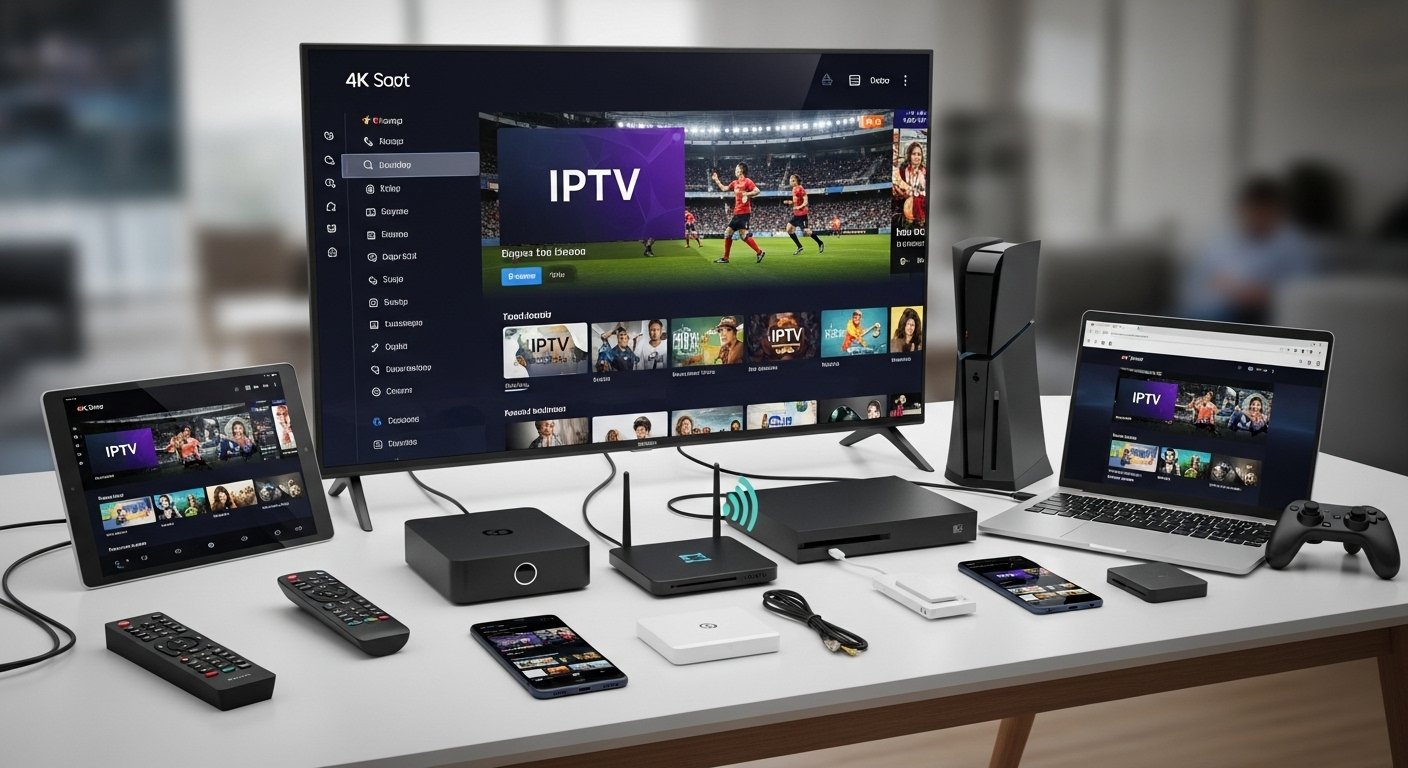
Top 5 Devices to Use with Your IPTV UK Subscription

If you’re using an IPTV UK service — whether you’re trying an IPTV UK free trial, evaluating a new IPTV subscription, or searching for the best IPTV UK setup in 2025 — choosing the right device makes a huge difference. Your choice affects picture quality, app availability (for players such as IPTV Smarters Pro), reliability, security, and usability. Below I compare the top five device categories for IPTV United Kingdom users, explain the pros and cons of each, provide device-specific setup tips, and include an 800-word step-by-step guide for selecting, subscribing, and installing your chosen option. Best Devices for IPTV.

Quick summary — what matters when picking a device for UK IPTV

Before we dive into the top five devices, here’s a quick checklist of the features that matter for IPTV subscriptions in the United Kingdom:

  • App availability: Can the device run apps such as IPTV Smarters, TiviMate, or native apps from the provider?
  • Performance & codecs: Does it support H.265/HEVC, 4K HDR, hardware decoding, and smooth playback for multiple streams?
  • Network connectivity: Wired Ethernet is preferable, but good Wi-Fi (dual-band/AX) is acceptable.
  • Security & updates: Does the vendor provide regular firmware and security updates?
  • Sideloading support: If the provider supplies APKs or M3U/XTREAM credentials, can you install or configure them safely?
  • Remote & UI: Is the user interface responsive and friendly for channel surfing and EPG use?
  • Cost & longevity: Is it value for money and future-proof (supports 2025 standards)?

With those priorities in mind, here are the top 5 device choices for UK IPTV viewers, ranked by general suitability.

1) Amazon Fire TV Stick (4K / 4K Max) — best value and app availability

Why choose it

The Amazon Fire TV Stick series — especially the Fire TV Stick 4K and 4K Max — is arguably the single most popular IPTV device in UK homes. For many people, it hits the sweet spot between cost, app selection, and everyday usability. It supports major streaming stores, good hardware decoding, and is compatible with sideloaded players (if needed). This makes it an ideal companion for IPTV UK subscriptions and for using apps like IPTV Smarters Pro.

Pros

  • Affordable and widely available in the United Kingdom.
  • Smooth support for mainstream streaming and common IPTV players.
  • Regular firmware updates from Amazon (mostly).
  • Compact and easy to install on Fire TV, Amazon devices, and many TVs.
  • Works well with Ethernet adapters for stable IPTV streaming.

Cons

  • Sideloading third-party APKs requires some extra steps.
  • Some Amazon policies and app store rules may limit certain IPTV provider apps.
  • Occasional ads and Amazon UI bloat.

Best use cases

  • Users who want a cheap, reliable, and widely supported streamer for IPTV services and want to test an IPTV UK free trial quickly.
  • Households that will primarily stream on one or two TVs.

Setup tips

  • Use a powered Ethernet adapter if possible to avoid Wi-Fi buffering.
  • Use official app stores first, and only sideload reputable APKs (verify checksums).
  • Install a trusted player like IPTV Smarters Pro from the Amazon store or the developer’s verified source.

2) Android TV Boxes & NVIDIA Shield — best performance and versatility

Why choose it

If you want raw power, flexibility, and strong codec support (H.265, AV1 in some models), Android TV boxes — and the NVIDIA Shield TV in particular — are hard to beat. They’re perfect for advanced users running multiple streams from iptv providers, using EPGs, and integrating with home media servers. Best Devices for IPTV.

Pros

  • Excellent hardware decoding and long-term support (NVIDIA Shield is well-supported).
  • Native Google Play store access for apps like IPTV Smarters, TiviMate, or VLC.
  • Strong networking: gigabit Ethernet on many models.
  • Great for 4K HDR content and higher bitrate streams.

Cons

  • More expensive than basic sticks.
  • Overkill for casual users who just want simple channel surfing.

Best use cases

  • Power users and households with heavy IPTV usage (multiple simultaneous streams).
  • People who want to pair UK IPTV with Plex, Kodi, or a local NAS.

Setup tips

  • Use wired Ethernet and enable hardware acceleration in player app settings.
  • Stick to official app sources where possible and keep the Android OS updated.
  • Configure EPG and channel groups inside your IPTV player for the best experience.

3) Apple TV 4K — best for Apple ecosystem and polished UI

Why choose it

For users deeply invested in Apple devices — iPhone, iPad, Mac — Apple TV 4K offers a polished UI, consistent updates, and a strong app ecosystem. While some third-party players are not available on tvOS (Apple’s platform is more restrictive), many IPTV providers offer web players or dedicated tvOS apps. Best Devices for IPTV.

Pros

  • Superb UI and reliable updates.
  • Great for families who want cross-device continuity (AirPlay, iCloud).
  • Strong hardware and 4K HDR support.

Cons

  • More expensive than Fire Sticks and some Android boxes.
  • Sideloading is hard; tvOS does not permit arbitrary APKs, meaning some grey-market players are unavailable.
  • Some popular Android IPTV apps (like TiviMate) are Android-only.

Best use cases

  • Apple ecosystem users who want a polished, secure device for licensed OTT apps and trusted IPTV providers.
  • Users who prefer an Apple TV app from a reputable IPTV provider.

Setup tips

  • Use official provider apps where possible; otherwise configure provider’s web player or use AirPlay from a trusted iPhone.
  • Pair with a good network and enable Ethernet for high-bitrate channels.

4) Smart TVs (Samsung, LG, Sony) — best for simplicity and all-in-one

Why choose it

Smart TVs from Samsung (Tizen), LG (webOS), and Sony (Android TV/Google TV on many models) are convenient because they eliminate the need for extra hardware. Many licensed IPTV providers publish apps on TV stores, and these TVs are fine for casual and mainstream IPTV usage. Best Devices for IPTV.

Pros

  • No extra hardware; simple setup.
  • Some native apps for IPTV providers or popular players.
  • Great for guests and living rooms where simplicity matters.

Cons

  • App availability varies by brand and model.
  • Many Smart TVs have slower hardware and less frequent updates than dedicated players.
  • Sideloading or installing custom apps is often impossible or risky.

Best use cases

  • Casual viewers who want a simple setup and mainly use licensed, store-distributed IPTV apps.
  • Those who prefer a clean, integrated living room experience.

Setup tips

  • Check the TV app store for your provider or player app before purchasing.
  • Keep TV firmware current for security and performance.
  • Use Ethernet if the TV supports it, especially for 4K streams.

5) PCs, Laptops & Raspberry Pi — best for flexibility and advanced tinkering

Why choose it

For techies, a PC or Raspberry Pi is the most flexible option. PCs run desktop IPTV apps, browser web players, and advanced clients like Kodi; Raspberry Pi (especially Pi 4 and later) can act as lightweight set-top boxes running LibreELEC / OSMC / Kodi or Chromium-based web players. Best Devices for IPTV.

Pros

  • Highly customizable; supports many formats and tools.
  • Easy to run multiple instances, record via DVR, or pair with a NAS.
  • Great for testing IPTV UK free trial offers before committing.

Cons

  • Setup can be technical and fiddly for non-technical users.
  • PCs may be less convenient as living-room devices compared to a simple remote.

Best use cases

  • Users who want advanced features (DVR, advanced EPG, transcoding).
  • Those who want to do local recording or integrate IPTV with home media servers.

Setup tips

  • Use modern browsers or dedicated apps and enable hardware decoding if available.
  • Secure your PC (antivirus, updated OS) when testing new providers or APKs.
  • For Raspberry Pi, use official images and ensure SD card reliability and power supply quality.

Other device notes: MAG boxes, set-top boxes, and NAS integration

Some users still favour dedicated MAG boxes and other specialised set-top boxes that many IPTV providers support. These are legacy devices that can be stable, but they often lag in codec support and receive fewer security updates. If you choose a MAG or grey-market box, verify the firmware source and avoid devices that come pre-loaded with questionable apps or preconfigured illegal subscriptions.

Similarly, integrating with a NAS can let you record, transcode, and serve streams to multiple devices — a powerful option for advanced households. Best Devices for IPTV.

Security, legality, and best practice reminders for UK IPTV users

Before you set up an IPTV subscription in the United Kingdom, remember:

  • Legality depends on content rights: IPTV is a delivery method; if your IPTV service streams premium channels without rights, it’s illegal. Always pick licensed providers or transparent aggregators.
  • Security matters: Avoid cracked APKs and untrusted “pre-loaded” boxes that may include malware. Use secure payment methods (card, PayPal) — this helps with disputes.
  • Trials are for testing: Use an IPTV UK free trial to test stability, EPG accuracy, and device compatibility before committing.
  • Use trusted players: IPTV Smarters Pro is a popular client. Install it from official stores when available, and verify any APK checksums if sideloading.
  • Prefer Ethernet & wired connections for higher-bitrate streams and fewer buffering issues.
  • Use reputable VPNs cautiously: A VPN can protect privacy on public networks but doesn’t legalise pirated streams and can affect streaming performance. Best Devices for IPTV.

 Step-by-Step Walkthrough: Choose, Subscribe, Install, and Secure Your IPTV UK Package

Below is a thorough, practical 800-word guide that walks you step-by-step from deciding which device to use through to installing your IPTV subscription, testing a free trial, and securing your system. Follow this sequence to get a reliable, legal, and secure IPTV setup in the United Kingdom. Best Devices for IPTV.

  1. Define requirements
    First, write down what you actually need. List the must-have channels (e.g., BBC, ITV, specific sports), the number of simultaneous streams for your household, and the devices you already own (Fire TV, Apple TV, Smart TV, PC). If sports and live events matter, accept that licensed sports rights typically cost more and cheap packages promising everything are red flags. Decide whether portability (phone/tablet) or living room convenience (TV box) is your priority.
  2. Shortlist devices & providers
    Based on your device preference, select 2–3 hardware options from the top five above. For example, if you want low cost and broad app support, pick a Fire TV Stick 4K and an Android TV box. Next, shortlist 3–5 IPTV providers that match your channel needs and offer a transparent policy. For each provider, check: pricing, trial policy (iptv uk free trial), device compatibility, and whether they declare licensing or company details. Exclude providers that demand untraceable payments or refuse to answer licensing questions.
  3. Check app compatibility and reviews
    Search for the provider name plus terms like “review”, “scam”, “shutdown” and read community forums. Confirm whether your chosen player app (e.g., IPTV Smarters Pro) is available on your device’s store, or whether the provider offers secure M3U/Xtream credentials.

Following these steps will help you pick the right device and IPTV subscription, complete a safe IPTV UK free trial, and secure your setup for long-term use in the United Kingdom. Best Devices for IPTV.

Choosing the best device for specific UK viewers (quick recommendations)

  • Budget / casual viewer: Fire TV Stick 4K (cheap, easy, compatible with IPTV Smarters Pro).
  • Power user / multi-stream household: NVIDIA Shield or high-end Android TV box.
  • Apple lovers: Apple TV 4K (security, polished UI).
  • Simplicity / plug-and-play: Smart TV with official provider app.
  • Tinkerers / advanced features: PC or Raspberry Pi + Kodi / Plex.

Troubleshooting common issues

  • Buffering: Use wired Ethernet, reduce stream quality, or upgrade bandwidth.
  • Incorrect EPG times: Set EPG timezone to UK and resync.
  • App crashes: Clear cache, reinstall, or test a different player.
  • Missing channels: Confirm with provider and check for geoblocking or rights restrictions.

Final thoughts

Choosing the right device for your IPTV UK subscription depends on what you value: price, performance, security, or ecosystem. Whether you pick a Fire TV Stick, NVIDIA Shield, Apple TV 4K, a Smart TV, or a PC/Raspberry Pi, follow the step-by-step checklist above, test using an IPTV UK free trial, and prioritize licensed and transparent IPTV providers. For many UK viewers in 2025, a combination of a reliable device plus a reputable subscription and a trusted player (like IPTV Smarters Pro, where available) offers the best balance of convenience, performance, and safety. Best Devices for IPTV.
How to Set Up IPTV in the UK: A Step-by-Step Guide for Beginners

Introduction

IPTV (Internet Protocol Television) lets you watch live channels, catch-up and on-demand shows over your broadband connection — no dish, no coax, no long engineer visits. If you want flexibility (watch on phones, tablets, smart TVs, or streaming sticks), fine-grained subscription control, and access to vast on-demand libraries alongside live TV, IPTV is usually the best route today. IPTV Beginner Setup Guide.

This guide walks you through everything a UK beginner needs: legal checks (TV Licence), choosing the right broadband and device, step-by-step setup, optimizing for 4K or sports, troubleshooting common problems (buffering, black screens), parental controls, safety, and how to avoid illegal services.

Part A — Before you start: legal & technical checklist

1. TV Licence — the UK legal must-know

A current UK TV license is required if you use BBC iPlayer or view or record live TV on any channel. This holds true whether the TV is delivered via IP, cable, satellite, or the air. Don’t assume “streaming = different”: live streaming counts. For details and to check whether you need one, see TV Licensing guidance. IPTV Beginner Setup Guide.

2. Broadband: basics and 4K requirements

The quality of your internet determines how well you enjoy IPTV. For a smooth single-stream:

  • HD (1080p): ~10–15 Mbps minimum per stream.
  • 4K (UHD): plan for 25–30 Mbps per stream as a practical baseline; more headroom (50+ Mbps) reduces buffering with simultaneous uses. Sources from consumer guides and UK fibre providers give similar practical ranges.

If more than one person streams at once (family homes), multiply per-stream needs and add bandwidth for gaming, uploads and background use. For multi-room households, 100 Mbps+ fibre is a good target.

3. Device compatibility and codecs

Different devices have different capabilities (HDR, Dolby Vision, Dolby Atmos, AV1 decoding, Wi-Fi generation). Newer streaming sticks and set-top boxes increasingly include Wi-Fi 6/6E and AV1 support, which improves 4K performance and future-proofing. Check the device tech specs before you buy. IPTV Beginner Setup Guide.

Part B — Choose the right hardware

1. What to buy (short list for most UK homes)

  • Streaming stick (best value): Amazon Fire TV Stick 4K Max — fast, wide app support, Wi-Fi 6/6E on newer SKUs. Good first buy for living room or bedrooms.
  • Premium box: Apple TV 4K — excellent HDR/Atmos support and polished UI; great if you use Apple devices.
  • Google option: Chromecast/Google TV (latest models) — solid discovery tools and Google integration; check AV1 support on the specific SKU.
  • Console or smart TV: Xbox/PlayStation or modern Smart TVs (LG webOS, Samsung Tizen, Sony) work if you already own them — a stick usually outperforms older TV OSes. IPTV Beginner Setup Guide.
  • AV1/hardware decode limits for long-term streaming for enthusiasts and server users: NVIDIA Shield (excellent for Plex) or Raspberry Pi for do-it-yourself media clients.

2. Essential accessories

  • Ethernet cable (best reliability).
  • USB-Ethernet adapter for sticks that are Wi-Fi only (many sticks support wired adapters).
  • Good HDMI cable (High Speed / HDMI 2.0 or better for 4K).
  • For larger houses, use mesh Wi-Fi or a contemporary Wi-Fi 6 router.

Part C — Pick your IPTV apps & services (legal options)

Most IPTV in the UK is built from apps — a mix of free catch-up services and paid subscriptions:

  • Free UK catch-ups: BBC iPlayer (TV Licence required if you use it), ITVX, All4 (Channel 4), My5.
  • Popular paid apps: Netflix, Disney+, Amazon Prime Video (Prime includes Video), NOW (Sky content), discovery+ (TNT Sports in certain plans). Each app has its own device compatibility and sometimes 4K or boost add-ons (e.g., NOW Boost/Ultra Boost requirements). IPTV Beginner Setup Guide.

Tip: If you want sports in 4K, check that the service supports 4K on your device and whether a paid “boost” or higher tier is required (NOW Ultra/Boost, discovery+ Premium for TNT Sports, etc.). NOW specifies device restrictions and minimum Boost/Ultra Boost speeds. IPTV Beginner Setup Guide.

Part D — Step-by-step setup (30–60 minutes)

Follow these steps to get IPTV running reliably.

 1 — Confirm your broadband & home network

  1. Run a speed test in the room where the TV sits (use Speedtest.net or Fast.com). If your Wi-Fi result is much lower than your advertised plan, either move your router closer or use Ethernet/mesh. Aim for at least 25–30 Mbps for 4K, higher if more people stream concurrently.
  2. If you can, connect the TV or streaming device via Ethernet. Wired is far more stable, especially for live sports or UHD.
  3. If Ethernet isn’t possible, use 5 GHz Wi-Fi (less interference) and consider a mesh node close to the TV.

 2 — Prepare the device

  1. Plug in your Fire TV / Apple TV / Chromecast / stick and complete initial setup (language, Wi-Fi, account sign-in).
  2. Update the device’s software by going to Settings → System → Software Update. Updates are frequently made to modern devices to enhance codec support and streaming.

 3 — Install the apps you need

  1. Open the device’s app store (Amazon Appstore, Apple App Store, Google Play on Android TV devices).
  2. Install: BBC iPlayer, ITVX, All4, Netflix, Disney+, Amazon Prime Video, NOW, discovery+ — whichever you plan to use. Note availability can vary by platform.

 4 — Sign in and test streams

  1. Sign in to each service with your account.
  2. For each app, play a short HD/4K piece of content to test buffering, picture and audio sync. If you have a paid 4K plan or Boost/Ultra settings (NOW), enable them per the app’s instructions — NOW documents minimum speeds for Boost/Ultra Boost.

 5: Set up the audio and picture

  1. On Apple TV / Fire TV: enable “Match Content” features where available so the device switches frame-rate and HDR automatically (improves film look and sports motion)
  2. On the TV: pick a picture preset optimized for movies/sports (Cinema/Filmmaker for movies, Game or Sports mode for live sports) and disable aggressive motion smoothing if it makes sports look odd.

 6 — Enable parental controls & profiles

  1. Create profiles on Netflix, Disney+ and Prime for kids.
  2. Set PIN/protected purchases on Fire TV / Apple TV so kids can’t buy content accidentally.
  3. Use router-level parental controls or screen-time features in Google/Apple ecosystems for tighter control.

Part E — Optimizing for the best experience

1. Make Ethernet the default for the main TV

If possible, wire the main set to the router. Even a modest FTTP plan with wired connection beats Wi-Fi for uninterrupted 4K sports.

2. Use modern Wi-Fi (Wi-Fi 6/6E) and mesh for large homes

New routers and sticks with Wi-Fi 6/6E reduce interference and improve multi-device performance. Amazon’s Fire TV Stick 4K Max and some newer sticks support Wi-Fi 6/6E — helpful in dense homes.

3. Reserve bandwidth for streaming (QoS)

If your router supports Quality of Service (QoS), prioritise the streaming device’s MAC address so large downloads or uploads don’t ruin match day.

4. For future proofing, select devices with hardware AV1 support.

AV1 delivers better compression; devices that decode AV1 in hardware will be more efficient on bandwidth — check the specific model specs when buying.

Part F — Sport & 4K specific notes

1. Check the service’s 4K policy & add-ons

Some services require extra “boost” passes for UHD (e.g., NOW Boost/Ultra Boost have minimum speed recommendations) — and even when allowed, 4K may be limited to particular devices. Confirm on the service’s help pages.

2. Latency and live sports

IPTV often introduces slight latency relative to satellite — that’s normal. For competitive gaming or betting reactions, bear in mind a 10–30 second delay is common with internet streams.

3. Audio: eARC for Atmos

If you use a soundbar/AVR for Dolby Atmos, ensure your TV and device support eARC to pass through Atmos to your sound system correctly. Apple TV and many premium boxes handle Atmos, but full pass-through depends on your TV and AVR chain. IPTV Beginner Setup Guide.

Part G — Troubleshooting common problems

Problem: Buffering mid-match

Symptoms: stream stalls, pixelation, or repeated loading wheel.

Fix checklist:

  1. Run an in-room speed test. If below required per-stream bandwidth, reduce resolution or upgrade broadband.
  2. Switch to Ethernet.
  3. Close other heavy downloads (household devices).
  4. Restart router and streaming device.
  5. If only one app buffers, the provider’s servers may be congested; try a different channel or contact support.

Problem: Black screen or app won’t start

Symptoms: app opens to black screen, or shows errors.

Fix checklist:

  1. Reboot the device.
  2. Clear app cache and reinstall the app.
  3. Check geo-restriction: some content is region-locked.
  4. Verify account (subscription valid, logged in).
  5. Ensure device firmware is updated.

Problem: Audio out of sync

Symptoms: lip sync issues.

Fix checklist:

  1. To adjust audio, use the device’s audio delay settings, if any are provided.
  2. Switch between passthrough and device-decoding audio options to locate where delay happens (TV vs AVR).
  3. Update app/firmware — sometimes fixed in updates.

Issue: Despite having a plan, the app does not have a 4K option.

Fix checklist:

  1. Confirm you’re on the correct service tier and that the app supports 4K on that device (some devices are excluded).
  2. Check minimum speed requirement (NOW Ultra Boost lists 30 Mbps minimum for Ultra).

Part H — Security and legal safety

1. Avoid illegal IPTV services

“Fully loaded” boxes or vendors promising every premium channel for a tiny monthly fee are almost always illegal and unreliable — they risk malware, sudden shutdowns, and legal consequences for suppliers. Stick to official apps in the Amazon/Apple/Google stores. Enforcement is active and penalties can be significant.

2. Use secure payment methods and protect accounts

Pay with cards or reputable processors (PayPal) so you have chargeback options. Use strong, unique passwords and enable 2FA on accounts where available.

3. When to use and when not to use VPNs

A VPN can help if a service is geo-restricted, but it may reduce speed (bad for 4K) and violate service terms. Use responsibly and check the provider’s policy.

Part I — Advanced tweaks for power users

1. DNS changes for faster lookups

Changing to Google DNS (8.8.8.8) or Cloudflare (1.1.1.1) can speed up DNS lookups and occasionally shorten app load times. Test first; effects vary.

2. Router optimisations and QoS

Set up QoS priorities for your IPTV device, or put streaming devices on their own SSID or VLAN for stable performance.

3. Local media and Plex/Jellyfin

If you run a home media server (Plex, Jellyfin), integrate your local library with streaming apps for a single, unified living-room experience. Many enthusiasts pair a Shield or NAS with IPTV apps.

Part J — Practical scenarios & quick checklists

Scenario 1 — Student in a flatshare (budget)

  • Product: Fire TV Stick 4K Max (available for £30–£60).
  • Broadband: Shared Virgin / local FTTC 100–200 Mbps.
  • Apps: Free catch-ups, Netflix Basic/Ad, Prime Video via student deals.
  • Tips: Use wired Ethernet where possible, rotate subscriptions month-by-month.

Scenario 2 — Family of four who want sports + kids’ shows

  • Device: Apple TV 4K or top Fire TV stick (living room), extra sticks for bedrooms.
  • Broadband: 200–500 Mbps FTTP.
  • Apps: discovery+ (TNT Sports where relevant), NOW (Sky content as needed), Netflix/Disney+. Check TV Licence.

Quick setup checklist

  • Confirm TV Licence if you’ll watch live TV/BBC iPlayer.
  • Test delivered speed at the TV.
  • Wire main TV with Ethernet where possible.
  • Buy a modern stick/box (Fire TV Stick 4K Max or Apple TV 4K).
  • Install official apps from device store.
  • Create profiles and parental controls.
  • Perform a 4K test stream and tweak picture/audio settings.

Conclusion — IPTV on your terms

Setting up IPTV in the UK is straightforward once you understand the legal baseline (TV Licence), have suitable broadband, and choose a device that matches your needs. The rewards are huge: flexible subscriptions, multi-device viewing, 4K HDR where supported, and easier family control. Follow the steps above, prioritise wired connections for the main screen, and pick official apps on supported devices. Avoid illegal sellers — they’re a false economy. IPTV Beginner Setup Guide.

If you want me to build a personalised shopping & setup plan for your home (tell me your broadband speed, how many viewers, preferred content — e.g., sports or movies — and your budget), I’ll map exact device models, subscription combinations and a step-by-step install checklist you can follow the same evening.

FAQs

  1. Do I need a TV Licence for IPTV?
    Yes, if you watch or record live TV in the UK or use BBC iPlayer, you need a TV license. Catch-up on demand (non-BBC) generally doesn’t require a licence. Check TV Licensing for specifics.
  2. What internet speed do I need for 4K IPTV?
    As a practical baseline, aim for 25–30 Mbps per 4K stream; 50+ Mbps provides more headroom for multiple users at once. Similar numbers are suggested by other suppliers and consumer guidelines.
  3. Is the Fire TV Stick 4K Max good for IPTV?
    Yes — it’s a strong value pick with robust app support and modern Wi-Fi (Wi-Fi 6/6E on newer SKUs), making it an excellent choice for UK IPTV users.
  4. How do I watch Sky content without a dish?
    You can use Sky’s streaming offerings via apps like NOW or Sky Stream on supported devices — these are IPTV-delivered options that don’t require a satellite dish. NOW sometimes requires Boost/Ultra Boost for higher resolutions; check their device and speed requirements.
  5. Should I use a VPN for IPTV?
    Only if you understand the trade-offs. VPNs can bypass geo-blocks but often reduce speed (which matters for 4K) and may violate service terms. Always prefer licensed services available in your region.