
Family IPTV Deals: Affordable Streaming for Every Room

Families today want three things from TV: quality, choice and value. IPTV (Internet Protocol Television) can deliver all three — if you shop smart. This article is a practical, step-by-step guide for UK families who want an affordable IPTV setup that serves every room: living room, kids’ den, teenage bedroom and the kitchen smart display. We’ll cover how IPTV works for households, which deals and bundles make sense, device and network choices, tips to reduce costs while keeping everyone happy, and a realistic plan for a family of four (or more) that saves money without turning your home into channel chaos. Affordable Family IPTV Streaming.

Quick primer: What IPTV is and why families like it

IPTV stands for Internet Protocol Television — TV delivered over your broadband connection instead of through satellite dishes or coax cable. Practically, that means live channels, catch-up and on-demand libraries are available as apps on smart TVs, streaming sticks (Fire TV, Google/Streamers), set-top boxes from ISPs, phones and tablets.

Why families like IPTV:

  • It’s flexible — multiple devices, multiple rooms, personalised profiles.
  • It’s cost-effective — you can build skinny bundles, use ad-supported options, and buy seasonal sports passes instead of a yearlong satellite package.
  • It’s future-ready — easy updates, better integration with smart home devices, and simpler parental control features.

IPTV unbundles the old “one box = one living room” model into a system that follows your household’s needs.

Why switch from cable/satellite? The family value case

Cable and satellite bundles still have advantages: centralised billing, some exclusive live sports deals, and built-in DVRs. But they also lock families into:

  • Large monthly bills (often with long contracts),
  • Paying for many channels nobody watches,
  • Hardware rental fees, and
  • Costly multi-room add-ons.

IPTV lets you tailor a package per-family — pay for the kids’ channels and the occasional sports pass, keep catch-up apps free, and stream movies via a low-cost SVOD subscription. That combination frequently beats traditional packages on price without sacrificing quality. Affordable Family IPTV Streaming.

Choose the right broadband first: speeds, reliability and tips

Before swapping to IPTV, check your broadband. Good IPTV is a team sport between your provider, home network and devices.

How much speed do you need per room?

A practical guideline for UK homes:

  • SD: 3–5 Mbps per stream.
  • HD: 10–20 Mbps per stream.
  • 4K: 25–50 Mbps per stream.
  • Add 5–10 Mbps overhead per concurrent user for headroom.

Ofcom and industry summaries note the UK average broadband speed and that “decent” broadband is defined as at least 10 Mbps, but for modern households you should aim higher if multiple rooms stream simultaneously.

If your family watches 3 HD streams at once (kids cartoon, adult drama, teen gaming), aim for at least 50–80 Mbps upload/download total to avoid contention.

Managed ISP IPTV vs pure OTT (app-only) services

  • Managed ISP IPTV: ISPs (BT, Virgin Media, Sky, TalkTalk, EE) bundle IPTV with broadband — they can prioritise traffic and provide set-top boxes with better reliability during peak hours. These bundles often include family features and a single bill. Examples show many ISPs offering flexible TV-broadband bundles.
  • Pure OTT: App-only approach (Netflix, Disney+, Prime, NOW etc.), cheaper and flexible, but reliant on public internet routing. Works great with solid broadband and devices.

For families seeking simplicity and guaranteed evening performance, ISP-managed IPTV is attractive. For savings and flexibility, OTT-first is usually cheaper.

Family-friendly IPTV deals & bundles in the UK (what to look for)

When hunting for a family IPTV deal, prioritize three things: concurrent streams, profile support (kids/adult), and bundled extras (cloud DVR, kids’ packs, parental controls). Affordable Family IPTV Streaming.

ISP bundles: what they usually include

ISPs often include:

  • A managed set-top box with integrated apps.
  • Multiple streams / multi-room options.
  • Broadband + TV discounts for combined billing.
  • Priority tech support and occasionally low-latency streams for sport.

Check comparison sites (Uswitch, MoneySavingExpert, CompareTheMarket) to find current bundle deals — bundles can save money especially if you need multiple set-top boxes. Affordable Family IPTV Streaming.

App-based bundles and modular passes

App ecosystems let you buy modular passes:

  • NOW (Entertainment, Cinema, Sports passes) — monthly, no long contract.
  • Disney+, Netflix, Prime Video — low monthly fees, often with family plans and profiles.
  • Add-on channels (e.g., Prime Channels) let you subscribe to specific collections without a big bundle.

This modular strategy is perfect for families who want to pay only for what they use.

Devices for every room: cheap to premium (and what to buy)

Not all rooms need the same hardware. Mix devices by room role.

Living room: boxes and smart TVs

The living room often needs the best experience — 4K, multi-audio, good UI. Options:

  • Smart TV with integrated apps (Samsung, LG webOS, Android TV) — easiest, no extra device.
  • Premium set-top box or streaming box (e.g., Amazon Fire TV Stick 4K Select, Fire TV 4K Max, Google/Streamers): new Fire devices offer very good value and 4K at affordable prices. Recent device launches have emphasised better performance at lower prices.

If you choose ISP-managed TV, the living room box usually comes with DVR and family-friendly middleware. Affordable Family IPTV Streaming.

Kids’ room: simple sticks and parental controls

Kids need simplicity and safety:

  • Low-cost streaming sticks (Fire TV Stick Lite or select 4K) with pinned kids’ apps.
  • Use platform parental controls and dedicated kids profiles on Disney+, Netflix, and Prime.

Bedrooms & mobile: tablets, phones and casting

Bedrooms often only need a tablet or casting from a phone. Chromecast-style or native casting lets users push content from mobile apps to a TV when needed. Note Google’s product line evolved — new streamers and integrations are available; check current models when buying.

Multi-room setups and account sharing: rules and tricks

Most family plans allow multiple simultaneous streams (Netflix Standard/Premium, Disney+ profiles, Prime session limits). ISP bundles typically handle multi-room with extra boxes (sometimes at a fee). Affordable Family IPTV Streaming.

Tips:

  • Use one master account per household and create profiles for each family member.
  • For sports or premium channels, coordinate seasonal passes so not everyone pays year-round.
  • When splitting costs with grown children or relatives, use joint plans with clear admin control.

Check each provider’s T&Cs for simultaneous stream limits — breaching those can lead to blocking or account throttles.

Saving strategies: mix-and-match, seasonal passes, and family plans

Want to cut costs? Try these proven strategies:

  1. Core free apps first: BBC iPlayer, ITVX, All 4, My5 and Freeview Play cover a lot of family viewing at zero extra monthly cost.
  2. Choose one primary paid service (Netflix, Disney+, or Prime) that covers the majority of your family’s tastes.
  3. Use seasonal sports passes (NOW Sports or rights-holder passes) only during the season—cancel afterward.
  4. Leverage ISP promos — many ISPs offer introductory pricing for combined broadband+TV that’s cheaper than separate purchases. Compare via Uswitch or MoneySavingExpert.
  5. Use ad-supported tiers where acceptable (some services offer cheaper ad-supported plans).

This hybrid approach typically costs much less than an all-in satellite package while maintaining high coverage.

Parental controls, accessibility and multi-profile tips

Good parental controls are essential for family peace of mind:

  • Set up kids’ profiles on Netflix, Disney+, Prime and YouTube Kids.
  • Create PINs for purchases and account changes.
  • Use router-level controls (many modern routers offer time limits per device).
  • Enable audio description and subtitles for accessibility — most IPTV apps support this.

Most ISP boxes include simplified parental controls, which are helpful for less techy parents.

Sports, movies and big events: how to keep costs down

Sports and first-run movies are the major cost drivers. To enjoy them affordably:

  • Short-term access: Buy monthly or event-based passes rather than annual subscriptions.
  • Use pay-per-view or rentals for movies you’ll watch once.
  • Look for family discounts or student offers for streaming services.
  • Share costs responsibly across extended family if terms permit.

For households where live sport is essential, an ISP-managed sports pass or a single monthly NOW Sports pass during the season often beats paying for year-round satellite sports bundles. Affordable Family IPTV Streaming.

Installation, wiring and placement: keep streaming smooth

Practical housekeeping can prevent most streaming headaches:

  • Wired where possible: Ethernet gives lower latency and fewer dropouts for living room boxes.
  • Place router centrally and preferably elevated for better coverage across rooms.
  • Use 5GHz Wi-Fi band for streaming devices (less interference than 2.4GHz).
  • Consider a mesh Wi-Fi system if your home has dead zones — worth it for multi-room families.

If your ISP offers a managed TV box, let them install to ensure the best setup and bandwidth QoS.

Troubleshooting common family streaming problems

Common symptoms and quick fixes:

  • Buffering during evenings: Check peak-time speed via a speed test; try Ethernet or lower bitrate setting.
  • App crashes on cheap sticks: Clear app cache, uninstall rarely used apps, or upgrade device firmware.
  • Multiple users causing slowdowns: Ensure your plan has enough bandwidth for concurrent streams; upgrade if required.
  • Geo-restriction issues when abroad: Use legal alternatives or properly configured VPNs (adhere to provider T&Cs).

Keeping a simple troubleshooting checklist near the router — restart, speed test, device reboot — helps resolve most issues quickly.

A realistic 12-month family plan (example budgets & services)

Here’s a practical plan for a family of four that balances cost and coverage. Affordable Family IPTV Streaming.

Scenario A — Value-focused family (£25–£40/month)

  • Broadband: mid-tier full-fibre 100 Mbps plan (often available ~£30–£40/mo depending on promos). Compare hubs via Uswitch/MoneySavingExpert.
  • Core free services: BBC iPlayer, ITVX, All4, My5 — £0.
  • Primary paid: Netflix Standard or Disney+ family plan — £6–£11/mo.
  • Kids: Fire TV Stick Lite per kids’ room (£25 one-off) with parental control.
  • Sports: Buy NOW Sports pass only in season — around £10–£25 for the months you need.

Scenario B — Premium home theatre + multi-room (£60–£90/month)

  • Broadband: 300–500 Mbps full fibre.
  • Managed ISP package: broadband + TV bundle with two boxes (living room + bedroom). Look for promotional bundles from Virgin or BT/EE.
  • Core paid: Netflix Premium + Disney+ + Amazon Prime (shared family accounts) — higher cost but wider variety.
  • Sports: Seasonal premium passes as needed.

These examples show how families can scale cost to needs — flexible passes and device choices make the difference.

Future-proofing: codecs, Wi-Fi 6, and when to upgrade

To avoid premature replacement:

  • Choose devices supporting modern codecs (H.265/HEVC and AV1 where possible) — this reduces bandwidth for the same picture quality.
  • Consider routers with Wi-Fi 6 for better capacity in busy homes.
  • Upgrade broadband only when you consistently hit bandwidth limits or when multiple 4K streams become routine. UK infrastructure programs continue to expand gigabit coverage — check local availability before heavy upgrades.

Conclusion

Family IPTV deals unlock a smarter, more flexible way to watch TV in every room without paying for what you don’t use. Whether you choose ISP-managed bundles for reliability or a modular OTT approach for savings, the recipe for success is simple: start with a solid broadband plan, prioritise devices by room, mix free and paid services to match viewing habits, and use seasonal passes for sports. With a little planning, your household can enjoy high-quality streaming across the home — and likely save hundreds of pounds a year compared with traditional satellite/cable packages. Affordable Family IPTV Streaming.

FAQs

  1. Do I need a special TV box for IPTV in every room?
    No. Many families use a smart TV or an inexpensive streaming stick (Fire TV Stick, new 4K stick) for secondary rooms. ISP-managed boxes are optional but helpful for guaranteed performance.
  2. How many Mbps does my household need for IPTV in 4 rooms?
    For three simultaneous HD streams plus one 4K stream: aim for ~80–150 Mbps total to keep headroom. Use per-stream guidelines (HD 10–20 Mbps, 4K 25–50 Mbps) and add overhead.
  3. Are ISP bundles cheaper than assembling my own OTT stack?
    It depends. Bundles can be cheaper if you need multi-room boxes or premium sports regularly. An OTT stack (free apps + one primary paid service + seasonal passes) is often cheaper for flexible families.
  4. Can parental controls be enforced across all IPTV devices?
    Yes — combine provider/app-level controls (Netflix, Disney+, Prime profiles) with router or ISP parental controls for household-wide restrictions.
  5. What’s the best device for the living room in a family home?
    A 4K-ready streaming stick or box with good app support (recent Fire TV 4K models) or a smart TV with a robust app store. Newer devices offer strong performance at reasonable prices.                                                                                                                                                                                                                                                                                                                                 IPTV FREE TRIAL
Best Devices for IPTV in the UK: Fire Stick, Roku, and Smart TVs

Introduction:

If you’re reading this, chances are you’re already using or thinking about using IPTV (Internet Protocol Television) in the UK — maybe for live channels, catch-up shows, international content, or simply cutting down on expensive cable/satellite bills. Top UK IPTV Devices. But one key question often comes up: Which device will give me the best experience?

It’s no longer just about “a box” under the TV. Today’s best IPTV experience depends on the device you choose, how it connects to your network, what apps it supports, how future-proof it is, and how well it handles what you watch in your household. In this article I’ll walk you through the top device categories — streaming sticks, streaming boxes, smart TVs — test them against UK use-cases, and help you pick the right one for your living room, spare room or bedroom.

What Makes a Great IPTV Device?

Key specs to look for: HDMI, codec support, Wi-Fi version

When choosing a device for IPTV, here are the technical details you should check:

  • HDMI output: Ensure the device supports HDMI 2.0+ if you plan 4K/HDR playback.
  • Codec support: H.265/HEVC is standard now; AV1 (emerging) is a bonus for future streams.
  • Wi-Fi version: Wi-Fi 5 (802.11ac) is baseline; Wi-Fi 6 (802.11ax) offers better multi-device performance — key in UK homes sharing internet with multiple users.
  • Processor & memory: A quicker interface and smoother navigation matter more than raw specs for everyday use.
  • Remote and OS support: A responsive OS and a good remote (voice, shortcuts) improve the experience.

Platform & App support: UK streaming ecosystem

In the UK you’ll want a device that supports: BBC iPlayer, ITVX, All 4, My5, Netflix, Amazon Prime Video, Disney+, and ideally other niche apps. Some devices may lag in updates or have limited app libraries. Also check whether they support live IPTV services or overlay apps. For example, Amazon press notes show the UK Fire TV Stick includes voice remote and wide app compatibility.

Device Category 1: Streaming Sticks

Amazon Fire TV Stick 4K (and variants)

The Fire TV Stick line from Amazon is widely used in the UK and offers very strong value for IPTV users. For instance, Amazon’s UK press centre mentions the “most affordable 4K streaming device” with Wi-Fi 6 support and smoother performance. Some key features: 4K HDR playback, voice-remote with Alexa, wide app ecosystem, easy setup (plug into HDMI, connect Wi-Fi).

Pros:

  • Relatively low cost compared to full set-top boxes.
  • Wide app support including UK catch-up services.
  • Voice remote and integrated smart-home features (if you use Alexa).
  • Good for living rooms and secondary rooms alike.

Cons:

  • Some models may be outdated — e.g., first-gen versions may lose app support.
  • Slight bias toward Amazon’s ecosystem (though you can still install other apps).
  • For very high-end home cinema (Dolby Atmos, highest HDR formats) you may want a more premium box.

Setup tip: Plug the stick into an HDMI port with good clearance (some TVs have cramped rear ports), connect to your Wi-Fi (preferably 5GHz band), sign in to your Amazon account, install or update apps (BBC iPlayer, ITVX etc), and test streaming quality. Setup can be done in minutes.

Device Category 2: Dedicated Streaming Boxes

Roku Streaming Stick Plus

While Roku is less ubiquitous in the UK than Amazon, the Roku Streaming Stick Plus (2025 version) is worth considering. A UK review notes it delivers 4K HDR, supports all major UK streaming services, and offers a clean, simple interface.

Pros:

  • Excellent simplicity and ease of navigation — ideal if you don’t want to mess with settings.
  • Broad app coverage (Netflix, Prime, Disney+, BBC iPlayer, ITVX).
  • Compact form factor, easy to move between rooms or TVs

Cons:

  • Some reviews cite issues with customer support and UK-specific app updates.
  • Slightly fewer advanced features than premium boxes (e.g., Dolby Atmos or advanced codecs may be limited).
  • Stock availability may vary in the UK.

Who it’s good for: Families wanting a simple streaming device in a bedroom or secondary TV, users who prefer minimal interface clutter and straightforward operation. Top UK IPTV Devices.

Device Category 3: Smart TVs with Built-in IPTV Support

If you’re buying a new TV anyway, choosing a Smart TV with strong streaming/app support can be the most seamless option — no extra stick or box required.

What to look for in Smart TV hardware for streaming

Key features:

  • Latest Smart TV OS (Tizen for Samsung, webOS for LG, Android TV/Google TV for other brands).
  • HDMI-CEC support and multiple HDMI ports (for future expansion).
  • Good remote (voice, dedicated streaming app buttons).
  • Adequate refresh rate, HDR support and codec support if you stream 4K/HDR content.
  • Built-in Wi-Fi (preferably Wi-Fi 5 or 6) and/or Ethernet port for stable connection.

Brands and models popular in the UK for IPTV use

Amazon’s UK press details mention new Fire TV styled TVs (2-Series, 4-Series). Samsung, LG and Sony also offer smart-TVs with built-in app stores and frequently push streaming updates. Top UK IPTV Devices.
Smart TVs are especially good if you want minimal hardware in your living room setup. The downside: if the TV’s OS becomes old or unsupported, you may end up with fewer updates than a standalone box.

Comparison: Fire Stick vs Roku vs Smart TV

Performance and usability comparison

Device TypeStrengthsTrade-offs
Fire TV StickStrong app ecosystem, voice remote, frequent updatesRequires HDMI port and some setup
Roku Streaming StickSimplicity, broad app support, easy to share across roomsSlightly less advanced features in some models
Smart TV built-inAll-in-one solution, no extra device requiredTV age may limit future app updates; higher initial cost

Cost comparison and hidden costs

  • A Fire TV Stick may cost £35–£50 in the UK.
  • A Roku Stick may cost around £30–£40 for HD models (or more for 4K versions).
  • Smart TVs can cost hundreds of pounds more initially, though they replace the TV itself.

Hidden costs: consider whether extra HDMI ports, remote replacements, or network upgrades will be needed.

Multi-Room and Household Use: What to Buy for Each Room

In a family household you might want different devices for different rooms:

  • Living Room (main TV): Use the Fire TV Stick 4K or a Smart TV if you’re buying new.
  • Kids’ Room: A cheaper stick (Fire TV Stick Lite or Roku HD) works fine; add parental controls.
  • Guest Room or Bedroom: Consider a compact streaming stick with fewer features, just enough for catch-up and light streaming.
  • Portable/Travel Use: A stick is easy to unplug and take to a second home or holiday.

Ensure your setup supports multiple concurrent streams, and check whether your subscriptions allow multiple devices simultaneously.

Network Considerations: Wi-Fi, Ethernet & Performance

Good devices need good network conditions. Here are key network tips for UK households:

  • Use the 5GHz Wi-Fi band rather than 2.4GHz if possible (better speed, less interference).
  • If your TV or streaming device is near the router: consider Ethernet cable for best stability.
  • If you share the broadband with other heavy users in the house (students, gamers, multiple TVs): aim for at least 100 Mbps broadband to handle multiple streams.
  • If using a Smart TV in an older home with weak Wi-Fi: consider a mesh Wi-Fi system or a Wi-Fi extender.

Device Longevity & Future-Proofing

Codec support (H.265/HEVC, AV1) and future streaming formats

Streaming services increasingly use efficient codecs like HEVC or AV1 to reduce bandwidth for 4K/HDR content. Devices that support these will last longer. Top UK IPTV Devices.
For example, Amazon’s recent Fire TV Stick 4K Max supports Wi-Fi 6E and faster processors, making it more future-ready.
When buying, ask: will this device support the next generation of streaming formats? Will it receive firmware updates for 3–4 years?

Practical Buying Tips in the UK

Where to buy, what deals to look for

  • Amazon UK often has deals on Fire TV devices (especially around Prime Day, Black Friday).
  • Major UK retailers (Currys, Argos, John Lewis) stock streaming sticks and smart TVs.
  • Look for bundle deals: some ISPs may include streaming sticks or smart TV credits when you sign up for full-fibre.
  • Warranty & updates: ensure the device has at least a one-year warranty and check whether the manufacturer frequently updates its software.

Check stock and firmware status

For instance, Reddit users have noted stock shortages for some Roku models in the UK.
Before buying, search for the generation of the device, read recent reviews (especially UK-specific app support), and ensure the device meets your uses (4K, HDMI port, voice remote, etc). Top UK IPTV Devices.

Troubleshooting Common Issues

  • Buffering or poor quality: Check your Wi-Fi or Ethernet connection, ensure other heavy devices aren’t hogging bandwidth, and try lowering stream quality.
  • Apps missing or not working: Ensure your device is within support window; older devices may stop receiving updates (example: older Fire Stick models losing Netflix support).
  • Remote issues or slow navigation: Clear cache/apps if possible, or upgrade to a newer model if your device is lagging.
  • HDMI port limitations: Older TVs may only have HDMI 1.4 or limited ports; ensure the stick/box is connected to an HDMI port capable of 4K if needed.

Accessibility, Profiles & Family Use

  • Most modern devices support multiple user profiles (Netflix, Disney+) so each family member can have their own settings.
  • Check device accessibility features: subtitles, audio description, voice remote/microphone navigation. Fire TV remote with voice (Alexa) offers easy control.
  • For children’s rooms: use parental controls either via the streaming service or via the TV/device settings (time limits, age filters).

Conclusion: Make the Device Work for Your Viewing Habits

There’s no one-size-fits-all best device for IPTV in the UK — it depends on your room, budget, streaming habits, and whether you’re upgrading a TV or just buying a stick. Top UK IPTV Devices. But here’s a practical takeaway:

  • If you watch serious streaming (4K/HDR, family profiles, multiple rooms), aim for a Fire TV Stick 4K or better.
  • If you value simplicity and reliable app support, consider the Roku Streaming Stick Plus.
  • If you’re buying a new TV anyway and want the cleanest solution, go for a Smart TV with strong app support.

Pair your device with a stable broadband connection, the streaming services you use most, and buy a stick or box that’s current (not a legacy model). That way, your IPTV setup will serve you well for years — and you’ll avoid paying for boxes or devices that become obsolete.

Happy streaming!

FAQs

  1. Can I use any streaming stick for UK-based IPTV services?
    Yes — but you should check if the stick supports the apps you use (BBC iPlayer, ITVX, All 4) and if the UK app store is fully supported by the manufacturer.
  2. Is it worth upgrading to a smart TV instead of buying a streaming stick?
    If your TV is older and you’re planning an upgrade anyway, a smart TV may simplify your setup. But if your current TV works fine and you just need better app/access, a streaming stick is much more cost-effective.
  3. Will my streaming device need to be replaced soon?
    If it supports current codecs (H.265/HEVC) and receives firmware updates, it should last 3-5 years. Avoid buying very old sticks — some have already lost app support.
  4. Do I need Ethernet for best performance?
    Not necessarily — Wi-Fi 5 or better is fine for many. But for stability in multi-device families or for 4K streaming with heavy usage, a wired connection is ideal.
  5. How many devices can I stream simultaneously with these sticks/boxes?
    It depends on your streaming service’s plan (Netflix, Disney+, Prime) and your broadband capacity. Many devices can support multiple concurrent streams if your network and subscription plan allow it.                                                                                                                                                                                                                                                IPTV FREE TRIAL

Best IPTV Devices for UK Streaming in 2025—Fire Stick, Apple TV & More Compared

 1. Introduction — why device choice still matters

Streaming is software-heavy, but the device you run that software on still matters. UK IPTV Devices Compared. Why?

  • Hardware decode for modern codecs (AV1/HEVC) dramatically reduces CPU load and bandwidth.
  • Network interfaces (Ethernet vs Wi-Fi 6/6E) affect buffering and 4K stability.
  • HDR/DRM and audio passthrough differences change whether you actually get Dolby Vision, HDR10+, or Dolby Atmos at home.
  • App performance, navigation speed and firmware update longevity determine user experience.

A well-chosen device will make your IPTV subscription feel premium; the wrong one will make it feel clunky and unreliable. This guide helps you pick the right hardware for UK IPTV streaming in 2025. UK IPTV Devices Compared.

2. How to evaluate a streaming device in 2025 — quick checklist

Before diving into models, use this short evaluation checklist:

  • AV1 hardware decode? (essential for efficient 4K streaming).
  • Network connectivity: Ethernet port or USB-to-Ethernet, Wi-Fi 6 or 6E support.
  • HDR & audio support: Dolby Vision, HDR10+, Dolby Atmos, eARC passthrough.
  • App availability: BBC iPlayer, ITVX, Netflix, discovery+, NOW, DAZN, Prime Video.
  • OS updates & app ecosystem longevity.
  • Local media friendliness: Plex/Jellyfin support, USB or NAS compatibility (for enthusiasts).
  • Price & value: hardware cost vs features required.

If a device ticks the first three boxes — AV1, modern Wi-Fi/Ethernet, and HDR/audio — you’re in good shape for 2025-era IPTV.

3. Amazon Fire TV family — best value and wide UK app support

Why Fire TV still leads value

Amazon’s Fire TV platform remains one of the most popular streaming ecosystems in the UK. The Fire TV Stick 4K Max offers a compact form, solid performance and broad app availability across UK services. It supports Dolby Vision, HDR10+, Dolby Atmos, and recent Fire TV models include hardware AV1 decode and Wi-Fi 6/6E on some SKUs — a meaningful future-proofing improvement for 4K IPTV streams.

Pros

  • Excellent value for money.
  • Broad app support (iPlayer, ITVX, NOW, discovery+, Netflix, Prime Video, etc.).
  • Small, unobtrusive form factor for bedrooms or secondary rooms.
  • AV1 hardware in recent models reduces bandwidth needs for 4K.

Cons

  • Fire OS homescreen prioritises Amazon content (tweakable but sometimes intrusive).
  • Some models vary — check the SKU for AV1/Wi-Fi 6E support before buying.

Best for: Value-conscious UK viewers who want 4K HDR streaming and compatibility with major IPTV apps.

4. Apple TV 4K — premium polish, excellent HDR/audio handling

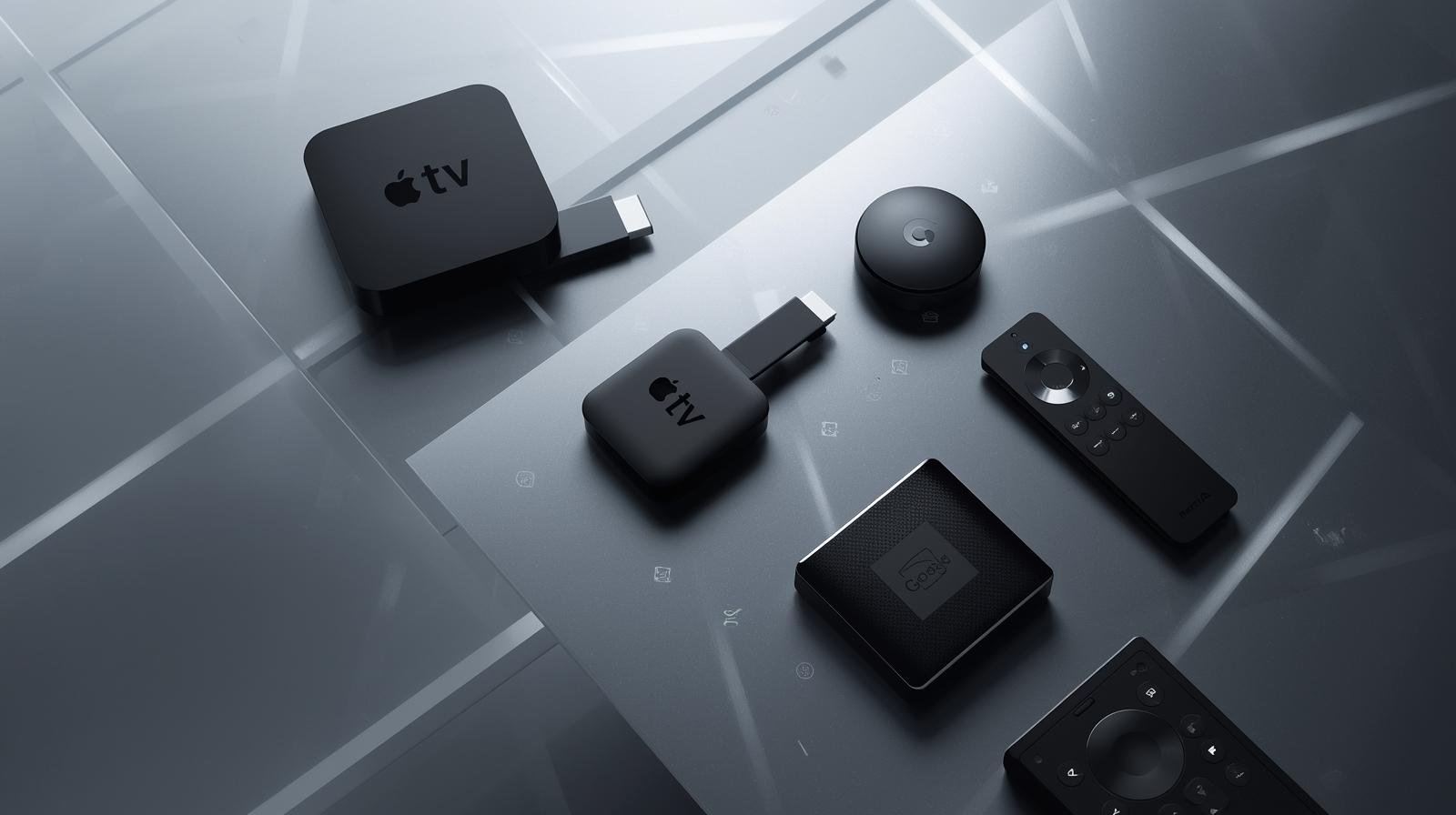
Apple’s Apple TV 4K remains the premium streamer for users who favour polished system integration, consistent updates, and best-in-class HDR/Audio implementation.  Hardware and tvOS deliver excellent Dolby Vision and Atmos support, strong app performance, and deep integration if you’re invested in the Apple ecosystem (iCloud, AirPlay, HomeKit). Apple’s product pages emphasise 4K 60-fps HDR output, eARC support and a focus on crisp AV performance.

Pros

  • Polished UI and reliable app behaviour.
  • Strong HDR/DRM handling for premium VOD and IPTV providers.
  • Great audio features and spatial audio on compatible setups.

Cons

  • Price is higher than sticks.
  • AV1 support can vary by generation/firmware; confirm before purchasing if AV1 is crucial.

Best for: Apple-centric homes, cinephiles, and anyone wanting the smoothest, most consistent 4K/HDR/IPTV experience.

5. Google Chromecast with Google TV — clean UI and wide compatibility

Google’s Chromecast with Google TV (newer models) have matured into strong streamers with attractive UIs, Google search integration, and consistent OS updates. Newer Google TV streamers coming into 2024–25 include AV1 hardware decode on certain SKUs, making them competitive alternatives to Fire and Apple for efficient 4K streaming. They also offer tight Google Assistant integration and Chromecast casting convenience. UK IPTV Devices Compared.

Pros

  • Integrated Google search and watchlist.
  • Clean UI and reliable app support.
  • AV1 support on recent SKUs helps with bandwidth efficiency.

Cons

  • Hardware specs vary by SKU; check for AV1 & Wi-Fi 6.
  • Google’s update cadence is good, but some app behaviour differences exist across platforms.

Best for: Android/Google users who want strong discovery features and broad app compatibility.

6. Roku’s 2025 lineup and the UK launch — a new contender

Roku expanded into the UK market more aggressively in 2025, releasing refreshed streaming sticks with a focus on a neutral, user-friendly UI and lots of free FAST channels. Roku’s official press release confirms new Roku Streaming Stick availability in the UK in June 2025. Roku’s devices are strong on channel breadth, low cost, and a simple remote experience. 

Pros

  • Extremely user-friendly interface and excellent channel discovery.
  • Good price-to-performance (UK deals in 2025 made Roku more competitive).

Cons

  • Hardware features (AV1, Wi-Fi 6E) vary by model; check spec sheets.
  • App availability is good for mainstream apps but sometimes lags in niche app releases compared to Android/Fire.

Best for: UK buyers who want a straightforward, neutral UI with lots of free/FAST channels and good value.

7. NVIDIA Shield — the power user’s classic (still relevant in 2025)

For enthusiasts who run local media servers (Plex, Jellyfin), want advanced features and occasional gaming, NVIDIA Shield TV Pro has been the enthusiast favourite. As of 2025 the Shield remains noted for its local media capabilities and flexibility. Recent community discussion shows expectation for a refreshed Shield, but the existing Shield Pro continues to serve power users well. If AV1 hardware decode is a must for you, check current Shield firmware/spec notes as AV1 support status has been evolving. UK IPTV Devices Compared.

Pros

  • Excellent Plex/Jellyfin and local media performance.
  • Strong remote and ecosystem for tinkerers.
  • Robust hardware for transcoding tasks in home servers.

Cons

  • Older Shield generations may lack AV1 hardware decode (verify model).
  • Pricier than consumer sticks and may feel like overkill for casual streaming.

Best for: Media server enthusiasts, Plex users and people who want a highly configurable streamer.

8. Smart TVs vs external devices — when the TV is enough

Modern smart TVs from LG (webOS), Samsung (Tizen) and Sony (Google TV) include native apps for most IPTV services. For a living room TV bought in the last 2–3 years, the TV’s built-in app may be perfectly adequate. But there are reasons to pick an external device:

  • External devices get more frequent app updates and faster SoCs.
  • Sticks/boxes offer easier migration between TVs and better support for advanced codecs and audio passthrough.
  • If you value cutting-edge features (AV1, Wi-Fi 6E, or latest HDR), a separate streamer is often safer.

Rule of thumb: Use the TV’s native apps for convenience, but add a Fire/Apple/Chromecast stick for the best experience and future-proofing. UK IPTV Devices Compared.

9. Cheap sticks and budget picks that punch above their weight

Not everyone needs premium hardware. Budget sticks like the Fire TV Stick (non-Max) and lower-tier Roku sticks still deliver solid HD/4K experiences for most viewers, especially in secondary rooms. They may lack AV1 or Wi-Fi 6, but if you’re on a stable wired connection or 100+ Mbps fibre, they perform well for mainstream IPTV usage. Always check whether a cheap stick supports the particular IPTV app and required video DRM for 4K. 

Best cheap picks: Fire TV Stick 4K (standard), Roku Streaming Stick 4K (discounts often make these excellent buys).

10. AV1, HDR, Dolby Atmos and other tech you must care about in 2025

AV1: This codec gives better compression than H.264/H.265, reducing bandwidth for equivalent quality. Devices with hardware AV1 decode are preferable for 4K streaming on constrained connections. Amazon’s newer Fire TV models and many Google/Chromecast SKUs list AV1 support and the AV1 device matrix has been evolving.

HDR formats: Dolby Vision and HDR10+ deliver dynamic metadata and better picture on compatible TVs. Apple TV, many Fire TV devices, Roku, and modern TVs support Dolby Vision; confirm on the specific device page.

Audio: Dolby Atmos passthrough and eARC support matter if you use a soundbar or AVR. Apple TV and many premium devices provide mature Atmos handling.

Takeaway: Combine a device with AV1 and HDR/Atmos support, plus a TV that supports those HDR formats, to unlock the best IPTV picture and sound in 2025.

11. Network & router tips tied to device choice (Wi-Fi 6/6E, Ethernet, mesh)

Your device choice interacts with your home network:

  • If you pick a stick with Wi-Fi 6/6E, use a matching router to reduce congestion and latency. Fire TV Stick 4K Max and other new SKUs advertise Wi-Fi 6/6E.
  • Prefer Ethernet for the primary TV to ensure stable 4K streaming. Many sticks support USB-to-Ethernet adapters.
  • Mesh Wi-Fi: For large UK homes, a mesh with wired backhaul gives the best multi-room IPTV experience.
  • QoS on your router helps prioritise a main streaming device during match night.

These network steps—paired with a capable device—are the single most effective way to reduce buffering and improve stream stability. UK IPTV Devices Compared.

12. Device-specific configuration and performance tuning (practical how-tos)

Here are practical steps per device family to maximise IPTV performance.

Fire TV (stick/box)

  • Update Fire OS and apps.
  • Enable Ethernet via USB-C adapter if possible.
  • In settings, enable automatic 4K switching and HDR match where available.
  • Use developer settings sparingly for debugging.

Apple TV 4K

  • Turn on Match Frame Rate and Match Dynamic Range to avoid judder and HDR mismatches.
  • Use wired Ethernet for main TV.
  • Ensure tvOS is current.

Chromecast / Google TV

  • Keep Android TV/Google TV OS updated.
  • Use Google Home/Chromecast settings to prioritise the device on your network.
  • Confirm AV1 enabled on the specific SKU.

Roku

  • Keep apps updated via Roku OS.
  • Use the Roku remote/voice for quick content search if preferred.
  • Check explicit model support for HDR formats if 4K is needed.

NVIDIA Shield

  • Use Shield for Plex/Jellyfin server transcoding — check hardware decode options and set streaming profiles to leverage Shield’s capabilities.

13. Gaming consoles and other unexpected contenders

Consoles like PS5 and Xbox Series X/S are full-featured streamers with powerful CPUs, wide app support, and excellent HDR/4K output. If you already own a console, it’s often the easiest way to enjoy IPTV in the living room — though consoles consume more power and may not be ideal for bedrooms.

Smart Blu-ray players and some set-top boxes can also run IPTV apps; they’re niche but viable if you want fewer devices. UK IPTV Devices Compared.

14. Head-to-head comparisons & decision flowchart (which to buy)

Primary living-room — pick Apple TV 4K if:

  • You want the most polished interface, best HDR/Atmos pass-through and deep Apple ecosystem integration.

 value for most rooms — pick Fire TV Stick 4K Max if:

  • You want 4K HDR, AV1 support on newer SKUs, broad app support, and best-in-class price-to-performance.

 for Android/Google users — pick Chromecast with Google TV if:

  • You want Google’s discovery features and potential AV1 support on current models.

 for enthusiasts / local media servers — pick NVIDIA Shield if:

  • You need Plex/Jellyfin server performance, hardware transcoding, and advanced local media features.

 simple option — pick Roku if you want:

  • A neutral UI, lots of free channels, and easy setup (especially with recent UK availability).

15. Future-proofing: what to look for in 2026 and beyond

When buying, look for:

  • AV1 hardware decode — the single biggest future-proof feature for bandwidth efficiency.
  • Wi-Fi 6/6E support — helps in dense device households.
  • eARC support and Dolby Atmos passthrough — if you use a soundbar/AVR.
  • Regular firmware updates and a healthy app store ecosystem.
  • USB/Ethernet expansion options for wired reliability.

If you tick these boxes, the device will remain relevant for several years. UK IPTV Devices Compared.

16. Final recommendations for UK buyers (short & long lists)

  one solid pick for most people Buy this if you want :

  • Amazon Fire TV Stick 4K Max — best blend of price, app support, 4K/HDR and AV1 on newer SKUs.

the best overall experience buy this if you want:

  • Apple TV 4K (latest model) — premium UX, best HDR/Atmos handling and consistent updates.

if you are an enthusiast or run a local server buy this :

  • NVIDIA Shield TV Pro — powerful local media features and advanced options.

Budget/secondary-room options:

  • Roku Streaming Stick 4K, Chromecast with Google TV, or lower-tier Fire sticks depending on price and availability in the UK.

17. Appendix — Quick spec cheat-sheet & sources

Spec highlights (examples)

  • Fire TV Stick 4K Max: 4K HDR, Dolby Vision, Dolby Atmos, Wi-Fi 6/6E on newer SKUs, AV1 on newer SKUs.
  • Apple TV 4K: 4K 60fps HDR output, Dolby Vision, HDR10+, Dolby Atmos, eARC support, tvOS ecosystem.
  • Chromecast / Google TV: Google TV UI, AV1 on newer models, solid app support.
  • Roku Streaming Stick 4K: UK availability in 2025, solid 4K HDR and value.
  • NVIDIA Shield TV Pro: excellent for Plex/Jellyfin, still popular with enthusiasts; check AV1 status for your model.

Key sources (manufacturer pages & announcements)

  • Amazon Fire TV product pages and retailer listings.
  • Apple TV 4K technical specs and support pages.
  • Roku press release — UK device availability 2025.
  • AV1 device support list and reports.
  • NVIDIA community discussion and reviews on Shield in 2025.

18. FAQs

Q1 — Do I need AV1 support on my streamer right now?
A: If you plan to stream lots of 4K on constrained broadband, AV1 helps reduce data usage and maintain quality. It’s increasingly common in 2024–25 devices, so prefer a model with hardware AV1 if you want future-proofing.

Q2 — Will a cheap Fire Stick stream 4K IPTV reliably in the UK?
A: Yes for most users on decent fibre broadband. For the main living room and competitive live sports, prefer a model with AV1 and wired Ethernet where possible (or use a Fire TV Max with Ethernet adapter).

Q3 — Is Apple TV 4K worth the price premium?
A: If you care about polished UI, best HDR/Atmos handling, and long OS support, Apple TV is worth it. If you just want inexpensive 4K streaming, Fire TV or Chromecast can be better value.

Q4 — Is the NVIDIA Shield still a good buy in 2025?
A: For enthusiasts, yes — particularly for local media server usage. But check whether you need the Shield’s advanced features; for pure IPTV streaming a modern stick might be sufficient.

Q5 — Which device gives the best value for multi-room homes?
A: A mix: premium box (Apple TV or Shield) for the main living room and Fire TV/Chromecast/Roku sticks for bedrooms gives the best price-to-performance balance. Ensure your router/mesh network can handle multiple 4K streams. 

For more info….