
How to Choose the Best IPTV Service in the UK (2025 Edition)

Introduction

IPTV (Internet Protocol Television) keeps getting smarter, faster, and more tempting — offering huge channel line-ups, international content, and cheap alternatives to legacy pay-TV packages. But 2025 brings fresh legal attention, more aggressive anti-piracy enforcement, and new security risks (including malware masquerading as IPTV apps). Choosing the right IPTV provider in the UK now means balancing value, reliability, device support, and—critically—legal/safety considerations. This guide shows you exactly what to check, why it matters, and a practical buying checklist you can use right away.

1) Start with legality and safety — the non-negotiable step

Before anything else, ask: Is this service authorised to distribute the channels it offers? In the UK, streaming copyrighted live TV and premium sports requires rights. Unauthorized resellers or “resellers of resellers” are the common illegal models in IPTV piracy.

Why this matters:

  • Using an unauthorized service can expose you to sudden shutdowns, loss of subscription fees, data exposure, and (in extreme cases) legal notices — enforcement groups like FACT have actively pursued operators and service providers.

  • Illegal IPTV distributors often deliver compromised binaries or instruct you to sideload apps — a known vector for malware. In 2025 researchers discovered Android trojans posing as IPTV/VPN apps. Don’t risk your banking credentials or identity.

How to check:

  • Look for licensing statements on the provider’s site (which channels they’re licensed to show and in which regions).

  • Search for the provider’s corporate identity — companies with UK registration details (or a credible EU/UK license) and transparent contact/support channels are more trustworthy.

  • Avoid anonymous sellers on social media or marketplaces offering “all channels + sports” for tiny monthly fees — these are classic red flags.

  • Check enforcement reports (FACT, news articles) — if the provider name appears in takedown/crackdown stories, walk away.

(If you want, later in this guide I’ll show how to verify particular providers — but always do the legality check first.)

2) Decide what “best” means for you — content, devices, and quality

IPTV services vary dramatically in what they offer. Ask yourself:

  • Content priorities: live UK channels? Premier League/major sports? US channels? International/ethnic channels? VOD and catch-up?

  • Quality expectations: Do you need 4K streams and Dolby audio, or is 720p/1080p fine?

  • Device ecosystem: Do you use Fire TV Stick, Android TV, Smart TV (Samsung/LG), Apple TV, iPhone/iPad, or just a web browser?

  • Simultaneous streams: How many family members will watch at once?

  • Budget: Are you willing to pay official prices for trusted services, or are you looking for a very low-cost solution (which often correlates with higher risk)?

A good provider matches your content needs, gives usable apps for your devices, provides stable streams, and offers a trial or short-term plan so you can test it.

3) Technical checklist: performance, reliability, and infrastructure

Look for these technical features and claims — then verify them:

  • Uptime guarantees & status page: Providers who publish uptime stats or have a status page are more likely to manage their service professionally.

  • CDN and server redundancy: Good IPTV vendors use multiple Content Delivery Networks (CDNs) and server clusters to reduce buffering and blackouts during peak times.

  • Adaptive bitrate streaming: This allows quality to adjust to your connection, reducing buffering.

  • Supported streaming protocols & formats: HLS, DASH, MPEG-TS, and common codecs (H.264/H.265) — compatibility matters for older devices.

  • Low-latency or DVR features: If sports are important, check for low-latency options and whether they support pause/rewind (DVR).

  • Customer support & ticketing: Live chat, support ticket history, and active forums indicate a provider prepared to resolve issues quickly.

How to verify claims:

  • Run a free trial and test at different times (prime time and daytime). Test channel changes, stream startup time, and sustained bitrate.

  • Ask the support team for technical details (CDN locations, supported protocols); legit providers will answer.

4) Device compatibility & app quality

A provider may list device compatibility, but app quality often decides real-world usability.

Must-have device coverage:

  • Fire TV / Fire Stick (very popular in the UK)

  • Android TV / Nvidia Shield

  • iOS & Android mobile apps

  • Apple TV (tvOS) if you prefer Apple’s ecosystem

  • Smart TV apps (Samsung Tizen, LG webOS) — not all providers bother to build these

  • Smartphone casting / AirPlay / Chromecast support

  • Web player for desktop access

App quality checklist:

  • Regular updates in app stores (or frequent changelogs).

  • Clean UI, EPG (electronic programme guide) with channel grouping, and stable playback.

  • Avoid providers whose apps require complex sideloading steps or obscure installers — those are both a security and maintenance headache.

5) Pricing, trials, and refund policy

  • Free trial / money-back guarantee: Legitimate services commonly offer at least a short trial or a 24–48 hour refund window. Use it to test real-world performance.

  • Monthly vs yearly plans: Monthly plans give flexibility; yearly deals can save money but risk loss if the service folds.

  • Transparent pricing: Watch for “add-on” fees for HD/4K or additional connections. Legit providers list all charges clearly.

  • Payment methods: Credit card / PayPal / bank transfer are preferable to anonymous crypto-only payments — the latter can be a sign of dodgy operations.

6) Privacy & security — protect your account and data

Security features to expect:

  • HTTPS and authenticated accounts — passwords and payment data must be transmitted securely.

  • Two-factor authentication (2FA) for account logins, if available.

  • Clear privacy policy stating data handling practices.

Use a VPN cautiously and legally:

  • A VPN can help protect your privacy when using public Wi-Fi or prevent ISP throttling. But VPNs do not legalise access to content you’re not licensed to view, and using them to hide illegal streaming can still expose you to downstream enforcement. Choose a reputable VPN with strong privacy practices if you decide to use one. Reputable VPN reviews (2025) recommend established vendors for reliability and speed.

Security warnings:

  • Don’t sideload APKs from untrusted pages. Malware has been disguised as IPTV/VPN apps — only use official app stores or signed installers from reputable providers.

7) Content & channel verification — look beyond screenshots

Providers often use glossy screenshots and channel lists to attract sign-ups. Verify:

  • Random channel check: During a trial, sample channels from different categories (news, sports, kids, international) to ensure actual availability.

  • Regional rights: Some live sports / premium channels have territorial restrictions — a provider might show the channel name but not the live feed for your region.

  • VOD library authenticity: Check if on-demand content includes officially licensed catalogues or appears to be a patchwork of pirated uploads.

8) Support, community, and reputation

  • Active support — 24/7 chat or reasonable response times via ticketing are preferable.

  • Reputation on forums and review sites — take reviews with a grain of salt, but repeated reports of buffering, missing channels, or refund problems are red flags. Community hubs like specialist IPTV forums, Reddit threads, and independent review sites can be informative — look for corroborated patterns, not single complaints. (Remember: user reviews can be manipulated; weigh multiple sources.)

  • Transparency: providers that publish company info, server locations, terms and conditions, and acceptable use policies are generally more trustworthy.

For example, many comparison guides and roundups exist in 2025 listing top IPTV options—these can be a useful starting-place when combined with direct testing.

9) Red flags — walk away if you see these

  • Ultra-low prices for premium rights: If it sounds too good to be true (e.g., massive sports packages for £3–£5/month), it probably is.

  • No company details or anonymous owners.

  • Cryptocurrency-only payment, with zero recourse for refunds.

  • Apps not in official app stores and instructions to sideload APKs. (Malware risk is real.)

  • Lots of “reseller” language (reselling access to “main server” with multiple reseller panels) — this often hides an unlicensed back-end.

  • Repeated takedown or enforcement mentions in the news. If FACT or local police have targeted a service, best IPTV service UK it’s risky to subscribe.

10) Practical buying checklist — 10 steps to a safe choice

  1. Legality check: Confirm licensing statements or company registration and search regulator/news sites for enforcement mentions.

  2. Trial-first approach: Never buy a long subscription without a trial. Use the trial during peak evening hours to test performance.

  3. Device test: Install on your main device(s) and test EPG, channel switching, and VOD playback.

  4. Quality test: Check stream quality, best IPTV service UK startup time, and buffering over multiple days.

  5. Support test: Submit a support ticket or live chat question and note response time/quality.

  6. Payment safety: Prefer credit card/PayPal for buyer protection. Avoid crypto-only sellers.

  7. Privacy practices: Read the privacy policy; consider enabling 2FA. If using a VPN, best IPTV service UK pick a reputable one.

  8. Refund terms: Check refund windows and cancellation rules.

  9. Community feedback: Search forums and independent reviews; prioritize providers with consistent positive feedback.

  10. Exit strategy: If the service fails, document attempts to refund and cancel; keep screenshots of terms and communications.

11) Device-specific tips

  • Amazon Fire TV / Fire Stick: Many legitimate IPTV apps are available; sideloading is common but risky—prefer apps available in the Amazon store or from a reputable provider with signed APKs.

  • Smart TVs: If there’s no native app, web-based players and casting (Chromecast/AirPlay) can be good fallbacks.

  • Mobile devices: Use the app stores (Apple App Store or Google Play) when possible for malware protection.

  • Set-top boxes & Android boxes: Avoid “pre-loaded” boxes from unknown sellers; best IPTV service UK they often contain modified firmware and illegal apps.

12) Sports and big events — special considerations

Sports rights are split by territory and are expensive. Providers advertising live Premier League, NFL, or UFC at rock-bottom prices are frequently operating illegally. Using such services can mean abrupt loss of access mid-season and risk of enforcement action. Always prefer rights-holding broadcasters or well-known, licensed OTT services for major sports. Recent enforcement efforts have repeatedly targeted illegal sports streams and “dodgy” boxes.

13) Protecting yourself from malware & scams

  • Official sources only: Download apps from official stores; avoid APKs from random websites.

  • Use anti-malware: Keep Android/iOS and antivirus apps updated.

  • Check permissions: If an IPTV app requests unnecessary permissions (contacts, SMS, Accessibility), that’s suspicious.

  • Be skeptical about “customer reviews” on a provider’s own site — independent verification is more trustworthy. Tech outlets in 2025 have highlighted new malware campaigns that disguise themselves as IPTV or VPN apps, so treat all third-party installers with caution.

14) VPNs — pros, cons, and recommended use

Pros:

  • Helps protect privacy on open Wi-Fi.

  • Can reduce ISP throttling in some cases.

Cons:

  • Does not legalise illegal streams. Using a VPN to hide piracy is not a legal solution.

  • Adds latency and sometimes reduces streaming quality if the VPN server is overloaded.

If you use a VPN, choose a reputable, fast provider with streaming-friendly servers. Reviews and roundups in 2025 list several strong VPNs for streaming reliability and speed. Always read the VPN provider’s terms — some explicitly prohibit illegal streaming.

15) Where to start — recommended approach in 2025

  1. Decide content and devices you need.

  2. Shortlist 3 providers that appear licensed/transparent and offer trials. Use independent comparison sites to narrow choices — but rely on hands-on trials for the final call.

  3. Run a 48–72 hour trial during peak hours; best IPTV service UK test multiple devices.

  4. Monitor support responsiveness and check the refund policy if problems arise.

  5. Keep evidence (screenshots of terms and advertising) until your first real month is over — helpful if disputes arise.

16) Common buyer mistakes (and how to avoid them)

  • Buying a year upfront before testing quality — use monthly plans first.

  • Assuming all IPTV equals “cable replacement” — channel line-ups differ; verify key channels.

  • Trusting anonymous social posts or “influencer” shoutouts without background checks.

  • Sideloading everything without thinking about security — that’s how users get malware.

17) Final words — balancing value, quality and safety in 2025

IPTV offers fantastic value and flexibility — when you pick a reputable provider. In 2025 the environment is a mixed bag: many legitimate, licensed OTT/IPTV offerings coexist with a persistent illegal market and increasing enforcement. Prioritize legality, security, and device compatibility before chasing the cheapest price. Use trials to test real-world performance, avoid sideloaded or anonymous apps, best IPTV service UK and treat VPNs as privacy tools — not legal shields.

If you want, I can:

  • produce a one-page checklist you can print before subscribing; or

  • evaluate a specific IPTV provider (if you give me a name) against the legality, technical, best IPTV service UK and security criteria above and summarize red flags and trust signals.

Sources & further reading (selected)

  • UK Government consultation on advertising restrictions for IPTV / Ofcom regulation background.

  • Federation Against Copyright Theft (FACT) enforcement and recent crackdowns on illegal IPTV operators.

  • TechRadar reporting on Android malware disguised as IPTV/VPN apps (2025).

  • 2025 IPTV provider roundups and comparison guides (TROYPOINT, FirestickTricks). Helpful starting points to build a shortlist — test providers directly via trials.

  • VPN guides and recommendations for streaming (2025).
IPTV Free Trial 

The Ultimate Guide to IPTV in the UK: Everything You Need to Know

Introduction

Internet Protocol Television (IPTV) has transformed how people watch TV — delivering live channels, catch-up content, and on-demand libraries over the internet rather than through satellite or traditional cable. In the UK, IPTV options range from fully legal services offered by mainstream broadcasters to third-party bundles that blur the line between convenience and copyright risk. This guide covers everything a UK viewer needs to know: what IPTV is, how it works, device and connection requirements, legal and safety considerations, how to choose a provider, setup and troubleshooting tips, and best practices for getting the most from your streaming experience.

1. What is IPTV?

IPTV stands for Internet Protocol Television. Instead of broadcasting TV signals via radio waves, satellite, or cable, IPTV delivers TV content using internet protocols — essentially sending video as data packets across your broadband connection. IPTV services can provide:

  • Live TV — real-time channels (news, sport, entertainment).

  • Catch-up TV — programs available after broadcast for a limited period.

  • Video on Demand (VoD) — movies and TV boxsets you can choose and play at will.

  • Time-shifted TV — options like start-over or pause-live TV.

Technically IPTV systems often use formats like HLS (HTTP Live Streaming), MPEG-DASH or RTMP for delivery, and may use playlists (M3U) or dedicated apps to organize channels and content.

2. Why people choose IPTV

IPTV is attractive for several reasons:

  • Flexibility: Watch on many devices — Smart TVs, set-top boxes, phones, tablets, and laptops.

  • Cost: Some IPTV packages are competitively priced versus traditional pay-TV.

  • Variety: Easy access to international channels and niche content.

  • Features: Cloud DVR, multi-device streaming, and integrated on-demand libraries.

  • Portability: Watch from anywhere with an internet connection (subject to license/geo-restrictions).

However, the convenience comes with trade-offs: variable stream quality, potential legal issues with some third-party services, and the importance of protecting your privacy and device security.

3. Legal landscape in the UK — what you must know

Understanding legality is essential before subscribing or using IPTV services in the UK.

  • Legal IPTV services: Many major broadcasters and platforms deliver IPTV legally. Examples include BBC iPlayer, ITVX, All 4, Sky Go, NOW, Netflix, Amazon Prime Video, Freeview Play, and services offered by ISPs or licensed providers. These services have rights to the content they show.

  • Illegal IPTV: Some third-party IPTV services sell access to hundreds or thousands of premium channels at very low prices. These services often redistribute copyrighted streams without permission and are illegal. Using, selling or facilitating access to such streams can expose you to legal risk.

  • Consumer risk: Subscribing to illegal IPTV can lead to cancelled subscriptions, malware, insecure apps, poor reliability, or legal notices in some cases. Sellers of illegal IPTV are increasingly targeted by enforcement actions.

  • How to play safe:

    • Prefer established, licensed providers.

    • Avoid services promising unrealistic channel lineups or extremely low prices for premium content.

    • Use official apps (App Store, Google Play, manufacturers’ app stores) where possible.

This guide will focus on legitimate use and safe practices, though it will briefly explain how to distinguish dubious services later on.

4. What you need to run IPTV

Internet connection

Quality of experience depends heavily on your broadband:

  • Minimum recommended:

    • SD streams: 3–5 Mbps per stream.

    • HD streams: 5–10 Mbps per stream.

    • 4K/UHD: 25 Mbps or more per stream.

  • Upload vs download: IPTV is download-heavy; aim for a stable download speed with low latency.

  • Wired Ethernet vs Wi-Fi: Wired Ethernet gives better reliability. If using Wi-Fi, ensure a strong router and ideally use 5 GHz band for less interference.

Device options

You can run IPTV on many devices:

  • Smart TVs: Most Samsung (Tizen), LG (webOS), and Android TV models support streaming apps.

  • Set-top boxes & dongles: Apple TV, Amazon Fire TV Stick, Android TV boxes, Roku (limited app availability).

  • Computers & laptops: Use browser players or dedicated apps.

  • Mobile devices & tablets: Official apps or third-party players.

  • Dedicated IPTV boxes: Some sellers offer Linux/Android-based IPTV boxes tuned for playlists and set-top functionality — quality varies.

Apps & players

Common clients and features:

  • Official apps: BBC iPlayer, ITVX, All 4, Sky Go, NOW, Netflix, etc.

  • IPTV apps: IPTV Smarters, TiviMate, Kodi (with legal addons), VLC and native M3U playlist players.

  • TV guide (EPG): Electronic Program Guide integration is handy for browsing channels and scheduling recordings.

5. Choosing an IPTV provider — criteria & checklist

When evaluating a provider, consider:

  1. Legitimacy: Are they licensed? Do they advertise access to channels that are normally paid-for at unrealistic prices?

  2. Content lineup: Does it include the channels and catch-up services you actually want?

  3. Quality & reliability: Look for stable HD streams, low buffering, and good uptime.

  4. Device support: Do they offer apps for your devices (Smart TV, Fire TV, Android/iOS)?

  5. Simultaneous streams: How many devices can watch at once under one account?

  6. DVR & catch-up: Cloud recording and on-demand libraries are useful.

  7. Customer support: Does the provider offer clear support channels and refunds?

  8. Pricing & contract: Transparent pricing and no hidden fees.

  9. Reviews & reputation: Check independent reviews, forum discussions, and complaints.

Tip: If a deal looks too good to be true (e.g., access to premium sports and movie channels for a few pounds), it probably is.

6. Setting up IPTV responsibly (legal use)

Here’s a practical, legal approach to get started:

  1. Choose licensed services first. For UK TV, consider Freeview Play (free), BBC iPlayer, ITVX, All 4, My5, and subscription services like Sky, NOW, Netflix, Amazon Prime Video or BT Sport (now TNT Sports).

  2. Install apps from official stores. Use your device’s official app store to reduce malware risk and ensure updates.

  3. Sign up and authenticate. Many apps require verification with a TV subscription or broadcaster account — follow legal sign-in routes.

  4. Add legal IPTV playlists only when provided. Some content providers offer playlists or apps for legitimate streaming. Use those.

  5. Use a good router and prioritize traffic. QoS or prioritization can help maintain smooth playback when other devices are active.

  6. Consider wired Ethernet for main viewing device.

  7. Enable parental controls. Most apps and devices have PINs and restrictions.

7. How to spot and avoid illegal IPTV

Red flags for illegal IPTV:

  • Too cheap for premium content: Extremely low monthly fees for hundreds of premium channels.

  • Anonymous sellers: No clear company details, no licensing info.

  • Constant domain or payment changes: Sellers shifting sites and payment methods to avoid enforcement.

  • Unsecured or sideloaded apps: Apps not available on official stores, and requesting excessive permissions.

  • No contracts or guarantees: Cash/crypto payment and no formal T&Cs.

  • No EPG or poor-quality streams.

If you suspect illegality, IPTV in the UK walk away. Using illegal services can expose you to malware, poor quality, and sometimes legal notices.

8. Privacy and security best practices

Even when using legal IPTV, protect your privacy and devices:

  • Keep software updated. Device OS and apps should be up-to-date to patch vulnerabilities.

  • Avoid third-party app stores. Install apps only from official sources.

  • Use strong passwords and unique account emails.

  • Guest Wi-Fi network: Keep streaming devices separate from sensitive work devices.

  • VPNs — pros and cons: A VPN can increase privacy, but may violate a service’s terms of use or affect streaming performance. Use a reputable VPN if privacy is a priority and the service permits it.

  • Be cautious with remote access ports: Don’t open router ports unless you know what you’re doing.

9. Common setup scenarios (quick guides)

Smart TV (Android TV / Samsung / LG)

  1. Open the TV’s app store.

  2. Search and install the broadcaster’s official apps (BBC iPlayer, ITVX, etc.) or a supported IPTV client.

  3. Sign in with your account credentials.

  4. Connect Ethernet for reliability or ensure a strong Wi-Fi signal.

Amazon Fire TV Stick

  1. From the home screen, go to Search → type the app name.

  2. Install the app (e.g., BBC iPlayer).

  3. Sign in.

  4. For third-party apps not in the store, be cautious — sideloading increases risk.

Android TV box / Android phone / tablet

  1. Use Google Play to install official apps or a trusted IPTV player like TiviMate.

  2. For M3U playlists from legitimate providers, load within the app following the provider’s instructions.

Laptop / PC

  1. Use a modern browser for web-based services IPTV in the UK or install desktop apps when available.

  2. Consider using a wired connection for HD viewing.

10. Troubleshooting — common problems & fixes

Buffering / stuttering

  • Check internet speed at the time of playback.

  • Switch to wired Ethernet.

  • Reduce concurrent streams on the network.

  • Lower video quality if necessary.

App won’t open / crashes

  • Update the app and device OS.

  • Reinstall the app.

  • Clear app cache/data (device settings).

No sound or wrong audio

  • Check TV audio settings and app audio options.

  • Ensure the correct audio output (TV speakers vs soundbar).

  • Try another channel to rule out a stream-specific issue.

Geoblocking / regional errors

  • Some content is restricted by rights holders. Legitimate services enforce geo-restrictions; a VPN may sometimes bypass them but could violate terms.

EPG guide missing or out of sync

  • Check the provider’s EPG settings in the app.

  • Ensure device time/date settings are correct.

  • Contact provider support if the EPG feed is the issue.

11. Advanced features to look for

  • Cloud DVR: Record programs to cloud storage for later viewing.

  • Multi-room streaming: Simultaneous streams across rooms/devices.

  • Profiles and parental controls: Keep adult channels separate and manage viewing for kids.

  • Catch-up and integrated VoD: One interface for live and on-demand content.

  • Multi-language audio / subtitles: Useful in multilingual households.

  • Chromecast / AirPlay support: Easy casting from mobile devices to TV.

12. Costs and value considerations

When comparing options, weigh:

  • Monthly subscription vs annual billing (often cheaper yearly).

  • Bundles with broadband or phone services (ISPs often include TV deals).

  • Pay-per-view sports and premium movie channels (add-ons can add up).

  • Free ad-supported services (FASTs) like Freeview Play, Pluto TV, and others that can complement paid subscriptions.

Budget-conscious viewers often combine a baseline of free apps (iPlayer, ITVX) with one or two paid streaming subscriptions for a balanced cost-to-content mix.

13. The future of IPTV in the UK

The UK market is evolving — broadcasters are consolidating streaming apps and rights are shifting. Expect the following trends:

  • More consolidation: Broadcasters bundling content into unified platforms.

  • Better personalization: Improved recommendations and profile features.

  • Higher-resolution streams: Wider 4K availability as bandwidth grows.

  • Cloud DVR & multi-device ecosystems: More seamless cross-device viewing.

  • Regulatory clarity: Ongoing enforcement against illegal IPTV will reduce low-quality pirate services.

For consumers, this means better legal experiences but also ongoing vigilance about privacy and which services carry the content you want.

14. Quick checklist — before you subscribe

  • Confirm the provider is licensed and reputable.

  • Verify device compatibility.

  • Check the number of simultaneous streams you need.

  • Test the free trial (if offered) to assess quality.

  • Read cancellation policy and refund terms.

  • Ensure the service supports the main shows or channels you care about.

  • Confirm whether the service requires additional hardware (e.g., set-top box).

15. Final recommendations

  • Start with legally available options: Freeview Play, BBC iPlayer, ITVX, All 4, My5, and mainstream subscription services.

  • Use official apps from trusted stores.

  • Avoid “too cheap” IPTV services that promise premium channels at tiny prices.

  • Prioritize a stable broadband connection and wired networking where possible for the best experience.

  • Protect your privacy and devices with reasonable security measures (updates, strong passwords, reputable VPN if needed).

  • Keep an eye on the changing OTT landscape — providers frequently update offerings, bundles, and pricing.

Conclusion

IPTV offers flexibility, convenience, and a rich variety of content for UK viewers — from free catch-up apps to pay subscriptions and integrated VoD libraries. The key is to choose legitimate services, match options to your device and budget, and follow sensible security and privacy practices. Avoid illegal IPTV services and side-loaded apps that promise unrealistic channel lineups; they bring legal and security risks. With the right choices and a solid internet connection, IPTV in the UK can deliver a modern, streamlined TV experience that fits the way people watch today.

Best Devices for IPTV in the UK: Fire Stick, Roku, and Smart TVs

Introduction:

If you’re reading this, chances are you’re already using or thinking about using IPTV (Internet Protocol Television) in the UK — maybe for live channels, catch-up shows, international content, or simply cutting down on expensive cable/satellite bills. Top UK IPTV Devices. But one key question often comes up: Which device will give me the best experience?

It’s no longer just about “a box” under the TV. Today’s best IPTV experience depends on the device you choose, how it connects to your network, what apps it supports, how future-proof it is, and how well it handles what you watch in your household. In this article I’ll walk you through the top device categories — streaming sticks, streaming boxes, smart TVs — test them against UK use-cases, and help you pick the right one for your living room, spare room or bedroom.

What Makes a Great IPTV Device?

Key specs to look for: HDMI, codec support, Wi-Fi version

When choosing a device for IPTV, here are the technical details you should check:

  • HDMI output: Ensure the device supports HDMI 2.0+ if you plan 4K/HDR playback.
  • Codec support: H.265/HEVC is standard now; AV1 (emerging) is a bonus for future streams.
  • Wi-Fi version: Wi-Fi 5 (802.11ac) is baseline; Wi-Fi 6 (802.11ax) offers better multi-device performance — key in UK homes sharing internet with multiple users.
  • Processor & memory: A quicker interface and smoother navigation matter more than raw specs for everyday use.
  • Remote and OS support: A responsive OS and a good remote (voice, shortcuts) improve the experience.

Platform & App support: UK streaming ecosystem

In the UK you’ll want a device that supports: BBC iPlayer, ITVX, All 4, My5, Netflix, Amazon Prime Video, Disney+, and ideally other niche apps. Some devices may lag in updates or have limited app libraries. Also check whether they support live IPTV services or overlay apps. For example, Amazon press notes show the UK Fire TV Stick includes voice remote and wide app compatibility.

Device Category 1: Streaming Sticks

Amazon Fire TV Stick 4K (and variants)

The Fire TV Stick line from Amazon is widely used in the UK and offers very strong value for IPTV users. For instance, Amazon’s UK press centre mentions the “most affordable 4K streaming device” with Wi-Fi 6 support and smoother performance. Some key features: 4K HDR playback, voice-remote with Alexa, wide app ecosystem, easy setup (plug into HDMI, connect Wi-Fi).

Pros:

  • Relatively low cost compared to full set-top boxes.
  • Wide app support including UK catch-up services.
  • Voice remote and integrated smart-home features (if you use Alexa).
  • Good for living rooms and secondary rooms alike.

Cons:

  • Some models may be outdated — e.g., first-gen versions may lose app support.
  • Slight bias toward Amazon’s ecosystem (though you can still install other apps).
  • For very high-end home cinema (Dolby Atmos, highest HDR formats) you may want a more premium box.

Setup tip: Plug the stick into an HDMI port with good clearance (some TVs have cramped rear ports), connect to your Wi-Fi (preferably 5GHz band), sign in to your Amazon account, install or update apps (BBC iPlayer, ITVX etc), and test streaming quality. Setup can be done in minutes.

Device Category 2: Dedicated Streaming Boxes

Roku Streaming Stick Plus

While Roku is less ubiquitous in the UK than Amazon, the Roku Streaming Stick Plus (2025 version) is worth considering. A UK review notes it delivers 4K HDR, supports all major UK streaming services, and offers a clean, simple interface.

Pros:

  • Excellent simplicity and ease of navigation — ideal if you don’t want to mess with settings.
  • Broad app coverage (Netflix, Prime, Disney+, BBC iPlayer, ITVX).
  • Compact form factor, easy to move between rooms or TVs

Cons:

  • Some reviews cite issues with customer support and UK-specific app updates.
  • Slightly fewer advanced features than premium boxes (e.g., Dolby Atmos or advanced codecs may be limited).
  • Stock availability may vary in the UK.

Who it’s good for: Families wanting a simple streaming device in a bedroom or secondary TV, users who prefer minimal interface clutter and straightforward operation. Top UK IPTV Devices.

Device Category 3: Smart TVs with Built-in IPTV Support

If you’re buying a new TV anyway, choosing a Smart TV with strong streaming/app support can be the most seamless option — no extra stick or box required.

What to look for in Smart TV hardware for streaming

Key features:

  • Latest Smart TV OS (Tizen for Samsung, webOS for LG, Android TV/Google TV for other brands).
  • HDMI-CEC support and multiple HDMI ports (for future expansion).
  • Good remote (voice, dedicated streaming app buttons).
  • Adequate refresh rate, HDR support and codec support if you stream 4K/HDR content.
  • Built-in Wi-Fi (preferably Wi-Fi 5 or 6) and/or Ethernet port for stable connection.

Brands and models popular in the UK for IPTV use

Amazon’s UK press details mention new Fire TV styled TVs (2-Series, 4-Series). Samsung, LG and Sony also offer smart-TVs with built-in app stores and frequently push streaming updates. Top UK IPTV Devices.
Smart TVs are especially good if you want minimal hardware in your living room setup. The downside: if the TV’s OS becomes old or unsupported, you may end up with fewer updates than a standalone box.

Comparison: Fire Stick vs Roku vs Smart TV

Performance and usability comparison

Device TypeStrengthsTrade-offs
Fire TV StickStrong app ecosystem, voice remote, frequent updatesRequires HDMI port and some setup
Roku Streaming StickSimplicity, broad app support, easy to share across roomsSlightly less advanced features in some models
Smart TV built-inAll-in-one solution, no extra device requiredTV age may limit future app updates; higher initial cost

Cost comparison and hidden costs

  • A Fire TV Stick may cost £35–£50 in the UK.
  • A Roku Stick may cost around £30–£40 for HD models (or more for 4K versions).
  • Smart TVs can cost hundreds of pounds more initially, though they replace the TV itself.

Hidden costs: consider whether extra HDMI ports, remote replacements, or network upgrades will be needed.

Multi-Room and Household Use: What to Buy for Each Room

In a family household you might want different devices for different rooms:

  • Living Room (main TV): Use the Fire TV Stick 4K or a Smart TV if you’re buying new.
  • Kids’ Room: A cheaper stick (Fire TV Stick Lite or Roku HD) works fine; add parental controls.
  • Guest Room or Bedroom: Consider a compact streaming stick with fewer features, just enough for catch-up and light streaming.
  • Portable/Travel Use: A stick is easy to unplug and take to a second home or holiday.

Ensure your setup supports multiple concurrent streams, and check whether your subscriptions allow multiple devices simultaneously.

Network Considerations: Wi-Fi, Ethernet & Performance

Good devices need good network conditions. Here are key network tips for UK households:

  • Use the 5GHz Wi-Fi band rather than 2.4GHz if possible (better speed, less interference).
  • If your TV or streaming device is near the router: consider Ethernet cable for best stability.
  • If you share the broadband with other heavy users in the house (students, gamers, multiple TVs): aim for at least 100 Mbps broadband to handle multiple streams.
  • If using a Smart TV in an older home with weak Wi-Fi: consider a mesh Wi-Fi system or a Wi-Fi extender.

Device Longevity & Future-Proofing

Codec support (H.265/HEVC, AV1) and future streaming formats

Streaming services increasingly use efficient codecs like HEVC or AV1 to reduce bandwidth for 4K/HDR content. Devices that support these will last longer. Top UK IPTV Devices.
For example, Amazon’s recent Fire TV Stick 4K Max supports Wi-Fi 6E and faster processors, making it more future-ready.
When buying, ask: will this device support the next generation of streaming formats? Will it receive firmware updates for 3–4 years?

Practical Buying Tips in the UK

Where to buy, what deals to look for

  • Amazon UK often has deals on Fire TV devices (especially around Prime Day, Black Friday).
  • Major UK retailers (Currys, Argos, John Lewis) stock streaming sticks and smart TVs.
  • Look for bundle deals: some ISPs may include streaming sticks or smart TV credits when you sign up for full-fibre.
  • Warranty & updates: ensure the device has at least a one-year warranty and check whether the manufacturer frequently updates its software.

Check stock and firmware status

For instance, Reddit users have noted stock shortages for some Roku models in the UK.
Before buying, search for the generation of the device, read recent reviews (especially UK-specific app support), and ensure the device meets your uses (4K, HDMI port, voice remote, etc). Top UK IPTV Devices.

Troubleshooting Common Issues

  • Buffering or poor quality: Check your Wi-Fi or Ethernet connection, ensure other heavy devices aren’t hogging bandwidth, and try lowering stream quality.
  • Apps missing or not working: Ensure your device is within support window; older devices may stop receiving updates (example: older Fire Stick models losing Netflix support).
  • Remote issues or slow navigation: Clear cache/apps if possible, or upgrade to a newer model if your device is lagging.
  • HDMI port limitations: Older TVs may only have HDMI 1.4 or limited ports; ensure the stick/box is connected to an HDMI port capable of 4K if needed.

Accessibility, Profiles & Family Use

  • Most modern devices support multiple user profiles (Netflix, Disney+) so each family member can have their own settings.
  • Check device accessibility features: subtitles, audio description, voice remote/microphone navigation. Fire TV remote with voice (Alexa) offers easy control.
  • For children’s rooms: use parental controls either via the streaming service or via the TV/device settings (time limits, age filters).

Conclusion: Make the Device Work for Your Viewing Habits

There’s no one-size-fits-all best device for IPTV in the UK — it depends on your room, budget, streaming habits, and whether you’re upgrading a TV or just buying a stick. Top UK IPTV Devices. But here’s a practical takeaway:

  • If you watch serious streaming (4K/HDR, family profiles, multiple rooms), aim for a Fire TV Stick 4K or better.
  • If you value simplicity and reliable app support, consider the Roku Streaming Stick Plus.
  • If you’re buying a new TV anyway and want the cleanest solution, go for a Smart TV with strong app support.

Pair your device with a stable broadband connection, the streaming services you use most, and buy a stick or box that’s current (not a legacy model). That way, your IPTV setup will serve you well for years — and you’ll avoid paying for boxes or devices that become obsolete.

Happy streaming!

FAQs

  1. Can I use any streaming stick for UK-based IPTV services?
    Yes — but you should check if the stick supports the apps you use (BBC iPlayer, ITVX, All 4) and if the UK app store is fully supported by the manufacturer.
  2. Is it worth upgrading to a smart TV instead of buying a streaming stick?
    If your TV is older and you’re planning an upgrade anyway, a smart TV may simplify your setup. But if your current TV works fine and you just need better app/access, a streaming stick is much more cost-effective.
  3. Will my streaming device need to be replaced soon?
    If it supports current codecs (H.265/HEVC) and receives firmware updates, it should last 3-5 years. Avoid buying very old sticks — some have already lost app support.
  4. Do I need Ethernet for best performance?
    Not necessarily — Wi-Fi 5 or better is fine for many. But for stability in multi-device families or for 4K streaming with heavy usage, a wired connection is ideal.
  5. How many devices can I stream simultaneously with these sticks/boxes?
    It depends on your streaming service’s plan (Netflix, Disney+, Prime) and your broadband capacity. Many devices can support multiple concurrent streams if your network and subscription plan allow it.                                                                                                                                                                                                                                                IPTV FREE TRIAL

What Is IPTV? The Complete Guide for UK Viewers

Television in the UK has undergone seismic changes over the past two decades. Understanding IPTV in UK.  From analogue broadcasts to Freeview, from Sky dishes on rooftops to on-demand streaming giants like Netflix, the way we watch TV continues to evolve. Now, we’re in the age of IPTV (Internet Protocol Television) — a new way of consuming television that combines the best of live TV, on-demand streaming, and multi-device access.

If you’ve heard the term but aren’t sure what it really means, or if you’re wondering whether it’s the right choice for your household, this complete guide to IPTV for UK viewers will walk you through everything.

1. What Is IPTV?

The Basic Definition

IPTV (Internet Protocol Television) is a system where television content is delivered over the internet, rather than through traditional satellite, cable, or terrestrial signals.

Instead of tuning into channels via a dish or aerial, IPTV uses your broadband connection to stream TV programmes, movies, and live events directly to your device.

Key Features of IPTV:

  • Live TV: Watch channels in real time, just like with Sky or Freeview.
  • Catch-up and On-demand: Watch programmes after they air.
  • Multi-device access: Works on smart TVs, Fire Sticks, laptops, tablets, and even smartphones.
  • Global reach: Access channels and libraries beyond the UK.

In short: if you’ve ever used BBC iPlayer, ITVX, Netflix, or NOW, you’ve already used a form of IPTV.

2. How Does IPTV Work?

At its core, IPTV works by converting TV signals into internet data packets. Understanding IPTV in UK. These packets travel through your broadband and are decoded by your device (TV, set-top box, or app).

Step-by-step:

  1. You launch an IPTV app.
  2. The app connects to the provider’s servers.
  3. The server streams video via your internet connection.
  4. Your device decodes and plays the video in real time.

Three Main IPTV Delivery Models:

  1. Live IPTV – Streaming live channels (e.g., BBC One live).
  2. Time-shifted IPTV – Catch-up TV or the ability to rewind/record shows.
  3. Video on Demand (VOD) – A library of films or series you can watch anytime (e.g., Netflix).

3. Types of IPTV Services in the UK

Free IPTV (Legal & Ad-supported)

  • BBC iPlayer, ITVX, All 4, My5 – free catch-up apps.
  • Pluto TV, Samsung TV Plus, Rakuten TV – FAST (Free Ad-Supported Streaming TV) channels.

Subscription IPTV (Legal & Paid)

  • NOW (Sky’s app) – Sky Sports, Sky Cinema, and entertainment packages without contracts.
  • Discovery+ – sports, documentaries, and Eurosport coverage.
  • BT TV & Virgin Stream – IPTV-based bundles.
  • Amazon Prime Video & Disney+ – technically VOD but part of the  IPTV ecosystem.

Grey Market / Illegal IPTV

  • Unlicensed providers selling “all channels” packages at £10/month.
  • Often includes Sky Sports, Premier League, and PPVs without legal rights.
  • Risk of malware, scams, and prosecution.

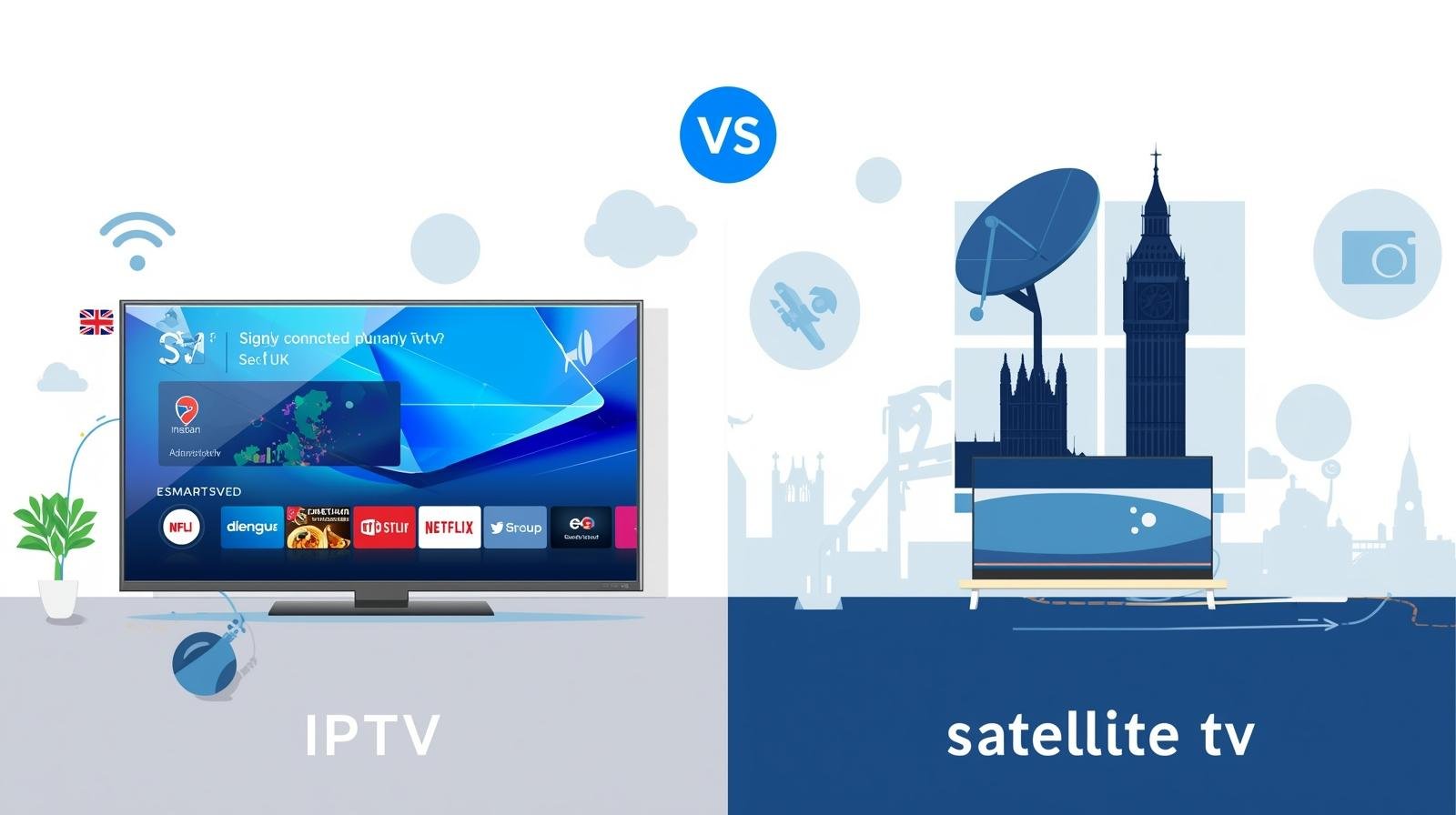
4. IPTV vs. Sky, Virgin Media & Freeview

📡 Sky & Virgin Media

  • Require a dish or cable.
  • Expensive (£70–£120/month).
  • Long contracts.
  • Excellent sports coverage but limited flexibility.

📺 Freeview

  • Free but limited (70+ channels).
  • No premium sports or movies.
  • Requires aerial.

🌐 IPTV

  • Affordable (£10–£40/month).
  • Cancel anytime (no contracts).
  • Works anywhere with internet.
  • Combines live TV + catch-up + VOD.

Verdict: IPTV wins on affordability and flexibility, but premium sports are still a key reason some stick with Sky/Virgin. Understanding IPTV in UK.

5. Legal vs. Illegal IPTV in the UK

This is one of the most important distinctions UK viewers need to understand.

Legal IPTV

  • Provided by licensed broadcasters (BBC, ITV, Sky via NOW, BT Sport via Discovery+).
  • Comes with consumer protections.
  • Stable, high-quality streaming.

Illegal IPTV

  • Services selling “all channels” for a few pounds.
  • No broadcasting rights.
  • Frequently shut down by UK authorities.
  • Risks: fines, data theft, or sudden service loss.

👉 Tip: If it seems too cheap to be true, it probably is.

6. Devices & Apps for IPTV

You don’t need fancy equipment. Just a good broadband connection and a device:

Devices:

  1. Amazon Fire Stick 4K Max – cheap, portable, and Alexa-enabled.
  2. Apple TV 4K – premium option with superb performance.
  3. Nvidia Shield TV Pro – best for advanced users and gamers.
  4. Smart TVs (Samsung, LG, Sony) – many IPTV apps preinstalled.
  5. Android TV Boxes – flexible and powerful.

Apps:

  • Official UK apps: BBC iPlayer, ITVX, All4, NOW.
  • Sports apps: Discovery+ (TNT Sports, Eurosport).
  • Third-party players: TiviMate, IPTV Smarters Pro (for licensed IPTV subscriptions).

7. Cost of IPTV in the UK

The cost varies widely depending on the provider.

  • Free options: BBC iPlayer, ITVX, Pluto TV.
  • Low-cost subscriptions: NOW Entertainment Pass (£9.99/month), Discovery+ (£6.99/month).
  • Premium bundles: Netflix (£10.99+), Disney+ (£7.99), Prime Video (£8.99).

On average, a family can replace a £100+ Sky/Virgin bill with a mix of IPTV services for £30–£40/month.

8. Parental Controls & Kid-Friendly IPTV

One concern for families is safety. Thankfully, IPTV offers robust controls:

  • BBC iPlayer & ITVX – parental lock PINs.
  • Netflix & Disney+ – kids’ profiles with age restrictions.
  • NOW TV – parental PIN for live and on-demand.
  • TiviMate/IPTV Smarters – allow parents to restrict certain channels.

This makes IPTV safer than traditional TV, where kids could stumble across inappropriate channels.

9. The Future of IPTV in the UK

By 2030, IPTV will likely become the default way Britons watch television.

Trends:

  • FAST Channels (Free Ad-Supported TV) growing rapidly.
  • AI recommendations making TV more personalised.
  • 5G + fibre broadband ensuring 4K/8K streaming without buffering.
  • Interactive sports (choose your camera angle, see live stats).
  • Decline of satellite dishes — Sky already pivoting to Sky Glass (internet TV).

The UK is moving towards a fully IP-based television ecosystem.

10. Is IPTV Right for You?

Ask yourself:

  • Do you want to cut expensive contracts?
  • Do you want TV on multiple devices, even when travelling?
  • Do you want more control over what you pay for?

If the answer is yes, IPTV is the smart choice — provided you stick with legal, licensed providers.

Conclusion

In the UK, IPTV is the way of the future. It blends the live, scheduled feel of traditional TV with the flexibility and affordability of streaming. Understanding IPTV in UK.

For families, students, and even retirees,  IPTV offers choice, savings, and convenience. But the golden rule is this: always choose legal providers to ensure quality, safety, and peace of mind.

As 2025 unfolds, the TV landscape in Britain is being rewritten — and IPTV is leading the charge.

IPTV FREE TRIAL

The Future of IPTV in the UK: FAST Channels, AI Recommendations & 5G Streaming

The television landscape in the UK is evolving faster than ever. Next-Gen IPTV UK. Once dominated by terrestrial broadcasts and satellite dishes, the industry is now shifting firmly into the realm of IPTV (Internet Protocol Television). With streaming now mainstream, a new wave of innovation is redefining how UK audiences watch their favourite shows, sports, and films.

The future isn’t just about swapping your Sky dish for a streaming puck — it’s about new business models like FAST channels, AI-powered content discovery, and 5G-enabled ultra-low latency streaming. Together, these trends promise a viewing experience that’s smarter, more personalised, and more accessible than anything that came before.

This in-depth 5,000-word guide explores the future of IPTV in the UK, focusing on three transformative forces: FAST channels, AI recommendations, and 5G streaming.

📌 Quick Overview

  • FAST (Free Ad-Supported Streaming TV) channels will bring hundreds of curated, live-style channels at no subscription cost.
  • AI recommendation engines will personalise viewing like never before, reducing choice fatigue and surfacing hidden gems.
  • 5G networks will deliver smoother, 4K/8K low-latency streams on mobile and home devices without buffering.
  • Together, these trends will reshape UK broadcasting, sports rights, advertising, and audience behaviour.

1. Setting the Scene: IPTV in the UK Today (2025)

Before looking forward, let’s understand the current state of IPTV in the UK.

The Current Players

  • Sky Stream / Sky Glass: Replacing satellite with IP delivery.
  • NOW: Sky’s flexible subscription app.
  • BBC iPlayer, ITVX, All 4, My5: Public service broadcasters’ streaming hubs.
  • Netflix, Disney+, Amazon Prime Video, Apple TV+: Global subscription giants.
  • Discovery+ / TNT Sports: Sports-heavy streaming bundle.

Viewer Behaviour

  • Cord-cutting has accelerated — fewer households subscribe to traditional satellite/cable.
  • Hybrid viewing dominates: mix of live TV (sports, news, soaps) + on-demand (dramas, films).
  • Multiple subscriptions per household are common, often rotated seasonally to save costs.

📌 But while today’s IPTV is strong, the next phase — FAST, AI, and 5G — will make the ecosystem even more dynamic.

2. FAST Channels: The Rise of Free Ad-Supported Streaming TV

FAST channels are arguably the biggest disruptor in IPTV right now.

What Are FAST Channels?

  • FAST = Free Ad-Supported Streaming TV.
  • They look like traditional live TV channels but stream over the internet.
  • Supported by ads, not subscriptions.
  • Examples: Pluto TV, Samsung TV Plus, LG Channels, Amazon Freevee.

Why FAST Matters in the UK

  • Cost-of-living pressures make free entertainment attractive.
  • Ad-funded TV has deep UK roots (ITV, Channel 4, Channel 5). FAST is the natural digital extension.
  • Endless niche channels possible: from “Classic Doctor Who” marathons to “UK true crime 24/7.”

Who’s Leading the FAST Push?

  • Pluto TV (Paramount): Already strong in the UK, offering 100+ channels.
  • Samsung TV Plus: Free on Samsung Smart TVs, with curated live feeds.
  • Amazon Freevee: Blending on-demand with FAST-style channels.
  • UK broadcasters: ITVX and Channel 4 experimenting with themed FAST channels.

The Future of FAST in the UK

  • Expect hundreds of FAST channels by 2030, replacing the Freeview EPG.
  • Broadcasters will repurpose back-catalogues into niche channels.
  • Advertisers will flock to FAST for addressable ads (tailored commercials based on viewer data).
  • FAST could become a gateway for cord-cutters unwilling to pay for Sky or Netflix.

3. AI-Powered Recommendations: Solving Choice Fatigue

The UK audience has more content than ever — but also more frustration finding what to watch. Next-Gen IPTV UK. Enter AI-powered recommendation systems.

The Current Problem

  • 10+ apps in one household, each with separate search.
  • Viewers spending 15+ minutes deciding what to watch.
  • Popular shows overexposed, hidden gems underdiscovered.

How AI Will Change IPTV

  • Personalised feeds: Instead of an EPG, viewers see an endless, TikTok-style stream of shows tailored to them.
  • Cross-platform aggregation: AI engines will unite content from Sky, BBC, Netflix, and others into a universal guide.
  • Smart profiles: Family members get distinct feeds — kids, sports fans, film buffs.
  • Predictive viewing: AI may queue up live sports highlights or suggest the next film in a series before you ask.

Who’s Innovating in AI TV?

  • Netflix: Leading with algorithms since 2010, now adding AI-generated trailers and personalised artwork.
  • Sky Stream: Building recommendation systems that combine live and on-demand.
  • YouTube / TikTok: Proof that AI feeds can hold attention better than traditional guides.

The Ethical Debate

  • Will AI create “filter bubbles”, limiting cultural exposure?
  • How will data privacy be handled (especially under GDPR)?
  • Could AI prioritise content based on advertiser demand, not just user interest?

📌 In the UK, regulators like Ofcom will play a role in ensuring AI recommendations don’t distort competition or mislead viewers.

4. 5G Streaming: The Network Backbone of the Future

IPTV’s quality depends on broadband. While fibre dominates at home, 5G is becoming the game-changer for mobile and flexible viewing.

What 5G Brings to IPTV

  • Lower latency: Near-instant connections — critical for live sports and betting integration.
  • Higher bandwidth: Supports 4K and even 8K streams on mobile.
  • Mobility: Watch UHD football on a train, without buffering.
  • Network slicing: Dedicated bandwidth for streaming apps, reducing congestion.

UK 5G Rollout (2025 Status)

  • EE, Vodafone, O2, Three: All offer nationwide 5G, with urban centres fully covered.
  • Home broadband via 5G routers gaining traction, especially in rural areas.

Use Cases in IPTV

  • Premier League in 4K on the go — no need for fixed broadband.
  • Interactive features like live stats overlays, multiple camera angles.
  • Cloud gaming & streaming bundlesIPTV platforms may merge with gaming subscriptions.

Challenges

  • Coverage gaps in rural UK.
  • Data costs — unlimited 5G is still premium-priced.
  • Network neutrality — will ISPs prioritise their own IPTV platforms?

5. How These Trends Interconnect

FAST, AI, and 5G aren’t isolated — they reinforce each other.

  • FAST + AI: AI curates ad-supported channels for personalised viewing.
  • AI + 5G: Mobile-first recommendation feeds stream seamlessly over 5G.
  • FAST + 5G: Free live channels on mobile without subscription barriers.

Imagine: You’re on a 5G train journey. Next-Gen IPTV UK. Your IPTV app uses AI to recommend a free FAST channel showing a curated F1 highlights reel. All streamed in 4K, seamlessly, without data drops.

6. The Impact on UK Broadcasters & Pay TV

Broadcasters

  • BBC, ITV, Channel 4 will lean into FAST + AI hybrids to keep audiences.
  • BBC could launch AI-personalised iPlayer feeds (though licence fee model complicates ads).
  • ITVX already testing ad-supported FAST channels.

Pay TV (Sky, Virgin, EE)

  • Sky’s pivot to IP-first (Sky Stream) shows where the industry is headed.
  • Virgin’s cable may become obsolete — replaced by IP + 5G.
  • EE positioning as a 5G + IPTV provider, bundling broadband, mobile, and streaming.

Sports Rights

  • Premier League may experiment with direct-to-consumer streaming by 2030.
  • F1 already testing multi-angle 5G streams.
  • Rights holders could offer FAST-style highlights channels alongside paid subscriptions.

7. Advertising in the New IPTV Era

Ad models will evolve with FAST and AI.

  • Addressable ads: Different households see different ads, even on the same channel.
  • Shoppable TV: AI integrates with e-commerce — click to buy what’s on screen.
  • Interactive ads: Choose-your-own ending or mini-games.
  • Sports betting integration: Real-time odds displayed during 5G live streams.

For UK advertisers, this means precision targeting at scale. Next-Gen IPTV UK.

8. Consumer Experience in 2030: What Will It Look Like?

Picture a typical UK household in 2030:

  • TV Home Screen: AI-powered, showing live FAST channels, personalised picks, and trending clips.
  • No remote: Voice or gesture control dominates.
  • Mobile-first: Teenagers primarily watch via 5G smartphones with instant 4K access.
  • Ad-supported tier for all: Even premium apps like Netflix run free FAST channels.
  • Interactive Sports: Dad watches a Sky Sports 4K stream with real-time stats overlays.
  • Seamless Discovery: Mum asks the TV for “comedies like Gavin & Stacey” and gets results across iPlayer, ITVX, and Netflix.

9. Challenges Ahead

  • Regulation: Ofcom must regulate AI feeds, ad targeting, and data privacy.
  • Digital divide: Rural areas without fibre or 5G risk being left behind.
  • Subscription fatigue: Families won’t pay for 8+ subscriptions — FAST becomes a pressure valve.
  • Piracy: Illegal IPTV may exploit 5G networks unless enforcement stays strong.

10. Final Thoughts: A Smarter, Freer, Faster Future

The future of IPTV in the UK isn’t about one company winning — it’s about an ecosystem evolving.

  • FAST channels will democratise access to content.
  • AI recommendations will cut through overwhelming choice.
  • 5G streaming will make premium-quality viewing possible anywhere.

For UK audiences, this future means more control, more choice, and fewer barriers. For broadcasters, it means adaptation or irrelevance. Next-Gen IPTV UK. And for advertisers, it opens a goldmine of targeted engagement.

In summary: The UK IPTV future is a convergence of free access (FAST), intelligent curation (AI), and technological muscle (5G). Together, they will define how we watch TV in the next decade.

IPTV FREE TRIAL

IPTV vs Satellite & Cable in the UK: Which One Should You Choose?

Introduction

Deciding between IPTV, satellite and cable is no longer a simple price comparison. In 2025 the TV landscape blends streaming-first services, hybrid products from legacy broadcasters, and ever-faster broadband. The right choice depends on how you watch TV, what you watch (sports? movies?), where you live in the UK, and how much tinkering you’re willing to do. Choosing IPTV or Satellite.

This long-form guide breaks down the technical differences, costs, reliability, device ecosystems, legal considerations (including TV Licence impacts), and future trends so you can choose with confidence. Wherever possible I’ll point to recent UK-relevant facts and practical examples. If you’re short on time: read the Decision checklist near the end — it’ll get you to a choice in under five minutes.

How TV is delivered: a technical primer

What is IPTV?

IPTV (Internet Protocol Television) delivers live channels and on-demand video over the internet. Everything from BBC iPlayer to NOW, discovery+ and other streaming apps uses IP delivery. IPTV is a broad label — it includes official, licensed streaming apps and, separately, third-party services that rebundle channels for viewers. IPTV’s strengths are flexibility, portability and app richness; its weakness is that it’s network-dependent.

How satellite works

Satellite TV (traditionally Sky in the UK) sends channels from broadcast centres to satellites in orbit, then down to a dish on your house. That signal is demodulated by a receiver (set-top box) which provides the channel guide and DVR functionality. Satellite is robust: when your broadband goes, satellite often still works — except in extreme weather where heavy snow/ice can degrade the signal.

How cable works

Cable (Virgin Media in the UK) sends encrypted TV and internet signals over a coaxial/fibre network into your home. Users typically receive a provider-supplied set-top box or a Stream box that uses the provider’s middleware and app ecosystem. Cable bundles often include broadband and phone services under one price.

Delivery chain and failure points

Every system has weak links:

  • IPTV: CDN capacity, ISP peering, home broadband, Wi-Fi/router, device.
  • Satellite: dish alignment, LNB issues, weather interference, receiver faults.
  • Cable: local network outages, provider headend failures, hardware faults.

Understanding these helps you target the right fix when problems arise.

Cost: subscriptions, hardware and hidden fees

IPTV: modular costs

IPTV shines on price flexibility. You build your TV service from apps: free catch-up services (BBC iPlayer, ITVX, All4), subscription SVODs (Netflix, Disney+, Prime Video), and sports/pay-per-view add-ons (NOW, discovery+ Premium, DAZN). Hardware is often inexpensive: streaming sticks or existing smart TVs work fine. You can rotate subscriptions seasonally to reduce spend. The broad availability of free ad-supported TV (FAST) channels also lowers costs. Guides that track IPTV options list many provider choices; prices vary widely by service and tier. Choosing IPTV or Satellite.

Satellite: packaged pricing

Satellite providers like Sky typically sell bundled packages—entertainment, movies, sports—often tied to long contracts (12–24 months). Packages include set-top hardware, Sky Q/Glass features and options for UHD sports or premium movie channels. Over time, bundled packages can cost significantly more than a tailored IPTV stack — but they can also deliver all-in-one convenience.

Cable: competitive bundles

Cable operators bundle TV and broadband attractively. Virgin Media’s Volt and Mega Volt bundles combine gigabit-capable broadband with TV packages and extras. Cable often undercuts satellite on pure broadband+TV bundles due to integrated network economics. Recent Virgin product pages emphasise bundled value and multiroom Stream boxes.

Hidden fees & equipment

Watch for: installation charges (for satellite dish or cable engineer), set-top box rental, multiroom extras, UHD add-ons, and price hikes after promotional periods. IPTV’s traps can include paid “boost” tiers for UHD or simultaneous streams (e.g., NOW Boost). Always read the small print.

Picture & sound quality: HD, 4K and beyond

Bandwidth and codecs

IPTV quality depends on network bandwidth and the codec used. Newer codecs like AV1 and HEVC (H.265) can deliver high-quality 4K at lower bitrates. Devices that support hardware AV1 decoding help reduce bandwidth needs for 4K streams (useful if your broadband is constrained).

Satellite/cable consistency

Satellite and cable deliver consistent bitrates for linear channels since the signal is managed as a broadcast. That makes them reliable for live events and predictable picture quality. IPTV, however, uses adaptive bitrate streaming: your quality will adjust to the available bandwidth — excellent when network conditions are good, variable when they’re not.

HDR & Atmos

Support for HDR formats (Dolby Vision, HDR10+) and Dolby Atmos varies by platform and device. Apple TV, premium smart TVs and higher-tier set-top boxes tend to support the broadest feature sets. IPTV apps increasingly offer HDR/Atmos, but availability depends on app/device combinations and subscription tiers.

Reliability & performance

Buffering, latency and live events

IPTV streams can buffer if network throughput dips. Latency is also a factor: IPTV often introduces a 10–30 second delay compared to satellite due to encoding, CDN delivery and buffering — usually not an issue for casual viewing but noteworthy for live betting or apps requiring sync across viewers.

Effects of home network

Your home network determines the final user experience. A gigabit fibre connection can be ruined by poor Wi-Fi, a congested router, or multiple simultaneous device-heavy tasks. Wired Ethernet to your main TV remains the gold standard for reliability.

Outages, weather and ISP congestion

Satellite can be affected by extreme weather (rare). IPTV is susceptible to ISP congestion, especially in peak hours or in areas where the ISP’s peering to streaming CDNs is suboptimal. Cable networks can have planned maintenance windows but are generally resilient thanks to provider-managed infrastructure. Choosing IPTV or Satellite.

Content availability & rights

Live sports and exclusive rights

Some sports rights remain splintered: Sky, TNT/Warner/discovery+, Amazon and DAZN all hold different rights for football, tennis, F1 and boxing at various times. That means to cover everything you may need multiple subscriptions across IPTV and legacy platforms. Rights deals change frequently; always check the current season holders for must-watch competitions.

Catch-up & on-demand

Catch-up apps (BBC iPlayer, ITVX, All4) are ubiquitous across IPTV devices. Satellite/cable boxes also integrate catch-up but may route you through proprietary guides. For bingeable boxsets and exclusive originals, SVODs dominate and are native to IPTV.

International and niche channels

IPTV often offers a wider selection of international and niche channels via apps and third-party providers. If you want foreign-language or specialty programming, IPTV’s modularity is a major advantage.

Flexibility & user experience

IPTV: multi-device & portability

IPTV is synonymous with portability: watch on phones during commutes, on tablets, or cast to a TV. Profiles, personalised recommendations and cross-device watch progress are standard in big streaming services. This flexibility is a big reason many households shift away from satellite/cable.

Satellite/cable: unified living-room experience

Satellite and cable aim to replicate the traditional living-room experience: a unified guide, simple channel up/down navigation, and built-in multiroom with single-provider management. For users who prefer an out-of-the-box experience and don’t want to cobble apps together, satellite/cable can be simpler.

User interfaces & voice assistants

Modern IPTV devices integrate voice search and smart-home assistants (Alexa, Google Assistant, Siri). Satellite/cable boxes increasingly support voice and app integration, but the thrift of apps and cross-service search remains IPTV’s strong suit.

Installation & setup

Satellite: engineer and dish

Satellite often requires an engineer to mount a dish and configure receivers. This adds installation cost and scheduling, but results in a stable coaxial feed and integrated DVR services.

Cable: self-install or engineer

Cable providers may offer self-install kits or engineer visits. Virgin’s Stream boxes, for example, are aimed at simpler install without a dish. Cable’s advantage is that the provider manages distribution inside the network. Choosing IPTV or Satellite.

IPTV: plug-and-play

IPTV typically needs only a streaming stick/box and an internet connection. Self-installation is quick, making it ideal for renters and people who move frequently. However, IPTV quality relies heavily on your existing broadband and Wi-Fi setup.

Devices & hardware

IPTV devices

Popular devices include Amazon Fire TV sticks, Apple TV 4K, Chromecast with Google TV, and various Android boxes. Choose devices with modern Wi-Fi (Wi-Fi 6/6E), Ethernet options, and codec support for AV1/HEVC for future-proofing. Choosing IPTV or Satellite.

Satellite receivers

Sky’s receivers (or Sky Stream/Sky Glass alternatives) provide native Sky UI, multiroom options and integrated DVR services. These boxes are tuned to the satellite ecosystem and often include exclusive features like Sky Q recordings.

Lifespan & updates

IPTV devices often receive frequent app/OS updates, while some smart TVs and older set-top boxes can lose app support over time. Consider a small external stick for long-term app compatibility if your TV is older.

Parental controls, profiles & accessibility

Parental controls

IPTV apps generally have granular profile and parental controls. This is excellent for households with kids: you can set PINs, age filters and viewing windows per profile. Satellite/cable providers also offer parental locks, but the flexibility of app-level controls (multiple profiles + downloads) is a clear IPTV advantage.

Accessibility

Accessibility features such as audio description, subtitles, and high-contrast interfaces are widely supported across modern IPTV apps and satellite/cable boxes. Check individual service settings for specifics.

Security & legality

Licensed IPTV vs illicit services

A growing caveat: IPTV is also used by grey-market resellers selling “all channels” packages cheaply. These often lack licensing and are unreliable, insecure and illegal. They can be shut down at any time and may expose users to malware or fraud. Stick to licensed apps and official stores for safety.

TV Licence in the UK

Crucially, the requirement to hold a TV Licence in the UK still applies if you watch or record live TV or use BBC iPlayer — regardless of delivery method. That means IPTV viewers watching live broadcasts must be licenced. Official guidance from TV Licensing and GOV.UK clarifies these obligations.

When satellite/cable still makes sense

Rural coverage & limited broadband

In rural parts of the UK lacking reliable full-fibre broadband, satellite (or cable where available) can be the only option for consistent live TV. Choosing IPTV or Satellite.

Absolute live reliability

For viewers who need the lowest possible latency and the most consistent linear broadcast — for instance, some older live-broadcast workflows or small venues — satellite still wins.

One-provider simplicity

Some households prefer one bill, one provider and in-home support. Satellite/cable offers that convenience with engineer visits and integrated customer service.

When IPTV is the smarter choice

Cost control & flexibility

If you like rotating subscriptions, only paying for sports during the season, or mixing ad-supported tiers and free FAST channels, IPTV often costs less overall. Its agility is a strong selling point.

Portability and modern features

If you want to watch on a phone, tablet, laptop, or mirrored TV with cross-device progress and profiles, IPTV is the clear winner. Its app-driven model integrates with smart-home devices and voice assistants easily.

Access to niche and international content

For international channels, niche sports or curated streaming content, IPTV and standalone streaming services far outpace legacy packages.

Hybrid approaches & future-proofing

Combine the best of both

Many UK households adopt a hybrid strategy: a slim satellite/cable package for key live channels plus an IPTV stack for flexibility and on-demand content. For example, keep a minimal Sky or Virgin package for certain sports while using IPTV apps for movies and international channels.

Emerging tech

Watch for AV1 codec adoption (more efficient 4K), Wi-Fi 6E routers, and 5G home broadband which may make full IPTV setups even more robust in areas with limited fibre. These trends favour IPTV’s continuing growth. Choosing IPTV or Satellite.

Decision checklist: which option fits your household?

Ask yourself:

  1. Do you need absolute broadcast reliability (rural/critical live events)? → Consider satellite/cable.
  2. Do you want portability, rotating subscriptions and app richness? → IPTV likely fits.
  3. Do you have reliable full-fibre broadband and modern Wi-Fi? → IPTV is practical.
  4. Are you unwilling to manage multiple apps or devices? → Cable/satellite offers one-package simplicity.
  5. Do you care about cost and seasonal sports subscriptions? → IPTV offers savings via rotation.

Sample scenarios:

  • Single occupant, streaming-heavy: IPTV + basic broadband.
  • Family with heavy sports interest: hybrid (select satellite sports + IPTV for everything else).
  • Rural area & unreliable broadband: satellite/cable where available.

Conclusion

There is no single “best” option for every UK household. Satellite and cable offer reliability, simple billing and deep live-TV integration — often at a higher, bundled price. IPTV offers flexibility, portability, and potential cost savings, but it depends on reliable broadband and a well-configured home network.

If your broadband is fast, stable and you enjoy app ecosystems and rotating subscriptions, IPTV is a modern, often cheaper, and feature-rich choice. If you value set-and-forget reliability, all-in-one guides and on-site support, then satellite/cable retains strong appeal.

Practical next step: evaluate your broadband quality (run an in-room speed test), list the must-have channels and content, and choose devices before committing. For many households in 2025, a hybrid approach delivers the best of both worlds. Choosing IPTV or Satellite.

FAQs

  1. Do I still need a TV Licence if I move fully to IPTV?
    Yes. If you watch or record live TV or use BBC iPlayer, a TV Licence is required, regardless of delivery method.
  2. Can IPTV deliver the same 4K quality as satellite?
    Yes — on a fast, stable fibre connection and with devices that support the required codecs and DRM. However, IPTV quality can vary more with network conditions.
  3. Are “cheap” IPTV subscriptions legal in the UK?
    Many inexpensive “all channels” IPTV services operate without the proper rights and are illegal and risky. Stick to licensed providers and official app stores for safety.
  4. Which is better for multiroom setups?
    Cable providers often make multiroom simpler with provider-managed boxes. IPTV can do multiroom via streaming sticks and sticks’ price advantage, but depends on Wi-Fi or wired backhaul.
  5. How can I future-proof my home for IPTV?
    Upgrade to a full-fibre broadband plan, use a modern Wi-Fi 6/6E router (or mesh), pick devices with AV1 hardware decode and ensure Ethernet to the main TV where possible.

IPTV FREE TRIAL

The Ultimate Guide to IPTV Free Trials in the UK

Introduction

Looking for a way to enjoy premium TV without committing to long contracts or hefty bills? IPTV free trials are your golden ticket. They let you explore channels, test device compatibility, and experience premium features — all without spending a penny upfront. In the UK, IPTV free trials have become increasingly popular, especially in 2025, as households seek flexible and affordable entertainment options. UK IPTV Free Trials Guide.

But here’s the big question: How do you find a reliable IPTV free trial without falling into scams or illegal offers? That’s what this guide is all about.

So, grab a cup of tea and let’s dive into everything you need to know about IPTV free trials in the UK.

Why is IPTV so popular in the UK, and what is it?

Definition of IPTV

IPTV, short for Internet Protocol Television, delivers TV content via the internet rather than traditional cable or satellite. Instead of channels broadcasting signals through dishes, IPTV streams directly to your device — whether it’s a TV, phone, or laptop. UK IPTV Free Trials Guide.

How IPTV Works

Imagine IPTV as Netflix for live television. You request a channel, the provider streams it over the internet, and your device decodes it instantly. It’s fast, flexible, and doesn’t require bulky equipment. UK IPTV Free Trials Guide.

Why IPTV is Booming in the UK

  • Cord-cutting is on the rise as families ditch costly satellite packages.
  • Fibre broadband expansion has made IPTV smoother and more reliable.
  • Streaming apps now bundle live TV, on-demand content, and sports.

Understanding IPTV Free Trials

What is an IPTV Free Trial?

An IPTV free trial is a limited-time access to a provider’s service. You get full or partial access to their content library and features, usually for 7–30 days.

Why Providers Offer Free Trials

It’s simple — trials hook you in. If you enjoy the content and experience, you’re more likely to convert into a paying customer.

Typical Duration of IPTV Free Trials

  • Netflix: 7–30 days depending on promotions.
  • NOW: Often 7-day free trials for entertainment or sports.
  • discovery+: Usually 7 days.
  • Amazon Prime Video: 30 days.

Benefits of IPTV Free Trials for UK Users

Risk-Free Testing

No upfront costs. You get to try before you buy.

Exploring Channels and Content

Perfect for sampling whether the service offers the channels you actually watch.

Device Compatibility Checks

Test if the app works on your Fire Stick, Apple TV, or smart TV before subscribing.

Budget-Friendly Entertainment

Families can rotate free trials across platforms, cutting monthly costs drastically.

How to Find Reliable IPTV Free Trials in the UK

Official IPTV Providers

Stick to known names: NOW, discovery+, Netflix, Disney+, Prime Video.

Third-Party Apps and Services

Some smaller legal IPTV apps also provide free trials. Always double-check legitimacy.

Social Media and Community Forums

Promo codes are frequently shared in IPTV and Reddit Facebook groups.

Warning Signs of Fake Free Trials

  • Requests for crypto payments.
  • Providers without a UK or global presence.
  • “Unlimited free IPTV forever” claims.

Step-by-Step Guide to Signing Up for an IPTV Free Trial

1. Research the Provider

Google the provider, check Trustpilot reviews, and look for an official website.

2. Check Legal Compliance

Verify the provider’s UK broadcasting license.

3. Device Preparation

Update your apps, check your broadband speed, and clear off your device’s storage.

4. Sign-Up Process Explained

  • Enter email and password.
  • Add payment details (sometimes required).

Best IPTV Providers Offering Free Trials in 2025 (UK Edition)

NOW TV

Great for sports fans — 7-day trials on Entertainment and Sports passes.

discovery+

Covers TNT Sports (football, UFC, and more). Usually 7-day trials.

Amazon Prime Video Channels

30-day Prime trial includes access to Prime Video + add-on channels.

Netflix, Disney+, and Other Global Apps

Trials vary; some rotate offers. Keep checking promotions.

Regional IPTV Services

Certain UK-based IPTV platforms occasionally offer short trials for niche content.

Legal Aspects of IPTV Free Trials in the UK

The Role of TV Licensing

You still need a TV Licence if you stream live BBC channels via IPTV.

Licensed vs Unlicensed Providers

Stick to licensed providers to avoid fines or malware.

Risks of Illegal IPTV Free Trials

Illegal IPTV trials often:

  • Steal personal data.
  • Lead to poor streaming quality.
  • Shut down without warning.

Testing IPTV Free Trials for Families

Parental Controls

Check if profiles and age restrictions work properly.

Multi-Device Streaming

See if you can stream on the living room TV and kids’ tablets at the same time.

Kids-Friendly Content

Netflix Kids and Disney+ excel here, while NOW also has dedicated children’s channels.

Testing IPTV Free Trials for Sports Fans

Premier League and Football Coverage

Ensure your free trial includes the sports channels you care about.

4K Ultra HD Streaming Tests

Check for HD/4K quality — many apps require paid add-ons.

VPN and Geo-Restrictions

Some sports are region-locked. Test with a VPN if needed.

Testing IPTV Free Trials for Movie Buffs

4K UHD Movies

When it comes to 4K blockbuster films, both Disney+ and Amazon Prime thrive.

Exclusive Releases and Originals

Netflix originals and Prime exclusives are key trial features.

Download and Offline Features

Perfect for flights or kids’ trips — test the download speeds.

Common Issues During IPTV Free Trials

Buffering Problems

Caused by weak broadband or overloaded servers.

Black Screens

Could mean geo-restrictions or app glitches.

Account Access Errors

Make sure you typed login details correctly; reset if needed.

Billing Concerns After Trials

Cancel before the renewal date to avoid charges.

How to Maximise IPTV Free Trials

Rotating Free Trials Legally

Families can rotate between Netflix, Disney+, NOW, and Prime to enjoy months of free content.

Cancel Before Billing Starts

Always set reminders in your calendar.

Note-Taking for Comparison

Jot down pros/cons of each trial to decide which is worth paying for.

IPTV Free Trials vs Paid Subscriptions

When to Upgrade

If you love the content and use it daily, paying makes sense.

Long-Term Cost Benefits

4K, simultaneous broadcasts, and offline downloads are frequently made available through paid memberships.

Trial vs Full Features

Some trials restrict premium features — check carefully.

Future of IPTV Free Trials in the UK

AI-Powered Recommendations

Trials may soon adapt content suggestions to your preferences.

Expanded Trial Durations

With competition heating up, expect longer trials in future.

Integration with 5G and Fibre

Faster networks will make free trial streaming flawless.

Conclusion

IPTV free trials in the UK are a game-changer in 2025. They give you a no-risk opportunity to explore channels, test devices, and enjoy premium content before spending a penny. Whether you’re a sports fan, a movie buff, or a parent looking for family-friendly content, free trials are the smart way to find the perfect IPTV service for your household.

Just remember: stick to licensed providers, check trial terms, and always cancel before billing if you’re not ready to commit. Play it smart, and IPTV free trials could save you hundreds every year. UK IPTV Free Trials Guide.

FAQs

  1. What is the average length of IPTV free trials in the UK?
    Most trials last between 7 and 30 days depending on the provider.
  2. Can I sign up for multiple IPTV free trials at once?
    Yes, but manage them carefully to avoid overlapping charges.
  3. Is it legal to use IPTV free trials in the UK?
    Yes, as long as the provider is licensed and you comply with TV Licence rules.
  4. Is a credit card needed for IPTV’s free trials?
    Some do, especially Netflix and Amazon Prime; others may not.
  5. Which IPTV free trial is best for sports in the UK?
    NOW and discovery+ are top picks for Premier League and TNT Sports.

Troubleshooting IPTV UK: Fix Buffering and Black Screens

IPTV has transformed television in the UK. Whether you’re watching live football, bingeing your favourite series, or streaming global channels, IPTV (Internet Protocol Television) offers flexibility and often better quality than traditional cable or satellite. But like all internet-based services, IPTV isn’t immune to problems. Fix IPTV Buffering Issues UK .

Two of the most common issues UK users face are buffering and black screens. These problems can be incredibly frustrating — especially if they happen in the middle of a live Premier League match or your favourite Netflix show.

This in-depth 5,000-word troubleshooting guide will walk you through everything you need to know to diagnose and fix IPTV problems. From understanding why buffering happens to solving device-specific issues, you’ll learn practical, step-by-step solutions to keep your IPTV streams smooth and reliable.

1. Understanding IPTV: How It Works

Unlike satellite or cable TV, IPTV does not require a physical dish or coaxial line. Instead:

  • Content is delivered over your internet connection.
  • The IPTV service provider hosts channels and on-demand content on servers.
  • Your device (smart TV, streaming stick, phone, etc.) requests the stream through an app.
  • The server sends video packets, which your device decodes and displays in real time

Because IPTV is internet-based, any issue in the chain — from server problems to Wi-Fi interference — can result in buffering or a black screen. Fix IPTV Buffering Issues UK.

2. Why Buffering Happens on IPTV

When the video stutters or pauses due to the stream’s inability to keep up, this is known as buffering. Common causes include:

  • Slow broadband speed (not enough Mbps for 4K or even HD).
  • Unstable Wi-Fi connection.
  • ISP congestion (peak-time slowdowns).
  • Server overload (too many users on the IPTV provider’s side).
  • Outdated apps or firmware.

Think of buffering like filling a bucket with water while you’re drinking from it. If the tap (internet) is too slow, the bucket (video buffer) runs dry. Fix IPTV Buffering Issues UK.

3. Why Black Screens Happen on IPTV

A black screen means the app is open, but no picture appears. Causes include:

  • App crashes or software glitches.
  • Account login/authentication issues.
  • HDCP errors (copy-protection problems with HDMI cables or TVs).
  • Geo-restrictions (blocked content in your region).
  • ISP blocking or throttling IPTV traffic.

Sometimes, black screens are temporary — but persistent ones usually mean deeper technical or legal issues.

4. Broadband Requirements for IPTV in the UK

Your internet connection is the foundation of IPTV. Here’s what you need:

  • SD streaming (480p): 3–5 Mbps
  • HD streaming (720p/1080p): 10–20 Mbps
  • 4K streaming: 25–50 Mbps

For homes with several streaming devices, 100 Mbps fiber broadband is the ideal speed.

Best UK broadband options for IPTV:

  • BT Full Fibre
  • Virgin Media Gig1 Fibre
  • Sky Ultrafast+
  • Community Fibre / Hyperoptic (London & select cities)

5. First Steps: Quick Fixes for IPTV Issues

Before diving into advanced troubleshooting, try these basics:

  1. Restart your device and router.
  2. Check your broadband speed (run a speed test on the same device).
  3. Switch from Wi-Fi to Ethernet if possible.
  4. Update your IPTV app to the latest version.
  5. Clear cache/data of the app.
  6. Test another app (to see if the issue is service-specific).

6. Diagnosing Buffering Problems

Step-by-step approach:

  1. Check internet speed. If below 15 Mbps for HD or 25 Mbps for 4K, that’s the issue.
  2. Test another device. IPTV is device-related if it functions on your phone but not on your TV.
  3. Try another app. If only one app buffers, it’s an app/server problem.
  4. Run IPTV at lower quality (switch from 4K → 1080p).
  5. Check Wi-Fi signal strength. Use mesh Wi-Fi or move your router if it’s weak.

7. Diagnosing Black Screen Problems

  1. Check app login – Are you signed in? Has your subscription expired?
  2. Test HDMI connections – Replace old cables if needed.
  3. Turn off VPNs: Some IPTV apps block VPN traffic.
  4. Switch channel/content – Black screens may only affect certain channels.
  5. Reinstall the app – Corrupted files can cause display issues.

8. Wi-Fi vs Ethernet: The Connectivity Debate

  • Ethernet (wired): Best for IPTV. Stable, faster, low latency.
  • Wi-Fi (wireless): Convenient but prone to interference.

👉 If you must use Wi-Fi:

  • Use 5 GHz Wi-Fi for higher speeds.
  • Avoid crowded networks.
  • Invest in mesh Wi-Fi systems for larger homes.

9. Device-Specific Troubleshooting

Smart TVs (LG, Samsung, Sony, etc.)

  • Update firmware.
  • Reinstall IPTV app.
  • Check HDMI/HDCP settings.

Amazon Fire Stick / Fire TV

  • Clear cache & data.
  • Restart device.
  • Use Ethernet adapter if Wi-Fi is weak.

Apple TV 4K

  • Ensure tvOS is updated.
  • Reboot the device.
  • Toggle HDR settings (some apps have issues).

Android Boxes (NVIDIA Shield, MAG, etc.)

Consoles (PS5, Xbox Series X/S)

  • Check for app updates.
  • Ensure HDMI supports 4K HDR.

10. App-Related Fixes

NOW (Sky Sports, Entertainment, etc.)

  • Requires NOW Boost for 1080p/4K.
  • Clear cache if streams freeze.

discovery+ (TNT Sports)

  • Verify that you are enrolled in the appropriate plan (Premium for 4K).
  • Disable VPN if black screens appear.

BBC iPlayer & ITVX

  • Update app.
  • Check geo-location (UK-only content).

Amazon Prime Video & Netflix

  • Restart app if streams buffer.
  • Downgrade temporarily to 1080p if broadband struggles.

11. Advanced Network Fixes

  • Change DNS settings: Try Google DNS (8.8.8.8 / 8.8.4.4) or Cloudflare DNS (1.1.1.1).
  • Use a VPN: Can bypass ISP throttling, but may reduce speed.
  • Router QoS (Quality of Service): Prioritise IPTV traffic.
  • Mesh Wi-Fi: Eliminates dead zones in larger homes.

12. ISP Throttling

Some ISPs slow down streaming at peak times. Signs include:

  • IPTV works fine in the morning but buffers at night.
  • Only certain apps/services affected.

Solutions:

  • Upgrade to a faster package.
  • Use a reliable VPN.
  • Switch ISP if throttling persists.

13. Avoiding Illegal IPTV Services

Many black screen/buffering issues happen because users subscribe to unlicensed IPTV services. Risks:

  • Streams cutting out during live matches.
  • Malware and data theft.
  • Sudden service shutdowns by law enforcement.

👉 Use official IPTV apps like Netflix, DAZN, iPlayer, ITVX, NOW, and Discovery+ at all times.

14. Preventing IPTV Issues

  • Use Ethernet for your main TV device.
  • Keep apps and devices updated.
  • Subscribe only to licensed IPTV providers.
  • Regularly restart your router to clear network issues.
  • Avoid peak-time downloads if streaming live sports.

15. When to Call Your ISP or IPTV Provider

  • If your broadband speeds are consistently below your plan.
  • If IPTV apps crash despite good speeds.
  • If you see error codes that don’t resolve after reinstalling.

16. Future of IPTV Reliability in the UK

By 2030:

  • Full fibre rollout will minimise buffering.
  • IPTV providers will adopt AI-driven streaming optimisation.
  • 5G home broadband will provide alternatives to fixed fibre.
  • Black screens will become rarer as apps improve error handling.

17. Quick Troubleshooting Checklist

✅ Restart device and router
✅ Check your internet speed (for 4K, at least 25 Mbps).
✅ Switch to Ethernet if possible
✅ Update IPTV app/firmware
✅ Lower stream resolution if needed
✅ Change DNS / try VPN
✅ Avoid unlicensed IPTV services

18. Conclusion

Buffering and black screens are the most frustrating IPTV issues in the UK, but they’re usually solvable with the right steps. Most problems boil down to broadband speed, Wi-Fi instability, or app glitches. Fix IPTV Buffering Issues UK.

By ensuring you have fast, stable internet, the right device setup, and official IPTV apps, you can enjoy smooth, reliable, 4K IPTV streaming without interruptions.

👉 The future is IPTV — but only if you keep your system optimised.

IPTV FREE TRIAL

The Future of Television: IPTV UK Explained

Introduction

Television has always been a central part of UK culture, from the BBC to Sky Sports. But the way Britons consume TV is rapidly changing. Internet Protocol Television (IPTV) is revolutionizing the industry. It promises flexibility, affordability, and more content than ever before. Let’s look at the factors that make IPTV the television of the future in the UK. Television’s Future with IPTV UK.

The Evolution of Television in the UK

Television in the UK has evolved dramatically. Terrestrial channels dominated in the mid-20th century. Later, cable and satellite providers such as Sky and Virgin introduced premium entertainment. The 2000s brought streaming giants like Netflix and Amazon Prime. Now IPTV combines live TV with on-demand flexibility, making traditional providers look outdated.

Understanding IPTV Technology

IPTV delivers television through the internet rather than satellite or cable. There are three main types:

  • Live IPTV – real-time broadcasts of TV channels.
  • You may watch movies and TV series whenever you want thanks to Video on Demand (VOD).
  • Time-Shifted TV – catch-up services for missed programs.

This technology offers interactive features, multiple device compatibility, and global accessibility.


Why IPTV Is Growing in the UK

IPTV is booming for several reasons:

  • Cheaper than Sky and Virgin packages.
  • Works on multiple devices without extra fees.
  • Perfect for cord-cutters who want flexibility.
  • Appeals to younger generations used to streaming.

IPTV’s ease alone makes it hard to ignore.


Legal Landscape of IPTV in the UK

Not all IPTV services are equal. Licensed IPTV providers operate legally, offering official channels and content. However, unlicensed IPTV services can be risky. They may offer pirated content, leading to legal issues and poor quality. The UK government is increasing enforcement, so users must choose wisely.

Key Benefits of IPTV for UK Viewers

  • Massive cost savings compared to traditional TV.
  • Access to global content, including international sports.
  • High-quality streams in HD and 4K.
  • Personalized viewing, with customizable playlists and preferences. 

Internet Requirements for IPTV

Smooth IPTV streaming requires stable internet:

  • SD streaming: 5 Mbps
  • HD streaming: 15–25 Mbps
  • 4K streaming: 50 Mbps+

A wired connection is ideal, but a strong 5GHz Wi-Fi network also works well.

Devices Compatible with IPTV

IPTV runs on almost any modern device:

  • Smart TVs with built-in apps.
  • Amazon Firestick and Roku for budget-friendly streaming.
  • Android and iOS devices for mobile viewing.
  • MAG boxes for dedicated IPTV performance. 

Top IPTV Apps in the UK

Popular IPTV apps include:

  • IPTV Smarters Pro – easy to use, feature-rich.
  • TiviMate – sleek interface, best for Android boxes.
  • GSE Smart IPTV – highly customizable.
  • Smart IPTV (SIPTV) – reliable with playlist support. 

How IPTV Beats Traditional TV Providers

Sky and Virgin charge high monthly fees with limited flexibility. IPTV costs a fraction of that, with thousands of channels and on-demand content. No long contracts. No hidden fees. Just entertainment on your terms. Television’s Future with IPTV UK.

Challenges Facing IPTV in the UK

Despite its advantages, IPTV faces hurdles:

  • Buffering caused by poor internet connections.
  • ISPs throttling IPTV traffic.
  • Legal uncertainty for unlicensed providers. 

The Role of VPNs in IPTV

A VPN is essential for many IPTV users. It helps bypass ISP throttling, protects user privacy, and grants access to geo-restricted content. For the best results, users should choose VPNs with UK-based servers.

Future Innovations in IPTV

The future of IPTV looks promising with:

  • AI-driven recommendations for personalized content.
  • Interactive programming, like live polls and VR integration.
  • 5G networks, which will make mobile IPTV seamless. 

Consumer Adoption Trends

Younger generations are leading the IPTV wave. Many millennials and Gen Z viewers prefer flexible, subscription-free entertainment. Market data shows steady growth, and by 2030, IPTV could dominate UK households.

How to Pick the UK’s Top IPTV Provider

Look for:

  • Reliable customer support.
  • EPG (Electronic Program Guide) features.
  • Compatibility with multiple devices.
  • Positive customer reviews.

Avoid providers with too-good-to-be-true offers, as they’re often unreliable.

Step-by-Step IPTV Setup in the UK

  1. Choose a licensed IPTV provider.
  2. Download a compatible IPTV player app.
  3. Enter subscription credentials (M3U link or Xtream codes).
  4. Connect via Ethernet or high-speed Wi-Fi.
  5. Use a VPN for secure, stable streaming. 

The Social and Cultural Impact of IPTV

IPTV is reshaping British culture. Families are no longer bound to schedules. Sports fans can follow matches from anywhere. Niche audiences enjoy international channels never offered by Sky or Virgin.

IPTV for Businesses and Public Venues

Pubs, hotels, and gyms are embracing IPTV. They deliver sports, music, and entertainment through IPTV systems, enhancing customer experiences while saving money.

The Future of UK Broadcasting with IPTV

While Virgin and Sky might not go right away, IPTV is unquestionably the way of the future. Hybrid models combining IPTV with traditional channels are already emerging. Regulation will shape the industry, but IPTV’s rise is inevitable.

Conclusion

IPTV is more than just an alternative to Sky or Virgin. It represents the future of television in the UK—flexible, affordable, and limitless. With the right setup and provider, IPTV offers the ultimate entertainment experience. Television’s Future with IPTV UK.

FAQs

  1. Is IPTV legal in the UK?
    Yes, licensed IPTV services are legal, but unlicensed ones can cause legal issues.
  2. Do I need a VPN for IPTV?
    A VPN helps protect your privacy and ensures smoother streaming.
  3. What is the best IPTV app in 2025?
    TiviMate and IPTV Smarters Pro are still well-liked by UK consumers.
  4. How much internet speed do I need for IPTV?
    For HD, at least 25 Mbps, and for 4K, at least 50 Mbps.
  5. In the UK, will IPTV take the place of satellite TV?
    Most likely, yes. By 2030, IPTV may dominate UK households.

Cut the Cord: Why IPTV Beats Sky and Virgin TV

1. Introduction — the streaming sea change

The past decade rewired TV. From a few channels to thousands, viewers transitioned from appointment viewing to on-demand streaming. Sky and Virgin dominated that shift. Now IPTV (Internet Protocol Television) extends the change further. It decouples content from physical infrastructure. It invites variety and innovation. But does it beat Sky and Virgin? In many practical ways, yes. This article shows exactly why, and how to do it without losing the things that matter — channels, reliability, and quality. Cut the Cord: IPTV Wins.

2. What is IPTV? A concise primer

IPTV delivers television over internet networks instead of satellite broadcasts or coaxial cable. Streams travel as data packets, similar to Netflix, but often arranged to mimic live TV, complete with Electronic Program Guides (EPGs), live channels, and video-on-demand (VOD). There are three common delivery models:

  • Provider-hosted IPTV: Major ISPs and broadcasters offer managed IPTV services with contracts. These are licensed and reliable.
  • Third-party IPTV services: Independent providers supply playlists (M3U/Xtream), often to suit niche tastes. Quality varies.
  • Community / open-source setups: Users assemble playlists, headends, and local caching for personal use.

IPTV is a technology, not always a single business model. That flexibility is its strength.

3. Sky and Virgin TV — how traditional pay-TV works today

Physical distribution is at the heart of both Virgin and Sky. Virgin uses cable infrastructure and managed boxes. Both combine linear TV with on-demand platforms, apps, and bundled broadband. They maintain large content deals, exclusives, and sports rights. Their strengths are reliability, customer support, and curated channels. Their weaknesses show up as rigid contracts, high costs, and limited customization. Cut the Cord: IPTV Wins.

4. The main reasons people cut the cord

Why do viewers move away from Sky/Virgin? Several reasons repeat:

  • Cost: Monthly fees and add-ons stack up. Big sports packages double or triple bills.
  • Control: IPTV allows flexible channel mixes and short-term subscriptions.
  • Device freedom: Watch on phones, tablets, smart TVs, and cheap sticks.
  • Choice: Niche international channels, specialized VOD, and smaller producers thrive in IPTV ecosystems.
  • Innovation: Custom DVRs, integrations with NAS, and third-party apps expand possibilities.

Cutting the cord isn’t for everyone. But for many, it’s a logical response to value and flexibility.

5. Cost comparison: IPTV vs Sky vs Virgin (real-world math)

Price drives decisions. Below is a simplified, illustrative comparison that highlights typical monthly costs. Real prices change with promotions, bundles, and location.

Example: Monthly cost breakdown (approximate)

  • Sky (base + sports + broadband): £30 (base) + £25 (sports) + £30 (broadband) = £85
  • Virgin Media (TV + VIVID broadband): £50 (TV packages vary) + £35 (broadband) = £85
  • IPTV (reputable third-party provider + broadband): £10–£20 (IPTV) + £30 (broadband) = £40–£50

Over 12 months, the difference compounds. IPTV can cost roughly £420–£600 a year versus £1,020 for bundled Sky/Virgin. That’s a large saving.

Add-ons and caveats

  • High-end IPTV users may buy premium subscriptions, NAS or DVR solutions, and multiple apps. Costs still often stay below traditional bundles.
  • Exclusive sports rights are expensive. If you need Sky Sports cricket or premium Premier League access, IPTV may not offer legal parity.
  • Customer service and guarantees differ. Traditional providers include hardware support that IPTV providers might not.

6. Content availability and choice: who wins?

Content is king. Sky and Virgin command premium rights for many leagues, films, and first-run shows. They invest heavily in originals and exclusives. IPTV’s strength is breadth and niche access. It often offers international channels, indie streams, specialty sports, and flexible channel packs.

Quick comparison

  • Sky/Virgin: Best for UK-first sports and big-budget content.
  • IPTV: Best for variety, smaller niches, and flexible add-ons.

If you watch mainstream UK blockbusters and top-tier live sports exclusively available via Sky/Virgin, those providers retain their value. Yet many viewers combine IPTV for general viewing and keep a limited Sky/Virgin subscription for must-have events.

7. Flexibility and device support: the IPTV advantage

IPTV excels at device compatibility. Most IPTV providers support:

  • Smart TVs (via apps or web players)
  • Android TV boxes and Fire TV Sticks
  • iOS and Android phones & tablets
  • Desktop players (VLC, Kodi)
  • Browser-based playback and Chromecast casting
  • NAS and home-server DVR recording

Sky and Virgin lock users into proprietary boxes and software. Their apps are improving across platforms, but they rarely match the freedom of bringing multiple playlists to many devices.

8. User experience: UI, EPG, and remote control battles

A slick UI matters. Both Virgin and Sky offer well-designed user interfaces, well-executed EPGs, and integrated suggestions. IPTV apps vary widely. Some, like TiviMate or OTT Navigator, provide excellent EPGs and neat UX. Others lag.

UX realities

  • Consistency: Sky/Virgin — consistent across boxes. IPTV — depends on the client app.
  • EPG quality: Sky/Virgin — professional metadata. IPTV — often relies on provider XMLTV feeds; accuracy varies.
  • Voice search and universal remote controls are integrated into major pay-TV sets. IPTV can work with voice but needs more manual setup.

A well-configured IPTV setup can match or beat pay-TV UX for power users. Casual users may prefer the out-of-the-box simplicity of Sky/Virgin.

9. Picture quality, latency, and buffering — technical realities

IPTV streams subject to internet variability. However, IPTV is on par with cable and satellite when properly configured.

Key factors

  • Bandwidth: 25–50 Mbps recommended for HD/4K.
  • Local network: Ethernet outperforms Wi-Fi every time.
  • Provider CDN: Good IPTV providers use multiple CDNs and regional caching.
  • Decoder & hardware acceleration: Modern devices handle H.264/H.265 well.

Latency and buffering

  • Satellite has predictable latency. IPTV varies with network routing.
  • ISP throttling can cause evening buffering. A VPN or a better ISP helps.
  • Sky/Virgin provide stable broadcast feeds; IPTV streams depend on the provider’s infrastructure.

In short: IPTV can offer excellent quality, but it requires attention to network and hardware.

10. DVR, catch-up, and on-demand features compared

Managed DVRs with cloud recording, built-in catch-up, and parental controls are offered by Virgin and Sky. IPTV solutions offer more DIY flexibility:

  • Local DVR (NAS/USB): Record streams directly in some apps (TiviMate + NAS, Kodi combos).
  • Timeshift & catch-up: Provider-dependent. Some IPTV services include catch-up VOD.
  • On-demand libraries: IPTV relies on provider offers, while Sky and Virgin have licensed VOD catalogs.

Pay-TV is convenient if you prefer scheduled recordings with assured availability and user-friendly interfaces. If you desire versatile recording options and long-term preservation, IPTV might be a better option.nji

11. Sports and live events: what matters to fans

Sports fans prioritize reliable live feeds, minimal latency, and access to major rights. Sky holds many UK sports rights. Virgin bundles some of these via Sky channels on its platform. IPTV can stream live sport, including international leagues and niche sports. However:

  • Major leagues & pay-per-view: IPTV rarely matches the exclusive rights held by large broadcasters in a fully legal way.
  • Latency: For betting or live commentary, even small delays matter. Satellite is often better.
  • Scalability for big events: Major broadcasters invest in extra capacity for big matches; some IPTV providers may struggle during peak events.

Many sports fans opt for a hybrid strategy, using pay-TV sports packages for key games and IPTV for general viewing.

12. Reliability, uptime, and provider infrastructure

Virgin and Sky both have strong distribution networks with service-level procedures in place. They provide guaranteed continuity and hardware replacement. IPTV reliability varies by provider:

  • Licensed providers and ISP-run IPTV tend to be stable.
  • Small third-party services may have slowdowns or outages, making them erratic.
  • Redundancy: Top IPTV providers use multiple servers and CDNs to reduce downtime.

Reliability is a major reason some viewers keep pay-TV. But with careful provider selection and a backup plan (secondary provider, local recordings), IPTV can be highly reliable.

13. Legal and ethical considerations in the UK

Legality matters. IPTV players are legal. It is not acceptable to stream copyrighted content without the proper authorization. Key points:

  • Licensed IPTV: Offered by ISPs and broadcasters — legal.
  • Third-party providers: May offer streams without permission. Using them risks takedowns and potential legal consequences.
  • Hardware devices: Selling pre-configured boxes loaded with illegal services is illegal in the UK.

When choosing IPTV, prefer providers that declare legitimate content sourcing. Respect copyright and consider the ethical implications of consuming unlicensed streams.

14. Security and privacy: VPNs and data handling

IPTV streams travel over your internet connection. Concerns emerge:

  • ISP throttling: ISPs might limit streaming traffic. VPNs can help by encrypting traffic.
  • Privacy: Choose a VPN with a no-logs policy if privacy matters.
  • Provider security: Reputable IPTV providers protect endpoints and verify users. Shady services may expose you to malware or data leaks.

A VPN is a useful tool for privacy and to mitigate ISP shaping, but it’s not a magic legal shield.

15. How to pick a reputable IPTV provider

Choosing a provider is critical. Look for:

  • Clear terms and contact info: Legit services show business details and responsive support.
  • Trial periods: Try short-term plans before committing.
  • Reviews from multiple sources: Use forums and trusted reviewers; cross-check.
  • Server locations and CDN use: UK viewers benefit from UK or nearby European servers.
  • EPG and VOD availability: If these matter, confirm support before buying.

Avoid providers with persistent downtime, poor support, or unclear legal status. Cut the Cord: IPTV Wins.

16. Devices and apps that make IPTV shine

Your device influences performance:

  • Android TV boxes & Nvidia Shield: Powerful, flexible, great app support.
  • Amazon Fire TV Stick / Cube: Affordable and widely supported; sometimes needs sideloading.
  • Smart TVs (Samsung Tizen, LG webOS): Native apps possible but sometimes limited.
  • Apple TV: Good UX but app availability varies.
  • Raspberry Pi / HTPC / Kodi setups: For tinkerers and advanced users.
  • Mobile devices and tablets: Good for on-the-go viewing.

TiviMate, IPTV Smarters, OTT Navigator, iPlayTV, Kodi (PVR clients), and thin desktop players are some of the best programs. Pick a client that supports your preferred features (EPG, DVR, multi-playlist).

17. Optimizing your home network for buffer-free IPTV

Network tuning matters. Follow practical steps:

  • Use wired Ethernet where possible. It reduces jitter and packet loss.
  • Upgrade to fiber broadband if available. Latency and upload speeds improve.
  • Use QoS on your router to prioritize your IPTV device.
  • Avoid busy Wi-Fi bands during prime viewing times. Prefer 5 GHz.
  • For the DVR to offload recording writes, set up a small NAS or external disk.
  • Keep an eye on bandwidth usage when several family members are streaming at once.

These small steps dramatically reduce buffering.

18. Troubleshooting common IPTV issues

Problems happen. Try these fixes:

  • Buffering: Switch to Ethernet, reduce resolution, or change CDN (if your app allows).
  • EPG mismatches: Use XMLTV feeds or re-sync your provider’s EPG.
  • Stream drops: Check router logs, ensure firmware is up to date, and test the stream in VLC on a PC.
  • App crashes: Clear cache, reinstall, or use an alternate player.
  • DVR failures: Use stable wired storage and make sure the recording path is readable.

Always cross-test streams with VLC or another player to isolate app vs stream issues. Cut the Cord: IPTV Wins.

19. Transition checklist: moving from Sky/Virgin to IPTV

If you decide to switch, use a structured approach:

  1. Audit your viewing habits: Which channels and features do you truly need?
  2. Map required rights: Sports, premium content, and exclusive shows may require keeping some subscriptions.
  3. Choose an ISP plan with adequate speeds and low contention.
  4. Select devices and a primary IPTV client. Buy hardware if needed.
  5. Test providers with short trials before committing.
  6. Set up DVR/recording if you depend on it.
  7. Keep a fallback such as a basic Sky/Virgin package for must-have events.
  8. Cancel traditional contracts only after you confirm your IPTV setup meets your needs.

A phased transition reduces risk and frustration.

20. Future trends: where TV is heading next

Streaming evolves. Expect:

  • More hybrid models: Traditional broadcasters offering flexible IPTV-like packages.
  • Improved CDNs for low-latency live streaming.
  • Cloud DVR and distributed caching to make IPTV more reliable.
  • Personalized channel bundles and à-la-carte pricing.
  • Regulatory action targeting unlicensed streams, refining legality and enforcement.

The direction favors flexibility. IPTV concepts will likely influence how all providers package and deliver content. Cut the Cord: IPTV Wins.

21. Conclusion — a practical recommendation

IPTV beats Sky and Virgin for many users, especially those who value flexibility, device freedom, and cost savings. IPTV allows tailored channel lineups, multiple inexpensive subscriptions, and advanced DIY features like NAS-based DVRs. However, IPTV places more responsibility on the user: choosing reputable providers, managing network setups, and accepting trade-offs on exclusive plays like top-tier sports. Cut the Cord: IPTV Wins.

If you want the cheapest possible service with the most freedom, IPTV is a strong choice. If you require guaranteed access to exclusive UK broadcasts and a fully supported hardware experience, maintaining at least part of a Sky or Virgin package makes sense. Most savvy viewers find a hybrid approach works best: IPTV for day-to-day viewing and a slimmed-down pay-TV Iptv subscription for must-have live events.

22. FAQs

Q1: Is IPTV legal in the UK?
A1: IPTV technology is legal. The legality depends on content licensing. Use licensed providers or services that clearly state legitimate sourcing. Avoid services that promise expensive premium channels at implausibly low prices.

Q2: Will IPTV give me the same picture quality as Sky/Virgin?
A2: Yes, if you have adequate broadband, a good device, and a reputable provider. Use Ethernet, a capable decoder, and avoid ISP throttling to get consistent HD/4K quality.

Q3: Is it possible to record IPTV streams similarly to a Sky DVR?
A3: Many IPTV setups support recording. Options include local recordings to USB/NAS and software DVR in apps like TiviMate or Kodi. Rights and availability depend on the provider.

Q4: What happens during major live events—will IPTV hold up?
A4: Top IPTV providers scale via CDNs. However, smaller providers may struggle. For high-stakes live events, test your provider in advance or keep a pay-TV fallback.

Q5: How do I choose a trustworthy IPTV provider?
A5: Look for transparent business details, positive community reviews, trial options, responsive support, and UK/CDN server presence. Avoid anonymous sellers and those with frequent complaints about downtime.

IPTV FREE TRIAL