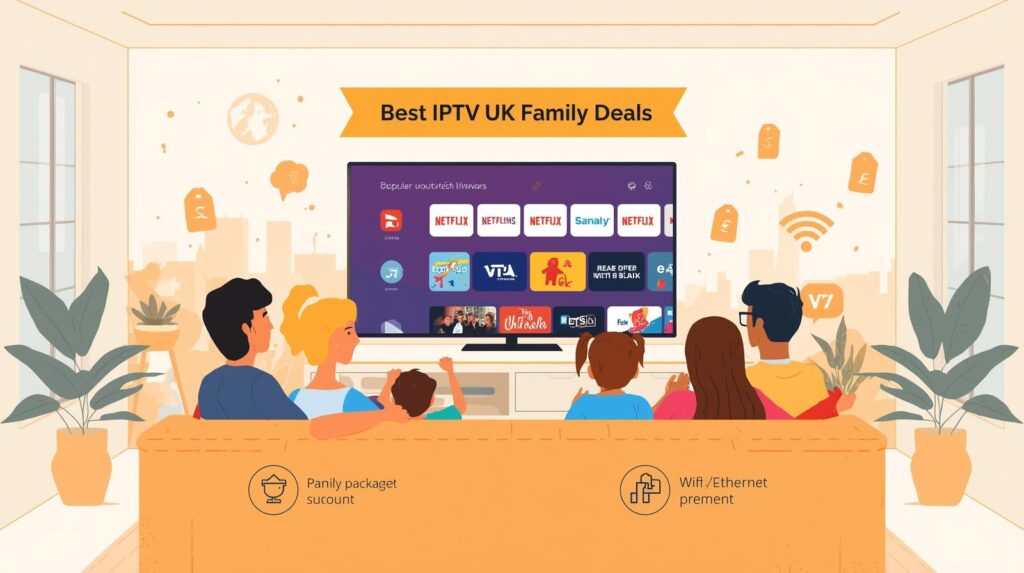

IPTV for Every Household: Retirees, Students, and Families

What is IPTV? Plain-English explanation

IPTV means Internet Protocol Television: video delivered over the internet rather than by satellite dish or cable. That delivery method can carry legal, licensed services (broadcaster apps, ISP-managed TV, paid SVOD) — or illegal pirate services that resell unlicensed streams. The delivery style doesn’t determine legality; rights do. IPTV for All Homes.

Delivery vs rights: why that difference matters

  • Delivery = how the video reaches you (IP packets over broadband).
  • Rights = whether the service has permission to distribute the content in the United Kingdom.
    So, an iptv subscription from an authorised UK provider is legal; an anonymous seller on social media offering “all channels for £5” almost certainly is not. Legal services protect you from outages, malware, and legal risk.

Common IPTV formats and players

  • Native apps on Smart TVs: BBC iPlayer, ITVX, All 4, Netflix, Disney+.
  • Streaming sticks / devices: Amazon Fire Stick, Chromecast with Google TV, Roku.
  • Front-end players: TiviMate (Android TV), IPTV Smarters Pro (Android/Fire TV) — these are players that load playlists (M3U/Xtream) or provider APIs; the legality depends on the source.
  • ISP-managed IPTV: BT TV, Sky Stream, Virgin Media — these are licensed services with clear support.

Why IPTV works for different households

Retirees: simplicity and catch-up

Retirees typically want simplicity, good readability and plenty of catch-up or classic content. IPTV for All Homes. They benefit from:

  • Big-font UIs and single-device simplicity (Smart TV or one Fire Stick).
  • Catch-up apps like BBC iPlayer and BritBox for classics.
  • Minimal monthly cost.

Students: budget and portability

Students need cheap, portable solutions:

  • Use phone/tablet apps and a small Fire Stick or Chromecast.
  • Rotate subscriptions via iptv uk free trial offers and student discounts.
  • Prioritise portability — watch on the move between halls and flats.

Families: multi-room streaming and parental control

Families require:

  • Multiple simultaneous streams and robust parental controls.
  • Short-term passes (e.g., NOW Sports pass) for big events instead of long contracts.
  • Front-end EPGs (TiviMate) for easy channel navigation if using an IPTV provider.

Key benefits everyone shares

Cost, choice and device flexibility

IPTV lets you pay for what you use: keep free catch-up apps, add one or two paid pillars (Netflix, Prime, Disney+) and buy seasonal passes for sport. Devices range from low-cost sticks to full Smart TVs. IPTV for All Homes.

Content variety: local, niche and international

IPTV ecosystems offer local UK programming, international channels (useful for multicultural households), and niche content via FAST (Free Ad-Supported TV) apps like Pluto TV and Tubi.

Devices, apps and front-ends: match to needs

Smart TV vs streaming stick vs set-top box

  • Smart TV: easiest for retirees — minimal extra hardware.
  • Streaming stick (Fire Stick/Chromecast): best value and portability for students.
  • Android TV box / Shield: best for families and power users who want TiviMate/advanced EPG and stronger codec support.

Recommended apps and players

  • Official: BBC iPlayer, ITVX, All 4, Freeview Play, Netflix, Amazon Prime Video, Disney+.
  • Players: TiviMate for polished EPG-driven playlists (Android TV); IPTV Smarters Pro for flexible playlist/Xtream API support on Fire/Android (use only with licensed sources).

Step-by-step: Build your household IPTV setup

Below is a practical 800-word walkthrough you can follow end-to-end to set up a legal, safe, and optimised IPTV system tailored to retirees, students, or families. This is the core, actionable piece — follow the steps carefully.

Step 1 — Audit viewing needs and budget

Grab recent statements and list current TV and streaming spend (Sky, Netflix, Amazon, mobile data). Meanwhile, for one week, note who watches what and when: live sport, news, kids’ shows, box sets. Classify each item as Must-have (live sport, BBC news), Nice-to-have (first-run films), or Rarely-used (premium movie channels). This clarifies priorities and the likely cost savers.

Step 2 — Choose legal sources and avoid pirate iptv subscriptions

Start with legal building blocks: BBC iPlayer, ITVX, All 4, My5, Freeview Play (all free). Add one or two paid pillars depending on taste: Netflix (broad drama), Amazon Prime Video (movies + channels), Disney+ (family franchises). For sport, prefer official passes (NOW Sports, BT, DAZN) or short-term season passes. If you’re tempted by a third-party iptv subscription provider, demand company details, invoices, and proof of rights — if they can’t provide these, walk away. Never buy “pre-loaded” sticks or accept APKs from unknown sites. IPTV for All Homes.

Step 3 — Pick devices and install apps

Device choice matters by household:

  • Retiree: Smart TV or Fire Stick. When setting up, increase font size, enable “simple mode” if available, and pin core apps to the home screen. Install BBC iPlayer, Freeview Play, and maybe BritBox.
  • Student: Fire Stick or Chromecast plus phone apps. Keep credentials portable and use student offers. Install Netflix, Prime, and carry the Fire Stick between locations.
  • Family: Android TV box or Fire Sticks for each TV. For main TV, consider NVIDIA Shield or an Android TV box supporting TiviMate (gives an excellent EPG when using a legal playlist). Install parental controls and create profiles (Netflix, Disney+).

For a Fire Stick: plug into HDMI, sign into Amazon, go to the Appstore, search & install each app. For Android TV boxes: use Google Play for apps like TiviMate and official streaming apps — avoid sideloading unknown APKs.

Step 4 — Configure profiles, parental controls and accessibility

Set up user profiles for children and adults in Netflix/Disney+/Prime. In TV settings, enforce PIN locks on purchases. For young retirees, set larger text and voice control (Alexa/Google Assistant). Use routers’ parental controls or third-party tools (e.g., OpenDNS) to set time limits or site restrictions. IPTV for All Homes.

Step 5 — Optimise network for streaming

A stable network matters more than anything:

  • Prefer Ethernet for the main living-room TV; use a powerline adapter if needed.
  • If Wi-Fi, use 5GHz and a modern router (Wi-Fi 5 or Wi-Fi 6). Position the router centrally or use mesh nodes for larger homes.
  • For families with multiple concurrent streams, aim for at least 100 Mbps down if you want multiple 4K streams; for HD stacks, 25–50 Mbps is typically fine.
  • Enable Quality of Service (QoS) to prioritise TV devices during evenings.

Step 6 — Test during peak times, iterate and manage costs

Before cancelling legacy services, run a 48–72 hour test: stream live channels, watch a 4K title, and stream simultaneously to two or three devices. Time tests for evening peak hours. If using any iptv uk free trial, note the start and end date and set a calendar reminder to cancel if it’s not needed. After tests, compare quality and cost, then decide whether to fully switch. For families, trial seasonal sport passes only when tournaments are active. Every 3 months, review subscriptions to remove under-used services and rotate trials to keep costs low. IPTV for All Homes.

Sample stacks: retiree, student and family configurations

Retiree stack (simple & comfy)

  • Device: Smart TV or Fire Stick.
  • Apps: BBC iPlayer, Freeview Play, BritBox, YouTube.
  • Cost: minimal — maybe BritBox or ITV Hub+ if desired.
  • Focus: readable UI, easy remote.

Student stack (portable & cheap

  • Device: Fire Stick / Chromecast, phone apps.
  • Apps: Free apps + Netflix Basic or shared Prime, rotate trials.
  • Cost: low — prioritise discounts & trials.

Family stack (multi-room & sport-ready)

  • Devices: Fire Stick per TV or Android TV box + TiviMate on main.
  • Apps: Freeview Play, Netflix/Disney+, Prime, NOW Sports when needed.
  • Cost: moderate — use short-term sport passes to save.

Legal, safety & TV licence reminders

  • TV Licence: In the UK, watching live TV or using BBC iPlayer requires a valid TV Licence. On-demand-only users (Netflix etc.) generally do not require a licence, but mixing live streaming and iPlayer does.
  • Avoid illegal services: Don’t buy anonymous playlists, pre-loaded sticks, or pirate iptv subscrition — they risk malware, data theft and legal trouble.
  • Use official stores (Amazon Appstore, Google Play, Samsung/LG) for apps.
  • Secure payments: Pay by card or PayPal for consumer protections.

Troubleshooting common issues

  • Buffering: switch to Ethernet, 5GHz Wi-Fi, or lower quality. Check ISP speed.
  • App crashes: update app/firmware, clear cache, reinstall.
  • Login problems: reset passwords, check subscription status, region locks.
  • EPG missing: use native app guides or TiviMate with a legitimate EPG source.

Money-saving and trial strategies

  • Use iptv uk free trial offers on official sites only and set calendar reminders.
  • Rotate subscriptions by binge-watching one service at a time.
  • Use NOW-style monthly passes for sport and cancel after the season.
  • Share family plans within household limits to split costs.

Future-proofing: codecs, Wi-Fi and accessibility

  • Prefer devices with HEVC (H.265) or AV1 decoding for efficient 4K streaming.
  • Upgrade routers to Wi-Fi 6 or use mesh to support many simultaneous streams.
  • Look for devices with voice control and good accessibility features for retirees.

Conclusion: quick checklist & takeaways

Checklist before switching:

  1. Audit who watches what and tally monthly costs.
  2. Start with free legal apps (BBC iPlayer, ITVX) and one paid pillar.
  3. Use official British iptv uk free trial offers and test during peak hours.
  4. Choose devices from official retailers (Fire Stick, Chromecast, Android TV).
  5. Avoid pirate iptv subscriptions, pre-loaded sticks and sideloaded APKs.
  6. Secure devices, use Ethernet/5GHz Wi-Fi and enable parental controls.
  7. Keep a calendar reminder for trial ends and quarterly subscription reviews.

IPTV can serve retirees, students, and families well — when done legally and thoughtfully. Pick devices and subscriptions that match needs, secure your network, and use trials smartly. Enjoy more choice, better budgets, and modern convenience. IPTV for All Homes.

FAQs

Q1 — Do I need a TV Licence to use IPTV in the UK?
A: Yes — if you watch live TV (including via IPTV) or use BBC iPlayer you need a TV Licence. On-demand-only services like Netflix generally do not require a licence.

Q2 — Are apps like TiviMate and IPTV Smarters Pro illegal?
A: No — they are legal front-end players. Legality depends on the streams you load; use them only with licensed providers.

Q3 — What’s the cheapest legal setup for students?
A: A cheap Fire Stick + free apps (iPlayer, Freeview Play) + one paid pillar on rotation (use official iptv uk free trial offers) is often cheapest.

Q4 — Should retirees avoid streaming sticks?
A: Not necessarily — retirees benefit from Smart TVs for simplicity, but a Fire Stick with a simplified launcher works too. Provide a short cheat sheet and set large fonts.

Q5 — How can families manage sport without a Sky contract?
A: Use modular passes like NOW Sports for the season or event-specific passes offered by rights holders — buy only when you need them.

How UK Families Are Cutting the Cord with IPTV — Real-Life Stories

Over the past decade, the UK has seen a dramatic shift in how people watch television. IPTV Replaces Cable UK. The era of expensive satellite packages, restrictive contracts, and clunky set-top boxes is fading fast. In its place, IPTV (Internet Protocol Television) has become the new household standard, giving families more freedom, flexibility, and affordability than ever before.

But this isn’t just a story about technology. It’s about real families across the UK — parents, kids, students, and retirees — who are cutting the cord on traditional pay-TV services and embracing IPTV as their main way to stream entertainment, sports, and live TV.

1. The Rise of IPTV in the UK

IPTV isn’t new, but its growth has exploded in recent years thanks to:

  • Faster broadband and 5G – streaming in HD and 4K is now seamless.
  • Smart TVs and devices – Fire Stick, Roku, Apple TV, and Android TV make IPTV easy.
  • Flexible subscriptions – no contracts, no dish installation, just plug-and-play.
  • Affordable options – from free services like Pluto TV to premium subscriptions like Netflix and Disney+.

The pandemic years (2020–2022) accelerated adoption, as more families discovered they could ditch their costly TV packages and still access all the content they loved — and more.

By 2025, research shows over 60% of UK households primarily watch television via IPTV platforms.

2. Why Families Are Cutting the Cord

Families across the UK are canceling satellite and cable for four main reasons:

📉 Cost Savings

  • Traditional Sky/Virgin bundles often exceed £80–£120 per month.
  • IPTV alternatives can cost £10–£30 per month.

🕒 Flexibility

  • Cancel anytime, no 18-month lock-in contracts.
  • Switch providers seasonally (sports in winter, movies in summer).

📺 Content Variety

  • IPTV services offer global content, not just UK channels.
  • Free and ad-supported TV (FAST channels) provide extra value.

🌍 Accessibility

  • IPTV works on multiple devices: smart TVs, laptops, tablets, smartphones.
  • Perfect for families with different viewing habits.

3. Real-Life Stories: UK Families Who Cut the Cord

Let’s meet some households who’ve made the switch.

📖 Story 1: The Johnsons from Manchester

Profile: Family of four, two children (ages 8 and 12).

The Johnsons were paying £95 per month for Sky TV with sports, kids’ channels, and HD add-ons. After looking at their budget, they realised most of what they watched was available via streaming.

  • What they did:

    • Cancelled Sky after 10 years.
    • Subscribed to Disney+ (£7.99) and Netflix (£10.99).
    • Installed Freeview Play for live BBC, ITV, and Channel 4.
  • Savings: Over £60/month (£720/year).
  • Family reaction:

    • Kids love Disney+ for Marvel and Pixar.
    • Parents use Netflix and iPlayer.
    • Dad occasionally buys day passes for Sky Sports via NOW when football is on.

👉 “At first, we thought we’d miss Sky. But honestly, we’re watching more of what we want, and paying far less.”

📖 Story 2: The Khans from Birmingham

Profile: Extended household with grandparents, parents, and teens.

The Khans needed multilingual content and lots of flexibility. Their Virgin package wasn’t cutting it.

  • What they did:

    • Subscribed to Amazon Prime Video (£8.99) and Disney+.
    • Added Plex with personal media.
    • Installed Pluto TV for free live channels.
  • Special benefit: IPTV gave them access to Bollywood content and international TV without expensive add-ons.
  • Savings: Roughly £50/month.

👉 “With IPTV apps, everyone has something to watch — the kids have Disney, the grandparents watch Zee TV, and I can stream Premier League games with a NOW pass.”

📖 Story 3: The Thompsons from Glasgow

Profile: Young couple with no kids.

The Thompsons cut the cord mainly to avoid being tied down by contracts.

  • What they did:

    • Bought a Fire Stick (£40 one-off).
    • Subscribed to Paramount+ (£6.99) and Apple TV+ (£8.99).
    • Use BBC iPlayer and ITVX for free.
  • Lifestyle impact: They travel often, so they love being able to stream anywhere.

👉 “We didn’t want to be stuck with Sky when we’re barely home. With IPTV UK , we just log in from our phones or hotel smart TVs.” IPTV Replaces Cable UK.

📖 Story 4: The Smiths from London

Profile: Family of five, three kids under 10.

Sky bills were spiraling out of control for the Smiths.

  • What they did:

    • Cancelled Sky TV and broadband bundle.
    • Kept broadband, switched to Netflix + Disney+ + YouTube Kids.
    • Set up parental controls on all streaming apps.
  • Savings: Over £1,000/year.

👉 “Our kids don’t care about 200 channels — they just want cartoons on demand. We’ve simplified everything and saved a fortune.”

📖 Story 5: The Davies from Cardiff

Profile: Retired couple.

The Davies family weren’t heavy TV watchers but were paying for Sky out of habit.

  • What they did:

    • Cancelled their package.
    • Installed Freeview Play on their smart TV.
    • Subscribed to BritBox (£5.99) for classic UK shows.

👉 “We realised we only really watch BBC dramas and the news. Why were we paying £70 a month? Now it’s simple and cheap.”

4. Common Themes from UK Families

From these stories, several themes emerge:

  • Huge savings — between £500–£1,000 per year.
  • Kids drive decisions — families prioritise Disney+, YouTube, Netflix.
  • Sports fans compromise — they buy day/month passes when needed.
  • Older generations simplify — using Freeview + one or two streaming apps.
  • Flexibility matters — cancel-anytime subscriptions are a big draw.

5. Challenges Families Face

Cutting the cord isn’t always smooth. Families report:

  • Internet dependencyIPTV needs reliable broadband.
  • Fragmentation – multiple subscriptions can add up.
  • Live sports gaps – not as simple as Sky Sports 24/7.
  • Parental controls – families must set them up manually.
  • Device learning curve – older generations sometimes struggle with apps.

👉 But overall, most families report greater satisfaction than before. IPTV Replaces Cable UK.

6. Expert Tips for Families Switching to IPTV

If you’re considering cutting the cord, here’s how to do it wisely:

 1: Audit Your Viewing

  • Write down what your family actually watches.
  • Cancel services you barely use.

 2: Mix Free + Paid IPTV

  • Use Freeview, Pluto TV, ITVX, BBC iPlayer.
  • Add one or two premium subscriptions (Netflix, Disney+, Prime).

 3: Use Family Features

  • Create kids’ profiles.
  • Set PINs for parental controls.
  • Share family accounts to save money.

 4: Rotate Subscriptions

  • Subscribe to Disney+ for 2 months → binge content.
  • Cancel, switch to Netflix for 2 months.
  • Repeat to avoid paying for unused services.

 5: Invest in Good Internet

  • At least 30 Mbps broadband for smooth streaming.
  • Consider Wi-Fi 6 routers for whole-home coverage.

7. What Cord-Cutting Means for the Future of UK TV

The family stories highlight bigger trends:

  • Sky, Virgin, and BT are losing dominance.
  • IPTV is now mainstream.
  • FAST channels (free ad-supported streaming) are the new Freeview.
  • Content choice > Channel bundles.
  • Younger generations may never experience traditional pay-TV.

By 2030, experts predict IPTV will account for over 90% of UK TV viewing.

8. Conclusion

UK families are rewriting the rules of television. From Manchester to Glasgow, from young couples to retirees, households are realising they don’t need to pay £100 a month for hundreds of channels they never watch.

Instead, they’re choosing IPTV: flexible, affordable, and personalised. While challenges remain — particularly for sports fans — the stories of the Johnsons, Khans, Thompsons, Smiths, and Davies show that cutting the cord is not just a tech trend, but a lifestyle shift.

For many families, IPTV isn’t just about saving money. It’s about taking back control of what they watch, when they watch it, and how much they pay.

The cord-cutting revolution is here — and UK families are leading the way. IPTV Replaces Cable UK.

IPTV FREE TRIAL

Affordable IPTV UK Packages for Families in 2025

Want top-notch TV for the whole family without breaking the bank? This guide breaks down how families in the UK can build affordable, legal IPTV setups in 2025 — step-by-step packages, device choices, broadband guidance, parental-control setups, saving hacks, and realistic monthly cost examples you can copy and tweak. Best IPTV UK Family Deals.

I’ll cover:

  • What families actually need from IPTV in 2025
  • Budget tiers (ultra-cheap → all-rounder → sports family) with exact app mixes you can subscribe to today
  • Device and broadband recommendations for rock-solid streaming (including 4K where it matters)
  • Step-by-step switching and setup instructions so you can move rooms/apply parental controls in under an hour
  • How to legally watch live TV (TV Licence note) and how to avoid illegal IPTV traps
  • Final example yearly savings and a comparison checklist

Important, up front: prices and plan names change fast in streaming-land. Below I cite the most load-bearing current numbers I used to build the packages. Use them as anchors; the rest of the guidance is evergreen.

Key price anchors used in this article:

  • discovery+ Premium (TNT Sports) tiers and pricing info.
  • NOW (Sky) membership options and Boost/Ultra Boost add-ons for HD/4K.
  • Netflix 2025 plan ranges (including ad-supported tiers).
  • Amazon Prime price in the UK (monthly/annual figures).
  • TV Licence requirement and current licence info — if you watch live TV or BBC iPlayer you need a licence. 

1 — What families actually need from IPTV in 2025

Not every household wants the same thing. But most families share these priorities:

  1. Reliable live TV for key items — news, weekend sport, school events.
  2. Kid-friendly content & profiles — on-demand cartoons, safe profiles, screen-time limits.
  3. Simple multi-room access — living room + bedroom(s) + mobile devices.
  4. low monthly cost, particularly when living expenses are tight.
  5. Parental controls and offline downloads for journeys.
  6. Reasonable picture quality — HD is sufficient for most; 4K for cinephiles/sports fans.
  7. Legal certainty — parents don’t want to risk dodgy services or malware.

This guide helps you pick plans that hit those needs without paying for redundant channels or long contracts.

2 — How to think about cost: building blocks, not bundles

IPTV is modular. Instead of one big bundle, build your family package from inexpensive building blocks:

  • Base: free catch-up and FAST channels (such as Pluto/Roku Channel, My5, Channel 4, ITVX, and BBC iPlayer).
  • Kids: low-cost SVOD (Netflix basic with ads, Disney+ ad tier, or Amazon Prime Video for some kids’ shows)
  • Movies/Boxsets: one mid-tier streaming service (Netflix Standard or Prime Video)
  • Live sport/special events: pay only for the season (NOW, discovery+ TNT Sports, DAZN, or pay-per-view)
  • Extras: occasional rentals on Apple/Prime, or a low-cost FAST replacement for niche interests

Because IPTV services let you pause/cancel, you can rotate sport and premium subscriptions to match the calendar — a huge saving over a year. Best IPTV UK Family Deals.

3 — The realistic family packages (cheap → full)

Below are four family packages with example monthly costs and notes. Each package is legal and practical for UK households in 2025. I give both the app mix and a short “why it works for families” rationale.

Notes on price accuracy: I used authoritative recent plan prices for the key pieces (discovery+, NOW, Netflix, Prime) as anchors. Expect small regional/promotional variations. See earlier citations.

1) The Essential Family — £6–£12 / month (ultra-budget)

Who this is for: Tight budgets, kids, grandparents, minimal streaming needs.

Apps & costs (example):

  • Free (catch-up and many live channels) are BBC iPlayer, ITVX, Channel 4, and My5.
  • Pluto TV / Roku Channel / other FAST apps — Free (ad-supported linear channels).
  • Netflix Basic with ads (optional) — £5.99/month (entry level ad-supported plan).
  • Amazon Prime Video (optional yearly split) — usually available through shared household or as a sub-£5.99 Prime Video only option in some promotions; full Prime is £8.99/month or £95/year if you want parcels & Prime benefits.

Total monthly cost: £0–£12 depending on whether you add Netflix/Prime.

Why it works:

  • You get the full set of UK catch-up services (news, children’s shows, local drama) at no monthly cost beyond your broadband and TV Licence. Classic kids’ shows and movies are among the linear TV needs that are satisfied by FAST channels. Netflix ad tier gives access to a lot of kids’ series cheaply.

2) The Balanced Family — £18–£35 / month (best value)

Who this is for: Families wanting a solid mix of kids’ content, box sets, and occasional movies without expensive sport packages.

Apps & costs (example):

  • BBC iPlayer, ITVX, Channel 4, My5 — Free.
  • Netflix Standard (ad-free HD, multi-profile) — ~£12.99/month (estimate band used in 2025).
  • Disney+ (good for kids) — ~£7.99/month (promo and bundle pricing vary).
  • Pluto / FAST channels for extras — Free.

Total monthly cost: ~£20–£28.

Why it works:

  • Netflix + Disney+ cover nearly all mainstream kids’ series, most family films and the big boxset shows. Free catch-up channels handle live UK programming. This basket is the sweet spot for many families who don’t need live sports.

3) The Sports & Family Mix — £35–£70 / month (seasonal rotation saves money)

Who this is for: Families who care about live sport plus good on-demand content.

Apps & costs (example):

  • BBC iPlayer, ITVX, Channel 4, My5 — Free.
  • The advertised TNT Sports/discovery+ tier is discovery+ Premium (TNT Sports tier), which costs about £30.99 per month.
  • Netflix Standard or Prime Video costs £12–£13 per month, or £8.99 per month if Prime is included.

Total monthly cost: ~£38–£44 (core) — you can pause TNT Sports off-season to drop back to the Balanced Family cost.

Why it works:

  • Discovery+ Premium brings TNT Sports (many Premier League/Champions League packages and other sport depending on the season), which is the expensive piece. Rotating (subscribe only during the season) saves hundreds per year compared with an 18-month satellite sports contract.

4) The Premium Family: £60 to £100 per month (All-Rounder with 4K)

Who this is for: Multi-room families who want all-round content, multiple simultaneous streams, and 4K sports/movies.

Apps & costs (example):

  • NOW Entertainment + NOW Sports (pay monthly) with Ultra Boost for 4K (NOW charges for Boost/Ultra Boost for HD/4K features; check current boost pricing).
  • discovery+ Premium (TNT Sports) — ~£30.99/month.
  • Netflix Premium / Disney+ ad-free / Prime — ~£12–£19 per service depending on tiers.

Total monthly cost: Highly variable depending on Netflix tier and whether you run simultaneous premium subscriptions — plan for £60–£100 during peak sport seasons.

Why it works:

  • App-by-app, this is similar to a lightweight Sky/UHD experience. You control the exact months you pay for the expensive bits and you only rent the channels you actually use.

4 — Device & broadband checklist (so your cheap subscriptions actually work)

Budget packages only save money if the streaming is reliable. These are the essential kits that families will require in 2025.

Broadband recommendations

  • Minimum: 30–50 Mbps for one HD stream + background browsing.
  • Recommended for multi-room: 100 Mbps FTTP for 2–3 concurrent HD streams.
  • 250 Mbps+ FTTP or gigabit tiers for 4K sports or multiple 4K streams.
  • Best practice: Wire your main TV with Ethernet — it solves most buffering problems.

(If you live in a location with limited FTTP options, consider alternative ISPs, community fibre rollouts, or bonding routers — but for most homes FTTP is now widely available.)

Devices that keep costs low and work well

  • Amazon Fire TV Stick 4K Max — excellent value, app support and widely used in UK homes (good for bedrooms and kids’ rooms). (Retail prices vary; look for deals during Amazon events).
  • When combined, Google TV and Chromecast provide amazing watchlist and discovery features.
  • If you have the money, the Apple TV 4K is a premium option with the finest user experience and reliable 4K/HDR/Atmos performance.
  • Smart TVs (modern LG/Samsung/Sony) — if the TV is <3 years old it will likely run the needed apps fine.
  • Phones and tablets are helpful for children and downloads when on the go.

Tips to keep device costs down

  • Use existing smart TVs where possible.
  • Buy a streaming stick (£30–£80) for bedrooms instead of an extra TV.
  • Watch for Prime Day / Black Friday deals for sticks and TVs.

5 — Parental controls, profiles and child safety

IPTV makes parental control easier than old coax boxes — but you must configure it.

Must-do steps:

  1. Create separate app profiles (Netflix, Disney+, Prime all support profiles and PINs).
  2. Use device-level restrictions (Fire TV and Apple TV can lock apps behind a PIN).
  3. Enable children’s modes in apps (Disney+ Kids, Netflix Kids).
  4. Restrict app store purchases (rentals require a password).
  5. Set screen-time routines: use tablet/phone parental controls or router schedules.
  6. Download for travel: configure offline downloads for plane/car trips so kids aren’t streaming over mobile data.

Most family packages suggested earlier work with robust parental controls — Balanced Family and Premium Family have the richest parental control features since they include Netflix/Disney+. Best IPTV UK Family Deals.

6 — How to legally watch live TV & the TV Licence note

Important legal information for families in the UK: you need a valid TV license in order to use BBC iPlayer or watch or record live TV on any channel. That includes watching live streams delivered via IPTV. The TV Licence is enforced separately from subscription services and remains a legal requirement. Check TV Licensing guidance for the current charge (annual rates can change).

Tip: owning a subscription service does NOT replace the TV Licence — keep that licence current if you watch live content or iPlayer.

7 — How to save even more — practical money hacks

  1. Rotate sport seasonally. Subscribe to TNT Sports or NOW Sports only during the months you need them. Switching off a £30 service for 6 months saves ~£180/year. (A crucial anchor in this case is the Discovery+ Premium/TNT Sports pricing.)
  2. Use ad-supported tiers where acceptable. Netflix/Disney+ ad tiers shave several pounds per month.
  3. Use FAST channels aggressively. Pluto, The Roku Channel, and other free channels fill in many movie and classic show needs at no cost.
  4. Share legally with household members. Many plans permit multiple profiles/streams; split cost across the household rather than buying extra plans.
  5. Watch library rotations & use rentals. If you need one movie, rent it rather than keep another subscription year-round.
  6. Bundle via ISP promos carefully. Sometimes ISPs add free subscriptions (e.g., discovery+/Netflix promos) — check the real long-term value and whether the bundle auto-renews at a higher rate.
  7. Make strategic use of free trials (one-time binge-watching a show or season, then canceling; create a calendar reminder to cancel before renewal).

8 — Switching from Sky/Virgin? Step-by-step to save cash

If you currently pay for Sky/Virgin and want to switch to the Balanced or Sports Family packages:

  1. List must-have channels (sports, kids, news) and identify which app covers them.
  2. Verify the current contract’s expiration date to prevent paying early termination penalties.
  3. Set up your broadband-only plan (choose the same or a cheaper ISP if you don’t need the TV bundle).
  4. Buy a reliable streaming stick for the living room (Fire TV Stick 4K Max or Apple TV for premium)
  5. Install official apps and transfer shows/watchlists.
  6. Subscribe to month-to-month services (Netflix, discovery+, NOW) and add premium sport only during  season.
  7. After one billing cycle, evaluate — if you miss something you can re-subscribe; most IPTV subscriptions are flexible.

Real saving example: Replacing a £70/month Sky package with Balanced Family at £25/month + occasional TNT Sports season at £31/month for four months reduces yearly spend considerably. Do the math for your household’s viewing habits. Best IPTV UK Family Deals.

9 — Troubleshooting common family issues

Problem: Kids keep streaming on tablets and hogging bandwidth.
Fix: Enable router QoS to prioritise the main TV or schedule bedtime blocks; download shows for offline play.

Problem: Buffering on match day.
Fix: Wire the main TV via Ethernet; if not possible, move to 5 GHz Wi-Fi or add a mesh node near the TV.

Problem: “Is this service legal?”
Fix: Use only apps from official stores (Amazon, Google, Apple) and check provider T&Cs. Avoid “fully loaded” boxes and sellers on social media promising all channels for £5/month. Best IPTV UK Family Deals.

10 — Avoiding illegal IPTV (red flags)

A short checklist — walk away if:

  • A seller promises every premium channel for an implausibly low price.
  • The device is “pre-loaded” and sold through social media, WhatsApp, Gumtree or eBay without a corporate identity.
  • Payment is requested via cash, crypto or bank transfer only (no card/PayPal safety).
  • The seller refuses to explain the source of streams or provide terms & conditions.

Illicit services often collapse without notice — then you lose your money and potentially expose devices to malware.

11 — Example yearly cost comparison (realistic family)

Below are three simple annual scenarios to show the saving power of IPTV rotation vs a fixed satellite bundle.

  1. Satellite bundle (example): £70/month → £840/year
    B. Netflix Standard + Disney+ + FAST + Free Catch-Up (balanced IPTV):
  • Netflix Standard: £12.99 x 12 = £156
  • Disney+: £7.99 x 12 = £95.88
  • FAST & catch-up: £0
    Total: ~£251.88/year
  1. Sports seasonal family (including TNT Sports for six months):
  • Balanced base: ~£252
  • £185.94 for six months of Discovery+Premium (TNT) at £30.99
    Total: ~£438/year (still ~£400 cheaper than the fixed satellite spend above)

Those numbers are illustrative, but they show how rotating expensive sport packages dramatically reduces annual spend. I used discovery+/TNT Sports price anchors for the sport cost assumptions. Best IPTV UK Family Deals.

12 — Final checklist before you sign up

  • If you watch live TV or BBC iPlayer, do you have a valid TV license? (Make sure to stay legal.)
  • What are your absolute must-have channels (sports, kids’ shows, a specific boxset)?
  • Can your broadband handle the streams you want (run a speedtest at the TV location)?
  • Will you buy a streaming stick for bedrooms (cheaper) or use the TV’s built-in apps?
  • Have you checked parental controls and download options for travel?

13 — FAQs families ask

Q — Can we share accounts between family members?
A — Most services allow multiple profiles and simultaneous streams within a household. Read the T&Cs (some services limit simultaneous streams).

Q — Are FAST channels any good for kids?
A — Yes. FAST channels host a lot of classic kids’ content suitable for casual viewing, but they do include ads.

Q — Which should I prioritise for a small flat with one TV?
A — Balanced Family: Netflix + Disney+ (or Prime Video) + free catch-up channels is usually perfect.

Q — How do I know if sport rights move mid-season?
A — Rights sometimes shift between seasons; check the broadcaster’s sites and plan to be flexible — that’s the advantage of IPTV.

14 — Closing — the smart family strategy for 2025

Families win with IPTV UK in 2025 by thinking modularly: use free catch-up apps as the base, add a kid-focused streamer and one general-purpose streamer, and only add expensive sports packages when you need them. Couple this with an inexpensive streaming stick (so bedrooms don’t need separate boxes), wired Ethernet for the main TV, and smart parental control configuration — and you’ll be ahead financially and practically. Best IPTV UK Family Deals.

IPTV FREE TRIAL