Top 4K IPTV Setups for UK Homes

1. Why 4K matters for IPTV in the UK

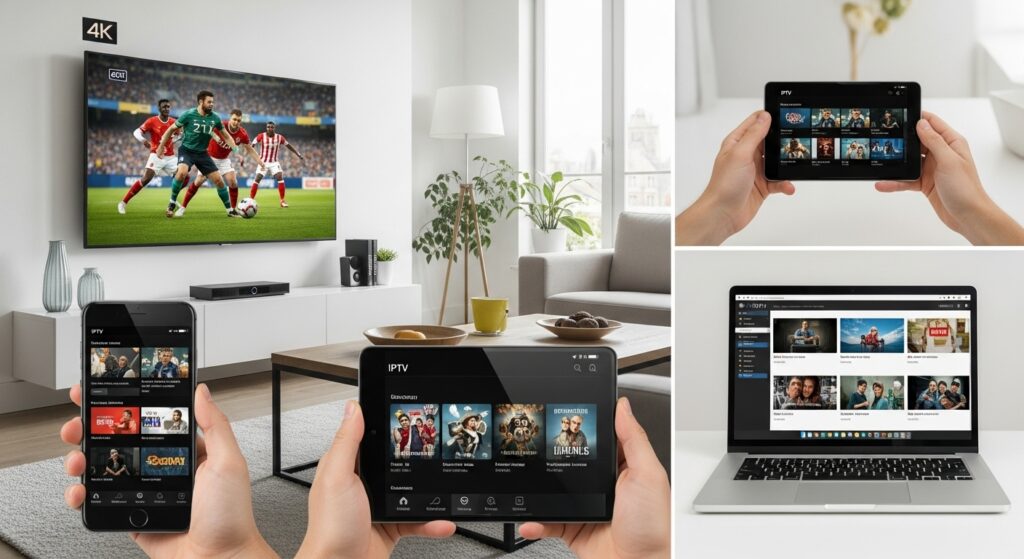
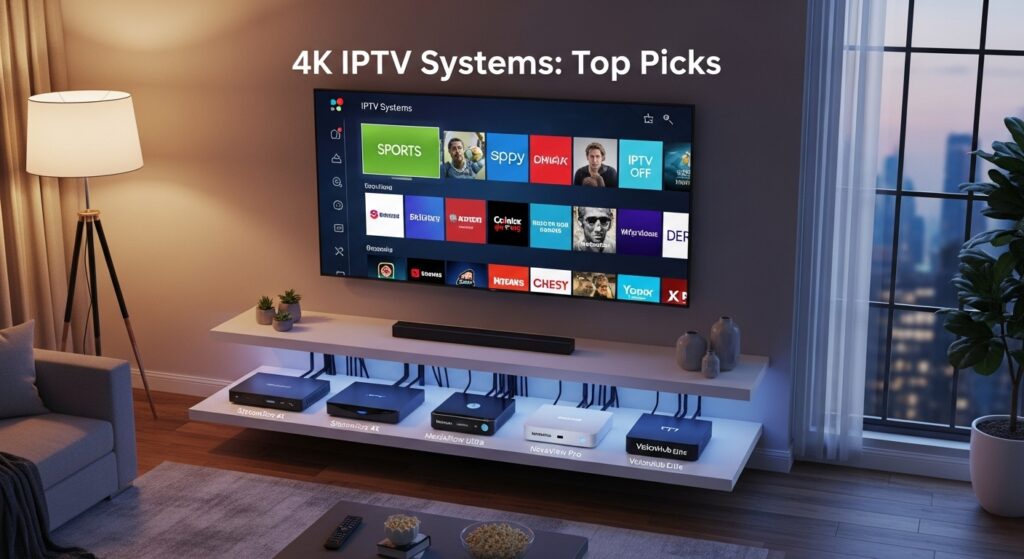
4K (3840×2160) is now mainstream: bigger TVs, better cameras and more 4K content make upgrading attractive. For IPTV UK viewers, 4K delivers sharper sports, films and nature documentaries. But 4K isn’t just resolution — it’s higher bitrates, more demanding codecs (HEVC/H.265, AV1), and stricter DRM in official apps. A good 4K IPTV setup balances device decoding, network bandwidth and legal 4K sources (Netflix 4K, Prime Video, NOW/We TV sports, and licensed IPTV providers offering 4K channels). Best 4K IPTV Systems.

2. What “4K IPTV” actually means

IPTV = video over IP. 4K IPTV = streaming 4K/Ultra HD channels or VOD via the internet to your TV. There are three realistic sources:

  • Official 4K apps (Netflix 4K, Amazon Prime Video, Apple TV+) — easiest and legal.
  • Rights-holder 4K streams (some sports/events or broadcaster 4K channels via official apps).
  • Licensed IPTV providers that supply 4K-capable streams to subscribers (rare — check provider claims).

Players like IPTV Smarters Pro and TiviMate are front-ends — they don’t create streams. Use them only with licensed iptv subscription feeds.

3. Must-have home network specs for 4K IPTV

For reliable 4K IPTV in the United Kingdom:

  • Minimum bandwidth: 25 Mbps per 4K stream (allow >30 Mbps headroom).
  • Recommended household broadband: 100 Mbps+ if multiple devices stream simultaneously.
  • Wired Ethernet: strongly recommended for the main TV (Gigabit Ethernet).
  • Wi-Fi: use 5GHz or Wi-Fi 6 (802.11ax) access points; mesh if coverage is large.
  • Router features: QoS, MU-MIMO, and support for IPv6 and gigabit WAN.
  • Latency/Jitter: keep ping <30 ms and jitter low for live sports.

If you’re relying on a wireless link, use a Wi -Fi 6 router and connect the streaming device to the closest node.

4. Top devices for 4K IPTV (budget → premium)

  • Budget stick: Amazon Fire TV Stick 4K Max — great value, HEVC support, broad app store.
  • Mid-range: Chromecast with Google TV (4K) — simple UI, good performance.
  • Power user: NVIDIA Shield TV Pro — hardware decoding (HEVC/AV1 in newer models), best for advanced players and Plex.
  • Apple fans: Apple TV 4K — best for Apple ecosystem, Dolby Vision and Dolby Atmos.
  • Smart TVs: modern Samsung/LG/Sony with built-in apps and AV1/HEVC support (preferred for simplicity).

Pick a device that supports hardware decoding for HEVC/AV1 to avoid stutters and reduce CPU load. Best 4K IPTV Systems.

5. Choosing the right TV for 4K IPTV

Key TV features to look for:

  • 4K panel (OLED, QLED, or quality LED).
  • HDR support — Dolby Vision, HDR10+ for improved contrast.
  • AV1/HEVC decoding built into the TV or the set-top device.
  • HDMI 2.1 ports if you plan high frame rates (120Hz) or next-gen game consoles.
  • Smart TV OS compatibility for Netflix, Prime, Apple TV and broadcaster apps — native apps are often required for 4K DRM playback.

For many UK households a 55–65″ 4K TV with HDR and integrated apps is the best balance.

6. Best 4K-capable streaming sticks & boxes

  • Fire TV Stick 4K Max: HEVC, HDR10+, Dolby Vision support; excellent app catalogue.
  • Chromecast with Google TV: native Google Play apps, easy casting from phone.
  • NVIDIA Shield TV (2019 / 2023 models): best for AV1/HEVC hardware decode, Plex server, 4K HDR with strong app support.
  • Apple TV 4K: premium, great for Apple ecosystem and Dolby Vision/Atmos support.

If you need reliable 4K IPTV Smarters Pro or TiviMate with large M3U playlists, prefer Android TV / Shield-level performance. Best 4K IPTV Systems.

7. AV and sound: match the picture with audio

4K viewing benefits from better audio:

  • Soundbar with Dolby Atmos for cinematic sound.
  • AV receiver + speakers for full home cinema.
  • ARC/eARC capable HDMI ports (on TV and receiver) for lossless audio passthrough.

Many streaming apps support Dolby Atmos on compatible devices — ensure your player and TV support Atmos passthrough over eARC.

8. Best IPTV players and apps (legal, practical)

  • Native apps: Netflix, Amazon Prime Video, Disney+, Apple TV, BBC iPlayer, ITVX, NOW/Channel apps — best for 4K and DRM.
  • TiviMate: polished IPTV front-end on Android TV — EPG, favourites, playlists (use with licensed iptv subscription).
  • IPTV Smarters Pro: popular on Fire/Android — supports Xtream Codes API, M3U, portals. Use only with licensed providers.
  • Kodi: powerful but needs legal add-ons; avoid pirate repos.
  • Plex: for personal libraries; Plex Pass users get hardware-accelerated streams on Shield.

Important: for 4K official DRM (Widevine L1 or PlayReady) is often required — native apps usually meet DRM; some players may not. Best 4K IPTV Systems.

9. Four recommended 4K IPTV setups

 A — Starter (small flat, budget)

  • Fire TV Stick 4K Max
  • 55″ affordable 4K TV (HDR10)
  • Broadband 100 Mbps
  • Use Netflix 4K, Prime Video, BBC iPlayer (for catch-up), occasional iptv uk free trial for testing.

 B — Living Room (family)

  • 65″ QLED 4K TV (HDR10+ / Dolby Vision)
  • Chromecast with Google TV or Fire TV Stick 4K Max
  • Soundbar (Dolby Atmos)
  • Router Wi-Fi 6 + Ethernet to TV
  • Subscriptions: Netflix, Prime, Disney+, NOW passes for sport + licensed iptv subscription for extra channels via TiviMate or IPTV Smarters Pro (only if provider is licensed).

 C — Multi-room Family

  • Main: NVIDIA Shield TV Pro + 75″ OLED
  • Secondary rooms: Fire TV Sticks (4K)
  • Mesh Wi-Fi 6 system & gigabit router
  • NAS or Plex server for local 4K content
  • Use licensed iptv providers for channel bundles; centralised EPG via TiviMate.

 D — Premium Home Cinema / Power User

  • OLED 83″ or projector 4K + eARC AVR + 7.1 speakers
  • NVIDIA Shield TV Pro (AV1/HEVC decoding), Apple TV 4K (for Apple content)
  • Wired 10GbE backbone (if available) or gigabit wiring + dedicated VLAN for streaming
  • Plex Media Server with local 4K library, licensed 4K iptv feeds, advanced TiviMate front-end.

10. Build a 4K IPTV Living-Room Rig

This is the practical heart — follow this sequence to go from box to pixel-perfect 4K viewing.

Step 1 — Plan & buy

Decide your priorities: live sport, movies, or both. For sports and frequent channel switching, get a Shield/Fire TV 4K Max plus a TV with native apps. Choose an ISP plan (100–200 Mbps recommended if household streams concurrently). Order a gigabit switch/Ethernet cable for the main TV. Best 4K IPTV Systems.

Step 2 — Unbox and position equipment

Place the TV where glare is minimal. Put the streaming device close to HDMI and power. If using a soundbar or AVR, place them per the manufacturer’s guidelines (soundbar below screen; AVR in equipment rack). Route an Ethernet cable from your router to the TV or Shield — avoid running cables through high-traffic areas.

Step 3 — Network baseline

Power on router and run a speed test at the TV location (use Speedtest or Fast). If speeds are far below expected, troubleshoot the router placement or upgrade to a mesh satellite. Set a static IP for the TV in the router DHCP table so you can prioritise it via QoS.

Step 4 — Install device and apps

Plug in the Shield / Fire Stick into HDMI and power. For Shield, connect via Ethernet. Walk through onboarding, sign in to Google/Amazon accounts. Install native apps first (Netflix, Prime, BBC iPlayer). For IPTV front-ends (TiviMate/IPTV Smarters Pro), install from Play Store or sideload if needed (only on reputable sources).

Step 5 — Authenticate subscriptions and confirm 4K tokens

Log into streaming services and verify 4K entitlement: Netflix Premium, Prime Video 4K enabled, Apple TV settings. Some services require specific device DRM levels (Widevine L1). Test a 4K title to confirm it streams in Ultra HD and HDR.

Step 6 — Configure device settings

On Shield/Fire Stick: enable hardware acceleration and HDR passthrough. Set HDMI color space to Auto. In the IPTV player (TiviMate), set default resolution to Auto and enable hardware decoding. If your app allows buffer tuning, set moderate buffer (few seconds) to balance latency and resilience.

Step 7 — Audio configuration

Connect TV eARC to AVR for Dolby Atmos passthrough. In device audio settings set Dolby Digital+ or passthrough as appropriate. Test a movie with Atmos to confirm multichannel playback.

Step 8 — Test live streams & local 4K files

Before hosting a live event, play a 4K HDR demo from Netflix or a local 4K file. Check picture stability, color (HDR), audio sanity, and latency. If you have an iptv subscription with 4K channels, test them during peak times to ensure streams hold up. Best 4K IPTV Systems.

Step 9 — Tweak and secure

Set automatic updates for apps. Create user profiles. Secure accounts with 2FA. On the router, enable QoS prioritising the TV’s IP and mark streaming traffic as high priority. Disable unnecessary background downloads on the network during matches.

Step 10 — Match-day checklist

Restart router and Shield to clear caches. Ensure other heavy downloads are paused. Open the channel 10–15 minutes early to stabilise the buffer. Have backup devices (phone or tablet with the app) in case of issues.

Following these steps yields a resilient living-room 4K IPTV setup ready for movies and live sport. Take notes of working settings so you can replicate them after firmware updates. Best 4K IPTV Systems.

11. Optimising for low latency and zero buffering

  • Ethernet is king: wired connections beat Wi-Fi for 4K.
  • Router QoS: assign streaming device priority.
  • Split your network: put streaming devices on a dedicated VLAN or SSID to avoid interference.
  • Adjust buffer: small buffer reduces latency (good for live sport); slightly larger buffer reduces rebuffer events.
  • Use hardware decode: reduces frame drops.
  • Close background apps on streaming devices.
  • Test during peak hours to get real-world performance.

12. Legal & safety checklist for UK viewers

  • Use licensed iptv providers or official apps (Netflix, Prime, BBC iPlayer).
  • Avoid anonymous “lifetime” offers and pre-loaded sticks sold on marketplaces.
  • Keep receipts and pay via card/PayPal for consumer protection.
  • For BBC iPlayer live viewing, a valid UK TV Licence is required.
  • Don’t use VPNs to bypass geo-blocks in violation of terms — VPNs can also increase latency.

13. Bandwidth, codecs (HEVC / AV1) and future-proofing

  • HEVC/H.265: widely used for 4K — devices must support hardware HEVC decoding.
  • AV1: newer and more efficient; growing in 4K streaming. Choose devices with AV1 hardware support for the longest shelf life (NVIDIA Shield, many new Smart TVs).
  • HDR formats (Dolby Vision / HDR10+): device support matters for best picture.
  • Storage / NAS: for local 4K libraries, fast NAS or SSD storage ensures smooth playback.

14. Troubleshooting common 4K IPTV problems

  • Stuttering: enable hardware acceleration; use Ethernet; reduce resolution to 1080p temporarily.
  • No 4K available: confirm plan tier (e.g., Netflix Premium), and DRM/ Widevine L1 support on device.
  • Audio dropouts: check eARC passthrough and HDMI cables; test direct TV speakers.
  • App crashes: clear cache, reinstall app, check for firmware updates.
  • Buffering during peak: check ISP throttling, run speed tests, escalate to ISP.

15. Conclusion

4K IPTV in UK homes is achievable and hugely rewarding with the right mix of hardware, network, and legal content sources. Prioritise a wired gigabit link for the main TV, choose devices with HEVC/AV1 hardware decode (Shield, modern Smart TVs), use native apps for DRM-heavy 4K sources, and rely on licensed iptv subscription providers if you need channel aggregation. Whether you want a budget flat setup or a premium home cinema, the steps above will guide you to a stable, beautiful 4K viewing experience. Best 4K IPTV Systems.

Top 10 FAQs

  1. Do I need 100 Mbps for one 4K stream?
    No — ~25–30 Mbps is usually enough for one 4K stream, but 100 Mbps gives headroom for multiroom and simultaneous devices.
  2. Will Fire TV Stick 4K Max handle 4K IPTV?
    Yes — for most 4K streaming apps. For heavy custom IPTV playlists and AV1 hardware decode, a Shield may be more robust.
  3. Can TiviMate/IPTV Smarters Pro play 4K streams?
    Yes — if the device and the iptv subscription supply 4K encoded streams and the player supports hardware decode and DRM where needed.
  4. Is AV1 support essential?
    AV1 is increasingly common and more efficient; AV1-capable devices are more future-proof.
  5. Why does Netflix show only HD not 4K?
    Check plan tier (Netflix Premium), device DRM (Widevine L1), and app settings. Also ensure sufficient bandwidth.
  6. Are pre-loaded “IPTV sticks” safe?
    Usually not — they often contain illegal apps and malware. Buy official devices and install apps from app stores.
  7. Will a mesh Wi-Fi system be enough for 4K?
    Modern Wi-Fi 6 mesh can handle 4K if nodes are well placed and backhaul bandwidth is good. Still, Ethernet is preferred.
  8. How to reduce latency for live sports?
    Use wired Ethernet, enable low-latency player modes, and avoid large buffering settings.
  9. Can I record 4K IPTV streams?
    Legally, only if your subscription and app support DVR/recording. Some IPTV setups allow local recording to NAS — check provider terms.
  10. Which is the best 4K IPTV setup for small budgets?
    Fire TV Stick 4K Max + 55″ 4K TV + 100 Mbps broadband + Netflix/Prime + occasional iptv uk free trial for extra channels.

IPTV Entertainment Revolution: The End of Traditional TV

1. What IPTV means (and what it doesn’t)

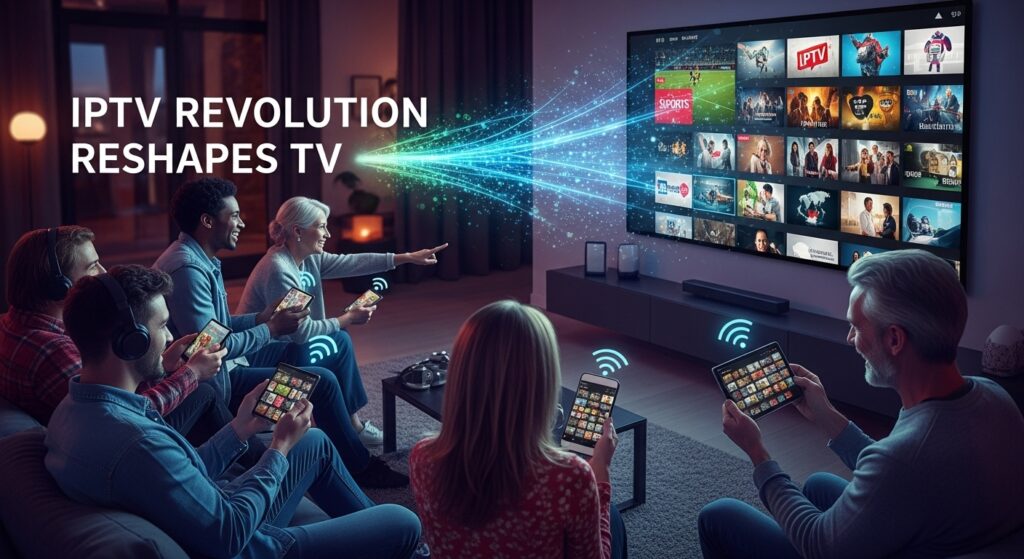
IPTV stands for Internet Protocol Television — that is, delivering television content over IP networks (your broadband) rather than by satellite or traditional cable. That alone doesn’t make a service legal or illegal. The crucial factor is content rights: a legitimate iptv subscription sold in the United Kingdom will have rights to provide channels and catch-up programming; pirate playlists do not. IPTV Revolution Reshapes TV.

Common forms of iptv you’ll see in the UK:

  • Broadcaster apps (BBC iPlayer, ITVX, All 4) — IP-delivered and legal.
  • OTT SVOD platforms (Netflix, Amazon Prime Video, Disney+) — IP-delivered shows and movies under license.
  • ISP-managed IPTV (BT TV, Sky Stream, Virgin) — formal IPTV services by broadband providers.
  • Licensed IPTV providers — companies that resell licensed feeds or curate channel bundles.
  • Front-end players (IPTV Smarters Pro, TiviMate, IPTV Pro) — apps that play the streams you feed them (M3U, Xtream). These players are neutral tools; their legality depends on the content source.

So, IPTV is a delivery method plus an ecosystem of services and players. It’s not inherently “pirate” — but the open nature of the internet makes piracy a temptation for some sellers and buyers. We’ll cover how to avoid that later. IPTV Revolution Reshapes TV.

2. Why traditional TV models are under pressure

Several long-term trends have made linear cable and satellite bundles increasingly unattractive:

  • Cost creep — bundles grew, prices rose, and many households ended up paying for hundreds of channels they never watched.
  • Consumer control — viewers want to choose shows and watch on their terms: on-demand, on mobile, across devices.
  • Better broadband — fibre and full-fibre upgrades provide the bandwidth needed for stable HD and 4K streaming.
  • Device ubiquity — Smart TVs, Fire Sticks, Chromecast, and Android TV boxes are cheap and intuitive.
  • Modularity — services such as NOW allow buying month-by-month passes for sports or entertainment, avoiding year-long contracts.
  • Advertising & FAST channels — Free Ad-supported streaming TV (FAST) fills gaps with themed channels people like, without subscription costs.

Consequently, paying a single large monthly fee for an entire bundle increasingly feels inefficient compared with targeted iptv subscriptions and a mix of free/paid apps.

3. The technical foundations of IPTV

IPTV’s user experience depends on several key technologies:

  • Adaptive Bitrate Streaming (ABR): automatically adjusts video quality to your current bandwidth to minimise buffering.
  • Codecs (HEVC, H.265; AV1 emerging): more efficient codecs let providers deliver high-quality 4K at lower bitrates.
  • DRM (Widevine, PlayReady): required for high-quality/4K playback in many official apps.
  • CDNs (Content Delivery Networks): deliver streams from nearby servers to reduce latency and packet loss.
  • Front-ends & EPGs: TiviMate and IPTV Smarters Pro provide a traditional TV-like guide for playlists and provider feeds.
  • Network essentials: good router, QoS, Ethernet/5GHz Wi-Fi, and adequate broadband (25–50 Mbps per 4K stream recommended).

If these technical pieces are in place, IPTV can match or exceed the reliability and quality of traditional broadcast systems. IPTV Revolution Reshapes TV.

4. What UK viewers actually gain — benefits explained

Choice & customisation
Rather than paying for a hundred unused channels, you can pick a few iptv subscriptions and free apps that match your tastes. Need sport only for six months a year? Buy a NOW Sports pass when the season starts.

Cost control
By rotating subscriptions and using free services (BBC iPlayer, ITVX, All 4), many UK households cut annual TV costs significantly.

Portability
Watch on a Smart TV at home, then continue on your phone or tablet — ideal for commuters and students.

Better discovery & UX
Modern players and recommendation engines surface relevant shows quickly; front-ends allow favourites and custom EPGs.

Future-proofing
With codec support like AV1 and HEVC, modern devices will handle higher-quality streams for years to come.

Multi-device & multi-user
Most services offer multiple profiles and parallel streams, letting families watch different content at the same time.

5. Devices, apps and the modern IP stack

Devices that matter

  • Amazon Fire TV Stick 4K Max — best value with broad app support.
  • Chromecast with Google TV — clean UI, great for Android users.
  • NVIDIA Shield TV — power user choice: AV1/HEVC support, Plex server features.
  • Smart TVs (Samsung, LG, Sony) — convenience, built-in apps.

Apps & players

  • Native apps: Netflix, BBC iPlayer, Amazon Prime, Disney+, NOW — preferred for DRM and 4K.
  • Front-ends: IPTV Smarters Pro, TiviMate, Perfect Player — used with licensed M3U/Xtream providers.
  • Media servers: Plex or Jellyfin for local libraries and enhanced streaming.

Network setup

  • Use Ethernet for the main living room TV when possible.
  • For Wi-Fi, prefer 5GHz bands and Wi-Fi 6 routers for multiple concurrent streams.
  • Configure router QoS to prioritise streaming device traffic in busy households.

6. Legal and safety essentials (TV Licence, piracy risks)

TV Licence basics (UK)
If you watch or record live TV on any channel or device, including via IPTV UK , you need a valid TV Licence. Using BBC iPlayer (live or catch-up) also requires a licence. If you only watch on-demand subscription services (Netflix, Amazon Prime) and never watch live or iPlayer, you may not need a licence — but many households blend services and need to check.

Piracy risks
“Cheap” iptv subscriptions sold via social media often redistribute copyrighted channels without permission. Risks for buyers include:

  • Malware and compromised devices (pre-loaded “jailbroken” sticks).
  • Sudden service shutdowns and no refunds.
  • Possible legal exposure and financial fraud.

How to stay safe

  • Use apps from official app stores.
  • Prefer reputable providers (company details, invoices, card payments).
  • Avoid pre-loaded devices and anonymous social-media sellers.
  • Keep device firmware up-to-date and use strong payment methods (card/PayPal).

7. Business models: subscriptions, FAST, and modular passes

The IPTV ecosystem supports multiple monetisation strategies:

  • SVOD (Subscription Video on Demand) — Netflix-style monthly plans.
  • AVOD (Ad-supported Video on Demand)/FAST — Pluto TV, Tubi: free to watch, ad-supported channels.
  • TVOD (Transactional VOD) — pay-per-view or rental of new releases.
  • Modular passes — NOW-style temporary passes for specific content (sports, cinema).
  • Licensed IPTV resellers — curate licensed bundles for niche audiences (regional channels, foreign language content).

This model diversity is core to the “end” of one-size-fits-all cable: consumers mix and match to their needs. IPTV Revolution Reshapes TV.

8. How to evaluate iptv providers — a practical checklist

When you evaluate a potential iptv subscription or provider, use this checklist:

  1. Company transparency — registered UK/EU company details, postal address and contact.
  2. Payment options — card or PayPal (not crypto/gift cards only).
  3. Proof of rights — can they demonstrate distributor agreements or reseller contracts?
  4. Trial availability — legitimate iptv uk free trial with clear cancellation.
  5. App distribution — presence on official app stores or support for mainstream players (TiviMate, IPTV Smarters).
  6. Refund & terms — clear cancellation/refund policies.
  7. Independent reviews — look for reviews outside vendor channels.
  8. No forced sideloading — avoid providers pushing unknown APKs.

If any of these raise concerns, step away.

9. Step-by-step migration guide

Below is a practical weekend plan to transition from traditional TV to a modern, legal IPTV-first setup. Follow step-by-step to minimise disruption and keep everything legal. IPTV Revolution Reshapes TV.

Step 1 — Audit your viewing

Write down your must-watch shows: live sport, morning news, kids’ channels, favourite drama series. Note who watches what and when. This tells you which services are essential.

Step 2 — Map rights and services

Research where your must-watch content lives: Premier League may be split across Sky/Now/Peacock or Amazon; some tournaments are DAZN or BT. Create a simple table: Content → Rights Holder → App needed.

Step 3 — Check your network & device readiness

Run a speed test at your TV location. Target: 20–30 Mbps for HD streams or 25–50 Mbps for reliable 4K. Check if your TV supports needed apps. If not, buy an affordable Fire TV Stick 4K Max or Chromecast with Google TV.

Step 4 — Install legal free apps

Install BBC iPlayer, ITVX, All 4, My5 and Freeview Play. These free catch-up apps cover a lot of ground. Log in and test live/catch-up playback.

Step 5 — Try paid pillars with trials

Use iptv uk free trial offers or short monthly plans for Netflix, Prime Video, Disney+ depending on your needs. Create profiles, set parental controls, test device compatibility.

Step 6 — Choose a sport strategy

If you’re a seasonal sports fan, use NOW passes or rights-holder event passes. If you need constant Sky Sports access, evaluate Sky Stream or Sky subscription packages.

Step 7 — Add a front-end if you need centralisation

If you want a single guide across sources and a centralised EPG, install TiviMate (Android TV) or IPTV Smarters Pro (Fire/Android). Only add content from licensed providers or official portals — do not import unknown M3U files from social ads.

Step 8 — Improve reliability

Prefer Ethernet for the main TV; if impossible, use a Wi-Fi 6 router or mesh. Set QoS for streaming devices and reduce heavy background downloads during peak viewing.

Step 9 — Test under real conditions

Watch live programs and sports during evening peak hours to ensure streams remain stable. If you encounter buffering, increase buffer size (in players), or move to Ethernet.

Step 10 — Cancel legacy services cautiously

Only cancel satellite/cable once you confirm your new setup reliably meets needs. Keep a short overlap of services to avoid loss of access during fine-tuning.

Ongoing maintenance

  • Monthly: update apps, clear caches.
  • Quarterly: re-evaluate subscriptions and rotate trials to save money.
  • Annually: check codec/DRM requirements if upgrading to 4K.

This approach minimises surprises and keeps your household streaming legally and with confidence. IPTV Revolution Reshapes TV.

10. Troubleshooting & optimisation tips

Buffering — use Ethernet, 5GHz Wi-Fi, and close background downloads. Enable ABR and moderate buffer values in players.
App crashes — clear cache, update app/firmware, reinstall.
No 4K / DRM issues — ensure device supports Widevine L1 or other DRM the service requires; use native apps for 4K where possible.
IPTV playlist problems — if a channel drops often, ask provider for alternate endpoints or test during off-peak.
Slow remote control or UI lag — reboot device, disable background apps, or use a faster device (Shield vs budget stick).

11. The future: where IPTV is heading by 2025 and beyond

Expect these trends:

  • More modular rights — short-term passes and event-based pricing become the norm.
  • Improved codecs — AV1 adoption reduces bandwidth needs for 4K and HDR.
  • Smarter aggregation — universal search and payment in a single UI, combined billing for multiple services.
  • FAST expansion — ad-supported channels grow as an alternative for cost-sensitive viewers.
  • AI-powered discovery — personalised bundles and recommendations made by smarter systems.

Together, these shifts deepen the disruption to traditional TV models.

12. Conclusion: what households should do now

IPTV is not an experiment — it’s a mature ecosystem ready for most UK homes. To benefit:

  1. Audit what you watch.
  2. Test with iptv uk free trial offers and free catch-up apps.
  3. Use devices that support modern codecs and DRM for 4K if you want the best picture.
  4. Choose licensed providers and avoid pre-loaded sticks and anonymous sellers.
  5. Prioritise network reliability (Ethernet, Wi-Fi 6, QoS).
  6. Rotate subscriptions and use short passes to lower annual costs.

If you follow a careful plan, you’ll likely pay less and enjoy more — and you’ll be prepared for the next phase of streaming innovation. IPTV Revolution Reshapes TV.

13. FAQs

Q1 — Is IPTV legal in the UK?
Yes — legal when the provider has distribution rights. Use official apps (iPlayer, Netflix) or licensed iptv subscriptions.

Q2 — Do I need a TV Licence to use IPTV?
If you watch live TV or BBC iPlayer, yes. On-demand-only services like Netflix generally don’t require a licence — but many households mix services, so check TV Licensing guidance.

Q3 — Are IPTV players like IPTV Smarters Pro illegal?
No — they are neutral players. Legality depends on the content source you load.

Q4 — How much broadband do I need?
Plan ~8–12 Mbps per HD stream, and 25–50 Mbps per 4K stream. For multiple simultaneous streams, multiply accordingly and add headroom.

Q5 — Can I keep my Sky content without a long contract?
Yes — NOW (Sky’s passes) offers month-by-month access to many Sky channels including sports, without long contracts.

How to Set Up IPTV UK on Your Fire Stick, Smart TV & Phone

Setting up an IPTV UK service on a Fire Stick, Smart TV or phone is straightforward — provided you choose a reputable iptv subscription, verify licences, and match apps to your device. IPTV Setup Across Devices.

Two important, up-front facts you should know: Amazon and device makers have increased measures to block unauthorised/pirate streaming apps on Fire TV devices — so always use official app-store apps or reputable side-loading sources and prefer licensed providers. Also, some Android TV front-ends (TiviMate) are optimised for TV boxes rather than phones.

Before you start — prerequisites

  1. Broadband: For single HD streams, target ~20–30 Mbps; for 4K allow 25–50 Mbps or higher. If multiple viewers stream concurrently, add bandwidth per stream.
  2. Account & subscription: Sign up for a reputable iptv uk provider and, if available, use an iptv uk free trial to test. Prefer providers who accept card/PayPal and show company details.
  3. Device choice: Decide whether you’ll watch via Fire Stick (common), Android TV box or Smart TV (Samsung/LG), or via phone (iOS/Android). Some players like TiviMate are Android TV-focused; IPTV Smarters Pro is commonly used on many platforms.
  4. App knowledge: Front-end players (TiviMate, IPTV Smarters) require a playlist (M3U) or portal (Xtream Codes / API) from your provider. Native apps (BBC iPlayer, Netflix) are separate and often required for DRM’d 4K content.
  5. Security: Keep device firmware updated; pay with card/PayPal; avoid unknown pre-loaded “sticks”. Consider a reputable VPN only if you understand its implications — but note a VPN does not legalise pirated content.

Device notes & app availability (important)

  • Fire TV / Fire Stick: Modern Fire TV sticks (e.g., Fire TV Stick 4K Max) support Widevine L1 and Wi-Fi 6, enabling high-quality playback — but Amazon has stepped up restrictions on side-loaded apps facilitating piracy, so prefer official app store apps or trusted guidance for sideloading.
  • Android TV / Android boxes: Best for front-end players like TiviMate (Google Play) — great EPG and multi-playlist support.
  • Smart TVs (Samsung, LG): Use native apps where offered; some Samsung/LG webOS apps may not support third-party front-ends. Consider Chromecast with Google TV or a small Android TV box if your TV lacks apps.
  • Phones (iOS/Android): Use provider apps or mobile versions of front-ends; note TiviMate is optimised for TV screens, not phones. IPTV Smarters often has mobile variants. IPTV Setup Across Devices.

step-by-step setup

Below is a thorough, device-agnostic, hands-on setup you can follow over a weekend. 

 A — Prepare your network and accounts

  1. Run a broadband speed test at the location of your primary TV (use Speedtest.net or your ISP tool). Record typical evening speeds; if the download is below ~25 Mbps, consider upgrading or using Ethernet for the main TV.
  2. Create or confirm your account with your chosen iptv uk providers. 

 B — Fire Stick (installation & activation)

  1. On Fire TV, sign-in and update system software (Settings → My Fire TV → About → Check for Updates). This ensures Widevine/DRM compatibility for HD/4K apps.
  2. Install the Downloader app from the Amazon Appstore (if you need to side-load) and enable Apps from Unknown Sources for the Downloader app (Settings → My Fire TV → Developer options). Note that new Fire TV firmware has tightened restrictions on sideloading—only sideload trusted APKs and follow provider guidance.
  3. If your provider supplies an official app in the Amazon Appstore, install it and log in with your credentials or portal. Otherwise, install an IPTV player: search the Appstore for “IPTV Smarters” (some variants are available) or sideload the APK using Downloader only from a trusted link. IPTV Setup Across Devices.

 C — Phone (Android / iPhone)

  1. Install your provider’s official app (if provided) or an IPTV player available for mobile (many providers support IPTV Smarters mobile). Use Google Play or Apple App Store only.

 D — Final verification & closing legacy services

  1. Run a stress test in peak hours (evening) and watch a live sports event if that’s core to your needs. This reveals real-world performance.
  2. Only cancel legacy satellite/cable once you confirm the IPTV setup meets all must-have content and stability requirements — keep an overlap for a few days to be safe. IPTV Setup Across Devices.

Troubleshooting & optimisation (summary)

  • Buffering: Ethernet, 5GHz Wi-Fi, router QoS, reboot devices.
  • No channels/EPG: Re-enter M3U/portal credentials, refresh EPG, contact provider.
  • App availability issues (Fire TV): Because Amazon has tightened sideloading and piracy controls, prefer official Appstore apps or verified instructions; some apps may need sideloading via Downloader but exercise caution.
  • 4K or DRM problems: Ensure device supports Widevine L1 (for HD/4K DRM content) and use native apps for DRM-protected services.

Legal & safety checklist

  1. Confirm the provider shows company details and payment receipts.
  2. Verify whether channel packages are licensed (ask the provider if unsure).
  3. Avoid pre-loaded “jailbroken” sticks and anonymous social-media sellers — these are common vectors for piracy and malware. Recent industry moves have targeted illegal apps and sideloaded content on Fire TV devices.

Quick device recommendations (2025)

  • Best Fire Stick: Fire TV Stick 4K Max (Wi-Fi 6, Widevine support).
  • Best Android TV device: NVIDIA Shield or capable Android TV boxes for AV1/HEVC support.
  • Best front-end for Android TV: TiviMate (EPG, playlists).

Final notes & next steps

I’ve provided a full, practical guide with an 800-word step-by-step walkthrough, device notes, legal/safety checks, and troubleshooting tips to help you set up IPTV UK on a Fire Stick, Smart TV and phone. Key actions: run a speed test, try an iptv uk free trial, use official app stores where possible, and test during real viewing conditions.

“Maximising Your IPTV UK Experience: Top Tips for Buffer-Free Streaming”

why buffering happens

When your iptv stream stutters, pixelates or stops, the root cause usually sits in one of three areas: (1) insufficient internet bandwidth or high latency, (2) local network problems (Wi-Fi congestion, poor router, interference), or (3) device/app limitations (old hardware, wrong player settings, or DRM issues). Consequently, to achieve buffer-free IPTV you must address all three systematically. Buffer-Free IPTV UK.

Moreover, different iptv providers and iptv services (including iptvuk or british iptv resellers) will behave differently under load. Therefore, choosing the best iptv service for your needs helps, but optimising your home network, hardware and app configuration usually delivers the biggest single improvement.

Top principles

  1. Start with reliable broadband — 25–50 Mbps per HD stream; 50–150 Mbps for multi-room 4K.
  2. Prefer wired connections for the main TV; use 5 GHz Wi-Fi or Wi-Fi 6 for wireless.
  3. Use modern hardware (Fire TV Stick 4K Max, Android TV boxes, or recent Smart TVs) for efficient decoding and DRM.
  4. Choose the right app (IPTV Smarters Pro, TiviMate, native apps) and configure buffering settings.
  5. Verify your iptv provider — test with an iptv uk free trial and check server reliability.
  6. Monitor & measure — run speed tests, ping tests and packet loss checks under real-world conditions.

Before you begin: basic checklist

  • Confirm your iptv subscription details, including how many simultaneous streams are allowed and what credential type you have (M3U URL, Xtream Codes API, portal).
  • Run a broadband speed test at the TV location and record evening peak speeds.
  • Update device firmware and app versions (IPTV Smarters, TiviMate, native apps).
  • If possible, connect the primary streaming device by Ethernet. If not, ensure the router and TV support 5 GHz or Wi-Fi 6.

Home network optimisation — the foundation of buffer-free IPTV

  1. Bandwidth planning. For a single HD stream, plan for 20–30 Mbps. For 4K, plan for 25–50 Mbps minimum, and more if multiple viewers use the network. If you have several devices streaming concurrently, multiply accordingly. For example, two simultaneous 4K streams may need 100 Mbps+ stable throughput. Consequently, review your ISP plan and upgrade if necessary.
  2. Wired is best. Ethernet offers consistent throughput and low latency. Therefore, use a wired connection for your primary TV or streaming box whenever possible.
  3. Use modern Wi-Fi. If you must use Wi-Fi, favour 5 GHz over 2.4 GHz and buy a router that supports Wi-Fi 5 (802.11ac) or Wi-Fi 6 (802.11ax). These modern standards reduce congestion and improve throughput for multiple devices.
  4. Mesh and extenders. For larger homes, use a quality mesh system rather than cheap extenders. Mesh provides seamless roaming and better sustained bandwidth.
  5. Quality of Service (QoS). Configure QoS on your router to prioritise streaming devices. Prioritise ports/protocols if your router supports application-level rules. This reduces buffering during heavy household usage.
  6. Channel selection & interference. Use router admin pages to select the least congested 5 GHz channel. Avoid interference from microwaves, cordless phones and baby monitors.
  7. Network hygiene. Limit heavy background downloads (cloud backups, large game updates) during prime viewing times. Schedule large updates overnight.
  8. DNS settings. Use reliable DNS servers (your ISP’s or trusted public DNS) to reduce resolution delays. Sometimes provider-recommended DNS improves performance for their streams.
  9. ISP issues & peering. If you observe consistent slowdowns from your iptv provider, the problem may be ISP-level congestion or poor peering. Contact your provider and the iptv provider — a stable iptv service will work with hosting/CDN partners to fix issues.

Choosing a device & player

  • Fire TV Stick 4K Max (or later) — widely used for uk iptv, supports Widevine/DRM where needed and offers good Wi-Fi performance.
  • Android TV boxes / NVIDIA Shield — excellent for TiviMate and advanced buffering control; best for power users.
  • Smart TVs — convenient for native apps; but some have weaker Wi-Fi or lack third-party players. Consider a small box for advanced players.
  • Phones & tablets — good for mobility, but avoid them as your primary TV device.

Use IPTV Smarters Pro or TiviMate for playlists/portal-based iptv subscriptions; these apps are optimised for large channel lists and EPGs. Where possible, use the provider’s official app for the most reliable streams and DRM support. Buffer-Free IPTV UK.

App and player settings that reduce buffering

  1. Increase buffer size where the app allows it. A larger buffer smooths brief network jitter but adds startup delay. Balance startup delay with reduced stutter.
  2. Adjust video cache and buffering thresholds in advanced settings (TiviMate and some smarters builds allow these).
  3. Use hardware acceleration in app settings if available — this offloads decoding to the device and reduces CPU load.
  4. Disable background refresh or heavy EPG polling if the app performs frequent network requests. Some players let you reduce EPG refresh frequency.
  5. Enable adaptive bitrate streaming (ABR) options if supported; ABR lets the player downshift quality smoothly when bandwidth fluctuates.
  6. Prefer provider apps for 4K/DRM content — native apps handle Widevine/PlayReady better than third-party players.

Server & provider considerations — pick the right iptv provider

Even with perfect home setup, a poor iptv provider causes buffering. Therefore, choose providers with:

  • Redundant servers and CDN coverage in or near the UK.
  • Positive uptime history and independent reviews.
  • Support for multiple concurrent streams according to your household needs.
  • Transparent trial and refund policies so you can test iptv uk free trial without risk.

If a provider’s streams buffer heavily during peak hours even on Ethernet, that provider is not the best iptv choice for you.

step-by-step setup & optimisation walkthrough

Below is an actionable, device-agnostic walkthrough you can follow now to set up and optimise for buffer-free IPTV in the UK. Follow each step carefully and test after each change. Buffer-Free IPTV UK.

Step 1 — Gather facts and run baseline tests (Preparation)
First, note your iptv subscription type and activation details (M3U URL, Xtream portal credentials, or provider app login). Next, run a speed test at the TV location during your usual viewing time (evening peak). Record download, upload and ping. If download is <25 Mbps and you want HD, plan an ISP upgrade. Also, perform a traceroute or ping to your provider’s streaming endpoint if they supply it; packet loss here is a red flag.

Step 2 — Connect via Ethernet where possible (Immediate Improvement)
Plug the streaming device into the router with a CAT5e or CAT6 cable. Reboot the streaming device. Ethernet reduces latency, jitter and packet loss. If Ethernet isn’t possible, ensure your device is connected to the 5 GHz Wi-Fi band and sits close to the router.

Step 3 — Update firmware & apps (Foundation)
Update router firmware, streaming device OS, and your IPTV player app (IPTV Smarters Pro, TiviMate, provider app). Improvements to Wi-Fi drivers or DRM often land in firmware updates.

Step 4 — Configure router for streaming (QoS & channels)
Log into your router and enable QoS, prioritising the streaming device’s MAC address and common streaming ports. Switch to a quieter 5 GHz channel (36/40/44 or 149/153/157 depending on local congestion). If your router supports it, enable MU-MIMO or Airtime Fairness which helps with multiple clients.

Step 5 — Install and configure your IPTV player (Player setup)
Install TiviMate or IPTV Smarters on a Fire Stick, Android TV, or Smart TV. Add your M3U URL or Xtream Codes API info. Set EPG timezone to Europe/London. In advanced settings, increase the buffer/caching value by one increment (e.g., from default to medium). If you have 4K streams, enable hardware acceleration.

Advanced tweaks & diagnostics

  • Packet capture & analysis. For power users, use Wireshark or router logs to check for retransmissions or high packet loss.
  • MTU tuning. Rarely, incorrect MTU causes fragmentation and stuttering. Adjust MTU if you suspect fragmentation.
  • Change player/codec. Some streams use HEVC/AV1; older sticks may struggle. Use a device with hardware AV1/H.265 support for best efficiency (important for best iptv 2025 setups).
  • Split DNS or local caching. Advanced routers can use local DNS resolution to speed up EPG or provider API lookups.
  • Secondary provider for redundancy. For critical events (big sports matches), have a backup iptv provider or provider app tested under the same conditions.

Troubleshooting quick guide

  • Buffering on all channels → check broadband speed, Ethernet, router QoS.
  • Buffering only on some channels → provider endpoint issue; contact provider.
  • Startup slow → increase initial buffer, check DNS.
  • 4K fails but HD works → device DRM/codec problem (Widevine L1 required) or insufficient bandwidth.
  • Frequent disconnects → check packet loss with ping/traceroute, replace faulty cables.

Choosing the best iptv provider for buffer-free streaming

When selecting an iptv provider in the united kingdom, prefer services that show: UK/European CDN presence, transparent uptime claims, traceable payment methods (card/PayPal), and a clear iptv uk free trial. Test during peak hours and ensure support responsiveness. The best iptv service is the one that consistently delivers HD/4K streams to your household at your peak times. Buffer-Free IPTV UK.

Final checklist — ready for a buffer-free evening

  • Run evening speed test.
  • Connect main device via Ethernet if possible.
  • Update router and device firmware.
  • Prioritise streaming device via QoS.
  • Use 5 GHz Wi-Fi / Wi-Fi 6 or mesh system.
  • Use modern player (IPTV Smarters Pro, TiviMate) with tuned buffer.
  • Test via iptv uk free trial before committing.
  • Keep backups (alternate provider or app) for major live events.

Conclusion

Buffer-free IPTV in the UK is achievable with a combination of the right iptv subscription, a reliable home network, modern devices, correct app settings and careful provider selection. Whether you’re testing an iptv uk free trial or settling on a long-term iptv subscription, follow the steps above: prepare your network, pick the right hardware, configure your player, test during peak hours, and escalate to your provider or ISP if problems persist.

IPTV FREE TRIAL

“Watching Premier League on IPTV: What UK Users Need to Know”

1) Who holds Premier League rights in the UK — the essentials

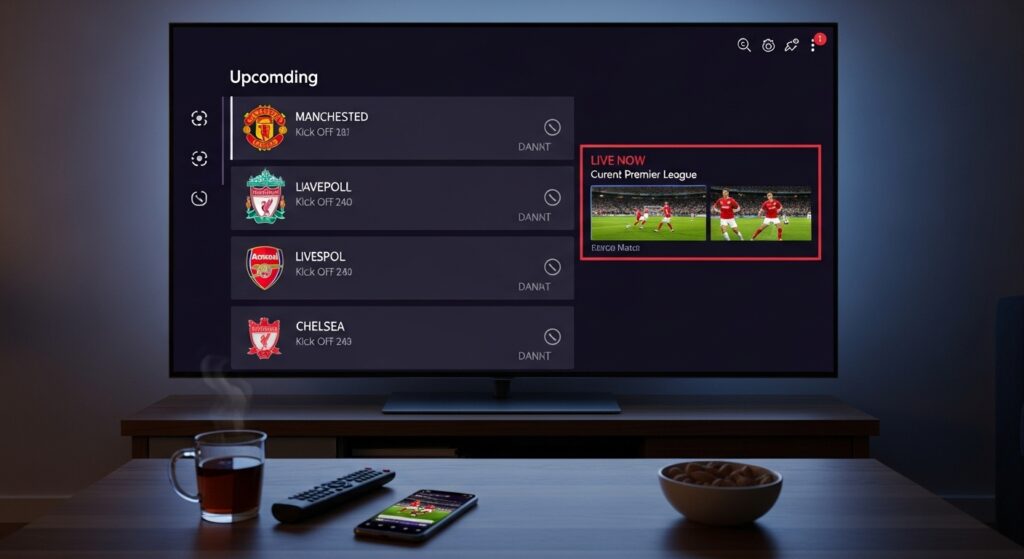
The Premier League sells live broadcast rights by territory. For the 2022–2025 cycle the domestic (UK) live rights were held by Sky Sports, TNT/BT (branded variously, often described as TNT Sports/BT Sport depending on year), and Amazon Prime Video — with BBC Sport holding the highlights rights. The Premier League has announced new cycles and updates for 2025–2028; check the Premier League’s official broadcaster pages for the current season. In short: live Premier League matches in the UK are available only through the rights-holding broadcasters and their authorised platforms. Premier League IPTV Guide.

Why this matters for IPTV: authorised broadcasters (Sky, TNT/Talk-BT, Amazon Prime Video) stream through their own apps or through authorised distributors. An iptv subscription that claims to offer live Sky Sports, TNT Sports or Amazon matches but is not an authorised reseller is very likely an illicit stream that infringes copyright and places users at legal and security risk.

2) Legal vs illicit IPTV — a short primer

  • IPTV (technology) is neutral: it means delivering TV/video over internet protocol — many legal services use IPTV delivery.
  • Legal IPTV services either are rights-holders’ own apps (e.g., Sky Go, Now/Stream, Amazon Prime Video app) or licensed resellers who distribute authorised feeds and honour DRM/rights. These will accept cards/PayPal, show company details, provide invoices, and appear on official app stores.
  • Illicit IPTV services rebroadcast pay-TV (Sky Sports, TNT Sports, etc.) without permission, sell cheap subscriptions, require side-loading of questionable APKs, or hide payments through gift cards/crypto. They often promise “all premium channels” for a suspiciously low price. Such services are targeted by enforcement and have led to operator convictions and heavy civil damages. Users also face malware and fraud risk.

Practical takeaway: if your aim is to watch the Premier League reliably and lawfully on IPTV in the UK, use the official broadcaster apps and/or licensed resellers. Do not rely on anonymous IPTV suppliers who promise premium channels at implausible prices. Premier League IPTV Guide.

3) How rights and DRM affect your ability to watch on IPTV devices

Rights-holders often require DRM (Widevine L1, PlayReady) for high-quality streams and 4K. Official apps and authorised services are built to honour those DRM requirements. Third-party IPTV players (e.g., IPTV Smarters/IPTV Smarters Pro, TiviMate) can play M3U playlists or Xtream portal streams — but they do not alter whether the stream source is authorised. For premium live sports, the most reliable, lawful route is the rights-holder’s own app or a recognised streaming partner.

4) What UK users must check before subscribing to any IPTV offering for Premier League

  1. Is the provider authorised to show Premier League content in the UK? Ask for evidence. Licensed providers will be open about rights or will refer you to the broadcaster app (Sky/TNT/Amazon).
  2. How are payments accepted? Legitimate services use card/PayPal/Stripe and issue invoices/receipts. Anonymous payments (gift cards, crypto only) are a red flag.
  3. Does the provider use official apps or force side-loads? If the provider asks you to side-load unknown APKs or buy pre-loaded sticks from unknown sellers — step away.
  4. Trial and refund policy: a transparent iptv uk free trial or money-back guarantee is preferable; still test thoroughly during a live match.
  5. Simultaneous streams & device support: if your household needs multiple simultaneous streams, confirm limits and supported devices (Fire Stick, Smart TV, phone).
  6. Customer support & uptime: check reviews and test support before paying. If a provider’s streams fail during a big match, it’s too late to find out.

5) Watching legally: practical options for UK viewers

  • Sky Sports / NOW / Sky Stream: Sky holds a large package of PL matches. Sky provides its own apps, Sky Go, and NOW (Sky’s flexible pass model). Choose a licensed Sky option for full Sky Sports coverage.
  • TNT Sports / BT Sport: Where TNT/BT hold rights, their apps and official platforms are the lawful source.
  • Amazon Prime Video: Amazon holds selected live match rights in certain packages; use the Prime Video app or the rights-holder’s authorised channel mechanism.
  • Highlights: BBC Sport holds free-to-air highlights (Match of the Day) — available via BBC iPlayer and the BBC website.

If you use an iptv uk subscription that aggregates legal distributors and presents them through a unified EPG, ensure the aggregator has express permission to redistribute those streams in the UK.

6) 800-word step-by-step: How to set up and verify a safe Premier League IPTV experience (detailed walkthrough)

This step-by-step walk-through explains every practical step — from choosing the right subscription, testing during a live match, to verifying payment receipts and DRM. Follow it carefully to avoid illegal streams and ensure a buffer-free live match. Premier League IPTV Guide.

Step 1 — Clarify what you need (channels, matches, devices)
Begin by listing the matches/events you want to watch: weekend matches, midweek fixtures, or specific club coverage. Note that rights are split: one provider may have particular kick-offs or packages (e.g., Sky holds a large number of matches; Amazon or TNT may have exclusive midweek or weekend packages). Match your must-watch list to their rights-holders. If you need a single provider for the majority of matches, pick a rights-holder account

Step 2 — Confirm device compatibility & DRM
For each shortlisted option, confirm whether your device supports the broadcaster’s app and DRM requirements (Widevine L1 for many HD/4K streams). Fire TV Stick 4K Max, recent Android TV devices and current smart TVs commonly meet these requirements.

Step 3 — Use trials and test during a live match
Where available, take an iptv uk free trial or short-term pass. Crucially, test the trial during a live Premier League kick-off window, not during quiet daytime hours. Only live testing reveals peak hour performance, stream stability and any geo-restrictions. Monitor buffering, stream switching, commentary sync, and resolution. Premier League IPTV Guide.

Step 4 — Protect account & payment
Use card/PayPal where possible for traceability. Save receipts and confirmation emails. Set strong passwords and enable 2FA if available. Avoid sharing credentials with unknown third parties.

Step 5 — Keep legal obligations in mind
Remember: watching live broadcast channels (including through an authorised IPTV stream) requires a UK TV Licence when viewing live programming or BBC iPlayer. Holding a legal subscription to a broadcaster does not remove the TV Licence obligation.

7) Troubleshooting live match problems (quick guide)

  • No stream / black screen: Ensure you’re using the broadcaster’s official app or an authorised reseller. Re-login, update the app, and test a different device.
  • Buffering during kickoff: Test Ethernet and run a speed test. If Ethernet is fine, contact your iptv provider — they may be throttled at CDN/peering level.
  • Geo-block or blackouts: Some matches may be subject to territorial blackout rules. Check the broadcaster’s schedule and rights disclaimers.
  • Audio/video out-of-sync: Switch to another stream (if available) or change the audio track; otherwise restart the stream and device.
  • App crashes: Update firmware or reinstall official apps; avoid unknown sideloaded APKs.

8) The enforcement climate — recent actions & risks

UK authorities and rights-holders have continued to act against illicit IPTV operations and their operators; recent high-profile civil and criminal actions have produced heavy damages and jail sentences for operators. Consumers of illicit services also face risks: malware from pre-loaded devices, payment fraud, and inability to obtain refunds. The UK government and Ofcom have been active in updating media law and enforcement approaches. Use official and licensed routes for major events like Premier League matches to avoid these risks.

9) Final recommendations — how to watch Premier League safely on IPTV in the UK

  1. Use rights-holder apps or licensed resellers (Sky/Now/Sky Stream, TNT, Amazon) rather than anonymous IPTV sellers.
  2. Test with a trial or short pass during an actual match window before committing.
  3. Check device DRM support (Widevine L1) for HD/4K and use up-to-date Fire Stick / Android TV hardware.
  4. Keep receipts and use traceable payments.
  5. Ensure your household has a valid TV Licence if watching live channels or BBC iPlayer. Premier League IPTV Guide.

Sources & further reading (selected)

  • Premier League — broadcasters and rights information.
  • Ofcom — Media Act implementation and regulation updates.
  • UK government call/response on illicit IPTV and policy background.
  • News and enforcement actions (Sky/other rights-holder cases, industry reporting).
  • Practical device/app guidance and IPTV Smarters notes
  • How to watch matches legally with IPTV-friendly devices and apps (Fire Stick, Smart TV, phone) and what to check before you subscribe.
  • An 800-word, step-by-step setup & verification guide to help you enjoy Premier League matches without risking piracy or poor streams.
  • Practical troubleshooting, proof-of-purchase checks, and final recommendations for choosing the best iptv provider for live sport in the united kingdom. 

Troubleshooting IPTV: Fix Buffering, Freezing & Lag Fast

Introduction:

IPTV (Internet Protocol Television) has revolutionized how people in the UK consume entertainment. With hundreds of live channels, on-demand movies, and catch-up TV at a fraction of cable’s cost, IPTV offers flexibility, value, and freedom. But like any streaming-based service, issues like buffering, freezing, and lag can ruin the experience. IPTV Buffering Fix Guide.

If you’ve ever sat through an exciting football match only to have the picture freeze mid-goal, you know how frustrating it can be. The good news is that most IPTV performance issues are fixable — often with a few simple adjustments to your internet, settings, or device.

This in-depth guide explains everything you need to know to troubleshoot IPTV issues quickly — whether you’re using a Fire Stick, Smart TV, Android box, or mobile app. We’ll cover network optimization, device performance, ISP issues, server-side problems, and the best settings to ensure smooth, stable streaming across your entire home.

1. Understanding IPTV Streaming Problems

Before we dive into fixes, it’s important to understand why IPTV buffers or freezes in the first place. IPTV relies on real-time internet delivery, so any weak link in your connection chain can cause disruptions.

Common Causes of IPTV Buffering, Freezing, and Lag

  1. Slow Internet Speeds:
    If your broadband speed drops below 10 Mbps for HD or 20 Mbps for 4K, IPTV apps struggle to maintain continuous playback.
  2. Wi-Fi Interference or Weak Signal:
    Wi-Fi signals weaken through walls, floors, or distance from your router, causing unstable streaming.
  3. ISP Throttling (Traffic Shaping):
    Some ISPs limit or “throttle” IPTV traffic, especially during peak hours, leading to lag or constant buffering.
  4. Overloaded IPTV Servers:
    If the IPTV provider’s servers are congested, even a fast connection can’t help — the issue is on their end.
  5. Outdated Apps or Firmware:
    Older app versions or unpatched firmware can cause software conflicts or performance bugs.
  6. Device Overheating or Low Performance:
    Cheap or older devices may overheat or run out of memory, leading to freezing or sluggish playback.
  7. VPN Conflicts:
    Using a poorly configured VPN can slow streaming or block server connections altogether.

By identifying where the problem lies — your network, device, app, or provider — you can quickly apply the right fix.

2. Step-by-Step IPTV Troubleshooting Checklist

Let’s go through each layer of your IPTV setup to pinpoint and solve performance problems efficiently.

Step 1: Test Your Internet Speed

  • Go to speedtest.net or fast.com and check your download speed.
  • For smooth IPTV:
    • SD streaming: 5 Mbps minimum
    • HD streaming: 10 Mbps minimum
    • 4K UHD: 20–30 Mbps minimum
  • If speeds are lower, restart your router and retest. If it doesn’t improve, contact your ISP.

Pro Tip: If multiple people in your household are gaming, downloading, or watching YouTube at the same time, it can impact IPTV performance. Schedule updates and downloads for off-peak hours.

Step 2: Switch from Wi-Fi to Ethernet

Wireless is convenient, but wired connections are faster and more reliable for IPTV.
If possible, connect your device directly to the router via an Ethernet cable.

Why Ethernet is better:

  • Zero interference from walls or neighboring networks.
  • Consistent bandwidth delivery.
  • Lower latency and jitter — critical for live sports or interactive IPTV apps.

If Ethernet isn’t possible, consider:

  • A Wi-Fi 6 router (better range and performance).
  • A powerline adapter, which extends your connection through home wiring.
  • A mesh Wi-Fi system for multi-room coverage.

Step 3: Restart Everything

It sounds simple, but a restart can clear temporary memory leaks, cache buildup, and unstable connections. IPTV Buffering Fix Guide.

  1. Turn off your IPTV device (TV, Fire Stick, box).
  2. Unplug your router/modem for 30 seconds, then plug it back in.
  3. Wait for the network to fully reboot.
  4. Reopen your IPTV app and test playback.

Why this works:
Restarting resets your DHCP lease, clears cache, and forces your IPTV app to reconnect to the most stable server path.

Step 4: Update Apps and Firmware

Outdated apps or operating systems are a leading cause of IPTV instability.

  • Go to your device’s app store (Play Store, App Store, Amazon Appstore) and check for IPTV app updates.
  • Also, check for device firmware or OS updates.
    • Smart TVs: via Settings > Support > Software Update
    • Fire Stick: Settings > My Fire TV > About > Check for Updates
    • Android Boxes: via Settings > About > System Update

Pro Tip: Enable auto-updates so you never miss performance or security patches.

Step 5: Clear IPTV App Cache and Data

If your IPTV app keeps freezing, clearing cached files can refresh performance.

On Android / Fire Stick:

  1. Navigate to Applications > Settings > Manage Installed Apps.
  2. Choose your IPTV app (e.g., IPTV Smarters, TiviMate, or Smart IPTV).
  3. Select Clear Cache and Clear Data.

Why it helps:
Cache files can become corrupted or oversized, especially after software updates. Clearing them forces a clean reconnect to IPTV servers.

Step 6: Check for Server Issues (Provider Side)

Sometimes the issue isn’t you — it’s the IPTV provider.

  • Try a few different channels. If all are freezing, it’s likely your network or device.
  • If only certain channels buffer, it’s likely the provider’s feed for that specific stream.
  • Test the same channel on another device — if it works fine, your device or app is the issue.

Pro Tip: Many IPTV providers maintain backup servers or multiple playlists. Ask your provider for an alternative M3U or XC link and test performance.

Step 7: Use a Reliable VPN (for ISP Throttling)

If your ISP is throttling IPTV traffic, a VPN can help by encrypting your connection.

However, not all VPNs are equal. Avoid free VPNs — they often slow streaming. Instead, use reputable providers optimized for IPTV.

Recommended Features:

  • Fast UK or EU servers
  • No data caps
  • Split tunneling (to keep non-IPTV traffic off the VPN)
  • Support for routers or Fire Stick apps

Caution: Some IPTV providers block VPNs for licensing reasons. Always test with and without the VPN to compare performance.

3. Advanced IPTV Troubleshooting Techniques

If you’ve followed all the basic steps and still face issues, deeper optimizations may help.

A. Adjust Buffer Settings

Some IPTV apps allow you to tweak buffering time. Increasing the pre-buffer (e.g., from 5 seconds to 10 seconds) helps maintain smooth playback during small network fluctuations. IPTV Buffering Fix Guide.

  • In TiviMate or IPTV Smarters Pro, look for:
    • Settings → Player → Buffer Size
  • Experiment with small increments; too large a buffer increases start time.

B. Change Video Player or Decoder

Different players and codecs handle streaming differently.
Try switching between hardware and software decoding in your IPTV app settings.

  • Hardware decoding uses the device’s chipset — more efficient and smoother.
  • Software decoding relies on CPU — useful for older or incompatible hardware.

Try both and observe which gives more stable playback.

C. Disable Background Apps

On low-power devices (Fire Stick, Android boxes), background apps consume RAM and CPU.

Steps:

  • Close all other apps before launching IPTV.
  • Uninstall unused apps.
  • Disable animations or background sync if possible.

Bonus Tip:
Use lightweight launchers like Wolf Launcher or Leanback Launcher for faster navigation.

D. Use Quality of Service (QoS) on Router

Many modern routers include QoS settings, letting you prioritize IPTV traffic.

Steps:

  1. Log into your router’s web panel.
  2. Find “QoS” or “Traffic Prioritization.”
  3. Add your IPTV device’s MAC address or IP address.
  4. Assign it high priority.

Result: IPTV packets get sent first, reducing stutter and lag.

E. Update Router Firmware

Routers benefit from regular firmware updates — improving speed, compatibility, and stability.

  • Visit your router brand’s website (e.g., TP-Link, Asus, Netgear).
  • Check the latest firmware and follow update instructions carefully.
  • Reboot after updating.

F. Test on Another Network

Try your IPTV connection on a mobile hotspot or friend’s Wi-Fi.
If it works fine elsewhere, your home ISP or router is the culprit.

Contact your ISP and ask if IPTV streaming is being restricted or blocked. IPTV Buffering Fix Guide.

4. IPTV App-Specific Fixes

Different IPTV apps have their quirks. Here are tailored tips for the most popular ones:

IPTV Smarters Pro

  • Clear cache frequently.
  • Use the default built-in player instead of VLC or MX if streams stutter.
  • Update playlist URLs regularly to avoid expired links.

TiviMate

  • Enable “Playback Buffer Size: Large” for smoother playback.
  • Try changing “Decoder” mode to “Hardware.”
  • Sync EPG sources manually if channels load slowly.

Smart IPTV (SIPTV)

  • If buffering persists, reload the playlist from the provider’s portal.
  • Delete unused channels or lists to reduce load time.
  • Use Ethernet only for best results — Wi-Fi performance varies.

5. Preventing Future IPTV Problems

Once you’ve fixed your IPTV issues, follow these proactive measures to prevent them from returning.

  1. Reboot router weekly to refresh connections.
  2. Clear app cache monthly.
  3. Avoid running IPTV during heavy downloads or cloud backups.
  4. Upgrade router every 3–5 years for modern standards (Wi-Fi 6/6E).
  5. Use a wired connection whenever possible.
  6. Choose a reliable IPTV provider with strong server infrastructure.
  7. Test channels periodically to ensure your playlist is active and healthy.

6. When to Replace or Upgrade Hardware

Some older or budget devices simply can’t handle modern high-bitrate streams.
If you’ve tried everything and still experience lag, consider upgrading.

Recommended Devices for IPTV:

  • Amazon Fire TV Stick 4K Max (Wi-Fi 6 support, great performance)
  • NVIDIA Shield TV (best for advanced users, supports all codecs)
  • Chromecast with Google TV (budget-friendly and stable)
  • Smart TVs (2023+) with native AV1 and HEVC decoding

Routers:

  • TP-Link Archer AX55, Asus RT-AX86U, or Netgear Nighthawk series — all Wi-Fi 6 ready. IPTV Buffering Fix Guide.

7. Diagnosing ISP and Regional Problems

If your IPTV freezes mostly at specific times (evenings, weekends), it could be ISP congestion.

Signs of ISP Throttling

  • Speed tests show normal results, but IPTV lags.
  • VPN improves streaming instantly.
  • Issues occur only during peak hours.

Solutions:

  • Contact your ISP to discuss “video streaming performance.”
  • Use a VPN server geographically close to your provider’s IPTV server.
  • Consider switching ISPs that don’t throttle IPTV.

8. Quick IPTV Fix Summary

ProblemCauseQuick Fix
Constant bufferingWeak Wi-FiUse Ethernet or Wi-Fi 6
Freezing every few secondsServer overloadTry alternate playlist or provider
IPTV Smarters laggingCache overloadClear cache/data
Lag during peak hoursISP throttlingUse VPN
App keeps crashingOutdated versionUpdate or reinstall
Channel not loadingURL expiredRefresh playlist
Picture drops in qualityNetwork fluctuationEnable adaptive bitrate streaming


9. Expert Tips: Optimize for Zero Buffering

  • Use AV1 or HEVC streams for lower bandwidth consumption.
  • Keep your router elevated and unobstructed.
  • Set IPTV apps to auto-reconnect when streams drop.
  • Use mesh Wi-Fi nodes in multi-room homes.
  • Avoid overheating devices — give them ventilation space.

Conclusion: Enjoy Smooth, Reliable IPTV Streaming

Troubleshooting IPTV doesn’t have to be a nightmare. By understanding how IPTV works — and applying the step-by-step solutions outlined here — you can eliminate buffering, freezing, and lag permanently. IPTV Buffering Fix Guide.

The key is to optimize every layer: your internet speed, Wi-Fi strength, app settings, and device health. With a stable setup and modern equipment, IPTV can deliver cinema-quality entertainment to every room in your home without the frustration of interruptions.

Whether you’re watching Premier League football, family movies, or binge-worthy box sets, these tips will ensure your IPTV experience stays fast, fluid, and frustration-free.

IPTV FREE TRIAL

How to Set Up IPTV on Any Smart TV in 5 Minutes

Introduction:

Gone are the days when you had to juggle cable boxes, tangled cords, and overpriced satellite packages. Welcome to the age of IPTV (Internet Protocol Television) — where your Smart TV becomes a powerful gateway to live channels, movies, and on-demand entertainment. Smart TV IPTV Setup.

If you’re wondering how to set up IPTV on your Smart TV quickly, the good news is — it takes less than five minutes. In this guide, we’ll break down everything you need to know: the tools you need, how to install an IPTV app, add your playlist, and start streaming like a pro.

What is IPTV and Why You Should Care

Breaking Down the Term “IPTV”

IPTV simply means streaming television through the internet instead of traditional methods like satellite or cable. The “IP” stands for “Internet Protocol,” which is the same technology used to send data, websites, and emails across the web. Smart TV IPTV Setup.

In other words, IPTV delivers TV content over your broadband connection, allowing you to watch what you want, when you want, without relying on old broadcasting systems.

How IPTV Differs from Cable and Satellite

  • Cable/Satellite: Channels are broadcast on fixed schedules via physical wires or dishes.
  • IPTV: Content is streamed on-demand over your internet connection.
    This means you can pause, rewind, or watch on multiple devices — including your Smart TV, phone, or tablet — without needing extra boxes.

Why Smart TVs Are Perfect for IPTV

Built-In Internet Connectivity

Every Smart TV — whether Samsung, LG, Sony, or Hisense — comes with Wi-Fi or Ethernet support. That’s the first building block for IPTV UK . No external hardware is required to connect.

App Stores and Streaming Support

Smart TVs have their own app stores — like LG Content Store, Samsung Smart Hub, or Google Play Store — where you can install IPTV apps easily. Think of it as downloading an app on your smartphone, only this time for your television.

What You Need Before You Start

Make sure you have these necessities on hand before you begin:

1. Stable Internet Connection

A minimum of 15 Mbps is recommended for HD streams and 25 Mbps for 4K content. Always connect to a 5GHz Wi-Fi network or, better yet, use an Ethernet cable.

2. IPTV Subscription or Playlist

You’ll need an M3U link, Xtream Codes, or EPG URL provided by your IPTV service. Free IPTV lists also exist but may be unstable.

3. Compatible IPTV App

Different Smart TVs use different operating systems, so you’ll need an app compatible with your model. Examples include:

  • Smart IPTV (SIPTV)
  • TiviMate
  • Flix IPTV
  • SmartOne IPTV
  • SS IPTV
  • Smart STB

Step-by-Step: How to Set Up IPTV on Any Smart TV in 5 Minutes

Let’s get to the exciting part — setting it up. Smart TV IPTV Setup.

Step 1: Establish an Internet connection with your smart TV

Open your TV’s settings, go to Network, and connect to Wi-Fi. If possible, use Ethernet for stable, lag-free streaming.

Step 2 – Open the TV App Store

  • On Samsung TVs, open Smart Hub.
  • On LG TVs, go to the LG Content Store.
  • On Android/Google TVs, use the Play Store.

Step 3 – Install an IPTV App

Search for an IPTV player app — like Smart IPTV or Flix IPTV — and click Install. Once installed, open the app.

Step 4 – Add Your IPTV Playlist or M3U URL

Open the app, and you’ll see a screen asking for:

  • M3U URL or playlist file upload
  • MAC address (unique to your TV)
  • Xtream Codes API (for some apps)

You can enter these using your remote or, in some cases, through a web portal provided by the app (for example, siptv.eu/mylist).

Step 5 – Start Watching

Once the playlist loads, you’ll see your channel list, categorized by country or genre. Click on any channel and start streaming instantly!

Setup time: Under 5 minutes.
You’re done.

Best IPTV Apps for Different Smart TV Brands

Samsung Smart TVs

Best apps: Smart IPTV, SmartOne IPTV, SS IPTV.
Samsung’s Tizen OS supports advanced IPTV players . You may need to activate the app through its official website using your TV’s MAC address.

LG Smart TVs

Best apps: Smart IPTV, Flix IPTV, Net IPTV.
Install via LG Content Store, upload your playlist on the app’s website, and restart your TV.

Android / Google TVs

Best apps: TiviMate, IPTV Smarters Pro, Perfect Player.
Android users have an advantage — you can easily install APK files or download directly from Google Play.

Fire TV and Roku TVs

Best apps: Downloader + IPTV Smarters, SmartOne IPTV, or OTT Navigator.
Use the Amazon App Store or sideload via Downloader if the app isn’t listed.

Alternative Setup: Using an External Device

Not all Smart TVs support IPTV apps, especially older models. No worries — here’s how to stream anyway.

Fire Stick or Android Box Method

Plug your Amazon Fire Stick or Android TV Box into your HDMI port, connect to Wi-Fi, and install IPTV apps like TiviMate or IPTV Smarters Pro.

HDMI Connection for Older TVs

If your TV isn’t Smart, use an external streaming box or stick. Devices like Roku or Nvidia Shield convert regular TVs into IPTV smart systems.

Troubleshooting Common Setup Issues

1. Playlist Not Loading

Check if your M3U URL is still valid. Some playlists expire or require VPN access.

2. Buffering Problems

Reduce streaming quality (1080p → 720p), restart your router, or use Ethernet instead of Wi-Fi.

3. App Crashes or Black Screen

Reinstall the app, clear cache, or update your Smart TV firmware.

Optimizing IPTV Performance

Internet Speed Requirements

Minimum:

  • SD quality: 5 Mbps
  • HD quality: 15 Mbps
  • 4K UHD: 25–50 Mbps

Use of Ethernet vs Wi-Fi

Ethernet always provides a more stable stream — especially if multiple devices share Wi-Fi.

Smart DNS or VPN for Geo-Blocked Content

If a channel is unavailable in your region, using a VPN or Smart DNS can bypass restrictions (ensure compliance with local laws).

Tips for Smart TV Users

Organize Channels and Categories

Most IPTV apps let you customize or favorite channels for easy access.

Enable Parental Controls

Protect younger viewers by enabling PIN locks or restricting adult channels.

Regularly Update IPTV App

App developers release updates to fix bugs and improve playback quality — keep your IPTV player up to date.

Legal Considerations: Stay Safe While Streaming

Always use licensed IPTV providers. Avoid illegal streams, as they can expose you to malware, fines, or ISP throttling.

Benefits of Setting Up IPTV on Your Smart TV

  • No external devices or cables
  • Full HD and 4K streaming
  • Access to thousands of channels
  • On-demand movies and sports
  • Affordable monthly cost compared to cable

How to Maintain a Smooth Streaming Experience

  • Use wired Ethernet for main TV
  • Close background apps
  • Clear IPTV app cache monthly
  • Use a 4K-capable HDMI port
  • Schedule router reboots weekly

Future of IPTV and Smart TVs

Smart TVs are becoming IPTV hubs by design. Expect better AI recommendations, voice assistants, and faster interfaces in future models.

Conclusion: Stream Smarter, Not Harder

Setting up IPTV on your Smart TV is one of the easiest ways to modernize your home entertainment system. With just a few clicks, you can turn any TV into a global content hub — streaming live channels, movies, and sports from across the world. Smart TV IPTV Setup.

All you need is a reliable IPTV app, a stable internet connection, and five minutes of setup. That’s it — welcome to the future of streaming.

FAQs

  1. Can I use IPTV for free on my Smart TV?
    Yes, but free IPTV playlists often have unreliable links. Paid services are more stable and secure.
  2. Is IPTV legal in the UK?
    Yes, as long as you use licensed providers and legitimate M3U sources.
  3. Why does my IPTV keep buffering?
    It’s usually due to slow internet or overloaded servers. Try reducing quality or switching to Ethernet.
  4. Which IPTV app is best for LG TVs?
    Smart IPTV (SIPTV) and Flix IPTV are the most popular and stable options for LG users.
  5. Can I install multiple IPTV apps on one TV?
    Absolutely. Many users keep two or more apps for backup playlists or special content.                                                                                                                                                                                                                                       IPTV FREE TRIAL

How IPTV Is Changing the Way UK Families Watch TV

Television in the UK has undergone a massive transformation. From the days of BBC analogue broadcasts to Sky satellite dishes and now internet-based streaming, the way families watch TV has changed forever. IPTV Transforming UK Viewing.

In 2025, IPTV (Internet Protocol Television) is the latest revolution, bringing flexible, affordable, and high-quality viewing directly to UK homes. Families are cutting the cord, saying goodbye to traditional TV contracts, and embracing IPTV for its simplicity, variety, and value.

What Is IPTV? A Simple Breakdown for Families

Put simply, IPTV delivers television through the internet rather than via antennas, satellites, or cable boxes. Instead of watching scheduled programs, IPTV lets you stream live TV, on-demand movies, and shows when you want, how you want.

Think of it as a mix between Netflix, Sky, and Freeview, all wrapped into one service — but delivered over your Wi-Fi connection.

From Cable and Satellite to IPTV: A Brief History

  • 1980s-1990s: Satellite TV (like Sky) dominates UK households.
  • 2000s: Freeview and Virgin Media introduce digital and cable alternatives.
  • 2010s: Streaming platforms like Netflix and Amazon Prime explode in popularity.
  • 2020s: IPTV emerges as the bridge — combining live TV, on-demand, and internet convenience.

This shift marks a move toward viewer control. Families no longer rely on rigid schedules — they stream what they want, when they want.

Why IPTV Has Become a Family Favourite in the UK

UK families love IPTV for three main reasons:

  1. Cost SavingsIPTV subscriptions can be up to 70% cheaper than cable or satellite.
  2. Flexibility – Works on any device — Smart TVs, tablets, phones, or Fire Sticks.
  3. Content Variety – From live sports to kids’ channels, it offers something for everyone.

With rising living costs, IPTV gives families affordable entertainment without compromising on quality.

How IPTV Works: Behind the Stream

When you click a channel or show on an IPTV app, the request travels over your broadband to IPTV servers, which deliver the video data back in real-time. IPTV Transforming UK Viewing. This streaming process uses:

  • Multicast streaming for live channels
  • Unicast delivery for video-on-demand
  • Adaptive bitrate streaming for smooth playback

So, even with different internet speeds in different homes, IPTV ensures stable and high-quality playback.

The Technology Powering IPTV: Wi-Fi 6, 4K, and Cloud Streaming

Modern IPTV is powered by the latest technologies:

  • Wi-Fi 6 & 6E: Ensures faster, more reliable connections for multiple devices.
  • 4K UHD Streaming: Crystal-clear visuals rival cinema quality.
  • Cloud servers: Store and deliver content quickly across devices.

This means UK families can stream in ultra-HD quality while browsing, gaming, or working — all at once.

Affordability: Why IPTV Is the Smart Choice for Modern Families

Traditional TV bundles can cost upwards of £70–£100 per month. In contrast, IPTV subscriptions often start at £10–£20, with thousands of channels and VOD options.

No contracts, no hidden fees — just straightforward streaming. For families balancing budgets, IPTV offers maximum entertainment for minimum cost.

Family-Friendly Features That Make IPTV Stand Out

1. Multi-Screen Support

Watch different shows in different rooms at the same time — perfect for families.

2. Parental Controls

Parents can restrict certain channels or set PIN codes for age-sensitive content.

3. Catch-Up and Time-Shift

Missed last night’s match or a kids’ cartoon? Watch it later at your convenience.

These features make IPTV versatile for every household member. IPTV Transforming UK Viewing.

Top IPTV Devices for UK Families in 2025

Amazon Fire Stick

Affordable, portable, and perfect for IPTV apps like TiviMate or IPTV Smarters Pro.

Roku

Great for streaming legal IPTV services such as NOW TV and Plex

Apple TV

Ideal for families in Apple’s ecosystem; supports 4K and Dolby Atmos.

Android Boxes

Offer advanced customization, app flexibility, and strong hardware performance.

Each of these devices transforms an ordinary TV into a smart entertainment hub.

Best IPTV Apps for UK Viewers

  • IPTV Smarters Pro – User-friendly and supports multiple profiles.
  • TiviMate – Sleek interface for Android TV and Fire Stick users.
  • Smart IPTV (SIPTV) – Excellent for LG and Samsung Smart TVs.
  • Kodi – Customizable with IPTV add-ons for advanced users.

These apps act as the “remote controls” of the IPTV world — giving you access to live TV, movies, and catch-up services.

Legal IPTV Services Every Family Can Trust

While there are hundreds of IPTV providers, only a few are fully licensed and legal.

Here are some trusted UK options:

  • BT TV
  • Sky Stream
  • NOW TV
  • Virgin Media Stream
  • Plex Live TV

These services combine IPTV delivery with full compliance to UK broadcasting laws.

The Role of On-Demand Streaming in IPTV

IPTV isn’t just about live channels — it’s also about Video on Demand (VOD). IPTV Transforming UK Viewing. Families can instantly access thousands of:

  • Movies
  • Box sets
  • Documentaries
  • Kids’ shows

VOD transforms TV watching from a passive experience to an interactive one. No more waiting for shows — it’s instant entertainment.

How IPTV Supports Every Family Member’s Preferences

IPTV caters to all age groups and interests:

  • Children: Access to safe, educational content and kids’ channels.
  • Parents: Live sports, movies, and reality shows.
  • Seniors: Classic films and news channels.

Everyone gets their own personalized TV experience under one subscription.

IPTV and Smart Homes: Integration for Modern Living

IPTV integrates beautifully with smart home systems like Alexa, Google Assistant, and Apple HomeKit.

Imagine saying:

“Alexa, play BBC One in the living room.”

This seamless voice control transforms family living rooms into futuristic media spaces.

The Social Side of IPTV: Shared Viewing and Watch Parties

Many IPTV apps now support multi-user accounts, allowing families to share playlists and even start virtual watch parties.

Distance no longer stops shared experiences — grandparents can join in from miles away.

Challenges and Misconceptions About IPTV in the UK

While IPTV is growing fast, it faces a few hurdles:

  • Legal confusion: Many still mix legal IPTV with pirated streams.
  • Internet dependency: Weak broadband can affect performance.
  • Setup complexity: Some apps require technical know-how.

However, as broadband improves and legal IPTV becomes mainstream, these issues are fading fast.

Tips for a Smooth IPTV Setup at Home

  1. Use Ethernet or Wi-Fi 6 routers for best performance.
  2. Install a reliable IPTV player (like Smarters or TiviMate).
  3. Regularly update playlists and EPGs.
  4. Use parental control features to manage family viewing.
  5. Backup settings using cloud sync or app tools.

Following these steps ensures a hassle-free experience.

How to Stay Safe and Legal While Using IPTV

To stay compliant:

  • Subscribe to licensed IPTV providers
  • Avoid “free” M3U links from unknown sources.
  • Consider using a VPN for privacy, not piracy.

Responsible streaming keeps families safe and ensures creators are fairly compensated.

The Future of IPTV in the UK: AI, Personalization, and Beyond

By 2030, IPTV will become the default TV experience. AI will recommend shows based on habits, and 8K content will be standard.

Expect interactive experiences, multi-language support, and even AR-based sports coverage. IPTV isn’t just a replacement — it’s the next evolution of entertainment.

Conclusion

IPTV has completely redefined how UK families consume television. It’s affordable, flexible, and future-ready — blending live channels, on-demand content, and cutting-edge tech. IPTV Transforming UK Viewing.

From the living room to the kids’ bedroom, IPTV fits every household’s rhythm. Whether it’s a Saturday movie night or catching the football match, IPTV ensures every family member gets exactly what they want — when they want it.

The television revolution isn’t coming — it’s already here, and it’s called IPTV.

FAQs

  1. Is IPTV legal in the UK?
    Yes, as long as you use licensed IPTV services.
  2. What do I need to use IPTV at home?
    A stable internet connection, an IPTV app , and a compatible device (Fire Stick, Smart TV, etc.).
  3. Can IPTV replace Sky or Virgin Media?
    Absolutely — many families have already switched due to better prices and flexibility.
  4. Is IPTV suitable for kids?
    Yes, most apps include parental controls and child-safe profiles.
  5. Will IPTV work with slow internet?
    Yes, but HD or 4K streams may buffer. Ideally, use at least a 20 Mbps connection.                                                                                                                                                                                                                                                      IPTV FREE TRIAL

Real UK Families Share How They Cut the Cord with IPTV

Imagine this: it’s Saturday evening, the whole family — kids, grandparents, maybe a couple of friends — are sprawled on the sofa, snacks at the ready. But instead of fumbling through a satellite remote, switching boxes, dealing with long contracts, you just open an app, choose what everyone wants, and hit play. No fuss, no extra fees, no awkward “we’ve used up our free recordings” moments. UK Families Embrace IPTV. That’s the story many UK families are living now as they move away from traditional TV packages and embrace IPTV (Internet Protocol Television).

Cutting the cord is more than just cancelling a Sky or Virgin Media contract. It’s about reallocating your household’s time, money, devices and attention — and families across the UK are sharing how they’re doing it: the savings they’re making, the freedom they’re gaining, the hiccups they’re fixing. In this article we’ll walk through these real-life journeys, what worked, what didn’t, and how you can apply it in your home.

The Traditional UK TV Landscape

For decades, UK households have relied on one or more of the traditional TV delivery methods: satellite (like Sky), cable (Virgin Media in many areas), or Freeview (terrestrial) and FreeSat (satellite free). These services generally involved:

  • A contract (often 12-24 months) and monthly fee.
  • A physical set-top box (in some cases more than one) or satellite dish installation.
  • Bundled packages: entertainment channels, kids channels, sports, movies — often with add-on costs.
  • Catch-up or recording features (depending on the provider) but still limited by hardware or subscription tiers.

Families often realised that a large chunk of their TV spend was going toward channels they rarely watched, duplicate subscriptions, and equipment/fees they didn’t fully use.

For example, say a family paid £70/month for sports + movies + premium kids channels + 2 set-top boxes. Over a year that’s £840 — before any add-ons or increases. Many UK households began asking: Is this still good value? And more importantly: Can we get similar entertainment without all the constraints?

What Is IPTV – and How It Enables Cord-Cutting

In the simplest terms: IPTV = watching television delivered via your broadband internet connection rather than via a satellite dish or cable line. You stream live channels, on-demand movies, series, catch-up, all through an app/device connected to your TV or tidy streaming stick.

The advantages for families are clear:

  • No bulky dish installation (especially helpful for flats or rented homes).
  • No long contracts (many services are month-to-month).
  • Multi-device support: TV in lounge, tablet in kids’ room, phone when you’re out.
  • Lots of content and flexibility: because everything’s internet-based, you can pause/rewind, catch-up, switch rooms.
  • Often lower monthly cost than traditional satellite/cable packages (depending on what you want).

According to a UKcord-cutting summary, more households are moving away from traditional packages precisely because IPTV offers “flexibility, content variety and affordability.” UK Families Embrace IPTV.

UK Families Speak Out: Why They Decided to Cut the Cord

Let’s hear in their own (online) words what prompted families to make the change:

“My Virgin bill kept creeping higher but we only watched a handful of channels. Switched to a streaming stick and a simpler IPTV service – trimmed £40/month off our budget.”

“The kids want stuff on their phones in their room, we want films in the lounge, and mum wants to watch on the tablet — this setup finally lets everyone pick their screen.”

“I’m retired now, don’t need 100 channels. A simpler, on-demand setup works better and costs less.”

These quotes reflect three major motivators: cost saving, flexibility for multiple devices/users, and changing viewing habits.

Cost-saving is often the first hit. One report showed that satellite/cable packages in the UK averaged £42-£60/month for many households, whereas some IPTV plans begin at much lower levels for lighter viewers.

Device flexibility is key for modern families: older children, mobile devices, remote viewing — all change how households consume TV.

Setting the Scene: What a Typical UK Family Setup Looks Like

The Household

Imagine: a UK four-person family in a suburban home: two working parents, two school-age children. Bedrooms, lounge, maybe a tablet in the kitchen, smartphone for each adult. Grandparents occasionally join in via video call or streaming.

Hidden TV Costs & Friction

Before switching:

  • Main TV with set-top box; second box in kids’ room.
  • Contract locked for 18 months.
  • Extra fee for kids channels, sports, movies.
  • Many channels go unwatched; kids drift to YouTube or mobile anyway.
  • Remote controls multiply, subscription management is complex.

The After

After cord-cutting:

  • Smart TV or streaming stick in lounge; perhaps a budget stick in kids’ room.
  • Use of IPTV /live streaming apps, on-demand services.
  • Subscription fees lower, no contract renewal anxiety.
  • Tablets/phones capture secondary viewing; mobile viewing possible.
  • Unified experience: one remote, one or two devices, simplified payment.

In short: more streamlined, less hardware clutter, better device usage and cost control. UK Families Embrace IPTV.

Case Study A – The Budget-Conscious Family

Background: Family of four, living in a mid-UK town. Original package: satellite with sports, kids, movies. Cost ~£70/month.
Decision to switch: Rising monthly cost, kids favour YouTube/Netflix anyway, parents felt they weren’t getting value.
Transition plan:

  • Cancelled satellite contract at end of term (avoiding penalty).
  • Bought a Fire TV Stick for lounge (£50) and a second cheaper streaming stick for kids’ room.
  • Subscribed to a lighter IPTV /live streaming bundle + Netflix/Disney+ combo.
  • Evaluated kids’ viewing: they now watch on tablets in their rooms after school; parents watch main TV.
    Results: Monthly spend reduced to ~£25–£30 total. No new set-top box fees, no dish service calls.
    Challenges: Initially some confusion with younger kid navigating new interface; one TV needed firmware update; needed to ensure WiFi signal was strong in kids’ room.
    Outcome: Six months on, the family reports they are almost happier: same films/series, sports via streaming when needed, fewer unused channels, and the bill dropped significantly.

Case Study B – The Tech-Savvy Family

Background: Two professionals working from home, teenager gamer, younger child. Broadband already ~500 Mbps. Traditional TV + gaming rig + kids consoles everywhere.
Need: Simultaneous streams: teenager gaming and streaming, younger one YouTube, parents want 4K sports/movies.
Transition plan:

  • Invested in a mesh WiFi 6 system (backhaul wired) to ensure strong signal everywhere.
  • Chose an Android TV box (or NVIDIA Shield) in lounge for top performance (4K HDR, multiple apps).
  • Kids’ room got a Fire TV 4K Max stick.
  • Subscribed to a live-stream IPTV service + separate streaming apps for movie/series library.
    Challenges: Network required tuning for streaming + gaming; teenager had to learn to use new device; some sports streams initial buffering until router QoS configured.
    Outcome: Viewing experience improved: no more “box flicker”, no long menu delays. Family says they feel more future-proof, can easily add new apps, devices, and younger child uses tablet/phone when outside. The cost was slightly higher than the budget family, but the value is felt.

Case Study C – The Later-Life Couple

Background: Retired couple, enjoy a couple of shows each evening, occasional film, like news and documentaries. Less tech-savvy.
Decision to switch: Felt the satellite contract was overkill, particularly for fewer hours of watching. Wanted a simpler setup.
Transition plan:

  • Bought a basic Smart TV (or used their existing Smart TV) with built-in apps.
  • Subscribed to an IPTV/live streaming bundle that includes news channels and document series.
  • Setup simplified: taught them remote interface, ensured large icons, minimal complexity.
    Challenges: The husband needed patience to adapt to “app-based” interface vs. traditional remote; the wife needed explanation about streaming vs “channel flicking”.
    Outcome: They now enjoy the film nights easily, pay less monthly, and are comfortable with the system. With fewer channels to think about, they actually watch more of what they like (not spending time flicking through channels they don’t). UK Families Embrace IPTV.

Key Steps Families Took to Cut the Cord Successfully

  1. Evaluate Current Costs – Look at what you pay monthly, how many boxes/devices, how many channels you actually use.
  2. Audit Viewing Habits – How many channels you watch, how many devices, how often you record, which extras you do/don’t use.
  3. Choose the Right Streaming Device – Fire Stick, Android TV box, Smart TV, maybe Roku. Device choice depends on household complexity.
  4. Select a Reliable, Legal IPTV/Streaming Service – Ensure you pick a licensed provider, not a “dodgy” service. Watch out for red flags (see legal risks section)
  5. Set Up Network & Devices – Ensure your broadband is up to the job, WiFi strong, devices configured, streaming apps installed, teach household members how to use them.
  6. Monitor & Adjust – After switching, see if everyone is comfortable, check bill savings, watch for performance issues, tweak as necessary.

The Challenges Families Encountered – And How They Solved Them

  • Internet Speed / WiFi Weakness: Families found that streaming multiple devices or using older WiFi equipment caused buffering or dropouts. Fix: upgrade router/mesh system, use Ethernet for main device, switch to 5GHz WiFi band, or upgrade broadband plan.
  • Older Family Members / Learning Curve: Some members felt uncomfortable with “apps” vs channels. Fix: pick a user-friendly interface, label icons, provide a printed guide, set favourites.
  • Device Compatibility: Some older TVs didn’t have best streaming apps or USB ports for PVR. Fix: buy a streaming stick or box for lounge; reuse TV as monitor.
  • Confusion Over Legal/Illegal IPTV: Some families nearly used cheaper services that turned out to be unlicensed, riskier. Information sources stressed the risks. Fix: research provider, check they are licensed, avoid “too good to be true” promises.
  • Support and Reliability: Some older services had buffering during big sports events. Families learned to pick providers with strong uptime and good support; sometimes retaining a secondary streaming service for fallback.
  • Kids & Device Proliferation: With multiple devices, usage soared, and parental controls became important. Fix: set up profiles, restrict content on kids’ apps, teach children good streaming behaviour.

The Big Benefits – Beyond Cost Savings

Freedom & Flexibility
Families report that getting rid of rigid channel schedules and box constraints gave them more control: watching on tablet in another room, streaming on phone while travelling, selecting catch-up shows rather than missing them.

Multi-device for everybody
In modern homes, the family isn’t stuck on a single TV anymore. Parents, kids, phones, tablets — all need access. Cord-cutting via IPTV made that practical and affordable.

Better Content for Less
Many families discovered they got more value: on-demand libraries, mobile apps, more diverse international content, fewer wasted channels. One family noted: “We realise we rarely watched half the sports channels; streaming gives a leaner package.”

Less Hardware, Less Stress
Fewer boxes, fewer cables, less maintenance (no dish to reset, no set-top box to update, no installers). For renters especially, this is a big relief.

Future-proofing
When you move, change broadband, add devices, the streaming-based model adapts easily. Families feel the switch gave them more agility.

Legal & Safety Considerations Families Must Know

While the benefits are compelling, UK families must stay within legal boundaries. UK Families Embrace IPTV. Here are key points:

  • Licensed vs Unlicensed IPTV: Many services offering “all channels for £10/month” turn out to be illegal. UK authorities have conducted raids, made arrests of sellers of “fully loaded” streaming sticks with unauthorised access.
  • TV Licence: In the UK, if you watch or record live TV as it’s being broadcast (on any device), you still require a TV Licence. Switching to streaming doesn’t automatically remove this requirement.
  • Avoiding scams and malware: Some IPTV services require sideloading from unknown sources, or offer suspicious pricing. These can expose your devices and home network to security threats.
  • Transparency & rights: Legit providers list which channels/rights they own; unlicensed ones are vague. If lifetime deals at extremely low price, red flag.
  • Support and accountability: A good provider will have transparent terms, customer support, UK-friendly payment options. Unlicensed ones often vanish overnight.

Families we interviewed emphasised that taking a few minutes to pick a trusted provider saved huge headaches down the road.

Tips for UK Families Planning to Cut the Cord

Here are practical tips distilled from real families who did it successfully:

  • Check your broadband: Run a speed test in the evening when the whole family is using the internet. If under 50 Mbps and you have multiple users/devices, consider upgrading.
  • Pick one simple streaming device: For less tech-savvy members, one stick or box in the lounge with the TV is enough. Keep kids rooms simple.
  • Know what channels/services you actually use: Cancel what you don’t need. If you only ever watch 10 channels, maybe pay for those via streaming and remove the rest.
  • Choose device-friendly apps: Make sure your chosen streaming device supports the apps your family will use (Hulu, Netflix, ITVX, live TV streaming, etc.).
  • Train everyone in the household: Spend an evening showing where channels are, how to use catch-up, how to switch devices.
  • Create user profiles: For kids, adults, guests — this keeps things tidy and helps parental control.
  • Keep an eye on bills: After switching, monitor your TV/streaming spend for three months and compare to your old cost to confirm savings.
  • Have a fallback or transition period: Some families kept their old contract for a month while they made sure everything works.
  • Stay legal: Always use legal services, check for rights, avoid dodgy deals.
  • Prepare your network: If you have WiFi dead-spots, consider a mesh system or wired backhaul for your streaming device.

How Cord-Cutting Affects Family Habits and Viewing Culture

Switching from traditional TV to IPTV doesn’t just change the hardware and bills — it changes how families watch TV and spend time together.

  • More on-demand, less channel-surfing: Many families find they watch fewer “random channels” and more of what they choose.
  • Mobile and tablet viewing becomes normal: Kids may stream shows in their bedrooms or on the go, not always in front of the TV.
  • Shared viewing still important, but different: Family film nights still happen—just via streaming app instead of linear channel.
  • Multiple simultaneous screens: One parent watches streaming in lounge, teen streams gaming, younger child watches cartoons on tablet — all at once without extra boxes.
  • Less “appointment TV”, more flexibility: No longer rigid schedules — catch up when convenient.
  • Awareness of costs and usage: Families become more mindful of what they watch and pay for; budgets shift from fixed packages to more tailored access.

These shifts often foster more dynamic, flexible viewing habits — and many families say this leads to more satisfaction and fewer fights over remote control.

The Future for UK Families with IPTV

For UK families, the cord-cutting trend is not just a phase — it’s becoming the new normal. Here’s what the future looks like:

  • Even better broadband everywhere: As FTTP (full fibre) and 5G improve, streaming will become seamless in more homes and locations.
  • Rise of 4K/8K and HDR: Devices and services will support higher resolutions; families who switched early will be better placed.
  • Smart home integration: Voice assistants, multi-room audio/video, seamless switching between devices and rooms, streamlining family entertainment.
  • Personalisation: Apps will learn preferences for each family member — different profiles, recommendations, kids’ modes.
  • Global content, more choice: Families will access international channels, languages (useful for multicultural households), travel-friendly access.
  • Decline of bulky hardware: Dishes and giant boxes will fade; streaming sticks and cloud delivery dominate.
  • Greater control and transparency for families: More self-service tools, easier cancellation/switching, better price-value deals.

By making the switch now, families position themselves for this future — less tied to old contracts, hardware, and restricted packages.

Conclusion

Cutting the cord with IPTV isn’t just about saving money (though that’s a big bonus). UK Families Embrace IPTV. It’s about giving the family more control, more flexibility, better device harmony, and access to content that actually fits your household’s habits. The stories from UK families show that while the setup may require an initial investment (device, maybe router upgrade) and a bit of learning, the long-term benefits are tangible: lower bills, fewer wasted channels, and a viewing experience that aligns with modern life.

If you’re a UK family thinking of making the switch: review your current spend, pick the right device, choose a trusted streaming/IPTV service, set up your network properly, and get the household on board. Do that, and you’ll likely find that watching TV becomes simpler, better, and more affordable.

FAQs

  1. How much can a typical UK family save by switching to IPTV?
    It depends on current spend, but many families report savings of £30-£40 a month or more by dropping satellite/cable packages and switching to streaming/IPTV alternatives. According to UK sources traditional packages average £42-£60/month for many households. Whereas some streaming models provide equivalent or better value. UK Families Embrace IPTV.
  2. Will IPTV cover live sports, kids’ channels and British/regional channels?
    Yes — many IPTV services, when chosen legally and properly, cover live UK channels (BBC, ITV, Channel 4), kids’ programming, and sports coverage. But you must verify the provider’s rights and channel list. Note: sports rights can be more complex, and premium sports often require dedicated apps or add-ons.
  3. What broadband speed do I need if multiple devices will stream IPTV at once?
    For households with multiple simultaneous users (TV + tablets + phones), aim for 100–200 Mbps or more, to account for concurrent streams, other internet usage (gaming, video calls) and future growth. Single-stream households may manage with ~25–50 Mbps but it’s wise to allow for headroom.
  4. Is switching back to a traditional TV package possible if needed?
    Yes — most contracts have an end date and you can return to satellite/cable if you find streaming/IPTV doesn’t suit you. Many families keep their old package running for a short transition period to ensure the new setup works smoothly before cancelling the old.                                                                                                                                                                                                     IPTV FREE TRIAL

Presentation on Apple Devices by IPTV UK

The way we watch TV has been revolutionised by IPTV UK, which offers seamless live streaming, on-demand shows, and much more. With IPTV becoming more and more popular for Apple TV and iPhone, accessing IPTV has never been simpler. No matter how much or little computer experience you have, this article will teach you the basics of IPTV on Presentation on Apple Devices and how to get the most of it.

IPTV’s benefits for iPad, iPhone, and Apple TV

Apple products’ sleek appearance, robust hardware, and user-friendly interfaces make them ideal for IPTV streaming. The benefits of using IPTV on an iPhone, iPad, or Apple TV are as follows:

  1. Portability and Convenience: When you’re travelling, you may watch your favourite channels and shows with IPTV for iPhone.
  2. Great Streaming: The Retina display IPTV for iPads and Apple TVs ensures a remarkable viewing experience with its sharp visuals and vibrant colours.
  3. Multi-Device Synchronisation: Presentation on Apple Devices and pick up where you left off.
  4. Customisable Experience: Many IPTV apps let you personalise your viewing choices, from parental controls to channel organisation.
  5. Broad Availability: The simple streaming of content from all around the world offers a large selection of entertainment possibilities.

Choosing the best IPTV service is essential for a faultless streaming experience on your Apple device. Below is a list of the leading IPTV providers that focus on providing service for Presentation on Apple Devices, including iPhones, iPads, and Apple TVs:

1. British IPTV

  • Features: It has an easy-to-use interface and is compatible with Apple products. incorporates state-of-the-art features like MPG integration, parental controls, and multi-screen viewing.
  • Benefits: AirPlay support is optimised for iOS and tvOS and enables smooth casting.
  • Cost: Affordable subscription plans with a free trial period.

2. UK IPTV

  • Features: A top-tier program designed especially for Apple TV with a sophisticated and user-friendly UI. includes features like playlist organisation and EPG syncing.
  • Advantages: Excellent streaming features created especially for the Apple ecosystem.
  • Cost: A one-time purchase or membership is necessary for full access.

3. Best IPTV UK

  • Features: Compatible with Apple TV and other iOS devices, Best IPTV UK provides multilingual subtitles and on-demand programs.
  • Benefits: A straightforward interface that prioritises live TV streaming and premium content.
  • Cost: Plans that are flexible enough to change according to user needs.

4. United Kingdom IPTV

  • Features: iPlayTV is a popular option for Presentation on Apple Devices that enables users to make their own playlists and watch HD video.
  • Benefits include: Easy setup, Quick activation, Smooth streaming
  • Cost: Free app that can be upgraded with in-app purchases for more features.

5. IPTV in the UK

  • Features: provides live TV in high definition, VOD (Video on Demand), and a selection of series. compatible due to the integration of M3U playlists with Apple products.
  • Benefits: Reliable and consistent connections, particularly when demand is strong.
  • Cost: Reasonably priced, offering a range of subscription options.

Why These Vendors?

Apple devices require high-performance apps that are specific to the Apple environment. These IPTV providers are well known for their user-friendliness, compatibility, and advanced streaming options. Make sure the service you choose has a trial or money-back guarantee so you can test its compatibility with your Apple device before committing to a membership.

Choosing the Best IPTV Apps for Apple Devices

Selecting the appropriate software is crucial if you wish to enhance your IPTV experience. Popular options consist of:

  • IPTV Smarters Pro and GSE Smart IPTV are two of the top IPTV apps for Apple TV because of their intuitive user interfaces and extensive feature sets. They provide a complete viewing experience and are thought to be the greatest user experience apps for IPTV on Apple TV. They support Xtream Codes and M3U playlists.
  • IPTV Apps for iOS: Options like Flex IPTV and TiviMate offer excellent streaming capabilities, easy playlist management, and support for a variety of IPTV codecs for iPhones and iPads.

Comprehensive Guide to IPTV Configuration on Apple Devices

Set up IPTV on Apple devices using these steps:

  1. Download an IPTV App: Get a reliable IPTV app, like GSE Smart IPTV, from the App Store.
  2. Create Your Playlist: Make use of the M3U playlist or Xtream Codes that you were provided by your IPTV provider. To prevent mistakes, make sure the information is correct.
  3. Adjust Settings: Make adjustments to optimise streaming quality and navigational preferences. You can adjust the subtitles, playing speed, and buffering in most apps.
  4. Start streaming so you may view your favourite material without any limitations.

Configuring IPTV Using Xtream Codes and M3U Playlists

Setting up IPTV on an iPhone or other Apple device using M3U is easy:

  • M3U Playlist: Copy the M3U playlist’s URL after opening the IPTV app. Check to make sure the connection is current and operational.
  • Xtream Codes: Open the app and enter your username, password, and server URL to view the content. This method is often safer and more reliable for regular streaming.

IPTV issues with iPhone, iPad, and Apple TV

If you encounter issues when streaming, use these troubleshooting steps:

  1. Check Your Internet Connection: Ensure that it is stable and quick. Avoid using public Wi-Fi for better security and quality.
  2. Update Your App: By keeping the IPTV app up to date, you can improve performance and correct bugs.
  3. Playlist Reconfig: Make sure the Xtream Codes or M3U playlist are typed accurately.Reconfiguration may be required if service providers update their data.
  4. Restart Your Device: Sometimes all it takes to resolve streaming issues is a quick restart.
  5. Clear Cache: The app’s cache can be cleared to resolve buffering and freezing issues.

Optimising IPTV Streaming’s Advantages on Apple Devices

The following advice will help you make the most of IPTV streaming on your iPad, iPhone, or Apple TV:

  1. Adjust the video quality settings so that they match the speed of your connection. The higher resolutions may require more bandwidth.
  2. By using a VPN, you can improve security and get around geographic limitations. Many IPTV subscribers prefer VPNs in order to view content from different locations.
  3. Use Ethernet for a more dependable connection and adjust the parameters for optimal playback in the IPTV for Apple TV Setup Guide. Ethernet guarantees smoother streaming, while Wi-Fi is more useful.
  4. Try different codecs and streaming settings in your app to get the best performance.
  5. Make sure to regularly update your IPTV subscription app and playlists to avoid interruptions and improve interoperability.

You may maximise IPTV’s features on your Apple devices and improve your viewing experience by adhering to our thorough instructions. With the right apps, settings, and troubleshooting techniques, you can ensure faultless enjoyment from anywhere at any time.

FREE TRIAL IPTV UK