
“4K and HD IPTV in the UK: Getting the Best Quality for Your Money”

Why 4K matters — and when HD is still perfectly fine

4K (Ultra HD) offers roughly four times the pixel count of 1080p HD. Premium UK IPTV Quality. The differences:

  • Resolution: 3840×2160 (4K) vs 1920×1080 (Full HD).
  • Detail: crisper textures, better upscaling, more immersive sports and nature footage.
  • Bandwidth: 4K consumes much more data and requires better network conditions.
  • Viewing distance & screen size: 4K payoff increases on large screens (55″+) or close viewing distances.

However, HD remains excellent for many UK households because:

  • Many channels and live sports are still distributed in HD.
  • On smaller TVs (under ~50″), difference is subtle.
  • HD requires less bandwidth and cheaper hardware, so it often gives better reliability for the money.

If you’re shopping for best iptv service in the united kingdom iptv market, consider whether you truly need 4K, or whether robust HD with good reliability is better value. Premium UK IPTV Quality.

What affects picture quality on IPTV?

  1. Source stream quality from the provider — the single most important factor. A cheap iptv subscription that rebroadcasts low-bitrate streams will look poor even if your TV is top tier.
  2. Encoding (codec) — H.265/HEVC or AV1 provide better compression for 4K, reducing required bandwidth. Providers still using old codecs can force higher bandwidth for the same quality.
  3. Bandwidth and latency — more on this below.
  4. Home network — Wi-Fi congestion, poor router, or long coax/ethernet runs matter.
  5. Player software and buffering — apps like IPTV Smarters Pro or hardware players behave differently.
  6. TV settings and HDMI — set TV to the correct HDMI input settings, enable UHD deep color, and use HDMI 2.0/2.1 for 4K60.
  7. Device decode capability — hardware must support the codec used (HEVC/AV1).

Bandwidth and data: what you need for HD and 4K IPTV

Estimate (general guidance):

  • SD: 1.5–3 Mbps
  • HD (720p/1080p): 4–8 Mbps stable per stream
  • 1080p high-bitrate sports: 8–12 Mbps
  • 4K (HEVC): 15–25 Mbps steady per stream
  • 4K (low compression or older codecs): 25–50+ Mbps

For a household using IPTV subscriptions, plan for multiple concurrent streams. Example: two 4K streams + one HD stream ≈ 40–60 Mbps recommended.

Note: ISP throughput must be consistent. Peak throughput is not enough — sustained throughput matters. If you’re hunting a good iptv provider in the UK, test using an iptv uk free trial while running a sustained speed test. Premium UK IPTV Quality.

Picking the right IPTV provider in the UK

When choosing a UK service or iptv provider, evaluate these factors:

  1. Legitimacy & rights — prefer licensed services. “Too good to be true” channel lists often signal illicit streams that are unstable or shut down.
  2. 4K availability — is true 4K offered or upscaled HD branded as 4K?
  3. Codec & bitrate transparency — ask if channels use HEVC/AV1 and published bitrates.
  4. Device support — Android TV, Fire TV, MAG boxes, Smart TV, iOS/Android, or web players. If you plan to use IPTV Smarters Pro or other apps, make sure provider supplies compatible playlists or portal URLs.
  5. Free trials — many legitimate providers have iptv uk free trial or short trial periods. Use them to check real-world performance.
  6. Customer support — live chat, response times, and replacement stream policies.
  7. Concurrent streams — how many simultaneous devices are allowed?
  8. Price vs channels vs reliability — cheaper = often less reliable; balance cost and quality.
  9. Reviews and uptime reports — user forums and social proof (but be wary of fake reviews).

Search for “best iptv 2025” or best iptv service but prioritize recent user experiences over marketing claims.

Devices and apps: what to buy and why

Smart TVs (Google TV, Android TV, LG, Samsung)

  • Convenient but app support differs. Android TV has largest app ecosystem; Samsung/LG may require vendor-specific apps or webOS apps.

Streaming sticks and boxes

  • Amazon Fire TV Stick 4K Max, NVIDIA Shield (older but very capable), or Android TV boxes handle 4K and HEVC (check model specifics).
  • Cheaper generic Android boxes can work but may lack HEVC or stable networking.

Dedicated IPTV set-top boxes

  • MAG, Formuler and other set-top boxes are popular in IPTV circles; choose models with HEVC/AV1 and gigabit Ethernet.

Mobile devices and tablets

  • Good for portability, but small screen makes 4K irrelevant.

Important: IPTV Smarters / IPTV Smarters Pro

  • Popular middleware/player app; many UK users use IPTV Smarters Pro or similar players to load M3U playlists or Xtream Codes portals.
  • Pros: flexible, multi-platform.
  • Cons: depends on playlist/provider quality; keep apps updated.

Cabling & HDMI

  • For 4K60 HDR, use HDMI 2.0 minimum (HDMI 2.1 for higher refresh rates, VRR, or advanced HDR settings). Premium UK IPTV Quality.

Network best practices for consistent 4K/HD streaming

  1. Use wired Ethernet where possible — gigabit Ethernet to your TV or set-top ensures the most stable experience.
  2. If using Wi-Fi, use 5 GHz and a modern router — Wi-Fi 6 is preferable for households heavy with concurrent traffic.
  3. Quality of Service (QoS) — prioritize streaming devices to reduce buffering during heavy use.
  4. Separate SSIDs for guests — isolate bandwidth-hogs.
  5. Router placement and interference — keep routers central and away from microwaves, thick walls, etc.
  6. Use adaptive bitrate but monitor bitrate ceilings — if your provider clamps bitrate, it will cap quality.
  7. Check DNS and MTU — occasional throttling can be bypassed by alternate DNS or adjusted MTU, but do this only if you know what you’re doing. Premium UK IPTV Quality.

Picture settings & TV calibration for best results

  • Set TV input to the correct HDMI mode (enable UHD/Deep Color).
  • Turn on game mode only if you need low latency (temporary) but disable features that add noise reduction for sports.
  • Disable aggressive motion smoothing for films unless you like the effect.
  • Calibrate brightness/contrast and color profile (Cinema/Natural for movies).
  • Ensure HDR is enabled for HDR streams.

Troubleshooting common issues

Buffering or stuttering

  • Check bandwidth and concurrent streams.
  • Switch to wired Ethernet.
  • Lower resolution in player settings (switch HD→SD temporarily).
  • Try a different DNS.

Blocky or washed-out picture

  • Provider bitrate too low or wrong colour space (YUV vs RGB).
  • Player or TV not using correct HDR profile.

4K not showing even when provider claims 4K

  • Check HDMI cable spec and TV input settings.
  • Verify the player supports the codec (HEVC/AV1).
  • Confirm portal/playlist points to true 4K stream — sometimes labeled 4K but is upscaled.

Legal and safety considerations (UK)

  • Only use providers with legitimate rights to the content. Illicit IPTV services can be taken down, sold off, or fail without refund.
  • Using unauthorized streams may have legal and security risks.
  • If you want robust, legal British IPTV options, check established, licensed services and broadcasters in the United Kingdom IPTV ecosphere. Premium UK IPTV Quality.

Price vs quality: value checklists

When comparing iptv subscriptions and iptv services, use these quick checks:

  • Bandwidth & bitrate: does the provider publish sample bitrates for channels?
  • Trial policy: is there an iptv free trial or money-back window?
  • Uptime stats: do they publish or have verifiable uptime?
  • Device compat: are there apps for your devices (Android TV, Fire TV, MAG)?
  • Concurrent streams and account sharing policy.
  • Update frequency and support responsiveness.

Sometimes it’s better to pay a bit more for a trustworthy iptv provider than to save on a service that stutters during the game.

800-word step-by-step technical guide: every step explained in detail

Below is a focused, step-by-step technical walkthrough to get a 4K IPTV stream working at the best quality in a typical UK home.

  1. Choose and verify a provider (10–15 minutes)
    • Pick a provider that explicitly lists 4K channels and codec info. Sign up for an iptv uk free trial if available. During the trial, log into their portal on the device you will use (Smart TV, Fire TV, Android box, etc.). Confirm they provide a sample 4K stream file or channel. Ask support to provide the exact stream URL or sample M3U entry if you can — this helps test with network tools.
  2. Verify device codec and hardware decode capability
    • On your device, check the specs: does it list HEVC (H.265) hardware decode or AV1? For 4K60 HEVC decode is essential. Older devices only decode H.264 and will struggle. If the device lacks HEVC, you will need a newer box or streaming stick.
  3. Prepare your network: wired first
    • If possible, run a Gigabit Ethernet cable from your router to the streaming device. This eliminates Wi-Fi variability. If wiring isn’t feasible, place the device within strong 5 GHz Wi-Fi range of your router or use a Wi-Fi 6 access point/repeater set to the same SSID.
  4. Check bandwidth with sustained tests
    • Use a laptop on the same network to run a sustained speed test (e.g., 60-second download test) to confirm sustained throughput of at least 25–30 Mbps for a single 4K stream. Remember peaks aren’t enough — sustained throughput matters. For multiple streams multiply accordingly. Premium UK IPTV Quality.

Comparing top device + provider combos (practical examples)

  • Budget (reliable HD) — Fire TV Stick (non-max) + stable HD-focused provider. Good for ≤50″ TVs; cheaper.
  • Balanced (HD + occasional 4K) — Fire TV Stick 4K Max or modern Android TV box + midrange provider with selective 4K channels.
  • Enthusiast (true 4K) — NVIDIA Shield Pro or high-end Android TV box + provider that publishes HEVC/AV1 4K streams + gigabit wired network.

Buying checklist

  • Does the provider offer an iptv uk free trial?
  • Are there published bitrates and codecs (HEVC/AV1)?
  • Device supports HEVC/AV1 and HDMI 2.0/2.1?
  • Home broadband plan supports sustained 25+ Mbps per 4K stream?
  • Does the service allow required concurrent streams?
  • Are legal rights or licensing clear?

Closing — final recommendations

  1. Start with a trial. Use an iptv uk free trial to check real performance on your devices and network.
  2. Prioritize device and codec compatibility — HEVC/AV1 decode is essential for efficient 4K. If your TV or device lacks it, buy one that supports it.
  3. Use wired Ethernet for the best 4K experience. If you can’t, invest in a modern Wi-Fi 6 router or good 5 GHz coverage.
  4. Balance cost vs reliability — cheap iptv subscriptions often skimp on bitrate and support.
  5. For long-term peace of mind, prefer licensed providers in the UK to avoid interruptions and legal risk. Premium UK IPTV Quality.

Legal IPTV Alternatives to Stay Safe and Stream Freely

If you want to enjoy IPTV in the UK without legal, security, or reliability headaches, choose licensed alternatives: official broadcaster apps, reputable SVOD services, modular passes for sport, and ISP-managed IPTV bundles. These options protect your data, offer real customer support, and avoid the malware and takedown risk of pirate iptv subscriptions or pre-loaded “jailbroken” devices. Read on for a step-by-step plan to build a legal, economical, future-proof streaming setup — plus device advice and recommended services for iptv uk viewers. Safe Legal IPTV Options.

Why choose legal IPTV alternatives?

Safety: security & privacy benefits

First and foremost, legal services reduce security risk. Licensed apps distributed through official app stores are vetted; they don’t come bundled with spyware, cryptominers, or hidden adware. Furthermore, traceable payment methods (card/PayPal) give consumer protection — chargebacks and refunds — which anonymous pirate sellers do not.

Reliability & quality of service

Licensed providers invest in CDN infrastructure, adaptive bitrate streaming and reliable EPGs. Consequently, you get smoother playback, consistent 4K/HD options, and fewer sudden channel blackouts. Moreover, companies with customer support actually respond when you have problems (login issues, device help, refunds).

Support for creators and the industry

Paying licensed iptv services, or using legal catch-up apps, ensures creators, studios, and rights holders are compensated. That’s important because it funds new shows and sports rights — plus it keeps the streaming ecosystem healthy. Safe Legal IPTV Options.

What counts as legal IPTV and related services

Broadcaster catch-up and FAST apps

These include BBC iPlayer, ITVX, All 4, My5, and ad-supported streaming TV (FAST) apps like Pluto TV, Freevee, and Tubi. They’re legal, free (or ad-supported), and often the first stop for UK viewers.

SVOD pillars and aggregator passes

Subscription Video on Demand (SVOD) platforms — Netflix, Amazon Prime Video, Disney+, Apple TV+ — offer huge libraries. Aggregator passes, such as NOW (Sky passes), let you buy modular access (Entertainment, Cinema, Sports) without a long contract.

ISP-managed IPTV and set-top boxes

Broadband providers — BT, Virgin Media, Sky — offer managed IPTV services and set-top boxes (or apps). These are licensed and supported, ideal if you prefer a single bill and technical assistance.

Licensed IPTV subscription providers

There are legitimate IPTV providers that resell licensed feeds or curate channel bundles legally; always check transparency, VAT/invoicing, and proof of rights. Safe Legal IPTV Options.

How to evaluate legal IPTV services (checklist)

Licensing & transparency

Does the provider clearly state their company details, VAT/invoicing, and rights? Can they show distribution partners or legitimate reseller agreements? Transparency is key.

Payment & consumer protection

Do they accept credit/debit cards or PayPal and issue receipts? Card payments protect you via chargebacks.

App availability & device support

Is the app in official stores (Amazon Appstore, Google Play, Samsung/LG)? Does it support Fire Stick, Android TV, Roku, and major Smart TVs?

EPG, quality, and multi-room support

Look for services with a usable EPG, stable HD/4K streams, and multi-device concurrent streams if you have a family. Safe Legal IPTV Options.

Step-by-step: Build a legal, low-cost IPTV stack (800-word detailed guide)

Below is a practical, step-by-step workflow (about 800 words) designed to help you build a fully legal, reliable, and cost-effective IPTV setup in the UK. Follow each step; don’t skip the checks — small decisions now save money and headaches later.

Step 1: Define your viewing needs and budget

Start by answering a few questions:

  • Do you need live sport? Which competitions? (Premier League, Champions League, F1?)
  • How important is 4K/HD?
  • How many simultaneous streams do you need at home?
  • What devices will you use (Smart TV, Fire Stick, Android box, phone)?

Why: Sport often requires specialized passes (NOW, Sky/BT/DAZN). If sport is non-essential, you can build an inexpensive stack around catch-up and one or two SVOD pillars. Safe Legal IPTV Options.

Step 2: Start with free catch-up and FAST apps

Install BBC iPlayer, ITVX, All 4, My5, Freeview Play and at least one FAST app (Pluto TV, Tubi, Freevee). These apps cover news, UK drama, kids content and lots of linear free channels for background viewing. They’re free, legal, and often preinstalled on Smart TVs.

Step 3: Add one or two paid pillars strategically

Pick one or two major paid services to cover most content:

  • Netflix for broad box sets and originals.
  • Amazon Prime Video for movies, channels and bundles (Prime Channels).
  • Disney+ for family franchises.

Why not subscribe to all? Because careful selection and rotating subscriptions can save money. For example, subscribe to Disney+ during a franchise launch, then pause and move to another service.

Step 4: Use modular passes for premium & sport

If you need live sport or Sky originals, use NOW passes (monthly) instead of a long Sky contract. NOW’s flexibility lets you buy a Sports or Entertainment pass month-by-month. For specialist sports, check DAZN or dedicated rights-holder apps (BT Sport app).

Step 5: Decide on ISP-managed bundles vs self-built stacks

If convenience, a single bill, and reliable multi-room capability matter, consider BT TV, Sky Stream, or Virgin Media bundles. Otherwise, self-build your stack using an affordable broadband plan + streaming sticks (Fire TV, Chromecast, Android TV).

Step 6: Choose the right devices and front-ends

  • Buy devices from official retailers: Amazon Fire TV Stick 4K Max, Chromecast with Google TV, NVIDIA Shield TV for power users, or a modern Smart TV.
  • Use trustworthy front-end apps on Android TV/Fire TV: TiviMate (excellent EPG for legal playlists), IPTV Smarters Pro (popular front-end), and vendor apps. Note: TiviMate and IPTV Smarters Pro are players — use them with licensed sources only.

Why devices matter: hardware with HEVC/AV1 decoding and Wi-Fi 6 (or Ethernet) reduces bandwidth needs and gives cleaner 4K playback.

Step 7: Secure, test, and maintain

  • Use Ethernet for the main TV or 5GHz Wi-Fi for stability.
  • Keep device firmware and apps updated.
  • Use strong, unique passwords and enable two-factor authentication for streaming accounts.
  • Test trials (official iptv uk free trial) cautiously, record start dates, and set calendar reminders to cancel if you don’t want to continue.

Step 8: Optimize costs over time

  • Rotate shorter trials and promotions. For instance, use Netflix for a series binge, then cancel for a month and catch up with a BritBox or Freeview Play.
  • Share family plans wisely (many services allow multiple profiles and simultaneous streams).
  • Use seasonal passes for sports rather than year-long commitments.

By following these steps, you create a flexible, legal iptv subscription strategy that fits your needs and keeps you safe from pirate services.

The best legal IPTV and streaming options for UK viewers (practical picks)

Free / ad-supported

  • Freeview Play — integrated live channels + catch-up.
  • Pluto TV, Tubi, Freevee — FAST apps with dozens of themed channels.

Catch-up essentials

  • BBC iPlayer, ITVX, All 4, My5 — must-haves for UK viewers.

Paid pillars

  • Netflix — broad library; strong recommendation engine.
  • Amazon Prime Video — movies + Prime Channels add-ons.
  • Disney+ — family/franchise content.
  • Apple TV+ — high-quality originals.

Sports & event-focused

  • NOW (Sky passes) — flexible monthly access.
  • BT Sport app — where rights apply.
  • DAZN — coverage for specific sports.

ISP-managed

  • BT TV, Sky Stream, Virgin Media — licensed, reliable, good for multi-room homes.

Device picks & app notes: Fire Stick, Android TV, Smart TVs, Roku

  • Fire TV Stick 4K Max — excellent price/performance; sideloading possible but avoid unknown APKs.
  • Chromecast with Google TV — clean UI and Google ecosystem.
  • NVIDIA Shield — top choice for power users and codecs.
  • Smart TVs (Samsung, LG, Sony) — convenient; use built-in app stores.
  • Roku — fewer sideload options but very stable and simple.

Install apps from official stores. Avoid “pre-loaded” sticks from marketplaces.

Money-saving tactics and trials: how to test and cancel safely

  • Use official iptv uk free trial promotions on provider sites only.
  • Set calendar reminders for trial end dates.
  • Use family sharing to split costs when permitted.
  • Consider rotating subscriptions seasonally.

Accessibility, parental controls & EPG integration

Most legal apps support subtitles, audio description and parental controls. Use profiles and PINs to control content access. TiviMate and some set-top boxes provide robust EPG integration for a TV-like guide.

FAQs

Q1 — Is using TiviMate or IPTV Smarters Pro illegal?
A: No. They are legal front-end players. Legality depends on the source streams you load; use them only with licensed playlists or providers.

Q2 — Can I get Sky/BT content without a Sky contract?
A: Yes — use NOW passes for month-to-month Sky content, or the BT/DAZN apps where rights apply.

Q3 — Are FAST apps like Pluto TV safe?
A: Yes — FAST apps are legal, free (ad-supported), and usually available in major app stores.

Q4 — Should I avoid pre-loaded “jailbroken” devices?
A: Absolutely. They often contain illegal streams and malware. Buy devices from official retailers only.

Q5 — What’s the cheapest legal way to watch occasional live sport?
A: Buy short-term passes (NOW Sports or event-specific passes) rather than committing to long multi-year contracts.

Conclusion: quick checklist & next steps

To summarise and help you act now, here’s a compact checklist:

  • Start with free catch-up apps and a FAST app.
  • Add one or two paid pillars (Netflix, Prime, Disney+) to cover movies and box sets.
  • Use NOW or rights-holder apps for sport seasonally.
  • Prefer ISP-managed bundles if you want one bill and support.
  • Buy devices from official retailers and install apps from official stores.
  • Use card/PayPal for payments and keep receipts.
  • Use official iptv uk free trial offers and set reminders to cancel if needed.

By choosing legal IPTV alternatives you stay secure, support creators, and enjoy reliable streams. If you want, I can create a printable one-page checklist tailored to your household (devices, budget, favourite shows) — say the devices and shows you watch and I’ll generate it. Safe Legal IPTV Options.

Family IPTV Deals: Affordable Streaming for Every Room

Families today want three things from TV: quality, choice and value. IPTV (Internet Protocol Television) can deliver all three — if you shop smart. This article is a practical, step-by-step guide for UK families who want an affordable IPTV setup that serves every room: living room, kids’ den, teenage bedroom and the kitchen smart display. We’ll cover how IPTV works for households, which deals and bundles make sense, device and network choices, tips to reduce costs while keeping everyone happy, and a realistic plan for a family of four (or more) that saves money without turning your home into channel chaos. Affordable Family IPTV Streaming.

Quick primer: What IPTV is and why families like it

IPTV stands for Internet Protocol Television — TV delivered over your broadband connection instead of through satellite dishes or coax cable. Practically, that means live channels, catch-up and on-demand libraries are available as apps on smart TVs, streaming sticks (Fire TV, Google/Streamers), set-top boxes from ISPs, phones and tablets.

Why families like IPTV:

  • It’s flexible — multiple devices, multiple rooms, personalised profiles.
  • It’s cost-effective — you can build skinny bundles, use ad-supported options, and buy seasonal sports passes instead of a yearlong satellite package.
  • It’s future-ready — easy updates, better integration with smart home devices, and simpler parental control features.

IPTV unbundles the old “one box = one living room” model into a system that follows your household’s needs.

Why switch from cable/satellite? The family value case

Cable and satellite bundles still have advantages: centralised billing, some exclusive live sports deals, and built-in DVRs. But they also lock families into:

  • Large monthly bills (often with long contracts),
  • Paying for many channels nobody watches,
  • Hardware rental fees, and
  • Costly multi-room add-ons.

IPTV lets you tailor a package per-family — pay for the kids’ channels and the occasional sports pass, keep catch-up apps free, and stream movies via a low-cost SVOD subscription. That combination frequently beats traditional packages on price without sacrificing quality. Affordable Family IPTV Streaming.

Choose the right broadband first: speeds, reliability and tips

Before swapping to IPTV, check your broadband. Good IPTV is a team sport between your provider, home network and devices.

How much speed do you need per room?

A practical guideline for UK homes:

  • SD: 3–5 Mbps per stream.
  • HD: 10–20 Mbps per stream.
  • 4K: 25–50 Mbps per stream.
  • Add 5–10 Mbps overhead per concurrent user for headroom.

Ofcom and industry summaries note the UK average broadband speed and that “decent” broadband is defined as at least 10 Mbps, but for modern households you should aim higher if multiple rooms stream simultaneously.

If your family watches 3 HD streams at once (kids cartoon, adult drama, teen gaming), aim for at least 50–80 Mbps upload/download total to avoid contention.

Managed ISP IPTV vs pure OTT (app-only) services

  • Managed ISP IPTV: ISPs (BT, Virgin Media, Sky, TalkTalk, EE) bundle IPTV with broadband — they can prioritise traffic and provide set-top boxes with better reliability during peak hours. These bundles often include family features and a single bill. Examples show many ISPs offering flexible TV-broadband bundles.
  • Pure OTT: App-only approach (Netflix, Disney+, Prime, NOW etc.), cheaper and flexible, but reliant on public internet routing. Works great with solid broadband and devices.

For families seeking simplicity and guaranteed evening performance, ISP-managed IPTV is attractive. For savings and flexibility, OTT-first is usually cheaper.

Family-friendly IPTV deals & bundles in the UK (what to look for)

When hunting for a family IPTV deal, prioritize three things: concurrent streams, profile support (kids/adult), and bundled extras (cloud DVR, kids’ packs, parental controls). Affordable Family IPTV Streaming.

ISP bundles: what they usually include

ISPs often include:

  • A managed set-top box with integrated apps.
  • Multiple streams / multi-room options.
  • Broadband + TV discounts for combined billing.
  • Priority tech support and occasionally low-latency streams for sport.

Check comparison sites (Uswitch, MoneySavingExpert, CompareTheMarket) to find current bundle deals — bundles can save money especially if you need multiple set-top boxes. Affordable Family IPTV Streaming.

App-based bundles and modular passes

App ecosystems let you buy modular passes:

  • NOW (Entertainment, Cinema, Sports passes) — monthly, no long contract.
  • Disney+, Netflix, Prime Video — low monthly fees, often with family plans and profiles.
  • Add-on channels (e.g., Prime Channels) let you subscribe to specific collections without a big bundle.

This modular strategy is perfect for families who want to pay only for what they use.

Devices for every room: cheap to premium (and what to buy)

Not all rooms need the same hardware. Mix devices by room role.

Living room: boxes and smart TVs

The living room often needs the best experience — 4K, multi-audio, good UI. Options:

  • Smart TV with integrated apps (Samsung, LG webOS, Android TV) — easiest, no extra device.
  • Premium set-top box or streaming box (e.g., Amazon Fire TV Stick 4K Select, Fire TV 4K Max, Google/Streamers): new Fire devices offer very good value and 4K at affordable prices. Recent device launches have emphasised better performance at lower prices.

If you choose ISP-managed TV, the living room box usually comes with DVR and family-friendly middleware. Affordable Family IPTV Streaming.

Kids’ room: simple sticks and parental controls

Kids need simplicity and safety:

  • Low-cost streaming sticks (Fire TV Stick Lite or select 4K) with pinned kids’ apps.
  • Use platform parental controls and dedicated kids profiles on Disney+, Netflix, and Prime.

Bedrooms & mobile: tablets, phones and casting

Bedrooms often only need a tablet or casting from a phone. Chromecast-style or native casting lets users push content from mobile apps to a TV when needed. Note Google’s product line evolved — new streamers and integrations are available; check current models when buying.

Multi-room setups and account sharing: rules and tricks

Most family plans allow multiple simultaneous streams (Netflix Standard/Premium, Disney+ profiles, Prime session limits). ISP bundles typically handle multi-room with extra boxes (sometimes at a fee). Affordable Family IPTV Streaming.

Tips:

  • Use one master account per household and create profiles for each family member.
  • For sports or premium channels, coordinate seasonal passes so not everyone pays year-round.
  • When splitting costs with grown children or relatives, use joint plans with clear admin control.

Check each provider’s T&Cs for simultaneous stream limits — breaching those can lead to blocking or account throttles.

Saving strategies: mix-and-match, seasonal passes, and family plans

Want to cut costs? Try these proven strategies:

  1. Core free apps first: BBC iPlayer, ITVX, All 4, My5 and Freeview Play cover a lot of family viewing at zero extra monthly cost.
  2. Choose one primary paid service (Netflix, Disney+, or Prime) that covers the majority of your family’s tastes.
  3. Use seasonal sports passes (NOW Sports or rights-holder passes) only during the season—cancel afterward.
  4. Leverage ISP promos — many ISPs offer introductory pricing for combined broadband+TV that’s cheaper than separate purchases. Compare via Uswitch or MoneySavingExpert.
  5. Use ad-supported tiers where acceptable (some services offer cheaper ad-supported plans).

This hybrid approach typically costs much less than an all-in satellite package while maintaining high coverage.

Parental controls, accessibility and multi-profile tips

Good parental controls are essential for family peace of mind:

  • Set up kids’ profiles on Netflix, Disney+, Prime and YouTube Kids.
  • Create PINs for purchases and account changes.
  • Use router-level controls (many modern routers offer time limits per device).
  • Enable audio description and subtitles for accessibility — most IPTV apps support this.

Most ISP boxes include simplified parental controls, which are helpful for less techy parents.

Sports, movies and big events: how to keep costs down

Sports and first-run movies are the major cost drivers. To enjoy them affordably:

  • Short-term access: Buy monthly or event-based passes rather than annual subscriptions.
  • Use pay-per-view or rentals for movies you’ll watch once.
  • Look for family discounts or student offers for streaming services.
  • Share costs responsibly across extended family if terms permit.

For households where live sport is essential, an ISP-managed sports pass or a single monthly NOW Sports pass during the season often beats paying for year-round satellite sports bundles. Affordable Family IPTV Streaming.

Installation, wiring and placement: keep streaming smooth

Practical housekeeping can prevent most streaming headaches:

  • Wired where possible: Ethernet gives lower latency and fewer dropouts for living room boxes.
  • Place router centrally and preferably elevated for better coverage across rooms.
  • Use 5GHz Wi-Fi band for streaming devices (less interference than 2.4GHz).
  • Consider a mesh Wi-Fi system if your home has dead zones — worth it for multi-room families.

If your ISP offers a managed TV box, let them install to ensure the best setup and bandwidth QoS.

Troubleshooting common family streaming problems

Common symptoms and quick fixes:

  • Buffering during evenings: Check peak-time speed via a speed test; try Ethernet or lower bitrate setting.
  • App crashes on cheap sticks: Clear app cache, uninstall rarely used apps, or upgrade device firmware.
  • Multiple users causing slowdowns: Ensure your plan has enough bandwidth for concurrent streams; upgrade if required.
  • Geo-restriction issues when abroad: Use legal alternatives or properly configured VPNs (adhere to provider T&Cs).

Keeping a simple troubleshooting checklist near the router — restart, speed test, device reboot — helps resolve most issues quickly.

A realistic 12-month family plan (example budgets & services)

Here’s a practical plan for a family of four that balances cost and coverage. Affordable Family IPTV Streaming.

Scenario A — Value-focused family (£25–£40/month)

  • Broadband: mid-tier full-fibre 100 Mbps plan (often available ~£30–£40/mo depending on promos). Compare hubs via Uswitch/MoneySavingExpert.
  • Core free services: BBC iPlayer, ITVX, All4, My5 — £0.
  • Primary paid: Netflix Standard or Disney+ family plan — £6–£11/mo.
  • Kids: Fire TV Stick Lite per kids’ room (£25 one-off) with parental control.
  • Sports: Buy NOW Sports pass only in season — around £10–£25 for the months you need.

Scenario B — Premium home theatre + multi-room (£60–£90/month)

  • Broadband: 300–500 Mbps full fibre.
  • Managed ISP package: broadband + TV bundle with two boxes (living room + bedroom). Look for promotional bundles from Virgin or BT/EE.
  • Core paid: Netflix Premium + Disney+ + Amazon Prime (shared family accounts) — higher cost but wider variety.
  • Sports: Seasonal premium passes as needed.

These examples show how families can scale cost to needs — flexible passes and device choices make the difference.

Future-proofing: codecs, Wi-Fi 6, and when to upgrade

To avoid premature replacement:

  • Choose devices supporting modern codecs (H.265/HEVC and AV1 where possible) — this reduces bandwidth for the same picture quality.
  • Consider routers with Wi-Fi 6 for better capacity in busy homes.
  • Upgrade broadband only when you consistently hit bandwidth limits or when multiple 4K streams become routine. UK infrastructure programs continue to expand gigabit coverage — check local availability before heavy upgrades.

Conclusion

Family IPTV deals unlock a smarter, more flexible way to watch TV in every room without paying for what you don’t use. Whether you choose ISP-managed bundles for reliability or a modular OTT approach for savings, the recipe for success is simple: start with a solid broadband plan, prioritise devices by room, mix free and paid services to match viewing habits, and use seasonal passes for sports. With a little planning, your household can enjoy high-quality streaming across the home — and likely save hundreds of pounds a year compared with traditional satellite/cable packages. Affordable Family IPTV Streaming.

FAQs

  1. Do I need a special TV box for IPTV in every room?
    No. Many families use a smart TV or an inexpensive streaming stick (Fire TV Stick, new 4K stick) for secondary rooms. ISP-managed boxes are optional but helpful for guaranteed performance.
  2. How many Mbps does my household need for IPTV in 4 rooms?
    For three simultaneous HD streams plus one 4K stream: aim for ~80–150 Mbps total to keep headroom. Use per-stream guidelines (HD 10–20 Mbps, 4K 25–50 Mbps) and add overhead.
  3. Are ISP bundles cheaper than assembling my own OTT stack?
    It depends. Bundles can be cheaper if you need multi-room boxes or premium sports regularly. An OTT stack (free apps + one primary paid service + seasonal passes) is often cheaper for flexible families.
  4. Can parental controls be enforced across all IPTV devices?
    Yes — combine provider/app-level controls (Netflix, Disney+, Prime profiles) with router or ISP parental controls for household-wide restrictions.
  5. What’s the best device for the living room in a family home?
    A 4K-ready streaming stick or box with good app support (recent Fire TV 4K models) or a smart TV with a robust app store. Newer devices offer strong performance at reasonable prices.                                                                                                                                                                                                                                                                                                                                 IPTV FREE TRIAL

Retirees, Students, Families: Why IPTV Works for Every UK Household

Television in the United Kingdom has never been more diverse, flexible, or affordable than it is today — and much of that transformation is thanks to IPTV (Internet Protocol Television). IPTV for Every Household. From retirees seeking simplicity and familiar favourites, to students on tight budgets, to busy families juggling multiple screens — IPTV has proven itself the universal entertainment solution for every type of UK household.

In this comprehensive guide, we’ll explore why IPTV works so well for retirees, students, and families, how it compares to traditional TV options, and why it’s becoming the go-to choice for millions of British viewers.

1. Understanding IPTV: A Quick Refresher

Before diving into how IPTV benefits different groups, let’s clarify what it actually is.

IPTV (Internet Protocol Television) is a digital television service delivered through the internet rather than traditional broadcast methods such as terrestrial (Freeview), cable, or satellite (Sky, Virgin, BT TV).

Instead of tuning into pre-set broadcast channels, IPTV streams content directly over a broadband connection. This allows for live TV, video on demand (VOD), and time-shifted viewing (catch-up TV) — all in one place.

1.1 How IPTV Works

  • IPTV uses your home internet (Wi-Fi or Ethernet) to stream television.
  • You access channels and shows via an IPTV box , smart TV app, mobile app, or streaming stick (like Amazon Fire TV or Android Box).
  • The content is sent in digital packets via IP — the same technology that powers websites, video calls, and online gaming.

This flexibility allows IPTV to adapt to nearly any lifestyle, which is precisely why it fits retirees, students, and families so perfectly.

2. Why IPTV Is Ideal for Retirees

Retirement offers the gift of time — time to enjoy hobbies, relax, and rediscover entertainment. IPTV for Every Household. IPTV caters to retirees by combining simplicity, affordability, and endless variety.

2.1 Simple to Use

Modern IPTV platforms are designed with user-friendly interfaces. Retirees can access:

  • Live TV with a familiar channel guide.
  • On-demand films and catch-up TV without technical hassle.
  • Voice search and large, clear menus.

Devices like Amazon Fire Stick and Android IPTV boxes make navigation intuitive, and many services even include support for remote assistance, where a family member can help configure the setup remotely.

2.2 Affordable Entertainment

Many retirees live on fixed incomes, making IPTV’s affordability a major advantage.

Unlike Sky or Virgin packages that can cost £60–£100 per month, IPTV subscriptions often range from £10–£30 monthly.
For that, users get:

  • Hundreds of live channels (UK and international)
  • Premium movies and sports
  • No long-term contracts
  • No hidden fees or installation costs

2.3 Access to Classic and New Content

Retirees love that IPTV combines nostalgia and novelty. They can revisit old favourites — from BBC dramas and classic IPTV soaps to vintage comedies — while also exploring new Netflix-style series, international films, or niche interests like gardening and travel documentaries.

2.4 Custom Viewing Experience

Features like pause live TV, rewind, and catch-up for missed episodes ensure retirees never miss a moment.
Plus, many IPTV services allow users to:

  • Adjust subtitles
  • Change playback speed
  • Customise picture settings for eyesight comfort

This personalization is far beyond what traditional broadcast TV can offer.

3. IPTV for Students: The Smart, Budget-Friendly Choice

University students in the UK live fast, flexible lives — often moving between accommodations, sharing spaces, and managing tight budgets. IPTV perfectly suits this lifestyle.

3.1 No Contracts, No Hardware Hassle

Most IPTV subscriptions are month-to-month, meaning students can subscribe during term time and pause during holidays. There’s no need for satellite dishes, TV licences (in some cases), or installation engineers.

Students can stream directly on:

  • Laptops and tablets
  • Smartphones
  • Smart TVs or portable streaming sticks

This mobility means they can watch anywhere — dorms, shared houses, or even while travelling.

3.2 Affordable and Flexible

With IPTV, students can enjoy premium entertainment at a fraction of the cost. Services start as low as £10 per month, giving access to sports, movies, live news, and even international channels for those studying abroad in the UK.

3.3 Perfect for Shared Living

In shared flats or student houses, everyone has different tastes. IPTV supports multiple devices and user profiles, so:

  • One student can watch live football.
  • Another can stream an anime series.
  • Someone else can catch up on BBC iPlayer.

No more fighting over the remote — and no separate accounts needed.

3.4 Access to Global Content

For international students, IPTV offers access to home-country channels, news, and cultural programming.
This helps them stay connected to their roots while adapting to British culture — something traditional UK cable TV rarely offers.

4. Families Love IPTV: Flexible, Modern, and Kid-Friendly

For UK families balancing work, school, and play, IPTV brings convenience and choice under one roof.

4.1 One Subscription, Multiple Users

Modern IPTV services support multi-device streaming, meaning Mum can watch a drama in the living room, Dad can catch sports in the study, and the kids can enjoy cartoons on their tablets — all simultaneously.

4.2 Parental Controls and Safe Viewing

Family safety is crucial. IPTV includes built-in parental control features to block inappropriate content or set time limits for children.
Parents can:

  • Create PIN-protected profiles
  • Restrict adult channels
  • Monitor viewing history

This control provides peace of mind for parents without stifling children’s entertainment choices.

4.3 Educational and Family-Oriented Content

Beyond entertainment, IPTV offers educational channels, documentaries, and language learning apps.
Services like Discovery+, National Geographic, or dedicated kids’ sections make IPTV both fun and informative.

4.4 Saving Money for Families

Traditional TV bundles can quickly add up with sports, kids, and movie packages. IPTV’s flexibility means:

  • Pay only for what you watch
  • Cancel anytime
  • No costly hardware or engineer visits

Families can also integrate free platforms like BBC iPlayer, ITVX, and All 4 into their IPTV setup , creating a hybrid ecosystem that feels both comprehensive and cost-effective.

5. Comparing IPTV vs Traditional Cable/Satellite

To understand IPTV’s rise, let’s compare it with older technologies like Sky, Virgin, and Freeview.

Feature IPTV Cable/Satellite TV
Delivery Method Internet (via broadband) Physical cable or satellite dish
Setup Cost Minimal (often plug-and-play) Installation fees, dish/cable setup
Monthly Cost £10–£30 typical £60–£100+
Contracts Usually flexible/monthly 12–24 month contracts
Device Compatibility Smart TVs, phones, tablets, PCs Limited to set-top boxes
Channel Variety UK + international + niche Mainly regional
On-Demand & Catch-up Integrated seamlessly Often app-based and fragmented
Mobility Watch anywhere Restricted to home setup

Clearly, IPTV outshines cable and satellite in cost, flexibility, and versatility — especially for younger and more connected audiences.

6. Legal and Licensing Considerations

While IPTV is perfectly legal, viewers must ensure they’re using legitimate providers that hold rights to the content they stream. IPTV for Every Household.

Free or “unofficial” IPTV services that broadcast copyrighted material without permission may violate UK laws and expose users to risks such as malware or fines.

Always choose licensed, reputable IPTV services or official apps like:

  • BBC iPlayer
  • NOW TV
  • Amazon Prime Video
  • Netflix
  • Plex, Stremium, or TiviMate (for legal IPTV playlists)

If you’re watching live BBC channels, you still need a TV Licence, even via IPTV. IPTV for Every Household. But if you only watch on-demand, licence rules may differ.

7. Internet Requirements and Technical Tips

IPTV thrives on a stable internet connection.
For smooth HD or 4K playback, consider:

Quality Minimum Internet Speed
SD (480p) 3–5 Mbps
HD (720p–1080p) 10–15 Mbps
4K UHD 25 Mbps+

Tips:

  • Use Ethernet (wired) connections for main TVs.
  • Invest in a Wi-Fi 6 router for strong signal coverage.
  • Avoid simultaneous heavy downloads during streaming.

8. Future of IPTV in the UK

With the rollout of full-fibre broadband across the UK and 5G expansion, IPTV will soon dominate home entertainment.

Trends shaping the future include:

  • AI-powered recommendations
  • Interactive viewing (polls, live chats)
  • Cloud DVRs replacing physical recorders
  • Ad-free custom packages
  • Integration with smart home devices

By 2030, experts predict IPTV will replace cable TV entirely for most UK households — just as streaming replaced DVDs.

9. Real UK Scenarios

Retiree Example:

Margaret, a 72-year-old in Devon, swapped her Sky package for IPTV.
She saves £55 monthly and enjoys on-demand gardening shows, BBC catch-up, and live news. “It’s simpler and clearer — I can watch what I want, when I want.”

Student Example:

Liam, a 20-year-old in Manchester, uses IPTV on his laptop.
“No dish, no bill shock — and I can pause my subscription during summer holidays,” he says.

Family Example:

The Shah family in Birmingham uses IPTV to watch sports, kids’ shows, and Bollywood films — all under one £25 plan.
“It fits everyone’s taste,” says Mrs. Shah. “And we’re saving over £600 a year compared to Virgin.”

10. Conclusion: IPTV — The Universal Solution for Every UK Home

Whether you’re a retiree seeking simplicity, a student chasing savings, or a family needing flexibility, IPTV delivers unmatched value.

It’s affordable, adaptable, and accessible — perfectly tuned to modern UK lifestyles.

With IPTV, entertainment is no longer tied to a cable or a contract — it’s wherever, whenever, and however you want it. IPTV for Every Household.

IPTV FREE TRIAL

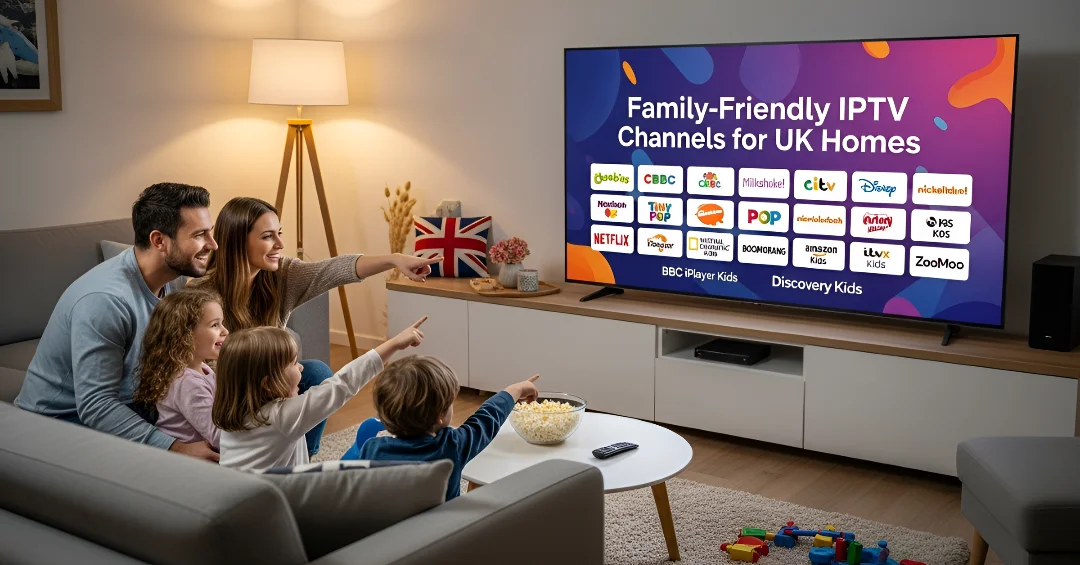
Family-Friendly IPTV Channels for UK Homes

Families in the UK increasingly choose IPTV for home entertainment. IPTV brings television through the internet. It offers flexibility, choice and value. This guide explores family-friendly IPTV Channels for UK Homes, safety features, package tips and setup advice. Read on for a full, practical, and up-to-date walkthrough.

What IPTV Means for Modern Families

IPTV means Internet Protocol Television. It streams live channels and on-demand content online. Therefore, households gain access across devices. Smart TVs, tablets and phones can all stream. Consequently, family viewing becomes flexible and mobile. Parents can set viewing limits and controls. This keeps children safe and viewing appropriate.

Why Families Prefer IPTV Over Traditional TV

First, IPTV Channels for UK Homes often costs less than satellite or cable. Next, it delivers many niche channels. For example, dedicated educational or kids’ channels appear. Additionally, IPTV provides on-demand libraries for catch-up viewing. Moreover, many services offer apps with profiles per family member. Thus, parents can tailor what each child watches. Finally, IPTV often supports HD and 4K streaming. This improves viewing for films and nature shows.

How to Choose a Family-Friendly IPTV Provider

Start by checking channel lineups and trial offers. Next, review parental control options in detail. Also, assess device compatibility across the household. In addition, read customer support reviews and uptime records. Price transparency matters, too. Look for clear billing and family bundles. Lastly, test video quality on your home connection. IPTV performs best with stable, fast broadband.

Essential Parental Controls to Look For

Look for channel locks and PIN-protected profiles. Also, choose solutions with viewing time limits. Some platforms offer content filters by age. Others report viewing history per profile. These features help parents manage screen time. Moreover, choose providers that update filters regularly. This protects younger viewers from unsuitable content.

Top Children’s Channels Available via IPTV

Children need trustworthy and educational content. IPTV Channels for UK Homes includes several mainstream and niche kids’ channels. Here are strong choices for UK families:

CBBC and CBeebies. These BBC channels remain reliable and educational. CBeebies suits preschool children. CBBC fits older kids and tweens.

Nickelodeon and Nick Jr. They offer fun cartoons and learning shows for young viewers. Nick Jr. focuses on preschool skills.

Disney Channel and Disney Junior. These channels carry popular series and safe family movies. They often feature moral lessons.

Cartoon Network and Boomerang. These channels include modern animations and timeless classics.

PBS Kids and Universal Kids. They provide creative, educational programming for curious minds.

Each of these channels emphasises safe storytelling. Parents can trust their reputations for age-appropriate content.

Educational Channels That Teach and Entertain

Educational TV supports home learning in fun ways. IPTV Channels for UK Homes offers many choices that blend learning and entertainment. Consider these channels:

National Geographic Kids. It reveals wildlife and science wonders for young minds.

Discovery Kids. It presents practical science, exploration and nature content.

Da Vinci and Knowledge Channels. They encourage problem solving and creativity.

BBC Bitesize and Learning On Demand. These services often appear within IPTV on-demand libraries. They match school topics and revision needs.

Furthermore, interactive and documentary-style shows build curiosity. Thus, educational channels complement classroom learning.

Family Movie and Entertainment Channels

Families enjoy shared movie nights and light entertainment. IPTV offers multiple family-friendly IPTV Channels for UK Homes. Look for these options:

Sky Family Movies and Film4. They show a wide selection of family films. Expect classics, comedies and modern hits.

BBC One and BBC Two. These channels offer dramas, documentaries and lifestyle shows for all ages.

ITV and Channel 4. They offer game shows, talent series and family-oriented documentaries.

Streaming service channel add-ons. Many IPTV packages include access to popular streaming services. This expands family viewing choices instantly.

Families benefit from on-demand movie libraries too. They allow selecting films by age rating and theme.

Sports and Activity Channels for Family Bonding

Active viewing brings families together during big events. IPTV Channels for UK Homes includes sports channels tailored to families.

Sky Sports and BT Sport. They provide major sporting events and family highlights.

Eurosport and local sports channels. They often show cycling, athletics and accessible family sports.

Fitness and activity channels. These promote family exercise sessions at home. Kids can learn dance routines and family yoga.

Thus, sports and activity channels support both passive viewing and active family time.

Lifestyle and Learning Shows for Parents and Children

Family viewing does not only mean kids’ shows. Lifestyle channels offer shared learning moments. Consider these:

Food Network and BBC Good Food. They teach cooking skills and family meal ideas.

Home and Garden channels. They provide DIY projects suitable for older children to assist.

Travel and nature channels. These inspire family holiday planning and cultural learning.

Consequently, lifestyle channels enrich family routines and hobbies.

On-Demand Features and Catch-Up Services

On-demand viewing is vital for busy families. IPTV Channels for UK Homes usually includes catch-up services like BBC iPlayer and ITV Hub. These let families watch shows later. Moreover, many providers offer cloud DVR. This lets households record programmes for later. Parents can build playlists and educational collections. Thus, on-demand features solve scheduling conflicts for busy families.

Device Compatibility and Smart Home Integration

Check that the IPTV service works on your devices. Most providers support smart TVs, tablets, and phones. Some also support game consoles and streaming sticks. Also, consider smart home integration. Voice assistants may control playback easily. Integration makes shared viewing seamless and hands-free.

Tips to Improve Streaming Performance

Good streaming needs good internet. First, use a wired connection for your main TV where possible. Second, upgrade Wi-Fi routers if many devices stream simultaneously. Third, choose an IPTV plan that matches your broadband speed. Fourth, reduce background downloads while streaming. Lastly, use adaptive streaming options if available. These steps reduce buffering and improve picture quality.

Affordable Family IPTV Packages in the UK

Affordability matters for households with children. Many providers offer family bundles. These may combine kids’ channels, movies and sports. Also, look for seasonal discounts and yearly plans. Some services allow pay-as-you-go or monthly subscription flexibility. Compare channel lists closely. Cheaper price does not always equal better value. Evaluate content that the family will actually watch.

Legal and Ethical Considerations

Choose licensed IPTV UK services. Licensed providers pay content creators and networks. Unlicensed streams may risk legal action. Moreover, they often have poor reliability and security risks. Additionally, avoid services that promote piracy. Always verify provider credentials and customer reviews. This protects your devices and personal data.

Setting Up a Kid-Friendly Viewing Profile

Most IPTV apps let you set up profiles per child. Create profiles with age-appropriate filters. Add parental PINs to restrict purchases or channel changes. Also, build playlists of approved shows. Finally, schedule viewing hours to enforce routine. These small steps help families manage screen time and choices.

Practical Ideas for Family Screen Time

Turn screen time into a family activity. For example, host a weekly movie night with themed snacks. Next, watch educational documentaries together and discuss them. Also, set up co-watching for kids to learn social themes. Moreover, play interactive family games on some smart TV platforms. These habits balance passive watching with active engagement.

Troubleshooting Common IPTV Issues

If channels stall, first check your broadband connection. Next, reboot your router and streaming device. Also, ensure the IPTV app and firmware are updated. Contact customer support if problems persist. Additionally, check the provider’s status pages for outages. Keep a backup streaming option for key events. These steps keep family viewing reliable.

Privacy and Data Safety with IPTV

UK IPTV services may collect viewing data. Read privacy policies carefully. Prefer providers with clear data use statements. Also, enable two-factor authentication where possible. Avoid using default passwords on streaming devices. These actions protect family accounts and privacy.

Choosing Age Ratings and Content Labels

IPTV platforms often include ratings and content labels. Use these tools to pre-screen shows. Age ratings help select suitable films and episodes. Content labels warn about themes such as violence or coarse language. Train older children to understand these labels. This builds healthy viewing habits.

Using IPTV for Homework and Study

IPTV can support homework and revision. Use educational channels and documentaries for research. Record relevant episodes to review later. Encourage children to note facts and discuss findings. Some services link to learning resources and quizzes. These features make IPTV a study tool as well as entertainment.

Cost-Saving Strategies for Families

Share subscriptions across family profiles where allowed. Choose family bundles that combine top channels. Use free trials to evaluate services before committing. Also, rotate paid services seasonally to access different content. Lastly, use public libraries and educational apps to supplement IPTV. These moves reduce monthly bills.

Future Trends: What Families Can Expect

Streaming technologies continue to evolve rapidly. Expect better interactivity and personalized recommendations. Additionally, AI-driven learning tools may appear within educational channels. More seamless smart home integration will follow. Consequently, families will gain more tailored and adaptive viewing experiences.

Checklist: Selecting the Best IPTV for Your Family

  1. Verify channel line-up for children and family shows.

  2. Test parental controls and profile management.

  3. Confirm device compatibility across your home.

  4. Check for on-demand and cloud DVR features.

  5. Assess price, trial offers and billing transparency.

  6. Review legal status and provider reputation.

  7. Confirm privacy policy and data protections.

  8. Test video quality and streaming reliability.

Use this checklist to compare providers and choose wisely.

Conclusion: IPTV as a Family-Focused Choice

IPTV offers UK families flexible, affordable and safe entertainment. It brings dedicated kids’ channels, educational content and family movies. Parental controls and profiles allow personalised viewing. In addition, on-demand libraries and cloud DVR support busy routines. Choose a licensed provider with clear privacy policies. Finally, make viewing interactive and educational for best results. IPTV can enrich family life with smart planning and sensible rules.

FREE TRAIL IPTV

Protect Yourself from Illegal IPTV: Red Flags and Safe Provider Checklist

The UK’s television landscape is changing fast. IPTV (Internet Protocol Television) has become the default way people consume entertainment — whether that’s BBC iPlayer, Netflix, Disney+, Sky Stream, or live sports via Discovery+ and NOW. But alongside the rise of legal IPTV services, there’s also been an explosion of illegal IPTV providers offering “all the channels” for a suspiciously low monthly fee. Avoid Illegal IPTV Risks.

📌 Key Takeaways

  • Illegal IPTV providers often advertise thousands of channels for very low prices.
  • Risks include account hacking, viruses, data theft, and even criminal penalties.
  • UK authorities (FACT, Police Intellectual Property Crime Unit) actively target illegal IPTV resellers.
  • Safe IPTV providers are transparent, licensed, and offer trial periods.
  • Use a safe provider checklist before signing up for any IPTV service.

1. What Is IPTV — and Why the Confusion?

IPTV simply means delivering TV via the internet rather than satellite or cable. In the UK, IPTV includes:

  • BBC iPlayer (live and catch-up TV).
  • Netflix / Amazon Prime / Disney+ (subscription video-on-demand).
  • NOW / Discovery+ / Sky Stream (sports and live channels).
  • Pluto TV, Freevee, ITVX (free, ad-supported IPTV).

👉 These are all legal IPTV services, backed by official rights agreements.

But because IPTV technology is so open, it’s also used by illegal resellers who capture TV signals and rebroadcast them without permission. This is what’s commonly marketed as IPTV subscriptions” for £10–£20 per month — and this is where the danger lies.

2. The Dangers of Illegal IPTV

Illegal IPTV is risky for three main reasons:

1. Legal Risks

  • Using illegal IPTV in the UK can breach the Copyright, Designs and Patents Act 1988.
  • Courts have ruled that viewing pirated streams is illegal, not just selling them.
  • Fines can reach thousands of pounds, and some resellers have received prison sentences.

2. Cybersecurity Risks

  • Many illegal IPTV apps are sideloaded from unverified sources.
  • Risks include:

    • Malware that spies on your device.
    • Phishing attacks stealing credit card info.
    • Data theft (IP logs, personal details).

3. Service Risks

  • Illegal IPTV services can vanish overnight.
  • Streams are often unreliable, with buffering or blackouts during major sports.
  • No customer support or refunds if things go wrong.

👉 Bottom line: cheap IPTV = high risk. Avoid Illegal IPTV Risks.

3. Red Flags of Illegal IPTV Providers

Here are the common warning signs to watch out for:

 Too Good to Be True Pricing

  • “All Sky Sports, BT Sport, Netflix, Disney+” for £10 a month.
  • Bundles thousands of channels from multiple countries.
  • No legal IPTV service can offer this at that price.

 Vague or Shady Websites

  • Hosted on strange domains (.xyz, .tv, .cc).
  • No registered business name or UK address.
  • Payment via cryptocurrency only.

 No Official App Stores

  • Requires sideloading APK files onto Fire Stick/Android TV.
  • Not available via Amazon Appstore, Google Play, or Apple App Store.

 No Clear Terms & Conditions

  • No licensing information.
  • No refund policy.
  • No customer support contact.

 Social Media-Only Promotions

  • Sold via Telegram, WhatsApp, or Facebook groups.
  • Pushy sellers offering “lifetime IPTV deals”.

👉 If you see these signs, it’s almost certainly an illegal IPTV provider.

4. The Legal IPTV Providers in the UK

To stay safe, always stick with providers who hold broadcasting rights. In the UK, the main legal IPTV providers are:

Live TV & Sports

  • Sky Stream / NOW → Entertainment, Sky Sports, Sky Cinema.
  • Discovery+ → TNT Sports, Eurosport.
  • BBC iPlayer → Live BBC channels (requires TV licence).
  • ITVX / Channel 4 / My5 → Free live channels.

On-Demand Movies & Series

  • Netflix
  • Disney+
  • Amazon Prime Video
  • Apple TV+
  • Paramount+

Free & Ad-Supported IPTV

  • Pluto TV (FAST channels).
  • Amazon Freevee.
  • Samsung TV Plus.

👉 All of these providers are licensed and safe. Avoid Illegal IPTV Risks.

5. Safe Provider Checklist

Before signing up for any IPTV service, run through this checklist:

 Is it available on official app stores?

  • If not on Amazon, Google, or Apple, be cautious.

 Does the provider list broadcasting rights?

  • Sky, BBC, and Disney+ make it clear which rights they own.

 Is pricing realistic?

  • £10 for thousands of channels is a red flag.
  • Expect £9–£20/month for single services.

 Is there customer support?

  • Check for a support email, phone number, or chat.

 Does the provider have a UK or global presence?

  • Legitimate services are backed by major companies.

Do you need a TV licence?

  • In the UK, watching live TV (even via IPTV) requires a licence.

👉 If a provider fails any of these checks, avoid it.

6. How to Protect Yourself Online

If you’re setting up IPTV at home:

Use Security Tools

  • Keep antivirus updated.
  • Use a VPN for privacy (but not as a shield for piracy).
  • Secure your router with a strong password.

Protect Payments

  • Never pay IPTV providers in cryptocurrency.
  • Use PayPal or credit card for chargeback protection.
  • Avoid services that require you to share bank details directly.

Educate Your Household

  • Teach kids not to download shady IPTV apps.
  • Use parental controls on Fire Stick, Roku, Android TV.

7. The UK Crackdown on Illegal IPTV

UK authorities are becoming more aggressive:

  • FACT (Federation Against Copyright Theft) regularly investigates IPTV sellers.
  • Police Intellectual Property Crime Unit (PIPCU) raids resellers.
  • Courts have jailed IPTV operators for fraud and copyright theft.

In 2023, a group of IPTV resellers were sentenced to over 30 years combined jail time. By 2025, enforcement is stronger than ever.

👉 Even end users risk warning letters, fines, and service termination from ISPs.

8. Future of Safe IPTV in the UK

Looking ahead, IPTV in the UK will become:

  • More consolidated → bundles from Sky, Virgin, and BT.
  • More flexible → monthly passes instead of long contracts.
  • More secure → watermarking and tracking to stop piracy.
  • More diverse → FAST channels offering free, ad-supported content.

👉 The legal market is growing — there’s less need than ever to risk illegal providers.

9. Final Recommendations

  • Avoid suspiciously cheap IPTV services.
  • Check for official app availability (Amazon, Google, Apple).
  • Stick to trusted UK providers (Sky, BBC, Netflix, Disney+).
  • Use the Safe Provider Checklist before subscribing.
  • Protect your devices with antivirus, secure Wi-Fi, and strong PINs.
  • Remember the law: live IPTV requires a TV licence in the UK.

By being alert to red flags and following the safe provider checklist, you can enjoy IPTV in the UK with peace of mind, reliability, and zero legal risk. Avoid Illegal IPTV Risks.

IPTV FREE TRIAL

Is IPTV Legal in the UK? Everything You Must Know

1 — What is IPTV?

IPTV stands for Internet Protocol Television. It describes any system that delivers television content (live channels, on-demand programmes, or recorded video) over an internet protocol (IP) network instead of via terrestrial (Freeview), satellite (Sky) or linear cable (Virgin) broadcasts. Is IPTV Legal in UK?

Important distinctions:

  • Technology vs legality: IPTV is a delivery method (like IPTV apps, smart-TV apps, or streaming boxes/sticks). The legality depends on whether the service has the rights to distribute the content. Using the delivery method is not illegal — streaming licensed BBC, Netflix, Disney+ or other official apps over IP is perfectly lawful.
  • Legal IPTV examples: Official broadcaster apps (BBC iPlayer, ITVX, Channel 4’s All 4), large licensed streaming services (Netflix, Amazon Prime Video, Disney+), and ISP/broadcaster streaming bundles (Sky Stream, NOW, discovery+ packages) are legitimate IPTV offerings.
  • Illicit IPTV examples: “Fully loaded” boxes, apps, or subscription services that promise access to hundreds or thousands of premium channels (Sky Sports, BT Sport/TNT Sports, movie channels) for a tiny monthly fee — without clear licensing — are almost always illegal.

2 — The legal framework (high-level)

For IPTV companies and customers in the UK, three legal pillars are essential:

2.1 Copyright legislation, particularly the 1988 Copyright, Designs, and Patents Act

The CDPA 1988 and subsequent amendments create criminal and civil offences for distributing copyrighted content without permission. Supplying or facilitating access to broadcasts or recorded content without rights can amount to copyright infringement and — where done knowingly or commercially — criminal conduct. Provisions pertaining to services or equipment intended to go around technological security measures are also included in the legislation.

2.2 Fraud, money laundering and related criminal laws

Where operators monetise illegal IPTV (subscriptions, advertising, funnels to other criminality), prosecutors often add charges under the Fraud Act and money laundering offences. The government and law enforcement have used a combination of copyright and financial crime laws to dismantle networks.

2.3 TV Licence law and live broadcasts

A TV license is required in the UK in order to use BBC iPlayer or to view or record live TV on any channel or device. That requirement applies regardless of whether the content arrives by aerial, satellite, cable, or IP-based streaming. A licence is separate from copyright enforcement — it’s an administrative requirement enforced by TV Licensing, and evasion can lead to fines up to £1,000.

3 — Why many people are uncertain: grey markets and “IPTV” marketing

Due to IPTV’s widespread use and the simplicity of setting up streaming stacks, two related issues arose:

  1. Third-party sellers packaging pirated streams into easy-to-use playlists, pre-configured “boxes”, or subscription portals; and
  2. Confusion among consumers who don’t distinguish between branded, licensed streaming services and cheap “all channels” subscriptions found on social media marketplaces.

Because the technology is neutral and many legal streaming services use the same protocols, a casual buyer may not realise a seller is offering unlicensed access until enforcement actions or shutdowns occur. Is IPTV Legal in UK?

4 — Recent enforcement in the UK (what’s changed in 2024–2025)

In the last 18–24 months the UK has seen a significant escalation in enforcement actions against illegal IPTV operators. Law enforcement and industry groups have focused on disrupting the supply side (servers, websites, data centres and sellers) rather than minor end-users. Is IPTV Legal in UK? Notable examples:

  • High-profile sentencing (2025): The Police Intellectual Property Crime Unit (PIPCU) and associated agencies have prosecuted several operators, resulting in their imprisonment. For example, a man who ran a subscription IPTV service (aFINITY IPTV) was sentenced to five years for making around £300,000, and other operators were jailed after running large-scale services that sold access to thousands of channels. These cases underline that commercial operations running illegal streaming services can face substantial custodial sentences.
  • Seizures and arrests: In mid-2025, PIPCU executed warrants, seized servers from UK data centres and arrested suspects believed to be operating illegal services. These investigations sometimes involve international cooperation and lead to the closure of servers and web portals used to distribute pirated streams.
  • Organised crime links and money seizure: Sentences in 2025 included confiscation of proceeds and money-laundering charges — illustrating that illegal streaming is often treated as a profit-making enterprise akin to other organised intellectual property crime.

What these trends mean: law enforcement is prioritising supply-side disruption — seizing infrastructure and pursuing operators — and courts have demonstrated willingness to impose custodial sentences in serious commercial cases. That increases the legal risk for anyone distributing or operating large-scale illicit IPTV services.

5 — What the BBC TV Licence covers (and why it matters for IPTV users)

TV licensing upholds the TV license as an independent duty. Key points:

  • Using BBC iPlayer or watching or recording live TV on any channel—including online live streams—requires a license. This applies to any device — TV, laptop, tablet, phone.
  • The licence is not a “copyright permission”: holding a TV Licence does not make pirating channels legal. You can be required to hold a licence and still be committing copyright offences if you use an unlicensed IPTV service to access copyrighted content.
  • Enforcement for licence evasion is administrative/criminal and can result in fines. The licence regime and enforcement procedure are independent of copyright prosecutions.

Bottom line: if you watch live TV streams, have BBC iPlayer, or watch live broadcasts via IPTV, make sure you hold a valid TV Licence — and separately ensure the service you’re watching is legally licensed to carry that content. Is IPTV Legal in UK?

6 — How authorities build a criminal case against illegal IPTV operators

Investigations commonly combine several strands:

  • Technical evidence: server logs, subscription records, IP addresses, payment trails, and seized hardware showing playlists and distribution infrastructure. Data-center seizures in the UK have been utilized by PIPCU to collect evidence.
  • Financial evidence: bank records, crypto wallets, and assets indicating profit/financial benefit from sales — used for fraud and money laundering charges.
  • Legal framework: prosecutors apply the CDPA (copyright offence), the Fraud Act, and money laundering statutes depending on the behaviours and scale. The government has previously published guidance and consulted on enforcement tools against illicit IPTV.

That combination — technical, financial and legal — has resulted in successful convictions and meaningful jail terms in high-value cases.

7 — How to tell a legal IPTV offering from an illegal one (practical checklist)

Not all IPTV is illegal. Use this checklist before you buy a subscription or “streaming box”:

Red flags (likely illegal)

  • The seller promises every premium channel (e.g., “Sky Sports, BT Sport, all movies and PPV”) for a tiny monthly price (e.g., under £10/month) with no official branding or distributor details.
  • Devices described as “fully loaded” or “pre-installed with everything” including premium pay-TV channels and paid subscription services.
  • Sellers advertising on social media, WhatsApp groups, eBay/Gumtree listings with no corporate name, limited contact details, and pressure to sign up via cryptocurrency or bank transfer.
  • No clear terms and conditions or refund policy; no transparency about licensing rights or source of streams.
  • The service requires custom apps or M3U playlists delivered outside official app stores, especially when paired with promises of all-premium content.
  • The business model relies on reselling subscriptions or streams rather than having contracts with rights owners.

Green flags (more likely legal)

  • The service is an official app in the Amazon Appstore, Apple App Store, Google Play or pre-installed on well-known streaming devices or smart TVs.
  • Clear corporate identity, terms and conditions, and contact details.
  • Pricing that roughly matches commercial reality for licensed sports and premium channels (those rights cost money).
  • Partnerships or references to known rights holders or official distributors.
  • Trial periods and normal card-based subscription processes (rather than cash/crypto-only).

If you’re unsure, stop and ask: search the seller’s company name, check for press or government warnings, and look up PIPCU and anti-piracy org FACT (Federation Against Copyright Theft) notices.

8 — Consumer risks from illegal IPTV services

Buying or using an illegal IPTV service isn’t just a legal risk — there are practical harms:

8.1 Security and malware

“Jailbroken” devices or third-party apps often bundle malware, adware or spyware that can compromise personal data, banking logins, and home networks. Instances of users reporting fraud after subscribing to dubious services are common in press reporting.

8.2 Financial and reliability risk

Illicit services can be shut down without notice, leaving subscribers out of pocket. Sellers can disappear or offer banned content, buffering, and poor-quality broadcasts. Servers may be hosted overseas and sink overnight after enforcement actions.

8.3 Legal exposure

While enforcement is mostly aimed at suppliers, users can face civil action or administrative consequences — especially if they knowingly distribute or resell access. Moreover, acquiring services via fraud or paying via stolen cards could transfer liability to the user.

8.4 Indirect criminal links

Large-scale piracy operations can be run by organised criminals; money flows, laundering, and other criminality have been shown in several cases. Associating with these businesses can expose customers to risk beyond copyright law.

9 — What to do if you’ve already bought a suspicious IPTV service

If you suspect the service you bought is illegal:

  1. Stop using it immediately. Remove any suspect apps and disconnect the device if possible.
  2. Cease payments to the seller; if you paid by card, contact your bank to dispute charges if you suspect fraud.
  3. Do not redistribute access or playlists to others. Sharing can increase your legal exposure.
  4. Use trustworthy antivirus software to check your device for malware.
  5. Report the seller to authorities: report to Action Fraud (if you suspect a scam) and to PIPCU (City of London Police) or FACT; both run operations to investigate illegal streaming. Reporting helps enforcement target suppliers.

If you’ve been tricked into buying a device that claims to be “legal” but clearly isn’t, keep records (invoices, messages) — they’ll help your bank claim or law enforcement action. Is IPTV Legal in UK?

10 — Lawful alternatives: how to get the best legal IPTV experience in the UK

If your goal is cheaper, convenient or flexible TV without illegal risk, consider these legal strategies:

10.1 Mix free UK catch-up apps + FAST channels

Channel 4/All 4, My5, ITVX, and BBC iPlayer are all free (but keep in mind that BBC iPlayer needs a license). FAST channels (Pluto TV, The Roku Channel, Tubi, Plex’s free channels) offer many linear streams at no subscription cost and are fully legal.

10.2 Seasonal subscriptions for sport

Rather than a year-long expensive satellite bundle, subscribe to the paid streaming service that holds the rights to the competitions you care about for the season, then cancel. This is exactly the flexibility legal IPTV allows.

10.3 Use official streaming alternatives for specific sports

Some sports have their own official streaming services (F1 TV, DAZN for some events — check UK availability). These are reliable and legal.

10.4 Bundle deals via ISPs and mobile providers

In the UK some ISPs and mobile carriers bundle streaming services (e.g., discovery+/TNT Sports with EE/BT, Netflix/Disney+ promos) — often the most cost-effective way to access premium content legally.

10.5 Buy or rent films/box sets on demand

Use Apple TV, Prime Video, Google Play Movies, or other legitimate stores for one-off rentals if you need that specific piece of content.

11 — How the industry and government are responding

The UK government and industry have used a mix of policy measures, law enforcement and civil proceedings to tackle illicit IPTV:

  • Law enforcement: PIPCU (City of London Police), the National Crime Agency and regional forces run investigations and seize infrastructure. Recent sentences in 2025 demonstrate strong enforcement appetite.
  • Civil remedies: rights holders often seek High Court orders to block websites and payment channels used by pirate suppliers. Courts have previously granted blocking orders and injunctive relief.
  • Policy & consultations: Government has run consultations and published responses on tackling illicit IPTV, and agencies coordinate internationally to disrupt supply chains.

All this signals: expect ongoing enforcement and continued pressure on platforms, hosters and payment processors used by illegal IPTV operators.

12 — Frequently Asked Questions (FAQ)

Q: Can I legally stream TV over my broadband without a TV Licence?
A: Only if you don’t utilize BBC iPlayer or watch live TV. If you watch live channels (including live streams) or use BBC iPlayer, a TV Licence is required. TV Licensing provides guidance on who needs a licence.

Q: If a service streams via the internet, how can I tell if it has rights?
A: Legitimate services are typically available through official app stores, have clear corporate details and terms, and charge prices consistent with the commercial value of the content. If a service promises “everything” for an implausibly low price, it’s almost certainly unlicensed.

Q: Will casual users be prosecuted for watching pirated IPTV streams?
A: Enforcement priorities focus on suppliers and commercial operators. Casual users are rarely the target of large-scale criminal action — however, distributing access, reselling accounts, or knowingly facilitating piracy increases legal risk. Also, using pirate services can expose you to scams and fraud.

Q: Are “jailbroken” Fire Sticks illegal?
A: The hardware (Amazon Fire Stick) is legal. The term “jailbroken” refers to software modifications and the installation of third-party apps that may enable piracy. Using such apps to access unlicensed streams is illegal; supplying pre-jailbroken sticks with illegal streams can be the basis for criminal charges.

Q: Who enforces IPTV piracy in the UK?
A: Enforcement is multi-agency: PIPCU (City of London Police) leads many operations, supported by rights-holder groups (e.g., FACT), the National Crime Agency for organised crime links, and through civil courts for blocking orders.

13 — Practical checklist:

Before you buy or subscribe

  • Check the service is on official app stores or a known broadcaster/ISP offering.
  • Search the seller’s name + words like “scam”, “complaint”, “piracy”, or “illegal” and look for press/Court/PIPCU mentions.
  • Avoid paying by crypto or cash-only sellers — use cards for chargeback protection.

If you already bought something suspicious

  • Stop using it and cancel payments.
  • Get in touch with your bank and report any fraudulent charges to Action Fraud.
  • Report the service to PIPCU or FACT.

For families

  • Use official kids profiles/protection features to avoid accidental access to third-party apps.

14 — Conclusion:

  • IPTV itself is legal. Watching TV over the internet is normal and lawful when using licensed services.
  • Purchasing “all channels” at a discount is nearly usually a warning sign. That business model cannot legally deliver premium, licensed sports and movie channels for a tiny monthly fee — rights cost money and are closely guarded by rights holders.
  • Enforcement is serious and escalating. The UK has prosecuted and jailed major operators in 2025, seized servers and assets, and pursued money-laundering cases tied to piracy. For operators, this is more than simply a “civil matter.”
  • Consumers should prioritise safety and transparency. Use official apps, check for seller legitimacy, and hold a valid TV Licence if you watch live UK TV or use BBC iPlayer.  Is IPTV Legal in UK?.                                                                        IPTV FREE TRIAL

Qualities of a Trustworthy IPTV Subscription

UK IPTV Service Reviews show how the way people in the UK watch television has been revolutionized by IPTV UK. Choose the right provider for unrivaled flexibility, from live Premier League games to foreign drama series.

What’s the issue? The IPTV market is rife with untrustworthy merchants, dishonest resellers, and subpar services that fail to live up to their claims. The most important factor in a decent IPTV membership is not the hundreds of channels available, but rather the quality, support, and overall enjoyment. When choosing a service that truly delivers, use these guidelines.

Content Library: Not Only Channels

The Best IPTV provider that claims “10,000+ channels” may seem like the best option at first sight. However, if the content is old, doesn’t stream well, or doesn’t include your favorite programs, numbers are meaningless.

In the UK, a reputable IPTV provider should provide a well-chosen selection of:

  • Well-liked live TV in the UK
  • 4K or HD movies and TV shows
  • VOD (Video On Demand) libraries and catch-up options

A service that lacks search capabilities, offers a poor content menu, or fills its VOD library with outdated B movies signals a warning sign. No matter what, quality always wins over quantity.

The Foundation of IPTV: Reliability and Availability

Buffering or abrupt service outages are among the most annoying things for any IPTV user, especially during a live game or a season finale. Sadly, many services advertise 99. 9% uptime but seldom live up to that promise. A dependable IPTV service should have a robust technological framework, including fast servers and a stable load distribution system, to ensure seamless streaming even during busy periods. It’s about more than just having channels; it’s about being able to view them without experiencing frequent stream crashes or endless loading circles.

Your provider is at fault if you’re always switching servers or refreshing your browser in order to finish a movie. As highlighted in UK IPTV Service Reviews, you should look for services known for consistent uptime and low buffering. A trustworthy IPTV system shouldn’t feel like a gamble every time you switch it on, but rather deliver a smooth, reliable experience.

Device Compatibility: Multiple Screens, One Sub

The time has passed when viewing IPTV meant being glued to a computer. Nowadays, people want flexibility, whether it’s streaming from a tablet while on the go, watching on a smart TV in the living room, or using a mobile phone in bed. A trustworthy IPTV provider should offer support for all popular platforms, such as mobile apps, Firesticks, Smart TVs, and Android boxes.

Certain lower-tier providers have restricted access to certain programs or have interfaces that are hard to use. Furthermore, certain subscriptions fail to disclose upfront that they are limited to one device usage at a time. A great service should be accessible on several devices and provide a consistent, user-friendly experience regardless of where you’re viewing. The provider isn’t keeping up with user demands if configuring it seems like completing a puzzle.

Responsiveness and Customer Support

Problems with IPTV are unavoidable, regardless of how tech-savvy you are. A certain channel may abruptly cease functioning, connections may expire, or servers may go down. Responsive customer service is crucial at that time. Ideally, a trustworthy IPTV UK provider should provide prompt, straightforward, and useful answers during UK business hours.

Regrettably, many users are tempted by inexpensive prices only to discover that their service is worthless and that they have no one to turn to. You write the seller, and days pass without a response, or you receive unclear responses that don’t address the issue. Dependable suppliers see support as an essential component of their offering. Support should be available via email, WhatsApp, or live chat to avoid being left with a frozen screen.

IPTV Free Trial UK: Why Testing Before You Buy Matters

When searching for the best IPTV provider, an IPTV Free Trial UK  can be the deciding factor between a great service and a costly disappointment. A free trial allows you to experience the provider’s streaming quality, channel selection, and interface before committing to a subscription. It’s your chance to see whether the service offers smooth playback during peak hours, delivers your must-have channels, and works seamlessly on your devices.

GeoSpecific Differences Between IPTV in Canada and the United Kingdom
 Although United Kingdom IPTV is based on similar technology worldwide, the user experience may vary greatly depending on your location. Users in the United Kingdom tend to give more weight to channels, and providers frequently adjust their libraries as a result. Content licensing laws also affect legal availability, which is why some UK-based providers exclude certain American or foreign channels.

In the UK, demand leans more toward regional sports like Premier League or Sky Sports broadcasts, British programming, and popular UK networks. Streaming restrictions and pricing models also differ. For example, an IPTV UK provider usually tailors content and technical capabilities to UK viewers, offering improved access to UK-based servers and local support options.

It’s crucial to take this regional variation into account, particularly if you travel frequently or plan to share your membership across international boundaries. In Canada and the UK, IPTV content selection can vary between providers. To be sure you are receiving the best value, always look for location-specific deals.

The Ultimate Guide to Purchasing IPTV: Final Checklist

It’s easy to feel intimidated by the many UK IPTV companies that assert to be the greatest. The picture becomes clearer, though, if you take a step back and consider the fundamentals. A reliable UK IPTV Service Reviews offers fair pricing, consistent performance, updated content, device compatibility, and quick support.

Before making a decision, ask yourself the following questions: Does the provider allow you to try the service? Do they support your preferred devices? Is the material updated frequently and catered to your area? Do they react when something goes wrong? If the answer is “no,” it’s not worth the risk. A reliable provider can transform your entertainment experience.

Conclusion

Price and channel count aren’t the only factors when choosing an IPTV UK provider. It centers around dependability, usability, and sustained performance. Stream smarter by researching and choosing a service that fits your needs locally or globally. A little caution at the beginning prevents a lot of aggravation in the future.