
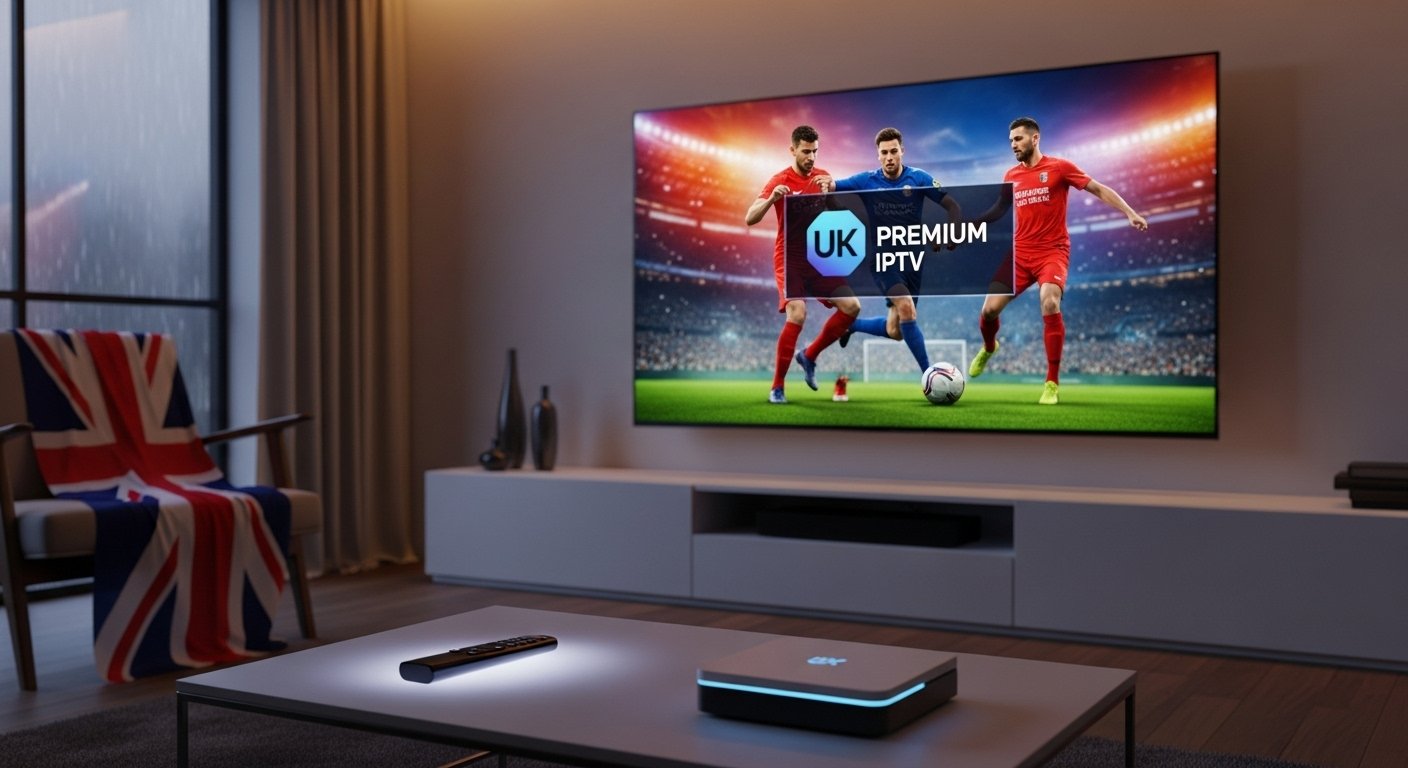
“4K and HD IPTV in the UK: Getting the Best Quality for Your Money”

Why 4K matters — and when HD is still perfectly fine

4K (Ultra HD) offers roughly four times the pixel count of 1080p HD. Premium UK IPTV Quality. The differences:

  • Resolution: 3840×2160 (4K) vs 1920×1080 (Full HD).
  • Detail: crisper textures, better upscaling, more immersive sports and nature footage.
  • Bandwidth: 4K consumes much more data and requires better network conditions.
  • Viewing distance & screen size: 4K payoff increases on large screens (55″+) or close viewing distances.

However, HD remains excellent for many UK households because:

  • Many channels and live sports are still distributed in HD.
  • On smaller TVs (under ~50″), difference is subtle.
  • HD requires less bandwidth and cheaper hardware, so it often gives better reliability for the money.

If you’re shopping for best iptv service in the united kingdom iptv market, consider whether you truly need 4K, or whether robust HD with good reliability is better value. Premium UK IPTV Quality.

What affects picture quality on IPTV?

  1. Source stream quality from the provider — the single most important factor. A cheap iptv subscription that rebroadcasts low-bitrate streams will look poor even if your TV is top tier.
  2. Encoding (codec) — H.265/HEVC or AV1 provide better compression for 4K, reducing required bandwidth. Providers still using old codecs can force higher bandwidth for the same quality.
  3. Bandwidth and latency — more on this below.
  4. Home network — Wi-Fi congestion, poor router, or long coax/ethernet runs matter.
  5. Player software and buffering — apps like IPTV Smarters Pro or hardware players behave differently.
  6. TV settings and HDMI — set TV to the correct HDMI input settings, enable UHD deep color, and use HDMI 2.0/2.1 for 4K60.
  7. Device decode capability — hardware must support the codec used (HEVC/AV1).

Bandwidth and data: what you need for HD and 4K IPTV

Estimate (general guidance):

  • SD: 1.5–3 Mbps
  • HD (720p/1080p): 4–8 Mbps stable per stream
  • 1080p high-bitrate sports: 8–12 Mbps
  • 4K (HEVC): 15–25 Mbps steady per stream
  • 4K (low compression or older codecs): 25–50+ Mbps

For a household using IPTV subscriptions, plan for multiple concurrent streams. Example: two 4K streams + one HD stream ≈ 40–60 Mbps recommended.

Note: ISP throughput must be consistent. Peak throughput is not enough — sustained throughput matters. If you’re hunting a good iptv provider in the UK, test using an iptv uk free trial while running a sustained speed test. Premium UK IPTV Quality.

Picking the right IPTV provider in the UK

When choosing a UK service or iptv provider, evaluate these factors:

  1. Legitimacy & rights — prefer licensed services. “Too good to be true” channel lists often signal illicit streams that are unstable or shut down.
  2. 4K availability — is true 4K offered or upscaled HD branded as 4K?
  3. Codec & bitrate transparency — ask if channels use HEVC/AV1 and published bitrates.
  4. Device support — Android TV, Fire TV, MAG boxes, Smart TV, iOS/Android, or web players. If you plan to use IPTV Smarters Pro or other apps, make sure provider supplies compatible playlists or portal URLs.
  5. Free trials — many legitimate providers have iptv uk free trial or short trial periods. Use them to check real-world performance.
  6. Customer support — live chat, response times, and replacement stream policies.
  7. Concurrent streams — how many simultaneous devices are allowed?
  8. Price vs channels vs reliability — cheaper = often less reliable; balance cost and quality.
  9. Reviews and uptime reports — user forums and social proof (but be wary of fake reviews).

Search for “best iptv 2025” or best iptv service but prioritize recent user experiences over marketing claims.

Devices and apps: what to buy and why

Smart TVs (Google TV, Android TV, LG, Samsung)

  • Convenient but app support differs. Android TV has largest app ecosystem; Samsung/LG may require vendor-specific apps or webOS apps.

Streaming sticks and boxes

  • Amazon Fire TV Stick 4K Max, NVIDIA Shield (older but very capable), or Android TV boxes handle 4K and HEVC (check model specifics).
  • Cheaper generic Android boxes can work but may lack HEVC or stable networking.

Dedicated IPTV set-top boxes

  • MAG, Formuler and other set-top boxes are popular in IPTV circles; choose models with HEVC/AV1 and gigabit Ethernet.

Mobile devices and tablets

  • Good for portability, but small screen makes 4K irrelevant.

Important: IPTV Smarters / IPTV Smarters Pro

  • Popular middleware/player app; many UK users use IPTV Smarters Pro or similar players to load M3U playlists or Xtream Codes portals.
  • Pros: flexible, multi-platform.
  • Cons: depends on playlist/provider quality; keep apps updated.

Cabling & HDMI

  • For 4K60 HDR, use HDMI 2.0 minimum (HDMI 2.1 for higher refresh rates, VRR, or advanced HDR settings). Premium UK IPTV Quality.

Network best practices for consistent 4K/HD streaming

  1. Use wired Ethernet where possible — gigabit Ethernet to your TV or set-top ensures the most stable experience.
  2. If using Wi-Fi, use 5 GHz and a modern router — Wi-Fi 6 is preferable for households heavy with concurrent traffic.
  3. Quality of Service (QoS) — prioritize streaming devices to reduce buffering during heavy use.
  4. Separate SSIDs for guests — isolate bandwidth-hogs.
  5. Router placement and interference — keep routers central and away from microwaves, thick walls, etc.
  6. Use adaptive bitrate but monitor bitrate ceilings — if your provider clamps bitrate, it will cap quality.
  7. Check DNS and MTU — occasional throttling can be bypassed by alternate DNS or adjusted MTU, but do this only if you know what you’re doing. Premium UK IPTV Quality.

Picture settings & TV calibration for best results

  • Set TV input to the correct HDMI mode (enable UHD/Deep Color).
  • Turn on game mode only if you need low latency (temporary) but disable features that add noise reduction for sports.
  • Disable aggressive motion smoothing for films unless you like the effect.
  • Calibrate brightness/contrast and color profile (Cinema/Natural for movies).
  • Ensure HDR is enabled for HDR streams.

Troubleshooting common issues

Buffering or stuttering

  • Check bandwidth and concurrent streams.
  • Switch to wired Ethernet.
  • Lower resolution in player settings (switch HD→SD temporarily).
  • Try a different DNS.

Blocky or washed-out picture

  • Provider bitrate too low or wrong colour space (YUV vs RGB).
  • Player or TV not using correct HDR profile.

4K not showing even when provider claims 4K

  • Check HDMI cable spec and TV input settings.
  • Verify the player supports the codec (HEVC/AV1).
  • Confirm portal/playlist points to true 4K stream — sometimes labeled 4K but is upscaled.

Legal and safety considerations (UK)

  • Only use providers with legitimate rights to the content. Illicit IPTV services can be taken down, sold off, or fail without refund.
  • Using unauthorized streams may have legal and security risks.
  • If you want robust, legal British IPTV options, check established, licensed services and broadcasters in the United Kingdom IPTV ecosphere. Premium UK IPTV Quality.

Price vs quality: value checklists

When comparing iptv subscriptions and iptv services, use these quick checks:

  • Bandwidth & bitrate: does the provider publish sample bitrates for channels?
  • Trial policy: is there an iptv free trial or money-back window?
  • Uptime stats: do they publish or have verifiable uptime?
  • Device compat: are there apps for your devices (Android TV, Fire TV, MAG)?
  • Concurrent streams and account sharing policy.
  • Update frequency and support responsiveness.

Sometimes it’s better to pay a bit more for a trustworthy iptv provider than to save on a service that stutters during the game.

800-word step-by-step technical guide: every step explained in detail

Below is a focused, step-by-step technical walkthrough to get a 4K IPTV stream working at the best quality in a typical UK home.

  1. Choose and verify a provider (10–15 minutes)
    • Pick a provider that explicitly lists 4K channels and codec info. Sign up for an iptv uk free trial if available. During the trial, log into their portal on the device you will use (Smart TV, Fire TV, Android box, etc.). Confirm they provide a sample 4K stream file or channel. Ask support to provide the exact stream URL or sample M3U entry if you can — this helps test with network tools.
  2. Verify device codec and hardware decode capability
    • On your device, check the specs: does it list HEVC (H.265) hardware decode or AV1? For 4K60 HEVC decode is essential. Older devices only decode H.264 and will struggle. If the device lacks HEVC, you will need a newer box or streaming stick.
  3. Prepare your network: wired first
    • If possible, run a Gigabit Ethernet cable from your router to the streaming device. This eliminates Wi-Fi variability. If wiring isn’t feasible, place the device within strong 5 GHz Wi-Fi range of your router or use a Wi-Fi 6 access point/repeater set to the same SSID.
  4. Check bandwidth with sustained tests
    • Use a laptop on the same network to run a sustained speed test (e.g., 60-second download test) to confirm sustained throughput of at least 25–30 Mbps for a single 4K stream. Remember peaks aren’t enough — sustained throughput matters. For multiple streams multiply accordingly. Premium UK IPTV Quality.

Comparing top device + provider combos (practical examples)

  • Budget (reliable HD) — Fire TV Stick (non-max) + stable HD-focused provider. Good for ≤50″ TVs; cheaper.
  • Balanced (HD + occasional 4K) — Fire TV Stick 4K Max or modern Android TV box + midrange provider with selective 4K channels.
  • Enthusiast (true 4K) — NVIDIA Shield Pro or high-end Android TV box + provider that publishes HEVC/AV1 4K streams + gigabit wired network.

Buying checklist

  • Does the provider offer an iptv uk free trial?
  • Are there published bitrates and codecs (HEVC/AV1)?
  • Device supports HEVC/AV1 and HDMI 2.0/2.1?
  • Home broadband plan supports sustained 25+ Mbps per 4K stream?
  • Does the service allow required concurrent streams?
  • Are legal rights or licensing clear?

Closing — final recommendations

  1. Start with a trial. Use an iptv uk free trial to check real performance on your devices and network.
  2. Prioritize device and codec compatibility — HEVC/AV1 decode is essential for efficient 4K. If your TV or device lacks it, buy one that supports it.
  3. Use wired Ethernet for the best 4K experience. If you can’t, invest in a modern Wi-Fi 6 router or good 5 GHz coverage.
  4. Balance cost vs reliability — cheap iptv subscriptions often skimp on bitrate and support.
  5. For long-term peace of mind, prefer licensed providers in the UK to avoid interruptions and legal risk. Premium UK IPTV Quality.

Next-Gen IPTV UK: AV1, Wi-Fi 6 & Future-Proof Streaming

If you care about watching crisp 4K sport, seamless multi-room IPTV, or delivering thousands of simultaneous live streams for a local events league, the combination of modern codecs and modern Wi-Fi matters. Next-Gen IPTV Technology UK. AV1, a royalty-free video codec engineered for bandwidth efficiency, is now maturing into mass use. At the same time Wi-Fi 6 (and 6E) have become affordable in consumer routers, solving many wireless bottlenecks that used to throttle high bitrate streams in busy households.

Together these technologies let ISPs, platforms and households move from “best-effort” streaming to robust, multi-screen experiences — but only if you understand how to align codec, network and device capability. This guide explains how and why, with actional advice for UK operators and end users.

2. AV1: what it is and why it’s a game changer

The Alliance for Open Media (AOMedia) created the open, royalty-free video codec known as AV1. It aims to provide substantially better compression than H.264/AVC and competitive gains over HEVC/H.265 — meaning the same perceptual video quality at lower bitrates. For streaming services this translates to either improved quality at the same bandwidth or the same quality at less bandwidth — a win for both viewers and ISP capacity.

Why AV1 is important for IPTV:

  • Bandwidth efficiency: AV1 typically delivers 20–40% bitrate savings over H.264 for similar perceptual quality; compared with H.265 the benefits can still be meaningful depending on content and encoder maturity.
  • Royalty-free economics: Unlike HEVC (with complex licensing), AV1 is designed to reduce friction and cost for large-scale distribution.
  • Future-proofing: Major streamers and platform vendors are adopting AV1 encodes for high-resolution and HDR content, signalling long-term relevance.

However: AV1’s strengths arrive with operational considerations — encoding complexity and device decode support are the two biggest practical blockers. Modern encoders (SVT-AV1 and others) have narrowed the encoding time gap, and hardware decode is being added across chipsets — but you must plan for mixed device populations.

3. Real-world AV1 adoption & device support (what to expect in the UK)

AV1 adoption in the field follows a predictable cadence: cloud and server encoding first (platforms like YouTube, Netflix and Meta), then high-end devices (new smart TVs, SoCs, GPUs, and consoles), followed by mass market smartphones and low-cost set-top boxes. As of 2024–2025, AV1 hardware decode is present in many modern chips and some streaming devices; adoption is growing but not universal, so graceful fallback to H.264/H.265 remains necessary. Next-Gen IPTV Technology UK.

Practical implications for UK IPTV:

  • Hybrid delivery: Deliver AV1 for capable clients and H.264/H.265 for legacy devices.
  • Client probing: On session setup, clients should report capabilities so the origin CDN or packager can choose the right representation.
  • Progressive rollout: Start AV1 for high-value streams (4K, HDR) and expand as device telemetry shows uptake.

Data points to note: hardware AV1 decode gain accelerated in 2023–2024 with chipset upgrades in flagship phones and TV SoCs; still, only a minority of older STBs and low-cost Android boxes can decode AV1 in hardware, requiring software decoding or fallback. That means operators must keep adaptive bitstreams for several years.

4. Wi-Fi 6, 6E and the wireless bottleneck for IPTV in homes

The home wireless network is often the weakest link in multi-room IPTV. Even with gigabit broadband coming into the house, the path from a router to a TV may be congested: multiple devices, neighbouring networks, and distance reduce throughput and increase packet loss — which kills streaming quality.

Why Wi-Fi 6 helps

  • OFDMA and MU-MIMO allow simultaneous, more efficient multi-device scheduling. That matters in a home with multiple concurrent 4K streams or when gaming and streaming coexist.
  • Target Wake Time and improved QoS let routers better prioritise video traffic.
  • Higher sustained throughput on the same spectrum helps reduce artefacts from bitrate collapses during contention.

Wi-Fi 6E extends Wi-Fi into the 6 GHz band, offering cleaner channels and less interference — ideal for ultra-high-bitrate streams and future-proofing. In crowded urban areas (flats and student housing), 6E can dramatically reduce co-channel contention.

From a deployment perspective, a household using multiple 4K AV1 streams should consider Wi-Fi 6 or wired Ethernet for primary STBs/TVs; cheaper “AC” routers may struggle as client counts grow. Next-Gen IPTV Technology UK. Ofcom’s Connected Nations and usage reports show increasing take-up of faster fixed broadband in the UK, but internal home wireless remains a crucial constraint to address.

5. Broadband realities in the UK: backbone, last mile and device contention

Across the UK, fixed broadband availability and speeds have improved substantially — median speeds and fiber rollouts are up — but average household circumstances vary. According to Ofcom’s Connected Nations and Online Nation reports, adoption of higher-speed fixed broadband has increased, yet affordability and last-mile quality are still real concerns for many households. These differences matter for IPTV planning: a theoretical gigabit package is only useful if the in-home network can deliver reliably to multiple screens.

A few practical planning numbers:

  • 4K HEVC/AV1 live stream: assume 10–25 Mbps per stream depending on encoding profile and scene complexity (AV1 can sit on the lower end for equivalent quality).
  • Household planning: a family with two simultaneous 4K streams + gaming + video calls should plan for a minimum of 120–200 Mbps of sustained capacity and robust Wi-Fi or wired distribution.
  • Burst tolerance: choose encoders and ABR ladders that avoid bitrate spikes beyond consumer connections’ capacity.

ISPs and content providers must coordinate: CDN peering, intelligent ABR sizing, and local edge caches mitigate the risk of mid-stream rebuffering even on variable last-mile links.

6. Streaming protocols & low-latency delivery for live IPTV (CMAF, LL-HLS, DASH, WebRTC)

Today’s IPTV is not just VOD; sports, news and interactive content demand low latency and high reliability. The industry converges around several protocol choices:

  • CMAF (Common Media Application Format) with low-latency DASH or LL-HLS combines adaptive bitrate delivery with segment structures that enable sub-2–8 second latencies while remaining CDN-scalable. Apple’s LL-HLS and CMAF extensions have shown latency reductions to 2–8 seconds for many deployments.
  • Low-Latency HLS (LL-HLS) uses partial segments and preload hints to reduce startup and live latency while remaining compatible with the HLS ecosystem.
  • WebRTC provides ultra-low latency (<1 s) but historically scales less economically for very large audiences; it’s ideal for interactive or low-audience live uses (examples: video conferencing, betting odds, real-time auctions).
  • Low-Latency DASH (LL-DASH) is the counterpart for the DASH ecosystem, leveraging CMAF fragments for quicker deliveries.

For IPTV operators: choose CMAF-based packaging and support both LL-HLS and LL-DASH where possible. Next-Gen IPTV Technology UK. Use WebRTC for scenarios requiring millisecond latency, but reserve it for targeted, small-scale interactions or hybrid architectures (e.g., WebRTC to edges that then relay via LL-HLS to larger audience subsets).

7. Encoding strategies: VBR, ABR ladders, and quality targets for AV1 streams

Creating an ABR ladder for AV1 requires care: while AV1 reduces bitrate for a given perceptual quality, its complexity means encoding presets and CRF/bitrate targets must be tuned.

Recommendations:

  • Two-stream strategy: provide an AV1 high-efficiency ladder and an H.264/H.265 compatibility ladder. Probe clients at session start, then serve the optimal ladder.
  • Per-title encoding: for on-demand and key events, use per-title/per-pass encodes to optimise the ladder based on content complexity.
  • VBR with ceiling: use VBR for efficiency but cap the peak bitrate to avoid saturating home links (especially for live events where everyone’s bitrate might spike).
  • Segment durations: short CMAF fragments (e.g., 0.5–2 s) help low-latency delivery and quicker bitrate switching but increase protocol overhead.

Quality targets (examples to start from — tune with A/B testing):

  • 4K HDR AV1 main stream: 12–25 Mbps (scene dependent)
  • 1080p AV1: 3–7 Mbps
  • 720p AV1: 1.5–3.5 Mbps

These are starting points; content types with high motion (sports) will need more bitrate for the same perceived quality than talking-head programs.

8. CDN, edge compute and multicast/unicast tradeoffs for IPTV providers

Scale is the decisive factor. Traditional IPTV in operator networks could use multicast across managed access networks (efficient for live channels). OTT distribution typically uses unicast via CDNs — flexible but bandwidth-heavy at scale.

Hybrid strategies:

  • Managed ISPs/operators: continue using multicast across their own access networks (e.g., IPTV over GPON/EPON) where supported, especially for linear TV channels. For OTT content, push popular streams into edge caches to reduce backbone transit.
  • CDN + edge compute: place AV1 transcode/packaging at the edge to reduce origin load and to serve tailored ABR profiles to local device mixes.
  • Multicast-ABR (RTP/HTTP hybrid) experiments and standards are emerging (e.g., SRT, RIST for contribution; Multicast ABR research) — these can reduce duplicated unicast traffic on local networks and are promising for telco-grade deployments.

For UK operators, leveraging local PoPs and direct peering with major CDNs is crucial to reduce cross-city transit and keep latency tight for live events. Next-Gen IPTV Technology UK. The Ofcom push for wider fiber rollouts also helps reduce the difference between theoretical and achievable capacity in many areas.

9. End-user hardware: smart TVs, STBs, streaming sticks and chipset expectations

From a household perspective, device capability is the gatekeeper for AV1 adoption:

  • Smart TVs & SoCs: modern TV SoCs (2022→2025 models) increasingly include AV1 hardware decode. Before rolling out AV1 streams widely, check the installed base of TV models among subscribers.
  • Streaming sticks & boxes: many recent streaming devices (some Chromecast with Google TV variants, Fire TV 4K Max, etc.) support AV1. Low-cost generic Android boxes may not.
  • Gaming consoles: newer consoles support AV1 decode, giving another route for IPTV viewers.
  • Set-top boxes (operator-supplied): for operator-controlled STBs, you can mandate hardware with AV1 decode — a clear way to accelerate in-home efficiency.

Operators: when issuing STBs, specify AV1 decode (and hardware DRM support) to avoid long tail device fragmentation. For BYO device markets, provide compatibility lists and graceful fallbacks.

10. Power users & BYO-router setups: Wi-Fi tuning and wired best practices

Many households can get excellent IPTV performance with modest changes:

  • Prefer wired Ethernet for primary TVs/STBs when possible — a single GigE link removes wireless contention and jitter.
  • If using Wi-Fi: upgrade to a Wi-Fi 6 mesh or router with QoS and Airtime Fairness. Put STBs/TVs on separate SSIDs or VLANs and prioritise video traffic.
  • Use 5 GHz (or 6 GHz) band for high-bandwidth streams; keep 2.4 GHz for IoT and low-bandwidth clients.
  • Channel planning & auto-optimisation: choose routers that can auto-select channels and steer clients to less crowded bands (6E is a major win where available).
  • MTU & bufferbloat: check MTU settings and use active queue management (AQM) to reduce latency under load — bufferbloat can cause spikes and rebuffer events even when bandwidth is sufficient.

These are practical steps families and student households can implement to dramatically improve streaming resilience.

11. Security, DRM and rights management with next-gen codecs

AV1 is codec-agnostic regarding DRM — you still need robust encryption, key delivery and platform DRM (Widevine, PlayReady, FairPlay) to protect premium content. Next-Gen IPTV Technology UK. For IPTV operators:

  • Integrate DRM with your packager so AV1 variants are protected identically to H.264/H.265 streams.
  • Secure STBs with signed firmware and secure boot to prevent content theft.
  • Monitor watermarking and forensic flags for compliance in live sporting rights agreements.

Remember: rights holders treat the codec as irrelevant — they want secure, auditable delivery irrespective of compression format.

12. Migration planning: how ISPs and operators can roll out AV1 + Wi-Fi 6 readiness

A phased migration reduces risk:

  1. Inventory devices: collect telemetry to segment the install base by AV1 capability.
  2. Pilot AV1 for VOD & archive content: validate encoding parameters and client behavior.
  3. Enable dual-stack manifests: provide AV1 and H.264/H.265 renditions simultaneously in manifests.
  4. Test low-latency CMAF workflows for live streams on a small scale before full rollouts.
  5. Offer AV1-capable STBs to high-value subscribers and incentivise firmware updates.
  6. Educate customers about router upgrades and recommend Wi-Fi 6 kits for multi-room households.

Operational notes: measure QoE (startup time, rebuffering ratio, MOS) and ABR ladder behaviour; use telemetry to shrink older ladders as AV1 adoption rises. Consider partnerships with hardware vendors to subsidise AV1-capable boxes or Wi-Fi 6 upgrades for churn-reduction. Next-Gen IPTV Technology UK. 

13. Cost vs benefit: bandwidth savings, carbon and license savings with AV1

AV1’s bandwidth savings produce direct OPEX reductions for ISPs and CDNs (fewer bits across transit and cache layers) and indirect carbon savings from reduced network transmission. Because AV1 is royalty-free, it simplifies licensing compared to HEVC’s complex patent pools — this matters for large scale OTT platforms negotiating long-term cost models. However, encoding cost (CPU hours) may be higher for AV1 unless using hardware encoders or optimized software encoders (SVT-AV1 improvements have helped here).

The business case typically looks like:

  • Short term: increased encoding cost and client-fragmentation overhead.
  • Medium term: bitrate savings reduce CDN and transit bills; improved user QoE reduces churn.
  • Long term: widespread hardware decode and mature encoders tilt the economics strongly in favour of AV1.

14. Emerging tech to watch (Wi-Fi 7, AV2, neural compression, integrated silicon)

Technology doesn’t stand still:

  • Wi-Fi 7 promises multi-Gbit/s multi-channel aggregation and lower latency — it will make ultra-high-bitrate in-home streaming trivial once consumer devices adopt it.
  • AV2 / future codecs will push compression further, possibly leveraging machine learning (neural codecs) — stay informed but avoid premature switches.
  • Integrated silicon (SoCs with native AV1/AV2 encode/decode + hardware DRM) will simplify operator STB procurement and reduce software decode fallbacks.

Operators and integrators should adopt a “wait and migrate” strategy: validate new tech on pilot channels, design ABR and manifesting systems for codec flexibility, and plan FY hardware refresh cycles around SoC roadmaps.

15. Practical checklist for families, students and early-adopter households in the UK

If you want robust IPTV now and to be ready for the AV1 era:

  1. Check device compatibility: look up your TV/STB/streamer model for AV1 decode. If none, plan to use wired Ethernet or upgrade the device.
  2. Upgrade Wi-Fi: buy a Wi-Fi 6 (or 6E where available and supported) router or mesh system if you have multiple simultaneous HD/4K streams.
  3. Prefer Ethernet for main TVs: run a wired link to the main set where possible.
  4. Manage roommates’ traffic: use router QoS or VLANs to prioritise streaming during peak times.
  5. Choose ISPs/CDNs that support edge caching: this improves live event reliability in busy homes. Check provider claims and local peerings.
  6. For operators: adopt hybrid ABR ladders and enable manifest negotiation so clients pick AV1 when capable.

16. Conclusion — five pragmatic steps to future-proof your IPTV experience

  1. Adopt AV1 gradually — start with VOD and premium 4K streams while maintaining compatibility ladders.
  2. Invest in Wi-Fi 6/6E for the home — it’s the most cost-effective way to improve in-home resilience today.
  3. Design for low latency using CMAF + LL-HLS/LL-DASH for live IPTV and reserve WebRTC for ultra-low-latency interactive use cases.
  4. Prioritise device telemetry and graceful fallbacks — use client capability signalling to choose codecs and renditions.
  5. Plan migrations around hardware refresh cycles and use edge CDNs to minimise backbone load and reduce viewer latency.

Follow these steps and you’ll be well positioned for the next decade of IPTV in the UK: better quality, lower bandwidth costs and happier viewers. Next-Gen IPTV Technology UK.

17. FAQs

Q1: Is AV1 already widely supported on UK smart TVs?
Support varies by model and vintage. Many 2022–2025 flagship smart TV SoCs include AV1 hardware decode, but older or budget models may not — operators should expect a mixed device base and provide fallbacks.

Q2: Do I need Wi-Fi 6 to watch 4K IPTV?
Not strictly — wired Ethernet will always do. Wi-Fi 6 makes wireless multi-stream households far more reliable, so for families with multiple simultaneous UHD streams, Wi-Fi 6 is highly recommended.

Q3: Will AV1 reduce my data usage?
Yes — AV1’s efficiency can reduce data usage for equivalent quality, which is good for both customer data caps and ISP transit costs. Exact savings depend on content type and encoder configuration.

Q4: Which streaming protocol should IPTV providers use for live sports?
CMAF-based LL-HLS or LL-DASH are the practical choices for broad device support and CDN scalability; WebRTC is suitable for ultra-low latency interactive scenarios but requires different scaling strategies.

Q5: How soon should ISPs require AV1-capable STBs?
Tie STB replacement cycles to churn and upgrade opportunities. For high-value tiers and new customers, offering AV1-capable STBs now is a competitive differentiator. Widespread mandatory replacement is best phased over multiple years as device adoption grows.

Selected references & further reading (sources that informed this guide)

  • AV1 overview and adoption notes — Wikipedia / AOMedia summaries.
  • AV1 hardware decode adoption statistics and device support analysis.
  • Netflix & major streamers’ AV1 rollout and device lists.
  • Ofcom Connected Nations & Online Nation reports (UK broadband and coverage).
  • Apple documentation on Low-Latency HLS and CMAF; Cloudinary/Harmonic guides on low latency streaming.                                                                                                                                                                                                                           IPTV FREE TRIAL

Best Devices for IPTV in the UK: Fire Stick, Roku, and Smart TVs

Introduction:

If you’re reading this, chances are you’re already using or thinking about using IPTV (Internet Protocol Television) in the UK — maybe for live channels, catch-up shows, international content, or simply cutting down on expensive cable/satellite bills. Top UK IPTV Devices. But one key question often comes up: Which device will give me the best experience?

It’s no longer just about “a box” under the TV. Today’s best IPTV experience depends on the device you choose, how it connects to your network, what apps it supports, how future-proof it is, and how well it handles what you watch in your household. In this article I’ll walk you through the top device categories — streaming sticks, streaming boxes, smart TVs — test them against UK use-cases, and help you pick the right one for your living room, spare room or bedroom.

What Makes a Great IPTV Device?

Key specs to look for: HDMI, codec support, Wi-Fi version

When choosing a device for IPTV, here are the technical details you should check:

  • HDMI output: Ensure the device supports HDMI 2.0+ if you plan 4K/HDR playback.
  • Codec support: H.265/HEVC is standard now; AV1 (emerging) is a bonus for future streams.
  • Wi-Fi version: Wi-Fi 5 (802.11ac) is baseline; Wi-Fi 6 (802.11ax) offers better multi-device performance — key in UK homes sharing internet with multiple users.
  • Processor & memory: A quicker interface and smoother navigation matter more than raw specs for everyday use.
  • Remote and OS support: A responsive OS and a good remote (voice, shortcuts) improve the experience.

Platform & App support: UK streaming ecosystem

In the UK you’ll want a device that supports: BBC iPlayer, ITVX, All 4, My5, Netflix, Amazon Prime Video, Disney+, and ideally other niche apps. Some devices may lag in updates or have limited app libraries. Also check whether they support live IPTV services or overlay apps. For example, Amazon press notes show the UK Fire TV Stick includes voice remote and wide app compatibility.

Device Category 1: Streaming Sticks

Amazon Fire TV Stick 4K (and variants)

The Fire TV Stick line from Amazon is widely used in the UK and offers very strong value for IPTV users. For instance, Amazon’s UK press centre mentions the “most affordable 4K streaming device” with Wi-Fi 6 support and smoother performance. Some key features: 4K HDR playback, voice-remote with Alexa, wide app ecosystem, easy setup (plug into HDMI, connect Wi-Fi).

Pros:

  • Relatively low cost compared to full set-top boxes.
  • Wide app support including UK catch-up services.
  • Voice remote and integrated smart-home features (if you use Alexa).
  • Good for living rooms and secondary rooms alike.

Cons:

  • Some models may be outdated — e.g., first-gen versions may lose app support.
  • Slight bias toward Amazon’s ecosystem (though you can still install other apps).
  • For very high-end home cinema (Dolby Atmos, highest HDR formats) you may want a more premium box.

Setup tip: Plug the stick into an HDMI port with good clearance (some TVs have cramped rear ports), connect to your Wi-Fi (preferably 5GHz band), sign in to your Amazon account, install or update apps (BBC iPlayer, ITVX etc), and test streaming quality. Setup can be done in minutes.

Device Category 2: Dedicated Streaming Boxes

Roku Streaming Stick Plus

While Roku is less ubiquitous in the UK than Amazon, the Roku Streaming Stick Plus (2025 version) is worth considering. A UK review notes it delivers 4K HDR, supports all major UK streaming services, and offers a clean, simple interface.

Pros:

  • Excellent simplicity and ease of navigation — ideal if you don’t want to mess with settings.
  • Broad app coverage (Netflix, Prime, Disney+, BBC iPlayer, ITVX).
  • Compact form factor, easy to move between rooms or TVs

Cons:

  • Some reviews cite issues with customer support and UK-specific app updates.
  • Slightly fewer advanced features than premium boxes (e.g., Dolby Atmos or advanced codecs may be limited).
  • Stock availability may vary in the UK.

Who it’s good for: Families wanting a simple streaming device in a bedroom or secondary TV, users who prefer minimal interface clutter and straightforward operation. Top UK IPTV Devices.

Device Category 3: Smart TVs with Built-in IPTV Support

If you’re buying a new TV anyway, choosing a Smart TV with strong streaming/app support can be the most seamless option — no extra stick or box required.

What to look for in Smart TV hardware for streaming

Key features:

  • Latest Smart TV OS (Tizen for Samsung, webOS for LG, Android TV/Google TV for other brands).
  • HDMI-CEC support and multiple HDMI ports (for future expansion).
  • Good remote (voice, dedicated streaming app buttons).
  • Adequate refresh rate, HDR support and codec support if you stream 4K/HDR content.
  • Built-in Wi-Fi (preferably Wi-Fi 5 or 6) and/or Ethernet port for stable connection.

Brands and models popular in the UK for IPTV use

Amazon’s UK press details mention new Fire TV styled TVs (2-Series, 4-Series). Samsung, LG and Sony also offer smart-TVs with built-in app stores and frequently push streaming updates. Top UK IPTV Devices.
Smart TVs are especially good if you want minimal hardware in your living room setup. The downside: if the TV’s OS becomes old or unsupported, you may end up with fewer updates than a standalone box.

Comparison: Fire Stick vs Roku vs Smart TV

Performance and usability comparison

Device Type Strengths Trade-offs
Fire TV Stick Strong app ecosystem, voice remote, frequent updates Requires HDMI port and some setup
Roku Streaming Stick Simplicity, broad app support, easy to share across rooms Slightly less advanced features in some models
Smart TV built-in All-in-one solution, no extra device required TV age may limit future app updates; higher initial cost

Cost comparison and hidden costs

  • A Fire TV Stick may cost £35–£50 in the UK.
  • A Roku Stick may cost around £30–£40 for HD models (or more for 4K versions).
  • Smart TVs can cost hundreds of pounds more initially, though they replace the TV itself.

Hidden costs: consider whether extra HDMI ports, remote replacements, or network upgrades will be needed.

Multi-Room and Household Use: What to Buy for Each Room

In a family household you might want different devices for different rooms:

  • Living Room (main TV): Use the Fire TV Stick 4K or a Smart TV if you’re buying new.
  • Kids’ Room: A cheaper stick (Fire TV Stick Lite or Roku HD) works fine; add parental controls.
  • Guest Room or Bedroom: Consider a compact streaming stick with fewer features, just enough for catch-up and light streaming.
  • Portable/Travel Use: A stick is easy to unplug and take to a second home or holiday.

Ensure your setup supports multiple concurrent streams, and check whether your subscriptions allow multiple devices simultaneously.

Network Considerations: Wi-Fi, Ethernet & Performance

Good devices need good network conditions. Here are key network tips for UK households:

  • Use the 5GHz Wi-Fi band rather than 2.4GHz if possible (better speed, less interference).
  • If your TV or streaming device is near the router: consider Ethernet cable for best stability.
  • If you share the broadband with other heavy users in the house (students, gamers, multiple TVs): aim for at least 100 Mbps broadband to handle multiple streams.
  • If using a Smart TV in an older home with weak Wi-Fi: consider a mesh Wi-Fi system or a Wi-Fi extender.

Device Longevity & Future-Proofing

Codec support (H.265/HEVC, AV1) and future streaming formats

Streaming services increasingly use efficient codecs like HEVC or AV1 to reduce bandwidth for 4K/HDR content. Devices that support these will last longer. Top UK IPTV Devices.
For example, Amazon’s recent Fire TV Stick 4K Max supports Wi-Fi 6E and faster processors, making it more future-ready.
When buying, ask: will this device support the next generation of streaming formats? Will it receive firmware updates for 3–4 years?

Practical Buying Tips in the UK

Where to buy, what deals to look for

  • Amazon UK often has deals on Fire TV devices (especially around Prime Day, Black Friday).
  • Major UK retailers (Currys, Argos, John Lewis) stock streaming sticks and smart TVs.
  • Look for bundle deals: some ISPs may include streaming sticks or smart TV credits when you sign up for full-fibre.
  • Warranty & updates: ensure the device has at least a one-year warranty and check whether the manufacturer frequently updates its software.

Check stock and firmware status

For instance, Reddit users have noted stock shortages for some Roku models in the UK.
Before buying, search for the generation of the device, read recent reviews (especially UK-specific app support), and ensure the device meets your uses (4K, HDMI port, voice remote, etc). Top UK IPTV Devices.

Troubleshooting Common Issues

  • Buffering or poor quality: Check your Wi-Fi or Ethernet connection, ensure other heavy devices aren’t hogging bandwidth, and try lowering stream quality.
  • Apps missing or not working: Ensure your device is within support window; older devices may stop receiving updates (example: older Fire Stick models losing Netflix support).
  • Remote issues or slow navigation: Clear cache/apps if possible, or upgrade to a newer model if your device is lagging.
  • HDMI port limitations: Older TVs may only have HDMI 1.4 or limited ports; ensure the stick/box is connected to an HDMI port capable of 4K if needed.

Accessibility, Profiles & Family Use

  • Most modern devices support multiple user profiles (Netflix, Disney+) so each family member can have their own settings.
  • Check device accessibility features: subtitles, audio description, voice remote/microphone navigation. Fire TV remote with voice (Alexa) offers easy control.
  • For children’s rooms: use parental controls either via the streaming service or via the TV/device settings (time limits, age filters).

Conclusion: Make the Device Work for Your Viewing Habits

There’s no one-size-fits-all best device for IPTV in the UK — it depends on your room, budget, streaming habits, and whether you’re upgrading a TV or just buying a stick. Top UK IPTV Devices. But here’s a practical takeaway:

  • If you watch serious streaming (4K/HDR, family profiles, multiple rooms), aim for a Fire TV Stick 4K or better.
  • If you value simplicity and reliable app support, consider the Roku Streaming Stick Plus.
  • If you’re buying a new TV anyway and want the cleanest solution, go for a Smart TV with strong app support.

Pair your device with a stable broadband connection, the streaming services you use most, and buy a stick or box that’s current (not a legacy model). That way, your IPTV setup will serve you well for years — and you’ll avoid paying for boxes or devices that become obsolete.

Happy streaming!

FAQs

  1. Can I use any streaming stick for UK-based IPTV services?
    Yes — but you should check if the stick supports the apps you use (BBC iPlayer, ITVX, All 4) and if the UK app store is fully supported by the manufacturer.
  2. Is it worth upgrading to a smart TV instead of buying a streaming stick?
    If your TV is older and you’re planning an upgrade anyway, a smart TV may simplify your setup. But if your current TV works fine and you just need better app/access, a streaming stick is much more cost-effective.
  3. Will my streaming device need to be replaced soon?
    If it supports current codecs (H.265/HEVC) and receives firmware updates, it should last 3-5 years. Avoid buying very old sticks — some have already lost app support.
  4. Do I need Ethernet for best performance?
    Not necessarily — Wi-Fi 5 or better is fine for many. But for stability in multi-device families or for 4K streaming with heavy usage, a wired connection is ideal.
  5. How many devices can I stream simultaneously with these sticks/boxes?
    It depends on your streaming service’s plan (Netflix, Disney+, Prime) and your broadband capacity. Many devices can support multiple concurrent streams if your network and subscription plan allow it.                                                                                                                                                                                                                                                IPTV FREE TRIAL