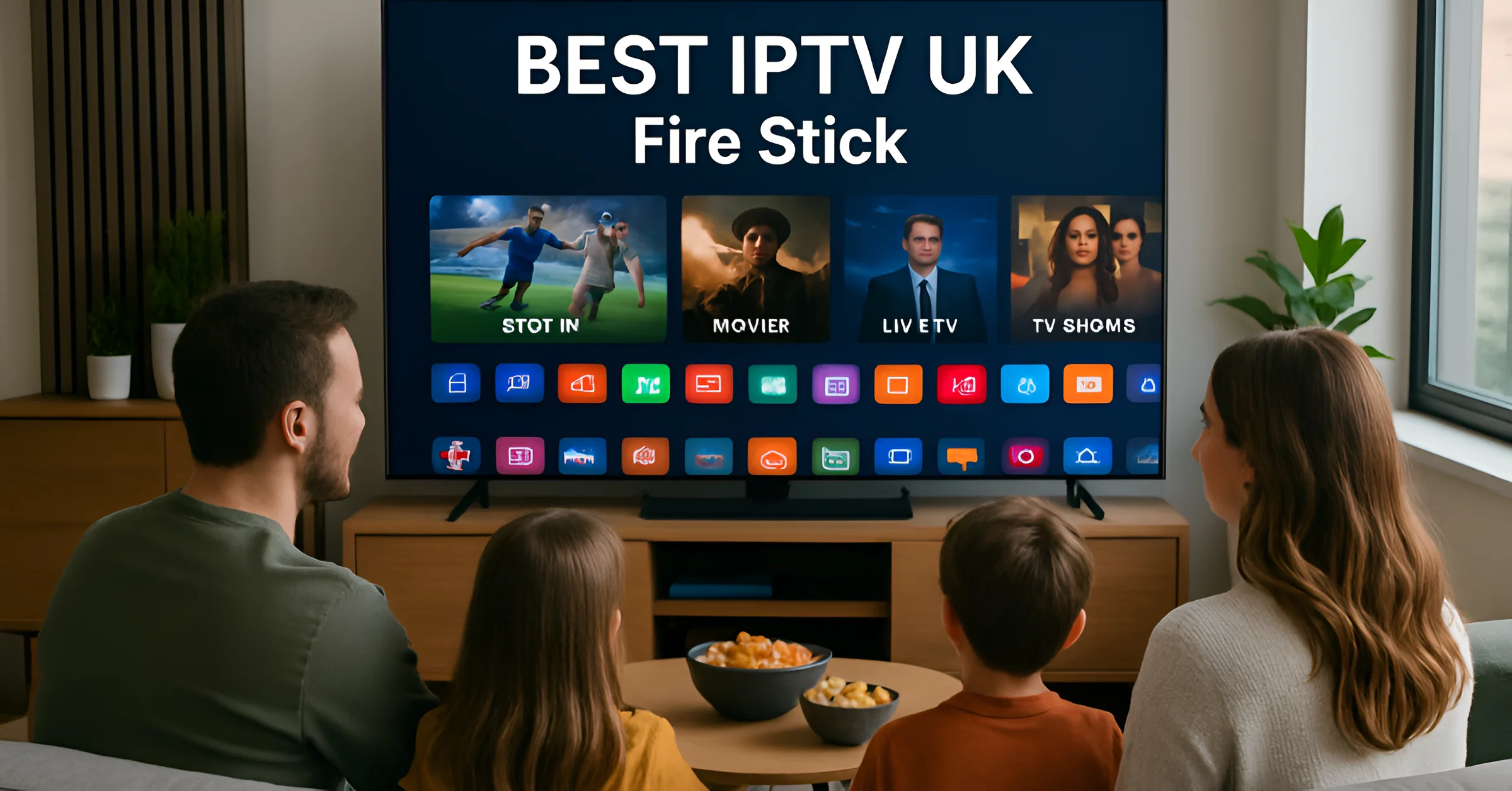
UK Families Embrace IPTV: Real Stories & Savings

What is IPTV? A plain-English refresher

IPTV stands for Internet Protocol Television. In short, it’s TV over the internet rather than through satellites or coax. Crucially, IPTV is a delivery method — not a content licence. So, legal IPTV services (like broadcaster apps, ISP bundles and licensed IPTV providers) are fine, while pirated playlists and pre-loaded “jailbroken” devices are risky and illegal. British Families Stream Smart.

IPTV vs cable/satellite: the practical difference

Cable and satellite packages often force you into bundles and long contracts. IPTV lets you pick apps (BBC iPlayer, ITVX, All 4), SVOD pillars (Netflix, Prime, Disney+) and pay-as-you-go passes for sport (NOW). That means families can pay for exactly what they use.

Common IPTV formats families use

  • Official apps (iPlayer, ITVX) on Smart TVs.
  • Streaming sticks (Amazon Fire Stick, Chromecast) with apps installed.
  • Front-end players (TiviMate, IPTV Smarters Pro) for managing playlists from licensed providers.
  • ISP-managed IPTV (BT TV, Sky Stream, Virgin) for those wanting a single bill and support.

Why families switch: six core motivations

Cost savings and budget control

First and foremost: money. Many families report saving hundreds per year by ditching expensive bundles and assembling a lean, legal IPTV stack.

Choice and flexibility

Instead of paying for hundreds of unused channels, families pick the catch-up services and SVOD pillars they actually watch.

Multi-device, multi-room convenience

Kids want to watch cartoons on tablets; parents want Netflix on the living room TV. IPTV makes simultaneous streaming easy.

Niche channels and international content

For multicultural households, IPTV gives access to foreign language channels and niche streaming without a bespoke expensive package.

Ease of setup and low hardware needs

A cheap Fire Stick + a subscription or two = a full TV setup. No installers, no big boxes.

Trials and short-term passes

Seasonal sports or a new drama? Families use iptv uk free trial offers or NOW passes, then cancel — giving flexibility and savings.

Real family stories: three representative case studies

These are composite but realistic stories drawn from common situations UK families face when switching to IPTV.

The Parkers — saving for school fees

The Parkers were paying £80/month for a premium TV bundle. After a weekend audit they switched to BBC iPlayer, ITVX, Netflix (one standard plan) and a Fire Stick. They used a NOW Entertainment pass for a month to keep Sky originals. Their savings: ~£40/month — roughly £480/year — which they redirected to school costs. British Families Stream Smart.

The Ahmeds — multi-generation household

Three generations under one roof needed multilingual channels. They combined Freeview Play with a legal licensed IPTV provider offering foreign channels, plus a shared Prime Video account for films. They used a separate tablet for the grandparent with simplified menus. Result: better content mix, fewer fights over the remote, and £30/month saved.

The Evans family — swapping Sky for seasonal sport passes

The Evans loved live sport but hated the annual Sky bill. They switched to an IPTV stack: free catch-ups, Disney+ for family films, and short NOW Sports passes during football season. They paid only for the months they needed the sport, saving more than £300/year.

Transition words and flow: why the conversation matters

Consequently, because families value choice and control, IPTV UK has become more attractive. Moreover, as broadband improves, streaming reliability increases; therefore, switching becomes less risky. However, families must be mindful of legality and security: needless to say, pirate streams may seem cheap but carry substantial hidden costs — malware, fraud, and legal exposure. Meanwhile, legitimate iptv providers and free public broadcaster apps keep improving, offering better EPGs and parental controls that meet family needs. British Families Stream Smart.

How much do families actually save? Breaking down the numbers

Typical cable/sky cost vs IPTV stack

  • Traditional premium bundle (Sky/Viaplay + broadband): £70–120/month.
  • Lean IPTV stack (broadband £30–40, Netflix £6–12, Amazon Prime £8, Free apps): roughly £25–40/month incremental for TV services — net savings of £30–60/month.

Case study savings—monthly and annual

Using the Parkers example above: saving of ~£40/month equals £480/year — money that can go to family priorities. Even modest stacks often save £200–£500 annually versus full premium bundles.

Step-by-step family plan: switch, test, save (detailed 800-word guide)

Below is a practical plan — roughly 800 words — to help a family move from an expensive bundle to a legal IPTV setup that saves money without sacrificing what matters most.

Step 1: Audit current costs and viewing habits

Start by gathering bills: list monthly subscriptions (TV, streaming services, broadband). Then track viewing for one week: who watches what, when, and on which device. Note must-have channels (live sports? children’s shows?) and content that’s “nice to have.”

Why? Finance and choices are clearer when you know exact patterns. British Families Stream Smart.

Step 2: Map must-have channels and shows

Create two columns: “Must-have” (e.g., live football, local news, children’s CBeebies) and “Optional” (box sets, premium movie channels). This helps prioritise paid passes vs free apps.

Step 3: Choose legal IPTV options and trials

Start with the essentials: install BBC iPlayer, ITVX, All 4, My5, and Freeview Play on your TV or Fire Stick. Then trial one or two SVOD pillars — use official free IPTV UK trial offers or short monthly plans. For sport, plan to buy a short NOW Sports pass for the season rather than a full year.

Step 4: Build the stack — devices, apps, and passes

Devices: pick a reliable streaming stick (Fire TV Stick 4K Max or Chromecast with Google TV) or use the Smart TV’s built-in app store. Use Ethernet for the main TV if possible. Apps: install your free catch-ups and chosen SVOD services. Front-end (optional): use TiviMate on Android TV or IPTV Smarters Pro if you have a licensed playlist from your provider — but only use legal, licensed sources.

Step 5: Test and optimise

Run a 48–72 hour trial with all apps active. Check picture quality, buffering, and user interface. If a service underperforms, cancel it before the trial ends. Monitor how different household members adapt — teach kids how to find content on the new apps.

Step 6: Handle sport and big events

For big sporting seasons, time your NOW or rights-holder passes to cover the months you need. If a single match matters, some rights holders sell event passes. This prevents paying year-round for intermittent sport.

Step 7: Monitor subscriptions and re-evaluate quarterly

Set calendar reminders to review subscriptions every three months. Cancel services you no longer use and rotate trials strategically. Reassess broadband speed and, if necessary, upgrade to support 4K. British Families Stream Smart.

Devices and apps families use

  • Amazon Fire Stick 4K Max — cheap, powerful, supports most apps.
  • Chromecast with Google TV — smooth UI, Google integration.
  • Smart TVs (Samsung, LG, Sony) — built-in apps, minimal setup.
  • TiviMate — excellent EPG front-end for licensed playlists on Android TV.
  • IPTV Smarters Pro — popular front-end; neutral tool—use with legal providers only.

Legal & safety checklist: avoid pirate iptv subscriptions

  • Use apps from official stores (Amazon, Google Play).
  • Never buy pre-loaded “jailbroken” sticks.
  • Prefer traceable payments (card/PayPal) and keep invoices.
  • If a playlist provider can’t show proof of rights, walk away.
  • Use reputable antivirus and keep devices patched.

Tips for parents: parental controls, profiles and homework time

  • Use profiles and PINs in Netflix/Disney+ to control kids’ access.
  • Set screen time limits on devices via the TV or router settings.
  • Use catch-up apps for homework resources (BBC Bitesize via iPlayer links).
  • Encourage a “no screens during meal” rule — technology should serve family life, not rule it.

Common objections & simple responses

  • “IPTV will be low quality” — Not anymore. With broadband at 50–200 Mbps, HD and 4K streams are smooth.
  • “We’ll miss channels” — Most families keep core local channels via Freeview Play and get specialized content via short passes.
  • “What about grandparents?” — Use simple remotes, dedicated profiles, and step-by-step guidance.

Future trends families should watch

  • AV1 and HEVC: more efficient codecs mean same quality for less bandwidth.
  • Wi-Fi 6 and mesh: better home coverage for multiple streams.
  • Smarter recommendations: family profiles get smarter — making discovery easier.
  • Voice control & integrated remotes: kids and grandparents alike will benefit from voice search.

Conclusion: final checklist & encouragement

Switching to IPTV is not about cutting enjoyment — it’s about smarter spending and modern convenience. To recap, do this:

  1. Audit what you pay and what you watch.
  2. Start with free catch-ups and one or two paid pillars.
  3. Use short passes for sport and set reminders for trials.
  4. Buy official devices and keep everything secure.
  5. Reassess quarterly and keep the family in the loop.

Families across the UK are saving money, reducing clutter, and gaining control by adopting legal IPTV approaches. With careful choices, your household can too. British Families Stream Smart.

FAQs

Q1 — Will switching to IPTV mean lower quality live sport?
A: Not if you use official rights-holder apps or NOW passes. Licensed IPTV streams from rights holders match broadcast quality.

Q2 — Are front-end apps like TiviMate or IPTV Smarters Pro legal?
A: Yes — they are neutral players. Legal status depends entirely on the content source you load into them.

Q3 — Can I use one Netflix/Prime account across multiple TVs?
A: Yes — check the plan’s simultaneous streams limit. Many family plans support 2–4 streams.

Q4 — How do I make sure kids don’t access unsuitable content?
A: Use app parental controls, profiles, PINs, and router-level site blocking for extra protection.

Q5 — If I sign up for an iptv uk free trial, how do I avoid being charged?
A: Set a calendar reminder for a day before the trial ends, and cancel via the provider’s account page if you don’t want to continue.

How to Set Up IPTV on Any Smart TV in 5 Minutes

Introduction:

Gone are the days when you had to juggle cable boxes, tangled cords, and overpriced satellite packages. Welcome to the age of IPTV (Internet Protocol Television) — where your Smart TV becomes a powerful gateway to live channels, movies, and on-demand entertainment. Smart TV IPTV Setup.

If you’re wondering how to set up IPTV on your Smart TV quickly, the good news is — it takes less than five minutes. In this guide, we’ll break down everything you need to know: the tools you need, how to install an IPTV app, add your playlist, and start streaming like a pro.

What is IPTV and Why You Should Care

Breaking Down the Term “IPTV”

IPTV simply means streaming television through the internet instead of traditional methods like satellite or cable. The “IP” stands for “Internet Protocol,” which is the same technology used to send data, websites, and emails across the web. Smart TV IPTV Setup.

In other words, IPTV delivers TV content over your broadband connection, allowing you to watch what you want, when you want, without relying on old broadcasting systems.

How IPTV Differs from Cable and Satellite

  • Cable/Satellite: Channels are broadcast on fixed schedules via physical wires or dishes.
  • IPTV: Content is streamed on-demand over your internet connection.
    This means you can pause, rewind, or watch on multiple devices — including your Smart TV, phone, or tablet — without needing extra boxes.

Why Smart TVs Are Perfect for IPTV

Built-In Internet Connectivity

Every Smart TV — whether Samsung, LG, Sony, or Hisense — comes with Wi-Fi or Ethernet support. That’s the first building block for IPTV UK . No external hardware is required to connect.

App Stores and Streaming Support

Smart TVs have their own app stores — like LG Content Store, Samsung Smart Hub, or Google Play Store — where you can install IPTV apps easily. Think of it as downloading an app on your smartphone, only this time for your television.

What You Need Before You Start

Make sure you have these necessities on hand before you begin:

1. Stable Internet Connection

A minimum of 15 Mbps is recommended for HD streams and 25 Mbps for 4K content. Always connect to a 5GHz Wi-Fi network or, better yet, use an Ethernet cable.

2. IPTV Subscription or Playlist

You’ll need an M3U link, Xtream Codes, or EPG URL provided by your IPTV service. Free IPTV lists also exist but may be unstable.

3. Compatible IPTV App

Different Smart TVs use different operating systems, so you’ll need an app compatible with your model. Examples include:

  • Smart IPTV (SIPTV)
  • TiviMate
  • Flix IPTV
  • SmartOne IPTV
  • SS IPTV
  • Smart STB

Step-by-Step: How to Set Up IPTV on Any Smart TV in 5 Minutes

Let’s get to the exciting part — setting it up. Smart TV IPTV Setup.

Step 1: Establish an Internet connection with your smart TV

Open your TV’s settings, go to Network, and connect to Wi-Fi. If possible, use Ethernet for stable, lag-free streaming.

Step 2 – Open the TV App Store

  • On Samsung TVs, open Smart Hub.
  • On LG TVs, go to the LG Content Store.
  • On Android/Google TVs, use the Play Store.

Step 3 – Install an IPTV App

Search for an IPTV player app — like Smart IPTV or Flix IPTV — and click Install. Once installed, open the app.

Step 4 – Add Your IPTV Playlist or M3U URL

Open the app, and you’ll see a screen asking for:

  • M3U URL or playlist file upload
  • MAC address (unique to your TV)
  • Xtream Codes API (for some apps)

You can enter these using your remote or, in some cases, through a web portal provided by the app (for example, siptv.eu/mylist).

Step 5 – Start Watching

Once the playlist loads, you’ll see your channel list, categorized by country or genre. Click on any channel and start streaming instantly!

Setup time: Under 5 minutes.
You’re done.

Best IPTV Apps for Different Smart TV Brands

Samsung Smart TVs

Best apps: Smart IPTV, SmartOne IPTV, SS IPTV.
Samsung’s Tizen OS supports advanced IPTV players . You may need to activate the app through its official website using your TV’s MAC address.

LG Smart TVs

Best apps: Smart IPTV, Flix IPTV, Net IPTV.
Install via LG Content Store, upload your playlist on the app’s website, and restart your TV.

Android / Google TVs

Best apps: TiviMate, IPTV Smarters Pro, Perfect Player.
Android users have an advantage — you can easily install APK files or download directly from Google Play.

Fire TV and Roku TVs

Best apps: Downloader + IPTV Smarters, SmartOne IPTV, or OTT Navigator.
Use the Amazon App Store or sideload via Downloader if the app isn’t listed.

Alternative Setup: Using an External Device

Not all Smart TVs support IPTV apps, especially older models. No worries — here’s how to stream anyway.

Fire Stick or Android Box Method

Plug your Amazon Fire Stick or Android TV Box into your HDMI port, connect to Wi-Fi, and install IPTV apps like TiviMate or IPTV Smarters Pro.

HDMI Connection for Older TVs

If your TV isn’t Smart, use an external streaming box or stick. Devices like Roku or Nvidia Shield convert regular TVs into IPTV smart systems.

Troubleshooting Common Setup Issues

1. Playlist Not Loading

Check if your M3U URL is still valid. Some playlists expire or require VPN access.

2. Buffering Problems

Reduce streaming quality (1080p → 720p), restart your router, or use Ethernet instead of Wi-Fi.

3. App Crashes or Black Screen

Reinstall the app, clear cache, or update your Smart TV firmware.

Optimizing IPTV Performance

Internet Speed Requirements

Minimum:

  • SD quality: 5 Mbps
  • HD quality: 15 Mbps
  • 4K UHD: 25–50 Mbps

Use of Ethernet vs Wi-Fi

Ethernet always provides a more stable stream — especially if multiple devices share Wi-Fi.

Smart DNS or VPN for Geo-Blocked Content

If a channel is unavailable in your region, using a VPN or Smart DNS can bypass restrictions (ensure compliance with local laws).

Tips for Smart TV Users

Organize Channels and Categories

Most IPTV apps let you customize or favorite channels for easy access.

Enable Parental Controls

Protect younger viewers by enabling PIN locks or restricting adult channels.

Regularly Update IPTV App

App developers release updates to fix bugs and improve playback quality — keep your IPTV player up to date.

Legal Considerations: Stay Safe While Streaming

Always use licensed IPTV providers. Avoid illegal streams, as they can expose you to malware, fines, or ISP throttling.

Benefits of Setting Up IPTV on Your Smart TV

  • No external devices or cables
  • Full HD and 4K streaming
  • Access to thousands of channels
  • On-demand movies and sports
  • Affordable monthly cost compared to cable

How to Maintain a Smooth Streaming Experience

  • Use wired Ethernet for main TV
  • Close background apps
  • Clear IPTV app cache monthly
  • Use a 4K-capable HDMI port
  • Schedule router reboots weekly

Future of IPTV and Smart TVs

Smart TVs are becoming IPTV hubs by design. Expect better AI recommendations, voice assistants, and faster interfaces in future models.

Conclusion: Stream Smarter, Not Harder

Setting up IPTV on your Smart TV is one of the easiest ways to modernize your home entertainment system. With just a few clicks, you can turn any TV into a global content hub — streaming live channels, movies, and sports from across the world. Smart TV IPTV Setup.

All you need is a reliable IPTV app, a stable internet connection, and five minutes of setup. That’s it — welcome to the future of streaming.

FAQs

  1. Can I use IPTV for free on my Smart TV?
    Yes, but free IPTV playlists often have unreliable links. Paid services are more stable and secure.
  2. Is IPTV legal in the UK?
    Yes, as long as you use licensed providers and legitimate M3U sources.
  3. Why does my IPTV keep buffering?
    It’s usually due to slow internet or overloaded servers. Try reducing quality or switching to Ethernet.
  4. Which IPTV app is best for LG TVs?
    Smart IPTV (SIPTV) and Flix IPTV are the most popular and stable options for LG users.
  5. Can I install multiple IPTV apps on one TV?
    Absolutely. Many users keep two or more apps for backup playlists or special content.                                                                                                                                                                                                                                       IPTV FREE TRIAL

Best Devices for IPTV in the UK: Fire Stick, Roku & Smart TVs

Introduction

The world of television in the UK has changed dramatically. Leading IPTV Devices UK. Gone are the days of clunky satellite dishes and pricey cable subscriptions. Today, IPTV (Internet Protocol Television) is taking over, offering flexibility, affordability, and endless entertainment choices. But there’s a catch — to enjoy IPTV at its best, you need the right device.

Choosing between a Fire Stick, Roku, or Smart TV can be overwhelming. Each offers unique advantages depending on your streaming habits, budget, and technical preferences. This guide breaks down everything you need to know about the best IPTV devices in the UK — so you can stream like a pro without wasting a penny.

What Is IPTV?

IPTV, or Internet Protocol Television, delivers TV content over the internet rather than through traditional broadcasting methods like satellite or cable. In simple terms, it’s TV via your Wi-Fi.

There are three main types of IPTV services:

  1. Live TV – Watch TV channels in real-time, just like traditional broadcasting.
  2. Video on Demand (VOD) – Access a library of movies and shows anytime.
  3. Time-Shifted TV – Replay or catch up on shows you missed.

This flexibility makes IPTV the ideal choice for families, students, and tech-savvy viewers looking to personalize their entertainment. Leading IPTV Devices UK.

Why Device Choice Is Crucial for IPTV

Not all streaming devices are created equal. A cheap stick might buffer endlessly, while a powerful media box can deliver cinema-quality 4K streams smoothly.

Here’s why your device choice matters:

  • Compatibility: Some IPTV apps only work on Android-based platforms.
  • Performance: Devices with better processors handle HD and 4K streams effortlessly.
  • Connectivity: Wi-Fi 6 and Ethernet ports reduce lag and buffering.
  • Interface: A smooth and intuitive interface makes your IPTV experience stress-free.

Amazon Fire Stick for IPTV

The Amazon Fire TV Stick is a favourite among UK IPTV users thanks to its affordability and versatility. Leading IPTV Devices UK. It turns any regular TV with an HDMI port into a smart entertainment hub.

Top Models

  • Fire TV Stick Lite – Best for HD streaming on a budget.
  • Fire TV Stick 4K – Offers vibrant 4K HDR streaming.
  • Fire TV Stick 4K Max – Adds Wi-Fi 6 and faster performance for demanding IPTV users.

Key Features

  • Access to popular IPTV apps (Smart IPTV, Tivimate, IPTV Smarters Pro).
  • Alexa voice remote for easy navigation.
  • Dual-band Wi-Fi and smooth app interface.

Pros

  • Affordable and widely available in the UK.
  • Regular software updates.
  • Excellent app support.

Cons

  • Amazon’s interface promotes Prime Video heavily.
  • Sideloading third-party IPTV apps can be tricky for beginners.

Fire Stick 4K vs Fire Stick 4K Max

The 4K Max stands out with a more powerful processor (Quad-core 1.8GHz vs 1.7GHz), Wi-Fi 6, and 2GB RAM. If you plan to stream 4K IPTV channels or use multiple apps simultaneously, the 4K Max is worth the extra pounds.

Roku Devices for IPTV

Roku is another top contender in the UK IPTV market . Known for its simplicity, it offers a user-friendly interface and reliable performance.

Popular Models

  • Roku Express – Best for HD streaming and casual users.
  • Roku Streaming Stick 4K – Compact, supports 4K HDR.
  • Roku Ultra (imported) – Premium experience with Ethernet port.

IPTV App Support

While Roku doesn’t officially support many IPTV apps, you can use IPTV Player, M3U Playlist Player, or Plex as alternatives. Some users also access IPTV through private channels or screen mirroring.

Pros

  • Clean, simple interface.
  • Affordable pricing.
  • Great performance for popular streaming services.

Cons

Smart TVs for IPTV in the UK

Modern Smart TVs are IPTV-ready out of the box. Brands like Samsung, LG, Sony, Hisense, and Philips now include IPTV-compatible apps such as Smart IPTV, TiviMate, and SS IPTV

Advantages

  • No need for extra devices or cables.
  • Clean setup and integrated interface.
  • Perfect for families and non-tech users.

Limitations

  • Fewer customization options than Android-based devices.
  • Some app stores restrict IPTV apps.

Android TV vs WebOS vs Tizen

OSUsed ByIPTV SupportCustomization
Android TVSony, Philips, TCLExcellent (Smart IPTV, Tivimate)High
WebOSLGModerateLow
TizenSamsungModerateLow

Verdict: Android TV wins hands-down for IPTV flexibility and app availability.

Apple TV for IPTV

The Apple TV 4K brings premium design and performance to IPTV streaming . With the tvOS platform, it supports IPTV apps like GSE Smart IPTV, rIPTV, and iPlayTV.

Pros

  • Superb 4K HDR quality.
  • Seamless integration with Apple ecosystem.
  • Powerful A12 Bionic chip.

Cons

  • Expensive compared to competitors.
  • Limited sideloading flexibility.

NVIDIA Shield TV

The NVIDIA Shield TV is the gold standard for IPTV enthusiasts . Its Tegra X1+ processor, AI upscaling, and Android TV OS make it unbeatable for performance.

Why It Stands Out

  • Handles 4K, Dolby Vision, and HDR10 effortlessly.
  • Supports every IPTV app on Android.
  • Excellent for gaming and streaming combined.

Essential Features to Look for in an IPTV Device

  1. Processor & RAM: Aim for quad-core or higher.
  2. Resolution Support: 4K/HDR10 for future-proofing.
  3. Connectivity: Dual-band Wi-Fi or Ethernet recommended.
  4. Storage: At least 8GB for app downloads.
  5. Remote Features: Voice control and shortcut buttons enhance convenience.

Internet Speed and Network Setup

  • HD streaming: Minimum 10 Mbps.
  • 4K streaming: 25 Mbps or higher recommended.
  • Ethernet connection: Always more stable than Wi-Fi.
  • Wi-Fi 6 routers: Ideal for smooth IPTV performance

Legal Considerations in the UK

IPTV itself is legal, but accessing unlicensed content isn’t. Always use legitimate IPTV providers that comply with UK broadcasting laws. Stick to licensed platforms like BBC iPlayer, ITVX, or NOW TV, or properly licensed IPTV subscriptions.

Comparison Table

DeviceOSResolutionWi-Fi 6App SupportPrice Range
Fire Stick 4K MaxFire OS4K HDRExcellent£45–£55
Roku Stick 4KRoku OS4K HDRModerate£35–£50
Smart TV (Android)Android TV4K HDRExcellent£400+
Apple TV 4KtvOS4K HDRGood£150–£170
NVIDIA Shield TVAndroid TV4K HDRExcellent£170–£200


Future of IPTV Devices

As technology evolves, IPTV devices are becoming smarter, faster, and more connected.

Expect:

  • AI-enhanced recommendations
  • 8K and AV1 codec support for superior compression
  • Full smart home integration with Alexa and Google Assistant

Conclusion

When it comes to the best IPTV devices in the UK there’s no one-size-fits-all.

  • For budget users: Fire Stick 4K is unbeatable.
  • For simplicity: Roku delivers a no-fuss experience.
  • For enthusiasts: NVIDIA Shield TV rules them all.
  • For integrated setups: Smart TVs with Android OS offer convenience and flexibility.

Choose based on your needs, and you’ll unlock a world of seamless IPTV streaming right in your living room. Leading IPTV Devices UK.

FAQs

  1. Which device is best for IPTV beginners in the UK?
    The Amazon Fire Stick 4K offers the easiest setup, broad app support, and great value for beginners.
  2. Can I use IPTV on multiple devices at once?
    Yes, many IPTV services allow multiple connections, but it depends on your provider’s plan.
  3. Is Fire Stick better than Roku for IPTV?
    For IPTV specifically Fire Stick is better due to wider app compatibility and Android-based flexibility.
  4. Do I need a VPN for IPTV in the UK?
    While not mandatory, a VPN enhances privacy and helps access region-locked content safely.
  5. What’s the most future-proof IPTV device in 2025?
    The NVIDIA Shield TV remains the most future-ready option, supporting Wi-Fi 6, 4K HDR, and constant software updates.                                                                                                                                                                                                                      IPTV FREE TRIAL

IPTV on a Budget: Affordable Streaming for Everyone in the UK

Introduction

Are you tired of paying sky-high cable bills just to watch a few shows? You’re not alone. Affordable IPTV Streaming UK. Across the UK, people are cutting the cord and turning to IPTV (Internet Protocol Television) — a more flexible, affordable, and modern way to enjoy TV. In this article, we’ll dive deep into how you can get IPTV on a budget, what options are available, and how to make the most of streaming without breaking the bank.

What is IPTV?

Simply put, IPTV delivers television content over the internet instead of traditional satellite or cable signals. That means you can watch your favourite shows, live sports, and movies using your broadband connection — anytime, anywhere.

Imagine swapping bulky cables and expensive boxes for a simple app or streaming device. That’s the beauty of IPTV.

Understanding IPTV Technology

How IPTV Works

IPTV uses your internet connection to deliver TV content in packets, similar to how YouTube or Netflix works. When you click on a channel or movie, the IPTV server sends the content through your connection in real time.

IPTV vs Traditional Cable and Satellite

FeatureIPTVTraditional TV
Delivery MethodInternetSatellite/Cable
Device FlexibilitySmartphones, Smart TVs, PCsTV Only
CostLowerHigher
On-Demand OptionsYesLimited

The clear winner in flexibility and affordability? IPTV UK.

Benefits of IPTV

1. Flexibility and Convenience

You can stream from anywhere — on your phone, tablet, or even your gaming console. Perfect for families with multiple viewers.

2. On-Demand Entertainment

Unlike traditional TV, IPTV offers on-demand content — movies, shows, sports, and more, available whenever you want.

3. Cost-Effectiveness

You can find reliable IPTV services in the UK for as low as £5–£15 per month — a fraction of what Sky or Virgin Media costs.

The Rising Demand for Affordable IPTV in the UK

Streaming is no longer just a trend — it’s the new normal. The UK’s shift toward IPTV has been massive due to rising living costs and people seeking cheaper entertainment alternatives.

Households are saving hundreds of pounds annually by switching from traditional cable to IPTV services.

Types of IPTV Services

1. Live TV IPTV

Stream live channels such as BBC, ITV, Sky Sports, and more — all through your internet connection.

2. Video on Demand (VOD)

Access movies and series anytime you want, much like Netflix.

3. Time-Shifted IPTV

Missed last night’s football match? Time-shifted IPTV lets you rewind and catch up on live shows later.

Free vs Paid IPTV Services

IPTV Free 

Free IPTV apps and lists exist, but they often come with limited channels, unstable connections, and annoying ads.

Paid IPTV

Paid IPTV services usually offer better quality, reliability, and customer support — often at surprisingly low prices.

Top Affordable IPTV Providers in the UK

While there are countless options, some of the most popular budget-friendly IPTV providers in the UK include:

  • Sling TV (UK) – Excellent for international channels.
  • Xtreme HD IPTV – Offers 20,000+ channels at a low price.
  • IPTV Trends – Stable service with HD and 4K content.
  • Yeah! IPTV – Known for affordability and user-friendly interface.

Features to Look for in a Budget IPTV Service

1. Channel Selection

Make sure the provider offers the channels you actually watch — UK favourites like BBC, ITV, Sky, and BT Sport.

2. Streaming Quality

Look for HD or 4K streaming for a smoother experience.

3. Device Compatibility

Good IPTV works across Smart TVs, Firesticks, Android Boxes, and mobile devices.

4. Customer Support

Responsive customer service can save you hours of frustration.

How to Choose the Right IPTV Subscription

Ask yourself:

  • What type of content do I watch most?
  • Do I need sports channels or movies?
  • What devices will I use?

Try monthly plans first to test reliability before committing to a long-term deal.

Setting Up IPTV on a Budget

All you need is:

  • A Smart TV, Amazon Firestick, or Android Box
  • A reliable internet connection (minimum 20 Mbps)
  • An IPTV app (e.g., TiviMate, Smart IPTV, or IPTV Smarters)

Then, install the app, log in with your IPTV credentials, and start streaming — simple as that.

Legal Considerations for IPTV in the UK

Here’s where things get serious. Affordable IPTV Streaming UK.  Not all IPTV services are legal. To stay safe:

  • Use only licensed IPTV providers.
  • Avoid services offering thousands of premium channels for extremely low prices — that’s often a red flag.
  • Illegal IPTV use can result in fines or prosecution in the UK.

Tips to Save Money on IPTV Subscriptions

  1. Choose annual plans — they’re often 30–50% cheaper.
  2. Share family plans or multi-device subscriptions.
  3. Look out for holiday discounts or coupon codes.
  4. Avoid unnecessary add-ons — stick to what you watch.

Common Problems and Troubleshooting

Buffering Issues

Try reducing resolution, restarting your router, or using a wired connection.

Login or Channel Errors

Double-check your credentials or clear your app cache.

Connectivity Fixes

Restart your device, update your IPTV app, or switch servers if possible.

The Future of IPTV in the UK

With fibre internet becoming widespread, IPTV is evolving fast. Expect AI-powered recommendations, interactive channels, and ultra-HD streaming to dominate the future of entertainment.

The UK market will continue shifting toward affordable, internet-based TV solutions, making IPTV the go-to for everyone.

Conclusion

IPTV isn’t just a tech trend — it’s a revolution in entertainment. With rising cable costs, people across the UK are discovering that IPTV offers the same (if not better) viewing experience at a fraction of the cost. Affordable IPTV Streaming UK. Whether you’re on a tight budget or just seeking more flexibility, IPTV is your gateway to affordable, high-quality streaming.

FAQs

1. Is IPTV legal in the UK?

Yes, but only if you use licensed IPTV services. Avoid unverified providers to stay safe.

2. How much does IPTV cost in the UK?

Affordable IPTV plans range from £5 to £15 per month, depending on features and channel selection.

3. Does IPTV require a smart TV?

No — you can use an Amazon Firestick, Android Box, or even your smartphone.

4. Can I use IPTV on multiple devices?

Yes, many providers offer multi-device plans for families or shared accounts.

5. What internet speed is best for IPTV?

A stable connection of at least 20 Mbps ensures smooth HD streaming.

IPTV FREE TRIAL

What Is IPTV? The Complete Guide for UK Viewers

Television is no longer what it used to be. In the UK, the days of relying solely on rooftop aerials, bulky satellite dishes, or expensive cable packages are fading. Instead, a new standard is shaping the future of entertainment: IPTV (Internet Protocol Television). Best IPTV services UK .

If you’ve heard the term but aren’t sure what it means, how it works, or whether it’s right for your home, you’re not alone. IPTV has quickly become one of the most talked-about topics in the UK TV landscape, yet for many, it’s still surrounded by confusion.

  1. IPTV Defined: What It Really Means

IPTV stands for Internet Protocol Television. Put simply, it’s TV delivered over the internet rather than via traditional broadcast methods such as:

  • Terrestrial signals (Freeview aerials)
  • Satellite dishes (Sky, Freesat)
  • Cable coaxial networks (Virgin Media)

Instead of using airwaves or satellites, IPTV uses your broadband connection to send video data to your device (TV, laptop, smartphone, or set-top box). The “IP” in IPTV refers to the same Internet Protocol that powers web browsing and emails.

Think of IPTV as TV streamed through apps, but with added flexibility: you can watch live channels, pause and rewind broadcasts, access on-demand shows, and sometimes even subscribe to custom channel packages.

2. How IPTV Works (In Everyday Language)

The technical explanation involves content servers, streaming protocols, and packet switching, but here’s the everyday breakdown for UK viewers:

  1. Broadcasters and content providers make live channels and shows available through IPTV platforms.
  2. Instead of broadcasting through satellite signals, the content is encoded into data packets.
  3. These packets travel across your broadband connection to your device.
  4. A compatible app (like BBC iPlayer, ITVX, NOW, or a dedicated IPTV app) decodes and plays the stream.

If you’ve ever watched Netflix, YouTube, or Amazon Prime Video, you’ve already used IPTV — those are on-demand IPTV services . The difference is that IPTV can also provide live TV channels, much like Sky or Freeview.

3. Types of IPTV Services in the UK

Not all IPTV is the same. For British viewers, there are four main categories to understand:

a) Catch-Up & On-Demand IPTV

  • Examples: BBC iPlayer, ITVX, All 4, My5, Netflix, Disney+, Amazon Prime Video.
  • How it works: Watch shows or films whenever you like, not tied to a schedule.
  • Best for: Families, binge-watchers, and those who hate missing episodes.

b) Live TV IPTV (OTT Services)

  • Examples: NOW (Sky’s streaming service), Discovery+, Sky Stream, Virgin Stream.
  • How it works: Access live TV channels, including sports and movies, without a satellite dish or long-term contract.
  • Best for: Sports fans, news watchers, and households who want real-time TV.

c) FAST Channels (Free Ad-Supported Streaming TV)

  • Examples: Pluto TV, Samsung TV Plus, Rakuten TV channels.
  • How it works: Free linear-style channels supported by ads (like old-school TV).
  • Best for: Budget-conscious households who don’t mind adverts.

d) Illegal IPTV Services (⚠️ Avoid These)

  • Examples: Shady providers selling “all Sky Sports + all movies” for £10/month through sideloaded apps.
  • How it works: Pirated streams with no licensing, unstable quality, and high legal risks.
  • Best for: Nobody. These services are illegal in the UK and can expose you to malware, scams, and prosecution.

4. Legal vs Illegal IPTV in the UK

This is an important distinction.

  • Legal IPTV = Services with proper broadcasting rights (e.g., BBC iPlayer, NOW, Discovery+, Netflix, Prime).
  • Illegal IPTV = Unlicensed providers reselling pirated streams, often marketed as “premium IPTV” with hundreds of channels for suspiciously low prices.

Why illegal IPTV is risky:

  • Poor stream quality (buffering, channel blackouts).
  • No customer support or guarantee of service.
  • Malware risks from sideloaded apps.
  • Potential fines or legal action — in 2024, several UK users were prosecuted for using pirate IPTV.
  • No parental controls or content protections.

👉 Rule of thumb: If it seems too cheap to be true, it’s almost certainly illegal. Stick with licensed IPTV services for peace of mind. Best IPTV services UK.

5. IPTV vs Traditional UK TV (Freeview, Sky, Virgin, BT)

How does IPTV actually compare with older TV delivery methods?

FeatureFreeviewSky/Virgin (Satellite & Cable)IPTV (Legal)
CostFree (with TV licence)£40–£100/month£0–£40/month depending on services
Channels70+ free300+ bundledCustom mix (free + paid apps)
SportsLimited (BBC, ITV highlights)Extensive (Sky Sports, TNT, F1)Flexible (NOW, Discovery+, Amazon)
FlexibilityLive-only, limited catch-upLong contracts, bundlesMonth-to-month subscriptions
HardwareAerial + Freeview box/TVSatellite dish or cable boxSmart TV, Fire Stick, Roku, etc.
Parental ControlsBasicStandardAdvanced (profiles, PINs, kids’ apps)

For many UK families, IPTV provides the sweet spot: lower costs, more choice, and no installation headaches.

6. Why UK Families Are Switching to IPTV

a) Lower Costs

  • Families save hundreds of pounds per year by dropping Sky/Virgin bundles in favour of IPTV apps.

b) Flexibility

  • Cancel anytime. Pay for sports only during football season.

c) Multi-Device Viewing

  • Watch on TVs, tablets, phones, or laptops — ideal for busy households.

d) Parental Controls

  • Safer kids’ profiles on Netflix, Disney+, and iPlayer Kids apps.

e) No Installation Required

  • Works over broadband — no engineer, dish, or drilling needed.

7. IPTV Devices in the UK (2025)

You’ll need a device to access IPTV. Best IPTV services UK.  The good news is most UK homes already have one.

a) Smart TVs

  • Samsung, LG, Sony, Hisense, etc. come with built-in apps like iPlayer and Netflix.
  • Pros: Simple, no extra device needed.
  • Cons: App updates may lag on older models.

b) Streaming Sticks & Boxes

  • Amazon Fire TV Stick 4K/Max
  • Google Chromecast with Google TV
  • Roku Streaming Stick
  • Apple TV 4K
  • Nvidia Shield TV (for advanced users)
  • Pros: Affordable, portable, wide app support.
  • Cons: Need a separate stick per TV.

c) Games Consoles

  • PlayStation 5 and Xbox Series X/S double as IPTV hubs.

d) Set-Top IPTV Boxes from ISPs

  • Sky Stream, EE TV, Virgin Stream — convenient but often pricier.

8. Sports on IPTV (Premier League, F1 & More)

Sports is the number one reason many families hesitate to cut the cord. Here’s how IPTV handles it in the UK:

  • Premier League: Split across Sky Sports (NOW), TNT Sports (Discovery+), and occasional Amazon Prime matches.
  • F1: Sky Sports F1 (NOW) or extended coverage on Channel 4 highlights.
  • Champions League: TNT Sports via Discovery+.
  • Tennis, Rugby, Golf: Mix of Sky, TNT, and free-to-air.

IPTV Sports Strategy:

  • Use NOW Sports Month Pass during key football months.
  • Subscribe to Discovery+ for Champions League coverage.
  • Use free highlights on BBC and ITV for casual viewing.

This seasonal rotation saves money while keeping sports fans happy.

9. IPTV for Kids & Families

Parents appreciate IPTV for its child-friendly features:

  • Profiles: Disney+, Netflix, and iPlayer Kids allow separate kid logins.
  • Parental Controls: PINs, restricted ratings, purchase blocks.
  • Educational Content: BBC Bitesize, National Geographic, Discovery+.
  • Kids’ Channels on FAST: Free cartoon channels on Pluto TV and Samsung TV Plus.

10. Setting Up IPTV in the UK

Here’s a step-by-step setup guide:

  1. Check broadband speed: Aim for at least 25 Mbps per stream (50–100 Mbps for busy households).
  2. Choose your device: Smart TV or Fire Stick recommended.
  3. Download legal apps: BBC iPlayer, ITVX, All 4, Netflix, NOW, Discovery+.
  4. Create profiles: Set up kids’ accounts and parental controls.
  5. Trial & rotate: Start with free apps, then add paid ones during busy TV seasons.

11. Common IPTV Problems & Fixes

  • Buffering → Upgrade broadband speed, use wired Ethernet, or invest in mesh Wi-Fi.
  • App not working → Update apps/firmware, reinstall, or use a different device.
  • Geo-blocking issues → Some UK content won’t work abroad. (BBC iPlayer requires a UK licence fee and IP address).
  • Confusion over subscriptions → Use a calendar to track start/end dates and avoid unwanted renewals.

12. Future of IPTV in the UK (2025 and Beyond)

IPTV isn’t just the present — it’s the future. Expect:

  • More FAST Channels (free, ad-supported live TV).
  • AI-powered recommendations for personalized family viewing.
  • 5G-enabled streaming for seamless mobile IPTV.
  • AV1 codec adoption for better quality at lower bandwidth.
  • Deeper integration with smart home assistants (voice-controlled TV).

13. IPTV Provider Checklist (UK Viewers)

Before signing up, ask these questions:

  • ✅ Is the service licensed in the UK?
  • ✅ Does it have parental controls?
  • ✅ Can you cancel anytime?
  • ✅ Is the app available on multiple devices?
  • ✅ Do reviews confirm good reliability?

If the answer is “no” to most, look elsewhere.

14. Final Thoughts: Is IPTV Right for You?

For UK viewers in 2025, IPTV is no longer niche — it’s the mainstream way to watch TV. Families are switching because:

  • It’s cheaper than Sky or Virgin.
  • It offers more flexibility with subscriptions.
  • It works across devices you already own.
  • It gives parents more control over what kids watch.

The only real barriers are sports rights and unreliable broadband. But with smart seasonal subscriptions and the UK’s expanding fibre rollout, those hurdles are getting smaller every year. Best IPTV services UK.

IPTV FREE TRIAL

Best Devices for IPTV in the UK: Fire Stick, Roku, and Smart TVs

Introduction:

If you’re reading this, chances are you’re already using or thinking about using IPTV (Internet Protocol Television) in the UK — maybe for live channels, catch-up shows, international content, or simply cutting down on expensive cable/satellite bills. Top UK IPTV Devices. But one key question often comes up: Which device will give me the best experience?

It’s no longer just about “a box” under the TV. Today’s best IPTV experience depends on the device you choose, how it connects to your network, what apps it supports, how future-proof it is, and how well it handles what you watch in your household. In this article I’ll walk you through the top device categories — streaming sticks, streaming boxes, smart TVs — test them against UK use-cases, and help you pick the right one for your living room, spare room or bedroom.

What Makes a Great IPTV Device?

Key specs to look for: HDMI, codec support, Wi-Fi version

When choosing a device for IPTV, here are the technical details you should check:

  • HDMI output: Ensure the device supports HDMI 2.0+ if you plan 4K/HDR playback.
  • Codec support: H.265/HEVC is standard now; AV1 (emerging) is a bonus for future streams.
  • Wi-Fi version: Wi-Fi 5 (802.11ac) is baseline; Wi-Fi 6 (802.11ax) offers better multi-device performance — key in UK homes sharing internet with multiple users.
  • Processor & memory: A quicker interface and smoother navigation matter more than raw specs for everyday use.
  • Remote and OS support: A responsive OS and a good remote (voice, shortcuts) improve the experience.

Platform & App support: UK streaming ecosystem

In the UK you’ll want a device that supports: BBC iPlayer, ITVX, All 4, My5, Netflix, Amazon Prime Video, Disney+, and ideally other niche apps. Some devices may lag in updates or have limited app libraries. Also check whether they support live IPTV services or overlay apps. For example, Amazon press notes show the UK Fire TV Stick includes voice remote and wide app compatibility.

Device Category 1: Streaming Sticks

Amazon Fire TV Stick 4K (and variants)

The Fire TV Stick line from Amazon is widely used in the UK and offers very strong value for IPTV users. For instance, Amazon’s UK press centre mentions the “most affordable 4K streaming device” with Wi-Fi 6 support and smoother performance. Some key features: 4K HDR playback, voice-remote with Alexa, wide app ecosystem, easy setup (plug into HDMI, connect Wi-Fi).

Pros:

  • Relatively low cost compared to full set-top boxes.
  • Wide app support including UK catch-up services.
  • Voice remote and integrated smart-home features (if you use Alexa).
  • Good for living rooms and secondary rooms alike.

Cons:

  • Some models may be outdated — e.g., first-gen versions may lose app support.
  • Slight bias toward Amazon’s ecosystem (though you can still install other apps).
  • For very high-end home cinema (Dolby Atmos, highest HDR formats) you may want a more premium box.

Setup tip: Plug the stick into an HDMI port with good clearance (some TVs have cramped rear ports), connect to your Wi-Fi (preferably 5GHz band), sign in to your Amazon account, install or update apps (BBC iPlayer, ITVX etc), and test streaming quality. Setup can be done in minutes.

Device Category 2: Dedicated Streaming Boxes

Roku Streaming Stick Plus

While Roku is less ubiquitous in the UK than Amazon, the Roku Streaming Stick Plus (2025 version) is worth considering. A UK review notes it delivers 4K HDR, supports all major UK streaming services, and offers a clean, simple interface.

Pros:

  • Excellent simplicity and ease of navigation — ideal if you don’t want to mess with settings.
  • Broad app coverage (Netflix, Prime, Disney+, BBC iPlayer, ITVX).
  • Compact form factor, easy to move between rooms or TVs

Cons:

  • Some reviews cite issues with customer support and UK-specific app updates.
  • Slightly fewer advanced features than premium boxes (e.g., Dolby Atmos or advanced codecs may be limited).
  • Stock availability may vary in the UK.

Who it’s good for: Families wanting a simple streaming device in a bedroom or secondary TV, users who prefer minimal interface clutter and straightforward operation. Top UK IPTV Devices.

Device Category 3: Smart TVs with Built-in IPTV Support

If you’re buying a new TV anyway, choosing a Smart TV with strong streaming/app support can be the most seamless option — no extra stick or box required.

What to look for in Smart TV hardware for streaming

Key features:

  • Latest Smart TV OS (Tizen for Samsung, webOS for LG, Android TV/Google TV for other brands).
  • HDMI-CEC support and multiple HDMI ports (for future expansion).
  • Good remote (voice, dedicated streaming app buttons).
  • Adequate refresh rate, HDR support and codec support if you stream 4K/HDR content.
  • Built-in Wi-Fi (preferably Wi-Fi 5 or 6) and/or Ethernet port for stable connection.

Brands and models popular in the UK for IPTV use

Amazon’s UK press details mention new Fire TV styled TVs (2-Series, 4-Series). Samsung, LG and Sony also offer smart-TVs with built-in app stores and frequently push streaming updates. Top UK IPTV Devices.
Smart TVs are especially good if you want minimal hardware in your living room setup. The downside: if the TV’s OS becomes old or unsupported, you may end up with fewer updates than a standalone box.

Comparison: Fire Stick vs Roku vs Smart TV

Performance and usability comparison

Device TypeStrengthsTrade-offs
Fire TV StickStrong app ecosystem, voice remote, frequent updatesRequires HDMI port and some setup
Roku Streaming StickSimplicity, broad app support, easy to share across roomsSlightly less advanced features in some models
Smart TV built-inAll-in-one solution, no extra device requiredTV age may limit future app updates; higher initial cost

Cost comparison and hidden costs

  • A Fire TV Stick may cost £35–£50 in the UK.
  • A Roku Stick may cost around £30–£40 for HD models (or more for 4K versions).
  • Smart TVs can cost hundreds of pounds more initially, though they replace the TV itself.

Hidden costs: consider whether extra HDMI ports, remote replacements, or network upgrades will be needed.

Multi-Room and Household Use: What to Buy for Each Room

In a family household you might want different devices for different rooms:

  • Living Room (main TV): Use the Fire TV Stick 4K or a Smart TV if you’re buying new.
  • Kids’ Room: A cheaper stick (Fire TV Stick Lite or Roku HD) works fine; add parental controls.
  • Guest Room or Bedroom: Consider a compact streaming stick with fewer features, just enough for catch-up and light streaming.
  • Portable/Travel Use: A stick is easy to unplug and take to a second home or holiday.

Ensure your setup supports multiple concurrent streams, and check whether your subscriptions allow multiple devices simultaneously.

Network Considerations: Wi-Fi, Ethernet & Performance

Good devices need good network conditions. Here are key network tips for UK households:

  • Use the 5GHz Wi-Fi band rather than 2.4GHz if possible (better speed, less interference).
  • If your TV or streaming device is near the router: consider Ethernet cable for best stability.
  • If you share the broadband with other heavy users in the house (students, gamers, multiple TVs): aim for at least 100 Mbps broadband to handle multiple streams.
  • If using a Smart TV in an older home with weak Wi-Fi: consider a mesh Wi-Fi system or a Wi-Fi extender.

Device Longevity & Future-Proofing

Codec support (H.265/HEVC, AV1) and future streaming formats

Streaming services increasingly use efficient codecs like HEVC or AV1 to reduce bandwidth for 4K/HDR content. Devices that support these will last longer. Top UK IPTV Devices.
For example, Amazon’s recent Fire TV Stick 4K Max supports Wi-Fi 6E and faster processors, making it more future-ready.
When buying, ask: will this device support the next generation of streaming formats? Will it receive firmware updates for 3–4 years?

Practical Buying Tips in the UK

Where to buy, what deals to look for

  • Amazon UK often has deals on Fire TV devices (especially around Prime Day, Black Friday).
  • Major UK retailers (Currys, Argos, John Lewis) stock streaming sticks and smart TVs.
  • Look for bundle deals: some ISPs may include streaming sticks or smart TV credits when you sign up for full-fibre.
  • Warranty & updates: ensure the device has at least a one-year warranty and check whether the manufacturer frequently updates its software.

Check stock and firmware status

For instance, Reddit users have noted stock shortages for some Roku models in the UK.
Before buying, search for the generation of the device, read recent reviews (especially UK-specific app support), and ensure the device meets your uses (4K, HDMI port, voice remote, etc). Top UK IPTV Devices.

Troubleshooting Common Issues

  • Buffering or poor quality: Check your Wi-Fi or Ethernet connection, ensure other heavy devices aren’t hogging bandwidth, and try lowering stream quality.
  • Apps missing or not working: Ensure your device is within support window; older devices may stop receiving updates (example: older Fire Stick models losing Netflix support).
  • Remote issues or slow navigation: Clear cache/apps if possible, or upgrade to a newer model if your device is lagging.
  • HDMI port limitations: Older TVs may only have HDMI 1.4 or limited ports; ensure the stick/box is connected to an HDMI port capable of 4K if needed.

Accessibility, Profiles & Family Use

  • Most modern devices support multiple user profiles (Netflix, Disney+) so each family member can have their own settings.
  • Check device accessibility features: subtitles, audio description, voice remote/microphone navigation. Fire TV remote with voice (Alexa) offers easy control.
  • For children’s rooms: use parental controls either via the streaming service or via the TV/device settings (time limits, age filters).

Conclusion: Make the Device Work for Your Viewing Habits

There’s no one-size-fits-all best device for IPTV in the UK — it depends on your room, budget, streaming habits, and whether you’re upgrading a TV or just buying a stick. Top UK IPTV Devices. But here’s a practical takeaway:

  • If you watch serious streaming (4K/HDR, family profiles, multiple rooms), aim for a Fire TV Stick 4K or better.
  • If you value simplicity and reliable app support, consider the Roku Streaming Stick Plus.
  • If you’re buying a new TV anyway and want the cleanest solution, go for a Smart TV with strong app support.

Pair your device with a stable broadband connection, the streaming services you use most, and buy a stick or box that’s current (not a legacy model). That way, your IPTV setup will serve you well for years — and you’ll avoid paying for boxes or devices that become obsolete.

Happy streaming!

FAQs

  1. Can I use any streaming stick for UK-based IPTV services?
    Yes — but you should check if the stick supports the apps you use (BBC iPlayer, ITVX, All 4) and if the UK app store is fully supported by the manufacturer.
  2. Is it worth upgrading to a smart TV instead of buying a streaming stick?
    If your TV is older and you’re planning an upgrade anyway, a smart TV may simplify your setup. But if your current TV works fine and you just need better app/access, a streaming stick is much more cost-effective.
  3. Will my streaming device need to be replaced soon?
    If it supports current codecs (H.265/HEVC) and receives firmware updates, it should last 3-5 years. Avoid buying very old sticks — some have already lost app support.
  4. Do I need Ethernet for best performance?
    Not necessarily — Wi-Fi 5 or better is fine for many. But for stability in multi-device families or for 4K streaming with heavy usage, a wired connection is ideal.
  5. How many devices can I stream simultaneously with these sticks/boxes?
    It depends on your streaming service’s plan (Netflix, Disney+, Prime) and your broadband capacity. Many devices can support multiple concurrent streams if your network and subscription plan allow it.                                                                                                                                                                                                                                                IPTV FREE TRIAL

Optimizing Your UK IPTV Experience: Router Settings, Device Selection & More

Introduction

In the UK, IPTV (Internet Protocol Television) has changed the way people watch television. It delivers live channels, catch-up services and on-demand content over your broadband connection rather than through a satellite dish or coax cable. That means flexibility: watch on smart TVs, streaming sticks, consoles, tablets and phones — often with better on-demand features than legacy pay TV. Best IPTV Settings Tips.

But IPTV’s promise only becomes reality when the plumbing — your home network and devices — are set up right. Get the wrong router settings, pick a sluggish device, or ignore common pitfalls and you’ll spend match day staring at a buffering wheel. This guide walks you through everything a UK viewer needs to know to optimize IPTV for steady picture quality, minimal lag, and great audio — whether you stream casual daytime TV, binge box sets, or watch live sports in 4K.

1. IPTV basics — what actually matters

Before we deep dive, a short primer so we’re talking the same language:

  • IPTV = TV delivered over the internet (IP packets) rather than satellite or cable. It includes official apps (BBC iPlayer, ITVX, Netflix, Disney+, NOW, discovery+) and licensed streaming bundles.
  • Delivery chain: content provider → CDN/servers → your ISP → your router → your device. Any weak link creates problems.
  • Key influencers of quality: your broadband speed, the stability of your home network, the capabilities of the streaming device, and the IPTV service (server load, codec efficiency).

The rest of this guide focuses on the parts you control: your broadband plan, router settings, device choice, and local configuration.

2. How much internet do you really need?

IPTV is bandwidth sensitive. Below are practical guidelines you can apply immediately.

Per-stream rough guide

  • SD (480p): 2–4 Mbps
  • HD (720p/1080p): 5–12 Mbps
  • 4K UHD (HDR): 25–40+ Mbps (practical baseline 25–30 Mbps per stream)

Why the range? Because modern streaming uses adaptive bitrates and codecs. AV1 or efficient HEVC services can provide comparable quality at lower Mbps than H.264. But don’t rely on theory — plan for headroom. Best IPTV Settings Tips.

Household planning

If your home has multiple streamers, add per-stream numbers. Example: two 4K streams + one HD stream → aim for 60–90 Mbps minimum. Take into account additional applications (Zoom, gaming, cloud backups). For the majority of UK homes, 100–300 Mbps FTTP provides a safe sweet spot for occasional downloads and multi-room streaming.

Latency matters too

For live sport and interactivity, latency (ping) influences how quickly streams start and how responsive apps feel. Fibre broadband typically gives low latency; mobile home broadband and ADSL may be higher and cause perceptible delays.

3. Wired vs Wireless: the fundamental tradeoff

Why Ethernet is king

A connected Ethernet connection is less susceptible to interference, has a lower latency, and is more reliable. If you can run a cable to your main TV or streamer, do it. Ethernet significantly lowers the possibility of buffering during 4K live sports or family movie nights.

When Wi-Fi is acceptable

Wi-Fi gives flexibility. If Ethernet isn’t possible, modern Wi-Fi can be excellent — but choose the right band, router and topology:

  • For streaming devices, use 5 GHz (lower interference, higher throughput).
  • Avoid long-distance 2.4 GHz links for streaming; they’re slower and noisy.
  • Use Wi-Fi 6 or 6E routers/sticks for best multi-device performance, especially in dense homes.

Powerline and Mesh alternatives

  • Powerline adapters can work well where Wi-Fi is weak and Ethernet running is impractical — results vary with home wiring quality.
  • Mesh Wi-Fi (with wired backhaul if possible) is ideal for larger homes. Place a mesh node close to each main TV to reduce hop counts.

4. Choosing a router: what to buy and why

Not all routers are created equal for IPTV. ISP supplied routers are okay for light browsing, but for reliable multiple 4K streams you’ll likely want a step up.

Key router features for IPTV

  • Gigabit Ethernet ports (ideally >1 on LAN)
  • Dual/tri-band with 5 GHz and 6 GHz (Wi-Fi 6/6E) support
  • Quality of Service (QoS) controls to prioritise streams
  • Support for VLANs and guest networks to divide up IoT devices
  • Good CPU / RAM for handling NAT and concurrent streams
  • Regular firmware/security updates

Practical router choices (examples)

  • Budget / Good value: TP-Link Archer AX50/AX55 — solid Wi-Fi 6 performance.
  • Performance / Features: Asus RT-AX88U or Netgear Nighthawk AX12 — strong QoS and throughput.
  • Top-end / Future-proof: Wi-Fi 6E routers (Asus ROG Rapture / Netgear Nighthawk RAXE) for serious multi-4K households.

(You don’t need the absolute top model unless you have many simultaneous heavy users.)

5. Router settings that improve IPTV

Once you have a capable router, a few key settings will materially improve IPTV performance.

Enable and configure QoS

Quality of Service lets you prioritise IPTV devices or streaming traffic. Options vary by router:

  • Use device-based QoS: set your TV or streaming stick as “high priority”.
  • Use application QoS where available: prioritise streaming/media protocols.
  • For best effect, assign upstream and downstream limits based on your ISP plan so QoS can fairly allocate bandwidth.

Use the 5 GHz (and 6 GHz) band

Put your IPTV device on the 5 GHz SSID (or 6 GHz for Wi-Fi 6E). Best IPTV Settings Tips. Keep IoT devices on 2.4 GHz to avoid congestion.

Static IPs and DHCP reservations

Assign a static IP or DHCP reservation for your main TV/streaming devices so router rules (QoS, port forwarding) remain consistent.

Channel selection and interference management

  • Use an app or router dashboard to scan for the least crowded Wi-Fi channel.
  • For 5 GHz, DFS channels can be less congested but may cause brief dropouts when radar events occur — if you see occasional disconnects, try a different channel range.

Enable MU-MIMO and OFDMA (Wi-Fi 6)

These features improve multi-device throughput on Wi-Fi 6 routers — keep them enabled.

Firmware updates

Install router firmware updates periodically for improved performance and security.

6. Device selection: best boxes, sticks and TVs for IPTV

Your streaming device impacts app compatibility, codec support (AV1/HEVC), HDR/DRM, audio, and UI responsiveness.

Key device capabilities to prioritise

  • AV1 hardware decode (future-proofs bandwidth efficiency)
  • Wi-Fi 6 / Ethernet port for stable throughput
  • 4K HDR & Dolby Vision / HDR10+ support for premium picture
  • Dolby Atmos / eARC passthrough if using a soundbar/AVR
  • Regular OS and app updates

Good device categories and picks

  • Streaming sticks (best value): Amazon Fire TV Stick 4K Max — wide app support, good performance.
  • Premium set-top: Apple TV 4K — polished UI, strong HDR/Atmos support.
  • Google ecosystem: Chromecast with Google TV (latest) — clean UI and discovery.
  • Enthusiasts / media servers: NVIDIA Shield TV Pro — great for Plex/Jellyfin and local media, though check AV1 status.
  • Smart TVs: Modern LG (webOS), Samsung (Tizen), and Sony (Android TV/Google TV) models often have native apps; their built-in SoC can be weaker than a dedicated stick for app performance — consider an external stick if the TV is older.

Device sizing for rooms

  • Use premium boxes for the main living room (4K, Atmos).
  • Use compact sticks for bedrooms.
  • Use a console (PS5/Xbox) if you also need gaming and your console supports the apps you want.

7. Apps and codecs: what to check

Official apps vs third-party players

Use official apps from the device app store (BBC iPlayer, ITVX, Netflix, Disney+, NOW, discovery+). Third-party IPTV players (TiviMate, IPTV Smarters) can play M3U playlists and EPGs — but ensure the playlist source is licensed. Best IPTV Settings Tips.

Codec support

AV1 is becoming common for efficient 4K. Devices with hardware AV1 decoding need less bandwidth to deliver the same quality. If you plan heavy 4K streaming in constrained networks, AV1 support is a strong plus.

DRM and 4K

4K often requires Widevine L1 or Apple FairPlay DRM and app support — check the service device compatibility list before expecting UHD.

8. Video & audio optimisation on device and TV

Match frame rate and resolution

Enable settings that let the device match content frame rate and dynamic range to avoid judder and incorrect HDR rendering. On Apple TV this is “Match Content”; other platforms have similar toggles.

HDR and picture modes

  • For films, prefer Filmmaker or Cinema modes to respect original colour grading.
  • For live sports, use Game or Sports modes for reduced motion handling latency.
  • Disable extreme motion smoothing for natural motion; it can make films look “soap opera”-like.

Audio passthrough and eARC

If you have a Dolby Atmos capable soundbar/AVR, ensure eARC is enabled on TV and device settings are passing through Atmos. Otherwise choose receiver decoding or device decoding depending on chain. Best IPTV Settings Tips.

9. Troubleshooting common IPTV problems

Even with optimization, issues happen. Here are pragmatic steps to resolve them.

1: buffering mid-stream

  • Check speed on the device near the TV (phone speed tests at the same location are useful but device tests are better).
  • Switch to Ethernet for the TV if possible.
  • Close background downloads and P2P activity.
  • Reduce stream quality (temporarily to HD).
  • Reboot router and device.
  • If only one app buffers, the service may be congested — try a different channel or check the provider’s status.

2: black screen / app won’t start

  • Reboot the device.
  • Clear app cache / reinstall the app.
  • Check for region locks (some content is geo restricted).
  • Verify account/subscription; some apps require specific add-ons for live channels.

3: audio out of sync

  • Try toggling audio passthrough on/off.
  • Use device audio delay or TV lip-sync adjustment.
  • Check firmware updates for TV/receiver — sometimes manufacturers patch sync bugs.

4: frequent disconnects on Wi-Fi

  • Move the router or add a mesh node nearer the TV.
  • Avoid channel overlap with neighbouring networks.
  • Use 5 GHz and check distance/obstacles.

10. Family features and parental control

IPTV shines for families with multi-profile support, downloads and parental controls.

Profiles & kid modes

Create child profiles on Netflix, Disney+, Amazon and restrict content by age rating. Use in-app PINs to lock purchases.

Device-level controls

Most platforms and routers let you implement time schedules, content filtering, and guest networks to isolate kids’ devices.

Offline downloads

Use downloads for tablets/phones when travelling to avoid mobile data use and reduce network congestion at home.

11. Sports optimizations: live action, low latency and 4K

Sports fans have special needs: low latency, stable high bitrate and clarity. Best IPTV Settings Tips.

Low latency tips

  • Prefer wired (Ethernet) for the main screen.
  • Use the service’s native app on a fast device (native apps tend to be lower latency than web casting).
  • Avoid VPNs (they add latency), unless needed for geo access — then choose a fast, reputable VPN with local exit nodes.

4K for sports

  • Confirm the broadcaster streams the sport in 4K and requires a premium tier or add-on (NOW Boost, discovery+ Premium, etc.).
  • Ensure your device and TV support the required DRM and codecs for 4K.

12. Security, legal and privacy considerations

Use licensed services

Only use services with proper rights to avoid legal risk and unreliable streams. “Fully loaded” boxes and suspicious playlists are common sources of malware and sudden shutdowns. Best IPTV Settings Tips.

Protect your accounts

Use unique passwords and two-factor authentication on streaming accounts. Pay with credit cards or reputable payment methods for chargeback protections.

VPNs: pros and cons

VPNs can help when travelling or when geo-restricted content needs access. But VPNs often reduce speed and can violate terms of service. If you use a VPN, pick one with fast UK exit nodes and test speed impact before committing.

13. Budget setups and where to save

Not everyone needs high-end routers and boxes. Best IPTV Settings Tips. Here’s how to balance cost and performance:

Save on devices

  • Use a Fire TV Stick 4K Max or Chromecast with Google TV for bedrooms — they’re affordable and capable.
  • Reserve Apple TV or Shield for the main screen if you need advanced features.

Save on broadband

  • If you only need HD and have light concurrent usage, a cheaper fibre plan (50–100 Mbps) can be enough. Upgrade only when you run into multi-stream bottlenecks.

Smart subscription management

Rotate sport or niche subscriptions seasonally rather than paying all year. Use ad-supported plans if occasional ads are acceptable.

14. Future-proofing: AV1, Wi-Fi 6E and beyond

Invest a bit in future tech to reduce upgrade cycles:

  • AV1 support reduces bandwidth for 4K — prioritise devices with AV1 hardware decode.
  • Wi-Fi 6E expands 6 GHz spectrum to cut congestion.
  • Ethernet where possible — the simplest future-proofing step.

15. Step-by-step quick configuration checklist

  1. Confirm broadband plan and run an in-room speed test.
  2. Wire the main TV with Ethernet if possible.
  3. Choose a capable router (Wi-Fi 6 recommended) and place centrally.
  4. Enable QoS and prioritise your streaming device’s IP/MAC.
  5. Use 5 GHz Wi-Fi (or 6 GHz if available) for streaming devices.
  6. Assign DHCP reservation for each main device.
  7. Install official IPTV apps from your device’s store.
  8. Enable frame rate/HDR matching on the device.
  9. Set up parental controls and profiles.
  10. Test 4K content and tweak picture/audio settings.
  11. Reboot router monthly and keep firmware updated.

16. Real-world scenarios and recommended setups

Small flat / student room

  • Device: Fire TV Stick 4K Max
  • Router: ISP hub or budget Wi-Fi 6 router
  • Connection: Wi-Fi 5 GHz (Ethernet if possible)
  • Plan: 50–100 Mbps fibre

Family home (two kids, work from home)

  • Device: Apple TV 4K main; Fire sticks in bedrooms
  • Router: Wi-Fi 6E router with mesh nodes or Wi-Fi 6 mesh router
  • Connection: 200–500 Mbps FTTP
  • Extras: QoS, device reservations, Ethernet for main TV

Enthusiast / media server owner

  • Device: NVIDIA Shield TV Pro + NAS + Plex/Jellyfin
  • Router: High-end Wi-Fi 6/6E with robust QoS and VLANs
  • Connection: 500 Mbps–1 Gbps FTTP
  • Notes: Use Shield for transcoding/local playback; keep AV1 in mind for future streaming efficiency.

17. Troubleshooting deep dive (advanced)

If problems persist after the basics:

  • Packet loss / jitter checks: Use a laptop to run continuous pings to your gateway, then to an external server. High packet loss indicates network issues.
  • Router logs: Check logs for DHCP conflicts, reboot loops or dropped sessions.
  • ISP checks: If speed tests show consistent underperformance, escalate to your ISP — ask for line tests, and check for congestion windows.
  • Alternate DNS: Try Cloudflare (1.1.1.1) or Google (8.8.8.8) to see if DNS resolution issues reduce app load times.
  • Factory reset: As last resort, factory reset the device and router and rebuild configuration — often clears obscure misconfigurations.

18. Summary & final recommendations

Optimising IPTV in the UK is largely an exercise in network hygiene and appropriate device choice. The single best step is Ethernet for the main screen. If wiring isn’t practical, invest in a modern Wi-Fi 6/6E router and position it well, or deploy mesh. Best IPTV Settings Tips.

Prioritise devices that receive OS/app updates, support modern codecs (AV1/HEVC), and offer the HDR/audio formats you need. Use your router’s QoS and band selection to prioritise streaming traffic. Always prefer licensed apps and reputable providers — they give predictable performance, security and updates.

Small configuration wins (static IPs, QoS, 5 GHz use, firmware updates) deliver noticeable, consistent benefits. For families, enable profiles and parental controls.  Sports fans, wire the main TV and avoid VPNs during live events unless necessary.  Enthusiasts, plan around AV1 and gigabit broadband.

Follow the checklist in section 15 and you’ll reduce buffering, eliminate intermittent black screens, and get the most out of your IPTV subscriptions.

FAQs

  1. What broadband speed should I get for IPTV in the UK?
    Aim for at least 25–30 Mbps per 4K stream, and 100 Mbps+ for multi-device households. For single HD viewing, 10–15 Mbps is usually adequate.
  2. Is Ethernet necessary for good IPTV performance?
    Not strictly necessary, but Ethernet is the most reliable and reduces buffering and latency dramatically. Use Ethernet for your main TV whenever possible.
  3. Which router settings most improve streaming quality?
    Enable QoS to prioritise streaming devices, put streamers on 5 GHz/6 GHz, assign static IPs for key devices, and keep firmware up to date.
  4. Do cheap streaming sticks work for IPTV?
    Yes — modern low-cost sticks (Fire TV Stick 4K Max, Chromecast with Google TV) are powerful enough for most IPTV uses. Use premium boxes for advanced features (4K HDR, Atmos, local media servers).
  5. Are “fully loaded” IPTV boxes safe?
    No. They are often illegal and come with security, reliability and legal risks. Use licensed services and official apps for consistent quality and safety.

IPTV FREE TRIAL

Easy-to-Use IPTV Plan for Elderly People

Finding the correct provider for a User-Friendly IPTV for Seniors could make a big difference. An IPTV solution that is easy to use enhances the viewing experience and offers benefits tailored to the needs of the elderly.

A user-friendly IPTV service should be simple first and foremost. Intricate systems may annoy some older individuals since they are not necessarily technologically proficient. As a result, services that are easy to browse are essential. A straightforward, clear, and understandable IPTV platform might have a significant effect. They give you easy access to the shows you want without any confusing setup or complex menus.

Subscription to IPTV that is easy to use

Having access to a wide range of channels is a further benefit. A User-Friendly IPTV for Seniors offers standard TV channels along with on-demand content, documentaries, and films. With this option, seniors can explore a variety of genres based on their preferences and easily discover comforting and classic films or documentaries without navigating through complicated menus.

Several IPTV systems also include features such as catchup TV and pause-and-rewind capabilities. This suggests that if a consumer has to take a break, they may resume watching their program from where they left off. Picture a senior watching a fantastic episode of one of their favorite shows and then being interrupted. They don’t miss a thing because of simple IPTV! These qualities ensure that they will be able to watch their movie without any stress.

The availability of options is another essential element of user-friendly IPTV Subscription systems. Certain sites provide subtitles and closed captions, which may be really helpful for older folks who may have hearing issues. People may follow along without having to ask others to repeat themselves or strain to hear the discussion because of this skill.

  • Easy to use: basic navigation is defined by menus and search tools.
  • Various Content: News, entertainment, educational programs, and more.
  • Catch-Up TV: Watch your missed shows whenever it’s convenient for you with tv.
  • Accessibility: features include captions and subtitles to aid in understanding.
  • Dependable client: support to help with any issues.

Important Features of an IPTV Service Created for Seniors

Furthermore, some user-friendly IPTV solutions include user assistance that is specifically designed for seniors. Senior-specific customer care teams can provide valuable support when needed, whether it’s setting up their device or troubleshooting issues. This encouragement enables children to be autonomous, allowing them to fully appreciate their viewing experience with few distractions.

The adaptability of IPTV is an additional benefit. Senior citizens can unwind by watching their favorite shows on a variety of devices. Customers may view anything from a tablet to a smartphone to a smart TV. For instance, even if people are visiting friends or family, they may still be able to watch their favorite shows without needing complicated gear.

An IPTV subscription for elders that is easy to use

Additionally, many IPTV companies make it easy to binge-watch. Seniors can view their favourite shows’ seasons one after the other. This is especially enticing on weekends or on days when you’re at ease at home. With only a few clicks, they can enter a whole world of forthcoming shows in advance. They can unwind in the best possible way after a busy week!

Typically, an IPTV Service that is easy to use can be tailored to meet individual needs. By creating their own playlists or favorite channels, users can ensure that they have quick access to the content they enjoy the most. Personalizing the viewing experience into something unique and tailored is a crucial factor in maintaining people’s interest and enjoyment.

An IPTV subscription that is user-friendly would have a number of advantages for seniors. These services ensure that people may enjoy watching television in a way that offers flexibility in viewing choices, customized experiences, and diverse programming along with accessibility. By prioritizing ease of use and user support, IPTV services have the potential to revolutionize the way older people engage with media, thereby changing their daily lives.

Usability, accessibility, and enjoyment should be the top priorities for senior citizens when selecting an IPTV service. Many elderly people are terrified by new technology. Therefore, a user-friendly IPTV subscription might be all the difference. When weighing your options, keep these important features in mind:

simple user interface

At first, you should look for a straightforward, user-friendly UI. By using a clearcut organization, seniors can readily find their favorite shows and channels and prevent confusion. Choose providers with straightforward menus, clear labeling, and large signs. A simple approach is appropriate for older adults who may not be familiar with technology. This allows users to focus on watching their favorite shows rather than messing with complex settings.

Important Text with Strong Contrast

Select an IPTV Provider that offers a variety of font sizes and high-contrast color options. This feature is useful for people who have vision issues when reading menus and titles. Good clarity might significantly enhance the viewing experience. A service that prioritizes an easy-on-the-eyes style will be ideal for enjoyable, extended viewing sessions.

Voice Control’s Function

Voice control capabilities are another noteworthy feature that is worth considering. Many IPTV subscriptions now come with intelligent remote devices that can be controlled by voice. By speaking only, elders can search for programs or switch between channels. Fine motor skills can be complicated for some older people; voice control eliminates their need. Additionally, it gives them a certain amount of convenience so they may enjoy their favorite content without having to deal with a remote control.

Preloaded material and channel listings

Seek out UK IPTV packages with preloaded content and well-liked, senior-friendly channels. You may save time and effort by using services that enable you to make favorites. In addition, one should have access to a simple channel guide. This feature allows users to see what is currently available and what is coming up next without getting lost in confusing menus.

Content Diversity

Your decision should be based on the wide range of materials available. It would be beneficial if the IPTV provider offered a wide variety of genres, such as news, documentaries, classic films, and even live sports. This variety caters to a wide range of interests among older adults and maintains the material’s appeal.

solutions that are available

Make sure the service provides closed captions and subtitles, as well as other accessibility features. These options are especially important for seniors who may have hearing issues. Everyone is guaranteed to be able to participate in a program without missing out on crucial interactions thanks to these features.

Technical assistance support

Choose an IPTV Provider UK with outstanding customer support. A customer support line that is available right away can be of assistance when necessary. Choose a service that offers live chat, email, or phone support, among other options. Service customers can thus get help for any technical issue throughout installation or operation. A cheerful support team makes technology less frightening for seniors.

Reversibility

Cost is a significant consideration for many elderly people as well. Even though some IPTV UK may offer premium features, seek alternatives that won’t deplete your finances. Many services offer free trials so you can see if the features match your needs without any commitment. Additionally, certain features, such as grouping channels to save monthly fees, may help you save money.

Device Compatibility

Check whether the IPTV service is compatible with a variety of devices. A lot of seniors may already have smart TVs or streaming devices in their homes. Make sure the service works well with the gadgets that most seniors own or are at ease using. Since it eliminates the need to purchase a new product, this makes the transition easier.

Usability, accessibility, and enjoyment are top priorities for seniors who choose an IPTV subscription. From a simple interface to a fair price, every aspect of making a positive viewing experience is crucial. Their television experience will be greatly enhanced by paying attention to the demands of seniors.

An Elementary Introduction to Installing IPTV for Seniors

It could be challenging to set up an IPTV (Internet Protocol Television) service, especially for older individuals who may not be as tech savvy. However, with a little guidance, you can view a variety of programs and channels directly from your home. Begin quickly and easily by following these simple, step-by-step directions.

Understanding IPTV

IPTV United Kingdom delivers television programs via your internet connection. In contrast to traditional cable, it allows you to watch live and on-demand entertainment without bulky hardware. Start by choosing a User-Friendly IPTV for Seniors that is easy to navigate and specifically designed for older adults. Look for choices that offer:

  • basic user interface
  • Easy access
  • Outstanding customer service
  • Reasonable regulations without any hidden fees

Selecting your IPTV provider is the first step

Examine a few Best IPTV Provider. Verify trustworthiness by reading reviews. One may also receive recommendations from family members or friends. A service that offers your favourite channels and content—sports, movies, news, or anything else—might be one of the best choices. Join by filling out the provider’s website with the necessary details.

Second: Gather the necessary equipment

You will need a few fundamental tools before you can use the IPTV service:

  • a streaming device, smart TV, or any other appropriate gadget, such as a smartphone or tablet.
  • A reliable internet connection—Wi-Fi is the best option
  • The IPTV service login credentials

Launch the IPTV app as the third step

The majority of IPTV companies encourage you to download their own app. Depending on the gadget you’re using:

  • If you own a smart TV, use the TV menu to search the app store for your IPTV provider.
  • Look for the IPTV app in the app store on your streaming device, such as the Roku or Amazon Fire Stick.
  • Download the app from the App Store for iOS devices or from Google Play for Android devices.

In step four, install and configure the application

Once the app has been downloaded, follow these instructions to install and configure it:

  • Open the application from your device’s menu.
  • Next, input the login credentials that were supplied to you by your 4K IPTV subscription.
  • Depending on the service, you may need to input an activation code or access link in order to gain full access.
  • There may also be an initial lesson in some applications; follow those instructions for an even better experience.

Step 5: Begin Observation

After setup, navigate around the app using your remote or mobile controls. Look for phrases like “Live TV,” “Movies,” or “Favourites.” A lot of IPTV providers allow you to personalise your favourites, which makes it easy to find the channels you want. Since each service has unique methods to enhance your viewing experience, take the time to explore the features of the app.

Suggestions for an Improved Experience

Determine the speed of your internet. Streaming requires a stable connection; normal definition requires at least 10 Mbps, while high definition requires more.

You may quickly set up an United Kingdom IPTV service and start enjoying a world of entertainment that suits your tastes by following these instructions. Keep in mind that patience is essential, and don’t be afraid to contact customer service if you need assistance. Have fun with your new watching experience!

Finally, an Easy-to-Use IPTV Subscription

Finding a top-notch, user-friendly Best IPTV service might help seniors who want to watch their favourite shows, remain in touch with family, or even take up new interests. These services provide entertainment catered to the needs of senior citizens, with an emphasis on advantages including ease of use, a wide variety of channels, and user-friendly interfaces.

Important factors to take into account while selecting an IPTV service include user-friendly navigation, accessibility features, and strong customer care. IPTV setup doesn’t have to be difficult; even people with little technical knowledge may enjoy seamless streaming with a simple instruction.

Final Thoughts

Selecting the appropriate supplier is crucial for senior citizens. Businesses that prioritise accessibility frequently incorporate features created especially for senior citizens, guaranteeing that they can access content without difficulty. Understanding typical difficulties, such as adjusting to new technology or connectivity problems, is essential for selecting the finest IPTV provider.

Seniors can overcome these obstacles with the help of support networks, guides, and friendly customer service. Seniors can confidently embrace technology and enhance their entertainment experience by giving priority to user-friendly solutions.

Older adults can enjoy watching options while staying connected and involved with their hobbies and the community thanks to the excellent IPTV service. Seniors are empowered and their everyday lives are improved by a hassle-free entertainment experience that results from a careful approach.

FREE TRIAL IPTV UK

Beginner’s Guide to IPTV UK

If you’re unfamiliar with Beginner’s Guide to IPTV UK , you might be enthralled by the opportunities it presents for online access to television shows. In addition to live TV streaming, IPTV provides a convenient and adaptable way to view your favorite shows and movies. However, employing this technology could be frightening for newcomers. This article’s objective is to provide you a comprehensive grasp of IPTV UK so you can begin exploring the basics with assurance.

The launch of IPTV

Using internet protocol (IP) networks to distribute television material is known as IPTV, or Internet Protocol Television. IPTV leverages your current internet connection to send television straight to your device, in contrast to traditional cable or satellite TV, which depend on specialized infrastructure.

Beginner’s Guide to IPTV UK: What is it?

Through internet protocol networks, Beginner’s Guide to IPTVUK provides television programming, enabling viewers to stream media on a variety of devices, including PCs, cellphones, smart TVs, and specialized IPTV boxes.

How does IPTV work?

Traditional television signals are transformed into digital data packets and sent over the internet in order for the best UK IPTV to function. These packets are subsequently put back together by the viewer’s device, enabling seamless replaying of films, TV series, and other content.

Types of IPTV Services

In general, there are three categories into which Beginner’s Guide to IPTV UK service providers can be separated:

live TV streaming

Customers can view a range of channels and their favorite shows in real time with the aid of live TV streaming services and by using UKIPTV Free trial.

Video on demand (VOD)

When it’s convenient for them, users can access a variety of films, TV shows, and other content from VOD providers.

Content that changes in time

Time-shifted media services give users scheduling flexibility by allowing them to watch previously aired shows whenever they choose.

Equipment Needed for IPTV

The following equipment is required to start using Beginner’s Guide to IPTV UK:

Internet connection: A stable internet connection with sufficient capacity is necessary for smooth streaming.

IPTV box or device: To access IPTV services, you can use a computer, smartphone, smart TV, or specialized IPTV box, depending on your preferences.

Choosing the Right IPTV Service Provider

The following factors should be considered while selecting an IPTV service provider:

  • material offerings: Look for vendors who offer a variety of materials and channels.
  • Plans for pricing: Examine costs and perks to see which membership provides the best value.
  • Testimonials and reputation of clients: Look at reviews and assessments from prior customers to ascertain the reliability and quality of the service.

    Setting up IPTV

Setting up IPTV is rather simple.

  • Configuring your equipment: Connect your IPTV device to both your TV and internet router using the appropriate wires.
  • Activating the service: Follow the guidelines provided by your IPTV provider to activate your membership.
  • Setting up preferences: Adjust your channel selection, settings, and preferences to suit your own tastes.

Making Use of the IPTV Interface

Once your IPTV service is configured, familiarize yourself with Beginner’s Guide to IPTV UK’ user interface.

  • Channel guide: To navigate between the different channels, use the on-screen guide.
  • Use the search feature to locate particular channels or shows easily.
  • Favorites and playlists: For convenient access, make customized lists of your preferred TV series and networks.

Streaming Quality and Performance

Take into account the following elements to guarantee the best possible streaming performance and quality:

  • Bandwidth requirements: Make sure your internet connection has adequate bandwidth to enable smooth streaming.
  • Support for HD and 4K: For the greatest viewing experience, choose IPTV packages that provide HD and 4K programming.
  • Issues with buffering and lag can be fixed by optimizing your hardware and network configuration.

Legal Considerations to Make.

It’s important to understand any potential legal difficulties before starting IPTV for Beginners.

  • Copyright infringement: To prevent legal issues, refrain from employing illegal or pirated content.
  • Geo-restrictions: Be mindful of any geographic limitations that can prevent you from accessing specific content depending on where you are.

Some Tips to Make Your IPTV Experience Better

Take into account the following tips to improve your IPTV for beginners:

  • Verify the stability of your internet connection. To cut down on delays and interruptions, use a reliable internet connection.
  • Update your device’s firmware on a regular basis. Update the firmware and software on the IPTV equipment to guarantee compatibility and security.
  • Make sure your network is secure by using strong passwords and encrypting it.

Common Troubleshooting

Try the following troubleshooting procedures if your IPTV service isn’t functioning properly:

Verify that everything is configured properly by examining the settings on your device and internet connection if you’re having trouble receiving signals or don’t have any at all.

Issues with audio or video synchronization: Modify your device’s audio and video settings to synchronize playback.

Future Advancements in IPTV

With the ongoing advancement of technology, IPTV Buy is poised to witness significant advances.

Technological developments: Expect improvements in streaming quality, interface design, and device compatibility.

Connectivity with smart home appliances: Look for IPTV services that offer more convenience and control through smooth integration with smart home gadgets.

In conclusion

Even though IPTV setup could seem challenging at first, with the right knowledge and preparation, you could have an ideal viewing experience. By understanding the principles

The Best IPTV Plan for Fire Stick 2025: A Comprehensive Guide

I’m sure you would have heard of IPTV if you’re anything like me and enjoy watching your favorite movies, TV shows, and live sporting events like the EPL or UFC. With the newest Best IPTV UK Fire Stick, which has the most reliable IPTV membership available in 2025, You can now enjoy a completely different kind of viewing. I have done a lot of research, tested some services, and am now able to share this with you. Therefore, let’s get started by grabbing a snack!

What is IPTV?

So, what exactly is IPTV, and why should anyone bother about it or purchase one of those top IPTV packages? The well-known IPTV (Internet Protocol Television) standard that we covered is the foundation for this. IPTV is distinct from conventional cable TV, and with it you can watch live TV and choose on-demand content through an internet connection right on your screen. You get a choice of channels, flexibility, and a large number of customers (about 6,000 channels), often at lower prices. With IPTV UK, you can experience the pleasure of satellite or cable services in your living room for a lot less money. Regardless of whether you’re a sports fanatic like myself, a movie buff, or someone who enjoys watching vintage TV detective shows, IPTV meets all media requirements for all types of people!

How IPTV changes the game for the Fire Stick?

1. A user-friendly UI: The Fire Stick earns kudos for its straightforward yet effective home screen, which enables even non-technical users to quickly locate their preferred content.

2. Cost-Effective – The majority of IPTV Subscription are far less expensive than those of other television providers.

3. Content variety: IPTV offers a wide range of programming on various topics, including live sports and current movies.

4. No Contracts: The majority of IPTV service providers in the United Kingdom don’t have long-term contracts, therefore you are free to stop at any moment.

The following are factors to take into account while choosing an IPTV membership:

1. Choosing the Channel

Channel Selection Having channel is the most crucial factor to take into account when choosing the best IPTV subscription. As a football fan, I can’t claim that my living room has access to every major sports network. If you live in the UK, make sure to choose an IPTV UK provider that offers BT Sport, Sky Sports, BBC channels, and other channels.

2. Video Quality

Watching a video with poor quality is one of the simplest methods to spoil a movie or game night. Search for HD or 4K streaming support. This should be an option supported by any reputable IPTV provider.

3. Device Compatibility

Verify that your Best IPTV UK Fire Stick supports IPTV Service. They are mostly, but it’s worth doing a little check to be sure.

4. Assistance to clients

You must make sure that the customer support you offer is efficient. You are sure that someone is there to assist you when you run into a problem or need to prepare for yourself.

5. Cost

Strive to locate a provider who offers the ideal combination of price and quality for the service they offer. To obtain a decent value on your subscription price, several IPTV plans provide monthly, quarterly, and annual options.

The finest IPTV memberships for Fire Stick in 2025

Now that we’ve covered that, here are the top 4K IPTV subscriptions for your Fire Stick for 2025. I’ve provided a review of my favorites, taking into account both the channel lineup and overall user experience as well as performance.

1. UK’s Finest IPTV Service

One of my favorite IPTV services is quickly becoming BEST IPTV UK. For football enthusiasts, Fit is, without a doubt, one of the finest bets, with coverage of almost all major sports channels, both in the UK and abroad. It’s a must-try due to its user-friendly interface and fantastic HD streaming capabilities.

Characteristics

  • All Sports Channels Included
  • IPTV with Adults Channels
  • More than 24,000 channels across the globe
  • Including a VPN to stream safely
  • Simple installation on firestick
  • Pricing options that are affordable
  • Customer service around the clock, seven days a week
And now you’re going after the Fire Stick and how to configure your IPTV membership on it! Follow these steps:

IPTV app installation is the first step.

1. Return to the Fire Stick’s main screen.

2. Go to the “Search” option in the Downloader and enter the following code: 78522 (to download IPTV Smarters Pro).

3. Install the app: Click on “Get” after clicking on the app.

 Set up the Application

1. Start the Application: Open the IPTV app after it has been installed.

2. Input Your UK IPTV Subscription Information: The Xtream Codes URL or M3u Link that the IPTV provider gave you is often necessary.

3. Save and Begin Watching: Once you have entered your login information, save the settings and start watching your favorite channels.

 Recommendations for Improving Your IPTV Experience

1. Make use of a VPN: Use a VPN to increase your privacy and get access to more material. Buffers can also be avoided with the use of VPNs.

2. Have a High-Speed Internet Connection: Make sure your internet connection is consistent and quick in order to maximise the benefits of your streaming experience. Generally speaking, wired connections are more dependable than wireless ones.

3. Keep Your App Updated Frequently: Regularly update your Best IPTV UK Fire Stick app for enhanced functionality and performance.

To sum up

Selecting the ideal IPTV membership for Fire Stick in 2025 shouldn’t be a difficult undertaking. It will provide you with a smooth viewing experience of football, movies, and shows at a reduced price. In my opinion, BEST IPTV UK is the finest IPTV subscription since it caters to a wide range of audience requirements and tastes.
As a result, there is an IPTV UK membership available to you regardless of whether you are a die-hard football lover or simply enjoy a new show. When choosing the finest service, take into account the channel lineup, video quality, and customer support instructions.
As a result, keep enjoying your streaming and let your Best IPTV UK Fire Stick keep bringing you endless amusement throughout the year 2025!