
Saving Money with IPTV UK: How It Beats Traditional TV Subscriptions

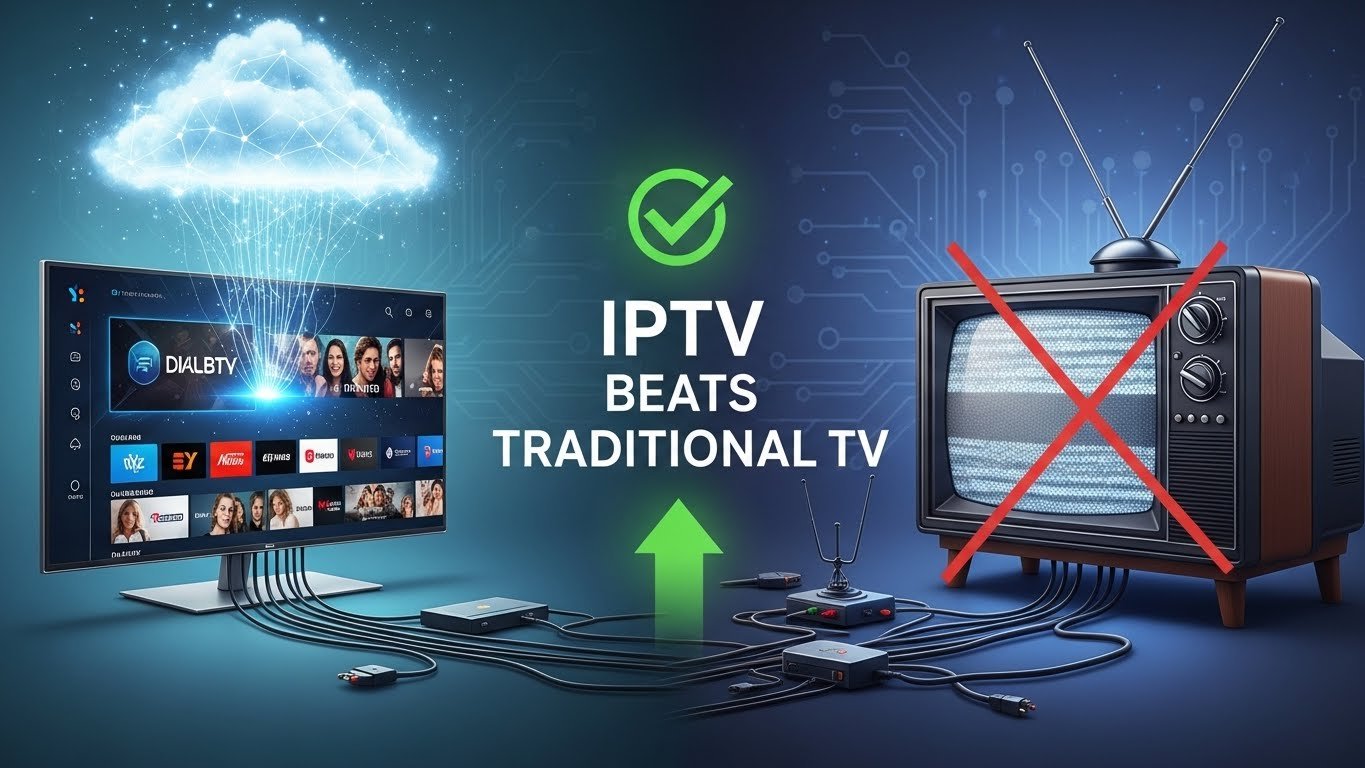
IPTV (Internet Protocol Television) is changing how people in the United Kingdom access TV. Rather than pay for multiple traditional services (satellite, cable, or terrestrial plus premium pay TV), viewers can pick and choose streamed channels, on-demand libraries and short-term passes. When done legally — with licensed IPTV UK providers or reputable aggregators — IPTV can deliver big savings, better flexibility, and improved device compatibility. However, there are trade-offs and risks: illegal IPTV services, malware on dodgy boxes, and loss of consumer protections. IPTV Beats Traditional TV.

Key load-bearing facts (sourced):

  • The UK’s TV and online-video market changed significantly through 2024–25; online video gains and shifting viewing habits are documented in Ofcom’s Media Nations 2025 report.
  • UK enforcement against illegal streaming remains active — PIPCU and other units have disrupted services and made arrests in 2025.
  • Industry/market reports show IPTV is a rapidly growing global market, indicating investment and options will expand.
  • Consumer warnings from industry bodies (FACT) and security researchers highlight malware and fraud risks tied to illicit IPTV and dodgy devices.
  • Action Fraud is the UK reporting body for fraud and cybercrime; suspicious providers and scams should be reported there. IPTV Beats Traditional TV.

Why IPTV can be cheaper — the economic logic

  1. Unbundling and choice
    Traditional pay-TV packages often bundle dozens of channels — many you never watch — into a single monthly fee. IPTV lets you subscribe only to services or channels you want (e.g., an SVoD library plus a sports add-on or a single aggregator), reducing wasted spend.
  2. Micro-subscriptions and day-passes
    IPTV and OTT platforms increasingly offer short-term access (day or event passes) and micro-subscriptions. If you only care about a small number of live events or series, you can pay only for those, saving compared with a full monthly cable/satellite bill.
  3. Lower distribution overhead
    IPTV providers who operate efficiently (using cloud/CDN delivery and smart caching) can deliver content at lower marginal cost than satellite distribution. Competitive pressure often results in lower per-user pricing or bundled promotions targeted at price-sensitive UK consumers.
  4. Promotional tiers & ad-supported models
    Many services now offer ad-supported lower-cost tiers (or subsidised bundles from ISPs) that reduce the monthly bill for users willing to accept advertising.
  5. Device flexibility reduces hardware cost
    IPTV often runs on devices you already own (smart TVs, Fire Sticks, phones), so you can avoid expensive set-top rentals or fees that some cable providers charge.

Sources of real savings: concrete examples

  • Replacing a full satellite package (which may include premium sports, movie add-ons and extra boxes) with a combination of an aggregator + a single sports pass for big match days can drastically cut annual costs.
  • Using trials (e.g., an IPTV UK free trial) to rotate subscriptions only during months you need them — e.g., pay for a sports pass in season months and cancel afterwards — lowers yearly spend.
  • Choosing a reputable, licensed IPTV service that bundles multiple broad channels can be cheaper than paying several individual broadcaster subscriptions separately.

Legal/ethical guardrails: do not confuse “cheap” with “legal”

Savings are attractive, but low prices often flag illicit services:

  • If a provider promises premium pay channels (Sky Sports, BT Sport equivalents, Netflix, big movie channels) at implausibly low monthly prices, treat it as suspicious. Many such offers are unlawful. Enforcement in the UK has targeted large illicit networks.
  • Illicit sellers often operate from anonymous social media, require crypto or untraceable payments, or supply pre-loaded “dodgy boxes”. These increase fraud and malware risk. Industry bodies like FACT have repeatedly warned against such boxes.

Rule of thumb: if a deal is too good to be true, it probably is. IPTV Beats Traditional TV.

How to identify cost-efficient legal IPTV services

  1. Transparent pricing & company details
    Legitimate vendors provide company registration, contact address, and clear refund terms. This protects you if the service fails or disappears.
  2. Payment methods with consumer protection
    Use card or PayPal, which offer chargebacks and buyer protection. Avoid wire transfers, vouchers or opaque crypto payments for subscription purchases.
  3. Official app availability
    Providers with apps in official stores (Amazon Appstore, Google Play, Apple App Store) are generally safer. If sideloading is required, verify APK checksums and provenance.
  4. Trial options
    Reputable providers often offer IPTV UK free trial periods or money-back guarantees. Use these to evaluate stream stability and EPG alignment without committing.
  5. Good reviews & community feedback
    Check multiple sources (independent review sites, forums, and recent posts). Watch for patterns of downtime or refund complaints.

Devices and network choices that cut costs

  • Use devices you already own: Smart TVs, Fire Sticks, tablets and phones can run legal IPTV apps — avoiding rental fees for ISP set-top boxes.
  • Wired connections: Ethernet reduces buffering (so you don’t pay for higher tiers to overcome poor Wi-Fi).
  • Energy & hardware savings: Small, low-power streaming sticks are cheaper to run than full set-top boxes.

The danger of “false savings”: scams, malware, and hidden costs

Cheap, illegal IPTV can impose hidden costs:

  • Fraud and identity theft: Unverified sellers can steal payment info or resell data. Reportable fraud in the UK is handled by Action Fraud.
  • Malware and device takeover: Pre-loaded boxes and cracked APKs have been linked to malware campaigns that steal credentials or display intrusive ads. Security researchers have uncovered vast piracy networks that reuse domains and host malicious code.
  • Service instability & loss of access: Illicit services can disappear overnight, leaving you out of pocket. UK enforcement continues to seize servers and disrupt networks.

These downstream costs often outweigh any short-term subscription savings. IPTV Beats Traditional TV.

Comparing real budgets: IPTV vs Traditional pay TV (example scenarios)

Scenario A — Traditional pay TV household (UK)
Satellite/cable package with premium sports + movie add-ons + second set-top box. Typical monthly cost (example): £70–£120. Annual: £840–£1,440.

Scenario B — Legal IPTV approach
Base aggregator (licensed) £20/month + sports event passes and a Netflix/Prime bundle averaged across the year = £35–£50/month. Annual: £420–£600.

Savings: £420–£840 per year in this simplified example, depending on which sports packages you require and how many add-ons. (Your mileage varies — sports-heavy users may find less savings.)

This shows the potential savings; the actual outcome depends on rights you need (especially live sports), whether you accept ad-supported tiers, and whether you choose day-passes or rotating subscriptions. IPTV Beats Traditional TV.

Practical advice: balancing savings with safety

  1. Start with trials — use IPTV UK free trial offers to test stability and device compatibility. Prefer trials that don’t auto-charge or require lots of personal data.
  2. Mix and match legally — combine a licensed aggregator for core channels with event passes for sports months. This is often cheaper than a permanent full premium package.
  3. Watch the renewal traps — note trial end dates and automatic renewals. Use calendar reminders.
  4. Use secure payment — credit cards or PayPal allow disputes. Keep records.
  5. Avoid pre-loaded “dodgy” boxes — they often bring malware and no consumer recourse. FACT and other industry groups have warned consumers about these devices.
  6. Use reputable players and official stores — install IPTV Smarters Pro or other clients only from verified app stores where possible and verify any sideloaded files.
  7. Report scams — if you suspect fraud, report to Action Fraud and to the app stores where the malicious APK appeared.

 step-by-step walkthrough — Choose, Test, Subscribe, Save (practical)

1) Define your viewing needs
Write a short list: must-have channels (e.g., BBC, ITV), must-watch sports, number of simultaneous streams, devices you own, and budget. Example: “I need BBC/ITV + one sports channel; two streams; budget £30/month.” IPTV Beats Traditional TV.

2) Shortlist legal providers
Search for providers that state licensing or list known channel deals. Use reputable comparison sites and community forums. Exclude sellers that insist on crypto/vouchers only or lack company details.

3) Check device compatibility and app availability
Confirm the provider supports your primary device (Fire Stick, Apple TV, Android TV). If you want to use IPTV Smarters Pro, ensure the provider supplies M3U/Xtream credentials or an official store app.

4) Trial the service
Sign up for an IPTV UK free trial where possible. Prefer trials that do not require card details; if a trial requires a card, set an early calendar reminder for cancellation. During the trial:

  • Test during peak hours.
  • Try HD and standard channels.
  • Check EPG accuracy (set timezone to UK).
  • Test catch-up/VOD features.
  • Test simultaneous streams if household uses multiple devices.

Final checklist: how to save money safely with IPTV UK

  • Use IPTV UK free trial offers to test before you pay.
  • Prefer licensed aggregators and official broadcaster apps.
  • Pay by card/PayPal for protection.
  • Avoid pre-loaded boxes from anonymous sellers.
  • Combine event passes + base packs for seasonal savings.
  • Keep device/network tuned (Ethernet, QoS).
  • Report suspicious sellers to Action Fraud and FACT.

Closing thoughts

IPTV offers genuine opportunities for UK viewers to save money on their TV diet — if they use licensed, transparent services and actively manage subscriptions. The promise of lower cost is real: unbundling, micro-subscriptions, trials, and ad-supported tiers all let viewers pay precisely for what they watch. However, false economies — cheap illegal bundles or dodgy boxes — can cost far more in fraud, malware, and lost access, and UK enforcement against illicit IPTV operations remains active. Use trials intelligently, prefer official apps and payment methods, and report any scams. Done right, IPTV UK is a powerful tool for cutting costs without sacrificing choice. IPTV Beats Traditional TV.

Selected sources & further reading

  • Ofcom, Media Nations 2025 (UK media and online video trends).
  • City of London Police / PIPCU press release on illegal streaming disruption (July 2025).
  • Research And Markets IPTV Market Report 2025 (global market growth).
  • FACT (Federation Against Copyright Theft) guidance and enforcement updates.
  • TechRadar coverage of large piracy networks and malware risks.
  • Action Fraud (UK national reporting centre for fraud and cyber crime). 
Save £1,000 a Year: How IPTV Replaces Expensive Cable in the UK

1. Why £1,000? The promise and the reality

Many people assume cable or satellite bundles are the only way to get “full TV” — live news, box sets, films and sport — and accept the price. But bundles are designed to sell convenience and “all in one” simplicity. IPTV Replaces Costly Cable. If you look at what you actually watch and replace unwanted channels with targeted streaming services and short-term passes for sport, the savings stack up quickly.

Example claim: “Save £1,000 a year” is realistic when:

  • you’re currently on a premium bundle (e.g., Sky + wide channel packs + broadband) costing £80–£120 per month, and
  • you switch to standalone broadband (roughly £25–£40/month depending on speed) + a mix of subscription apps that fit your viewing habits (often £5–£20/month each), and
  • you avoid paying for year-round premium sports subscriptions by using short-term passes or alternative providers.

I’ll show worked numeric examples below so you can see the math step-by-step.

2. How IPTV replaces cable — the components explained

IPTV” here means legal internet-delivered TV (apps and services authorised to show the content). The approach breaks a traditional bundle into modular parts you can mix and match:

  1. Free catch-up & public services
  • BBC iPlayer, ITVX, All 4, My5 — free and often the first stop for soaps, drama, news and local programming.
  1. Subscription video-on-demand (SVOD)
  • Netflix, Disney+, Amazon Prime Video, Apple TV+ — excellent for box sets and films. Prices vary; choose plans that match how you watch.
  1. Live TV OTT / transactional apps
  • NOW (for Sky content), Discovery+/TNT Sports, Sky Stream et al. These provide live channels without a dish.
  1. FAST channels (free ad-supported)
  • Pluto TV, Samsung TV Plus, Rakuten channels — free linear channels that replicate “channel surfing” without a subscription.
  1. Short-term sports passes
  • Day / week / month passes for big events (NOW Sports passes are an example) — pay for sport only when you need it.
  1. Hardware & network
  • Smart TV or inexpensive streaming stick (Fire TV Stick, Chromecast, Roku, Apple TV), and a reliable broadband connection.

When combined, these components can replace a single expensive bundle but at much lower cost because you only pay for what you actually use.

3. Typical household cost comparisons (with worked examples)

Below are specific, conservative examples showing how monthly and annual savings add up. I will do the arithmetic step-by-step.

Example A — Casual household (light viewer)

  • Current cable/satellite bundle: £60 per month.
  • Switch to IPTV: broadband £30 + Netflix £7 = £37 per month.

Monthly saving calculation:

  1. Subtract monthly IPTV cost from current bundle:
    60 − 37 = 23 (pounds per month saved).
  2. Annual saving = 23 × 12. Compute digit by digit:
    23 × 12 = (20 × 12) + (3 × 12) = 240 + 36 = 276.
    Annual saving = £276.

This household saves a tidy sum; not £1,000 but meaningful. IPTV Replaces Costly Cable.

Example B — Family with kids (common, mid-range scenario)

  • Current Sky Q + Cinema + Kids bundle: £80 per month.
  • Switch to IPTV: broadband £30 + Disney+ £7.99 + Netflix (Standard) £10.99 = monthly total ≈ £48.98 (round to £49).

Monthly saving calculation:

  1. 80 − 49 = 31 (pounds per month saved).
  2. Annual saving = 31 × 12 = (30 × 12) + (1 × 12) = 360 + 12 = 372.
    Annual saving = £372.

Again useful but under £1,000. IPTV Replaces Costly Cable. Add more savings by replacing broadband deal or removing extra subscriptions.

Example C — Sports fan (targeted plan to reach ~£1,000)

  • Current setup: Sky Sports + satellite every month costs ≈ £120 per month (this is a higher-end bundle including broadband and premium sports).
  • IPTV replacement plan: broadband £36/month + select SVODs £12/month + NOW Sports Month Pass only during 9 months of the season (we’ll count this as seasonal cost), and Discovery+ for Champions League at £7/month.

Let’s break it down into monthly averaged annual cost:

First compute typical yearly costs for the IPTV route:

  • Broadband: £36 × 12 = compute: 36 × 12 = (30 × 12) + (6 × 12) = 360 + 72 = 432. → £432/year.
  • SVODs (average): £12 × 12 = (10 × 12) + (2 × 12) = 120 + 24 = 144. → £144/year.
  • Discovery+: £7 × 12 = (7 × 10) + (7 × 2) = 70 + 14 = 84. → £84/year.
  • NOW Sports Month Pass seasonal: £35 × 9 months = (30 × 9) + (5 × 9) = 270 + 45 = 315. → £315/year.

Now sum IPTV annual cost: 432 + 144 + 84 + 315 = stepwise:

  • 432 + 144 = 576.
  • 576 + 84 = 660.
  • 660 + 315 = 975.
    Total IPTV annual cost = £975.

Compare to current bundle:

  • Current Sky bundle (example) at £120 per month = 120 × 12 = (100 × 12) + (20 × 12) = 1200 + 240 = 1440.
    Current annual cost = £1,440.

Annual saving = 1,440 − 975 = compute:
1,440 − 975 = 465 (first 1,440 − 900 = 540; 540 − 75 = 465).
Annual saving = £465.

This particular configuration saves £465, not £1,000. To reach £1,000 you need either a more expensive current bundle or stricter cost cutting on the IPTV side. Here’s a configuration that does reach ~£1,000.

Example D — Aggressive savings scenario (how to reach ~£1,000)

  • Current premium bundle: £160 per month (this could be a heavy Sky + Sky Sports + premium broadband + multiroom boxes). Annual cost = 160 × 12 = (100 × 12) + (60 × 12) = 1200 + 720 = 1920. → £1,920/year.
  • IPTV replacement: broadband £36/month + essential SVODs £15/month + seasonal NOW Sports only 6 months at £35/month.

Compute annual IPTV cost:

  • Broadband: 36 × 12 = 432.
  • SVODs: 15 × 12 = 180.
  • NOW seasonal: 35 × 6 = 210.
    Sum: 432 + 180 = 612; 612 + 210 = 822.
    Total IPTV annual cost = £822.

Annual saving = 1920 − 822 = compute:

  • 1920 − 800 = 1120; 1120 − 22 = 1098.
    Annual saving ≈ £1,098.

This is a realistic pathway to £1,000+ if you start from a high-cost legacy bundle and move to an efficient, seasonal IPTV strategy.

Takeaway on numbers

  • If you’re on a mid-range bundle (£60–£90) you’ll likely save £200–£500/year by switching.
  • If you’re on a premium sports + multiroom bundle (£120–£160) and you use seasonal passes and cut unnecessary channels, you can save £800–£1,200+/year.

Use your current bill to calculate your personal saving: subtract the estimated IPTV annual cost (broadband + chosen apps + seasonal passes) from your current annual spend.

4. Step-by-step migration plan (audit → test → switch)

Switching without pain requires organisation. Follow this controlled plan:

 1 — Audit your viewing habits (30–60 minutes)

  • List the channels and services you regularly watch over 4 weeks.
  • Note “must-have” items (e.g., one specific channel or sport).
  • Identify rarely used channels (these are prime targets for cutting).

 2 — Check your contract & exit terms

  • Note your current contract end date and early-exit penalties. It almost always pays to wait until contract end to avoid heavy fees.

 3 — Confirm broadband adequacy

  • Run a speed test during peak hours (evening). You want at least 25 Mbps per HD stream; 50–100 Mbps for multi-device households.

 4 — Pick devices

  • If your TV is new and supports apps, try them. Otherwise buy a low-cost Fire TV Stick or Chromecast per TV.

 5 — Build your IPTV starter pack

  • Install free catch-up apps (iPlayer, ITVX, All 4).
  • Trial one SVOD at a time (choose a month each).
  • For sports, trial a day / month pass for a big match.

 6 — Run a one-month trial period

  • Use only your new IPTV stack and track satisfaction. Use a calendar to mark trial end dates.

 7 — Cancel legacy services at contract end

  • Cancel Sky/Virgin/BT TV at the right time and return any rental boxes.

 8 — Optimize & iterate

  • If buffering occurs, fix router, wired connections, or upgrade broadband.
  • Rotate subscriptions seasonally.

5. Sports and special cases: covering the content people worry about most

Sports fragmentation is the main reason people stick with legacy providers. IPTV Replaces Costly Cable. Here’s how to keep fans happy while cutting costs.

 A — Seasonal passes

  • Buy NOW Sports month passes for heavy football months.
  • Add Discovery+ for Champions League or TNT Sports coverage when needed.
  • Use Amazon Prime for selected live coverage (e.g., some Premier League or special events).

 B — Mix free with paid

  • Use BBC/ITV for highlights and free coverage.
  • Combine one paid sports provider for the most important fixtures rather than all available services.

 C — Shared access

  • Split the cost among friends/family when permissible under provider terms (check T&Cs). For example, one household buys the sports pass that others use on occasion.

 D — Local options and pubs

  • For big finals, watch with friends at a pub that has the match or in a signed public viewing. It can be cheaper and social.

6. Devices, broadband and quality settings: what to buy and why

Recommended devices (budget to premium)

  • Budget, effective: Amazon Fire TV Stick 4K Max — low cost, wide app support.
  • Simple & universal: Chromecast with Google TV — clean UI and Google integration.
  • Power user: Apple TV 4K or Nvidia Shield — best for 4K, Dolby Atmos and Plex servers.

Network setup

  • Ethernet for main living room TV (always preferable).
  • Mesh Wi-Fi for multiroom households — reduces buffering and dropouts.
  • Router QoS: Set QoS to prioritise streaming traffic.
  • DNS: Consider reputable DNS (e.g., Google 8.8.8.8) if you need faster resolution.

Quality settings in apps

  • Reduce resolution when bandwidth is tight (switch from 4K to 1080p).
  • Increase buffer size if the app supports it to avoid short glitches.
  • Turn on hardware acceleration if available on device.

7. Parental controls, multi-user profiles and family features

One big advantage of IPTV is excellent profile and parental control tools:

  • Create kid profiles on Netflix/Disney+ with age limits.
  • Use iPlayer Kids and YouTube Kids for younger audiences.
  • Set purchase PINs to avoid accidental purchases.
  • For device-level controls, use Amazon Household, Google Family Link, or router level access controls.

These features often exceed legacy provider parental controls in flexibility and clarity.

8. FAST channels, ad-supported options and getting extra value

FAST channels are free linear channels funded by ads. IPTV Replaces Costly Cable. They’re growing rapidly and provide:

  • Free movie channels, news, and niche content (documentaries, classic TV).
  • A way to replicate “channel surfing” without a subscription.
  • Additional, zero-cost content that complements paid SVODs.

Use FAST channels to replace low-value paid channel packs and save money while keeping variety.

9. Legal safety: avoid pirate IPTV and stay protected

Do not use illegal IPTV. Pirate services promise hundreds of premium channels for tiny fees, but they come with:

  • Legal risk — takedowns, fines and prosecutions for operators and sometimes buyers.
  • Malware and security threats via sideloaded apps.
  • No support, unstable streams and missing channels at crucial moments.

Stick with licensed providers and apps from official app stores (Google Play, Amazon Appstore, Apple App Store, or the TV manufacturer). IPTV Replaces Costly Cable. An offer is most likely fraudulent if it appears too good to be true.

10. Real-world case studies (detailed breakdowns)

 1 — The commuter couple (London)

  • Before: Virgin bundle £65/month.
  • After: Broadband £30 + Netflix £7 + free catch-up apps.
  • Result: Save £28/month → £336/year. Pay only for what they use and gained flexibility to cancel Netflix during travel seasons.

 2 — The family with teen athletes (Manchester)

  • Before: Sky Q with kids pack + Sports = £110/month.
  • IPTV plan: Broadband £36, Disney+ + Netflix £19 combined, NOW Sports month passes for 6 months = £35×6=210/year. Annual IPTV cost = 36×12 + 19×12 + 210 = 432 + 228 + 210 = 870.
  • Before annual: 110×12 = 1320.
  • Saving: 1320 − 870 = 450/year. Family still has live sport during season and a massive library of kids’ content.

 3 — The heavy sports devotee — hitting £1,000+

  • Before: Premium Sky + multiroom + sports + broadband = £160/month → £1,920/year.
  • IPTV plan: Fibre broadband £36, two SVODs £20, Discovery+ £7, NOW Sports only 6 months at £35 → total annual 432 + 240 + 84 + 210 = 966.
  • Saving: 1920 − 966 = 954. Add a further £50+ saving by negotiating a cheaper broadband deal or sharing an SVOD and you exceed £1,000.

11. Advanced savings strategies and bill management tips

  • Annual vs monthly billing: Many SVODs offer cheaper annual rates — if you’re a heavy user, annual saves money over monthly.
  • Promotional switching: Use free trials and promotional offers responsibly — set calendar reminders to cancel before billed.
  • Bundled broadband only: If your ISP offers excellent broadband + TV app bundles (without forcing expensive channel packs), it can still be a deal — just avoid unnecessary extras.
  • Price monitoring tools: Use a subscriptions spreadsheet or apps to track renewal dates and total spend.
  • Family sharing: Use family plans on Netflix/Disney+ to reduce per-person costs.
  • Device consolidation: Use a single high-quality streaming stick per TV rather than renting multiple set-top boxes.

12. Common problems, fixes and troubleshooting checklist

Buffering / freezing

  • Check speed (Speedtest) and avoid Wi-Fi where possible.
  • Use Ethernet or mesh.
  • Lower stream resolution or increase buffer size.

App crashes / missing apps

  • Update device firmware; if the TV is old, use a Fire TV Stick or Chromecast.

Login or geo-block errors

  • Some UK services require a UK IP or TV licence (BBC iPlayer). Check T&Cs when abroad.

Subscription confusion

  • Keep a calendar of trials; disable auto-renew where necessary.

13. Final checklist and next steps

  1. Audit current TV spend and list must-have channels.
  2. Check contract end dates and avoid exit fees.
  3. Confirm broadband speed and upgrade if needed.
  4. Buy/prepare devices for new IPTV setup.
  5. Install free catch-up apps and trial crucial SVODs.
  6. Plan sports access seasonally.
  7. Run a one-month test and then cancel legacy service at the right time.
  8. Track spending and iterate every 6–12 months.

14. FAQs

Q: Will I lose Sky channels if I switch to IPTV?
A: Some Sky content (Sky Originals, continuous Sky Sports) is tied to Sky or their OTT apps (NOW, Sky Stream). You can access many Sky shows via NOW or Sky Stream without a full Sky satellite contract, often at lower short-term cost.

Q: How much broadband speed do I need for 4K?
A: Aim for 25 Mbps or more per 4K stream; 50–100 Mbps for multi-device households.

Q: Is IPTV legal?
A: Yes — licensed apps and services (iPlayer, Netflix, NOW, Disney+) are legal. Avoid services that resell pirated streams.

Q: How soon will I see savings?
A: After your legacy contract ends and you switch, you’ll see immediate monthly savings. Annual savings depend on how aggressive you are with seasonal passes and cutting unwanted services.

Conclusion — is £1,000 realistic for you?

Yes — if you start from a high-cost legacy bundle and adopt a deliberate IPTV strategy that:

  • keeps broadband but removes expensive channel bundles
  • uses free catch-up apps and selected SVODs,
  • replaces year-round sports subscriptions with seasonal passes, and
  • optimises devices and network for reliable playback.

For many UK households, saving £300–£600/year is realistically immediate. IPTV Replaces Costly Cable. For heavy sports households or those on premium multiroom Sky/Virgin bundles, £1,000+ savings are entirely achievable with disciplined changes.

IPTV FREE TRIAL