Staying Safe with IPTV UK: Security and Privacy Best Practices

Introduction: Why security matters for IPTV users in the UK

If you’re using IPTV UK services — whether a legitimate IPTV subscription from a licensed provider or a trial of a lesser-known service — security and privacy should be front-of-mind. Not all IPTV services are equal: some are perfectly legal and well managed, others are poorly maintained, and a minority are outright malicious. The consequences of a bad choice aren’t just buffering or poor picture quality — they can include malware that steals banking details, identity theft, and legal trouble. Recent UK enforcement actions and industry warnings underline the importance of choosing carefully and protecting your devices and data. IPTV UK Safety Tips.

Quick glossary: key IPTV terms (IPTV subscription, M3U, Xtream, IPTV Smarters Pro)

  • IPTV subscription — a service that streams television over the internet.
  • M3U — a plain-text playlist file used to point a player to streams.
  • Xtream Codes / API logins — common credentials systems providers use.
  • IPTV Smarters / IPTV Smarters Pro — popular player apps (client software) that display channels and EPGs; the app itself is neutral — legality depends on the provider supplying streams.

The current UK landscape: legality, enforcement and threats

IPTV services in the United Kingdom fall into two camps: licensed, legal services and unauthorised (illegal) resellers. UK authorities, industry groups and consumer protection bodies have a track record of acting against illegal streaming operations and dodgy “pre-loaded” devices. Using unauthorised IPTV services can expose you to legal and security risks — from losing your money to being part of a criminal investigation. Government and enforcement publications explain the harm of illicit IPTV and the measures taken to tackle it.

Illicit IPTV: what it looks like and why it’s risky

Illicit services commonly advertise premium bundles (Sky Sports, movie channels, premium VOD) for implausibly low prices. They often deliver content via M3U lists or pre-loaded boxes with modified apps. These services may vanish overnight, keep your payment details, and — crucially — some modified apps are delivery vehicles for malware. A recent example of Android malware disguised as IPTV or VPN apps demonstrates the real risk of installing untrusted packages.

Enforcement actions and consumer warnings

Industry groups and police have shut down sellers and jailed operators who ran illegal streaming services; FACT and other bodies publish warnings when crackdowns occur. Consumers have lost subscriptions and, in some cases, become victims of fraud after interacting with dodgy sellers. Always check whether a provider is transparent about licensing and reachable by normal customer support channels.

Common security and privacy risks with IPTV

Malware and malicious apps (fake IPTV apps / trojans)

Malicious Android packages can masquerade as IPTV apps or even as VPNs that “unblock” content. These apps may request invasive permissions (Accessibility, device admin) that allow them to control your device, steal passwords or inject ads. TechRadar and security researchers have reported malware campaigns using this tactic. Avoid APKs hosted on random pages — download from official stores or the provider’s verified source.

Data harvesting, account theft and fraud

Some dubious providers are set up to collect payment details, reuse them, or sell them on. Others may request unnecessary personal details. Check privacy policies and, if in doubt, use payment methods that offer buyer protection (card or PayPal) rather than direct bank transfers or gift cards.

Man-in-the-middle risks, unencrypted streams and public Wi-Fi

Some IPTV streams are unencrypted or use weak transport mechanisms. If you watch on public Wi-Fi, a malicious actor could intercept traffic. That’s why you should avoid streaming paid services over untrusted networks unless you use secure protections (see VPN section). NCSC guidance on VPNs and ICO guidance on securing data are useful references for best practice.

Choosing a safe IPTV provider

Legal and licensing indicators

A trustworthy IPTV provider will be transparent about channel rights, list its company details and provide clear terms and conditions. If a provider claims to offer premium channels for a tiny fee, it’s likely illegitimate. Check for verified business registrations or reputable reviews.

Reputation, reviews and transparency

Search for independent reviews from multiple sources and check forums for user experiences. Reputable providers usually have established payment channels, responsive support and verifiable uptime history. Beware anonymous sellers on social media promising “lifetime” cheap bundles. IPTV UK Safety Tips.

Payment methods and refund policy

Prefer providers who accept card payments or PayPal — these offer some recourse if things go wrong. Read refund and automatic-renewal terms carefully, especially with IPTV free trial offers that require a card up front.

Device hygiene: keeping your set-top, phone and Fire Stick secure

Only use official app stores & trusted APKs

Install apps from Google Play, Amazon Appstore or the provider’s official download page. Avoid random APK repositories. If a provider asks you to install a “patched” app, treat that as a red flag — modified apps can contain malware.

Keep firmware and apps updated

Manufacturers and app developers regularly patch security flaws. Keep devices (Android TV, Fire Stick, Smart TV, mobile phone) updated and remove unused apps.

Avoid jailbroken devices and modified firmware

Pre-rooted or jailbroken devices remove OS protections, making it easy for malicious code to gain control. They also make it harder to get official updates or warranty support.

Network and home security best practices

Use strong Wi-Fi configuration and router security

Set a strong, unique Wi-Fi password, use WPA3 (or WPA2 at minimum), disable WPS, and keep router firmware updated. Consider a guest network for visitors and IoT devices separate from your streaming kit.

When (and how) to use a VPN safely

A VPN can add privacy on public networks by encrypting traffic; however, it does not legalise pirated content and is not a cure-all. Use a reputable, paid VPN provider with a clear privacy policy and a strong track record (no logs, audited). Follow NCSC advice when evaluating VPNs for safety and configuration.

Bandwidth, QoS and buffering vs security trade-offs

Some users disable security features to minimise buffering (e.g., use weaker DNS). Don’t — pick a provider with good servers instead of compromising security. Use Quality of Service (QoS) on your router to prioritise streaming traffic without lowering security.

Player apps: how to use IPTV Smarters Pro and similar apps securely

Where to get the app and verifying integrity

Install IPTV Smarters Pro from the official source. If you must sideload, get the APK from a trusted provider and verify checksums if available. Beware of “cracked” Pro versions — they often hide malware.

Credentials, EPGs and limiting exposure

Use one dedicated account per player, set strong passwords, and avoid sharing login details publicly. Be cautious when importing EPGs or third-party playlists — they can link to malicious URLs.

Protecting personal data & payment information

Secure payment options and what to avoid

Pay with a credit card (chargeback protection) or PayPal rather than bank transfer or vouchers. Avoid entering full card details on obscure checkout pages — check for HTTPS and legitimate company contact details. IPTV UK Safety Tips.

GDPR and ICO guidance for consumers

The ICO provides advice on how organisations should protect personal data. While mostly aimed at organisations, consumers can use ICO guidance to judge whether a provider’s data handling looks proper (clear privacy policy, data retention details, contact for data requests).

Detecting scams and dodgy “free trial” traps

Common scam patterns and red flags

  • Trials that require immediate full payment and are hard to cancel.
  • Providers insisting on untraceable payment methods.
  • Apps asking for excessive permissions (Accessibility, device admin).
  • “Lifetime” offers run by anonymous sellers.

How to report suspicious services in the UK

Report fraud to Action Fraud, and suspicious copyright infringement to FACT or the police. Also flag malicious apps to Google/Apple and report dodgy domains to your ISP.

How to sign up and secure an IPTV subscription

This section is a deliberate, detailed step-by-step guide you can follow when choosing, subscribing to and securing an IPTV subscription in the United Kingdom. Read each step and act on it — this is practical security, not theory.

Step 1 — Define your needs
Write down what you want: live channels, sports (which leagues), catch-up, number of simultaneous streams, device types (Fire TV, Android TV, iPhone). Knowing your needs helps avoid impulse choices that trade security for cheapness.

Step 2 — Shortlist candidates
Search for “best iptv uk” and compile 3–5 providers. Use reputable review sites and community forums. Make sure at least one is a known legal/licensed service if you need premium sports. Note providers offering an IPTV UK free trial but read the trial terms.

Step 3 — Verify transparency and contact details
Check each provider’s About page, company registration, and support contact. Legal providers usually show company addresses, real phone numbers, and standard payment flows. If a provider refuses to disclose basic company details, cross it off.

Step 4 — App & device verification
Decide which app you’ll use (native app vs IPTV Smarters Pro). If using Smarters, download from an official app store or the developer’s verified page. Avoid “patched” APKs. If a provider supplies a custom app, check its presence on legitimate stores or request an MD5/SHA checksum before installing.

Following these steps methodically minimises risks associated with IPTV subscriptions and helps balance convenience with safety. These practical actions are the same whether you pay for a top-tier best iptv uk service or trial a smaller aggregator — the details matter. IPTV UK Safety Tips.

Recovery: what to do if you think you’ve been compromised

If you suspect malware or fraud:

  1. Disconnect the device from the internet.
  2. Change passwords on a separate, clean device.
  3. Contact your bank and report suspicious charges.
  4. Report to Action Fraud and to the app store/provider.
  5. Factory reset the affected device and reinstall apps from official sources only.

Long-term habits for staying secure

  • Use official apps and avoid cracked APKs.
  • Keep software and firmware updated.
  • Use strong passwords + password manager.
  • Prefer card/PayPal payments and check billing monthly.
  • Use a reputable VPN only for privacy on public networks.
  • Monitor news for provider shutdowns or compromises.

Final thoughts: balancing convenience, cost and safety

IPTV offers terrific flexibility and cost savings — but the cheapest option is not always the best. Protect your home, devices and personal data by favouring transparent providers, using secure payment methods, avoiding modified devices, and following the practical step-by-step checklist above. Remember: IPTV Smarters Pro and similar players are tools — the stream’s source determines legality and safety. Stay sceptical of deals that sound too good to be true and treat free trials as tests, not guarantees. IPTV UK Safety Tips.

FAQs

Q1: Is using IPTV illegal in the UK?
A: Using IPTV is legal if the provider has proper rights to the content. Many services are legitimate; however, unauthorised resellers and pirated streams are illegal and risky. Always verify provider licensing and transparency.

Q2: Should I use a VPN with IPTV?
A: A VPN can protect your privacy on public Wi-Fi by encrypting traffic, but it does not legalise pirated content. Choose a trustworthy paid VPN and follow NCSC guidance when setting it up.

Q3: Is IPTV Smarters Pro safe to use?
A: The official IPTV Smarters Pro app is a widely used client. It’s safe when downloaded from official sources. Avoid cracked or modified APKs which may include malware.

Q4: What are the signs of a dodgy IPTV provider?
A: Red flags include implausibly low prices for premium channels, requests for untraceable payments, no contact details, modified APKs, and poor or no refund policy.

Q5: What do I do if I installed a malicious IPTV app?
A: Disconnect the device, change passwords on a clean device, contact your bank if payments are compromised, report to Action Fraud, then factory reset the infected device and reinstall only from official sources.


The Ultimate Guide to IPTV in the UK

Television has undergone a dramatic transformation in the last two decades. Complete UK IPTV Guide. From the early days of analogue broadcasts to digital switchover, and now to internet-based streaming, the UK viewing landscape has never been more diverse or accessible. At the heart of this revolution lies IPTV (Internet Protocol Television) — a technology that has quietly, yet powerfully, reshaped how millions of Britons watch TV.

In this comprehensive 5,000-word guide, we’ll break down everything you need to know about IPTV in the UK — what it is, how it works, the benefits and drawbacks, the best services, legal considerations, and what the future holds for streaming-based television. Whether you’re a family thinking of cutting the cord, a sports fan chasing HD live matches, or a retiree looking for affordable entertainment, this is your complete IPTV handbook for 2025.

1. What Is IPTV? Understanding the Basics

1.1 The Definition

IPTV (Internet Protocol Television) refers to the delivery of television programmes, movies, and live broadcasts over the internet rather than through traditional terrestrial, cable, or satellite formats.

In simple terms, IPTV uses your broadband connection to stream content directly to your TV, smartphone, tablet, or computer. This means you’re no longer limited to specific broadcast times or cable connections — you can watch what you want, when you want, from anywhere with internet access.

1.2 The Key Difference from Traditional TV

Traditional TV relies on broadcast signals transmitted via:

  • Terrestrial networks (like Freeview)
  • Satellite (like Sky)
  • Cable (like Virgin Media)

IPTV, however, streams over the internet — no dish, coaxial cable, or aerial required.

This distinction makes IPTV uk more flexible, interactive, and scalable, allowing users to enjoy not just live television but also:

  • Video on Demand (VOD): Watch movies, box sets, and shows anytime.
  • Time-shifted TV: Catch up on missed programmes.
  • Live Streaming: Enjoy real-time broadcasts of sports, news, and events.

2. How IPTV Works: The Technical Breakdown

While IPTV may sound complex, the underlying system is straightforward once broken into parts.

2.1 The Process Step by Step

  1. Content Acquisition – Broadcasters and IPTV providers obtain TV programmes and films through licences or partnerships.
  2. Encoding & Compression – The content is converted into digital data packets suitable for streaming.
  3. Transmission – These packets are sent via the internet using a Content Delivery Network (CDN).
  4. Playback – The IPTV app or device decodes the packets and plays them on your screen in real-time.

2.2 The Types of IPTV Services

There are three main types of IPTV services in the UK:

Type Description Examples
Live IPTV Real-time streaming of TV channels over the internet BBC iPlayer live, Sky Go, Pluto TV
VOD (Video on Demand) Choose any show or movie to watch at any time Netflix, Disney+, Amazon Prime Video
Time-Shifted TV Replay recently aired shows ITVX, All 4, BBC iPlayer catch-up

Most IPTV providers offer a combination of all three for a complete experience.

3. Why IPTV Is Growing So Fast in the UK

The UK has become one of Europe’s most mature IPTV markets, with millions of users now relying on it as their main source of entertainment. There are several reasons for this rapid growth.

3.1 High-Speed Internet Access

With the rollout of fibre broadband and 5G mobile networks, UK households now enjoy faster, more reliable internet connections — making HD and even 4K streaming smooth and stable.

3.2 Demand for Flexibility

Traditional TV schedules no longer fit modern lifestyles. People want to watch content on their own terms, across multiple devices. IPTV enables on-demand and multi-device streaming, making it ideal for the modern, mobile UK viewer.

3.3 Cost Efficiency

IPTV subscriptions often cost a fraction of cable or satellite packages. While Sky or Virgin may charge £60–£100/month, IPTV services can range from £10–£30/month with similar — or greater — content offerings.

3.4 Global and Niche Content

Unlike traditional TV, IPTV gives access to international channels, niche genres, and special-interest content that’s often unavailable elsewhere — from sports leagues to foreign dramas.

3.5 The “Cord Cutting” Movement

A growing number of UK households are “cutting the cord” — cancelling expensive Sky and Virgin contracts in favour of IPTV, streaming boxes, and apps. This trend mirrors what’s already happened in the US and is accelerating as more UK viewers discover IPTV’s advantages.

4. Types of IPTV Devices and Apps

IPTV can be accessed through a wide variety of devices. Here’s an overview:

4.1 Smart TVs

Most new Smart TVs (Samsung, LG, Sony, etc.) have IPTV apps pre-installed or available for download — such as TiviMate, Smart IPTV, IPTV Smarters , or Perfect Player.

4.2 Streaming Devices

Compact, affordable, and portable — these are among the most popular ways to access IPTV:

  • Amazon Fire Stick / Fire TV
  • Apple TV
  • NVIDIA Shield
  • Android TV Boxes
  • Chromecast with Google TV

4.3 Mobile and Desktop Apps

IPTV apps are available for:

  • Android / iOS smartphones
  • Windows / macOS PCs
  • Web browsers (for direct access via URLs or M3U links)

4.4 Set-Top Boxes

Some users prefer dedicated IPTV boxes that support EPG (Electronic Programme Guides), HD/4K output, and parental controls.

5. Legal vs Illegal IPTV: What You Need to Know

5.1 Legal IPTV

Legal IPTV services are fully licensed to distribute the content they offer. Examples include:

  • BBC iPlayer
  • ITVX
  • All 4
  • NOW TV
  • Amazon Prime Video
  • Netflix
  • Pluto TV
  • Samsung TV Plus

These services operate within UK broadcasting and copyright laws.

5.2 Illegal IPTV

Unlicensed IPTV providers often sell access to premium channels (like Sky Sports or BT Sport) at low prices without permission. These illegal IPTV services:

  • Stream pirated content.
  • Expose users to malware or phishing attacks.
  • Can result in fines or legal action under the UK’s Copyright, Designs and Patents Act 1988.

5.3 How to Spot Illegal IPTV

Red flags include:

  • Offers of “All Sky Sports channels for £10/month”.
  • Payment only via Bitcoin or PayPal “friends and family”.
  • No verifiable company information or contact details.
  • Poor-quality streams or frequent outages.

Tip: Always choose licensed IPTV platforms to ensure safety, reliability, and legality.

6. IPTV and the UK TV Licence

The TV Licence remains a key consideration for UK viewers, even those using IPTV. Complete UK IPTV Guide.

6.1 When You Need a Licence

A current TV license is required if you:

  • Watch or record live TV on any channel (even via IPTV).
  • Watch BBC iPlayer, whether live or on demand.

6.2 When You Don’t

If you only stream on-demand content from services like Netflix, Disney+, or Amazon Prime (not live channels), a TV Licence is not required.

For example:

Watching Netflix = No licence needed.
Watching BBC News live on IPTV = Licence required.

7. Advantages of IPTV for UK Households

7.1 Cost Savings

With IPTV, you can ditch costly long-term contracts. Monthly subscriptions offer flexibility, often including thousands of channels and on-demand titles for under £30.

7.2 Accessibility Across Devices

Watch on your Smart TV, tablet, phone, or even while commuting — IPTV moves with you.

7.3 Personalised Viewing

Unlike traditional TV, IPTV platforms offer recommendation algorithms, watchlists, and profiles, tailoring entertainment to your tastes.

7.4 On-Demand Convenience

Pause, rewind, or replay shows instantly. Missed a match? Watch it later with catch-up TV.

7.5 Global Content

Access channels and shows from around the world — great for multilingual households or expats living in the UK.

7.6 Interactive Features

IPTV isn’t just passive viewing — it offers interactive guides, real-time stats for sports fans, and even in-app chat options during live events.

8. Disadvantages and Limitations

No technology is perfect. Complete UK IPTV Guide. IPTV does have some potential drawbacks.

8.1 Internet Dependency

Streaming quality depends entirely on your internet speed and stability. A weak connection means buffering and interruptions.

8.2 Legal Grey Areas

Some IPTV services operate in legally uncertain zones — making it crucial to choose verified providers.

8.3 Variable Quality

Unlike cable or satellite, IPTV providers vary widely in quality, reliability, and customer support.

8.4 Device Compatibility

Some apps may not work on older Smart TVs or unsupported devices.

9. Best Legal IPTV and Streaming Platforms in the UK (2025)

Platform Type Key Features Price
BBC iPlayer Free IPTV Live & on-demand BBC content Free (TV Licence required)
ITVX Free + Premium ITV channels, movies, catch-up Free / £5.99 per month (ad-free)
All 4 (Channel 4) Free Catch-up & exclusive UK series Free
NOW TV Paid Sky Sports, Cinema, Entertainment From £9.99/month
Pluto TV Free IPTV 250+ live channels Free
Samsung TV Plus Free IPTV Built-in to Samsung TVs Free
Freeview Play Free Combines live & catch-up Free
Amazon Prime Video Paid VOD Global content + originals £8.99/month
Netflix / Disney+ Paid VOD Premium global entertainment From £4.99/month

These services are legal, stable, and widely available across the UK.

10. Internet Speed and Equipment Recommendations

To enjoy smooth IPTV streaming , consider the following:

Video Quality Recommended Speed
Standard Definition (SD) 3–5 Mbps
High Definition (HD) 10–15 Mbps
4K Ultra HD 25 Mbps+

10.1 Equipment Tips

  • Router: Opt for a dual-band or Wi-Fi 6 router for stronger connections.
  • Ethernet: Use a wired connection for main TVs.
  • VPN (optional): Some use VPNs for privacy or accessing region-locked content — ensure your IPTV provider allows this.

11. The Future of IPTV in the UK

IPTV’s future is bright. Complete UK IPTV Guide. The UK is embracing full-fibre broadband and smart home integration, both of which favour internet-based entertainment.

11.1 Emerging Trends

  • AV1 & HEVC codecs: Better compression for smoother 4K streaming.
  • AI-driven recommendations: Smarter content discovery.
  • Cloud DVRs: Record shows without needing hardware.
  • Voice control: Alexa, Siri, and Google Assistant integration.
  • Interactive Sports: Real-time stats and multiple camera angles.

11.2 The Decline of Traditional TV

With satellite TV subscriptions falling year-on-year, IPTV is poised to become the primary mode of television delivery in the UK within the next decade.

12. IPTV FAQs

Q1: Is IPTV legal in the UK?

Yes, as long as you use licensed services that own or have permission to stream their content.

Q2: Do I need a TV Licence for IPTV?

Only if you watch live broadcasts or BBC iPlayer.

Q3: Can I watch IPTV on multiple devices?

Yes. Most IPTV services support simultaneous streaming across several devices.

Q4: Is IPTV better than Sky or Virgin?

For flexibility and cost, yes. However, traditional providers still offer exclusive sports and ultra-HD content that may appeal to some users.

13. Conclusion: IPTV Is the Future of UK Television

The evolution from analogue to internet streaming has transformed not only how we watch TV — but what we expect from it. IPTV offers  freedom, affordability, and variety, meeting the needs of modern British households like never before.

Whether you’re cutting the cord to save money, seeking global content, or simply craving a smarter way to watch, IPTV is your gateway to the future of entertainment.

It’s television without limits — and the UK is already tuning in. Complete UK IPTV Guide.

IPTV FREE TRIAL

Troubleshooting IPTV UK: Fix Buffering and Black Screens

IPTV has transformed television in the UK. Whether you’re watching live football, bingeing your favourite series, or streaming global channels, IPTV (Internet Protocol Television) offers flexibility and often better quality than traditional cable or satellite. But like all internet-based services, IPTV isn’t immune to problems. Fix IPTV Buffering Issues UK .

Two of the most common issues UK users face are buffering and black screens. These problems can be incredibly frustrating — especially if they happen in the middle of a live Premier League match or your favourite Netflix show.

This in-depth 5,000-word troubleshooting guide will walk you through everything you need to know to diagnose and fix IPTV problems. From understanding why buffering happens to solving device-specific issues, you’ll learn practical, step-by-step solutions to keep your IPTV streams smooth and reliable.

1. Understanding IPTV: How It Works

Unlike satellite or cable TV, IPTV does not require a physical dish or coaxial line. Instead:

  • Content is delivered over your internet connection.
  • The IPTV service provider hosts channels and on-demand content on servers.
  • Your device (smart TV, streaming stick, phone, etc.) requests the stream through an app.
  • The server sends video packets, which your device decodes and displays in real time

Because IPTV is internet-based, any issue in the chain — from server problems to Wi-Fi interference — can result in buffering or a black screen. Fix IPTV Buffering Issues UK.

2. Why Buffering Happens on IPTV

When the video stutters or pauses due to the stream’s inability to keep up, this is known as buffering. Common causes include:

  • Slow broadband speed (not enough Mbps for 4K or even HD).
  • Unstable Wi-Fi connection.
  • ISP congestion (peak-time slowdowns).
  • Server overload (too many users on the IPTV provider’s side).
  • Outdated apps or firmware.

Think of buffering like filling a bucket with water while you’re drinking from it. If the tap (internet) is too slow, the bucket (video buffer) runs dry. Fix IPTV Buffering Issues UK.

3. Why Black Screens Happen on IPTV

A black screen means the app is open, but no picture appears. Causes include:

  • App crashes or software glitches.
  • Account login/authentication issues.
  • HDCP errors (copy-protection problems with HDMI cables or TVs).
  • Geo-restrictions (blocked content in your region).
  • ISP blocking or throttling IPTV traffic.

Sometimes, black screens are temporary — but persistent ones usually mean deeper technical or legal issues.

4. Broadband Requirements for IPTV in the UK

Your internet connection is the foundation of IPTV. Here’s what you need:

  • SD streaming (480p): 3–5 Mbps
  • HD streaming (720p/1080p): 10–20 Mbps
  • 4K streaming: 25–50 Mbps

For homes with several streaming devices, 100 Mbps fiber broadband is the ideal speed.

Best UK broadband options for IPTV:

  • BT Full Fibre
  • Virgin Media Gig1 Fibre
  • Sky Ultrafast+
  • Community Fibre / Hyperoptic (London & select cities)

5. First Steps: Quick Fixes for IPTV Issues

Before diving into advanced troubleshooting, try these basics:

  1. Restart your device and router.
  2. Check your broadband speed (run a speed test on the same device).
  3. Switch from Wi-Fi to Ethernet if possible.
  4. Update your IPTV app to the latest version.
  5. Clear cache/data of the app.
  6. Test another app (to see if the issue is service-specific).

6. Diagnosing Buffering Problems

Step-by-step approach:

  1. Check internet speed. If below 15 Mbps for HD or 25 Mbps for 4K, that’s the issue.
  2. Test another device. IPTV is device-related if it functions on your phone but not on your TV.
  3. Try another app. If only one app buffers, it’s an app/server problem.
  4. Run IPTV at lower quality (switch from 4K → 1080p).
  5. Check Wi-Fi signal strength. Use mesh Wi-Fi or move your router if it’s weak.

7. Diagnosing Black Screen Problems

  1. Check app login – Are you signed in? Has your subscription expired?
  2. Test HDMI connections – Replace old cables if needed.
  3. Turn off VPNs: Some IPTV apps block VPN traffic.
  4. Switch channel/content – Black screens may only affect certain channels.
  5. Reinstall the app – Corrupted files can cause display issues.

8. Wi-Fi vs Ethernet: The Connectivity Debate

  • Ethernet (wired): Best for IPTV. Stable, faster, low latency.
  • Wi-Fi (wireless): Convenient but prone to interference.

👉 If you must use Wi-Fi:

  • Use 5 GHz Wi-Fi for higher speeds.
  • Avoid crowded networks.
  • Invest in mesh Wi-Fi systems for larger homes.

9. Device-Specific Troubleshooting

Smart TVs (LG, Samsung, Sony, etc.)

  • Update firmware.
  • Reinstall IPTV app.
  • Check HDMI/HDCP settings.

Amazon Fire Stick / Fire TV

  • Clear cache & data.
  • Restart device.
  • Use Ethernet adapter if Wi-Fi is weak.

Apple TV 4K

  • Ensure tvOS is updated.
  • Reboot the device.
  • Toggle HDR settings (some apps have issues).

Android Boxes (NVIDIA Shield, MAG, etc.)

Consoles (PS5, Xbox Series X/S)

  • Check for app updates.
  • Ensure HDMI supports 4K HDR.

10. App-Related Fixes

NOW (Sky Sports, Entertainment, etc.)

  • Requires NOW Boost for 1080p/4K.
  • Clear cache if streams freeze.

discovery+ (TNT Sports)

  • Verify that you are enrolled in the appropriate plan (Premium for 4K).
  • Disable VPN if black screens appear.

BBC iPlayer & ITVX

  • Update app.
  • Check geo-location (UK-only content).

Amazon Prime Video & Netflix

  • Restart app if streams buffer.
  • Downgrade temporarily to 1080p if broadband struggles.

11. Advanced Network Fixes

  • Change DNS settings: Try Google DNS (8.8.8.8 / 8.8.4.4) or Cloudflare DNS (1.1.1.1).
  • Use a VPN: Can bypass ISP throttling, but may reduce speed.
  • Router QoS (Quality of Service): Prioritise IPTV traffic.
  • Mesh Wi-Fi: Eliminates dead zones in larger homes.

12. ISP Throttling

Some ISPs slow down streaming at peak times. Signs include:

  • IPTV works fine in the morning but buffers at night.
  • Only certain apps/services affected.

Solutions:

  • Upgrade to a faster package.
  • Use a reliable VPN.
  • Switch ISP if throttling persists.

13. Avoiding Illegal IPTV Services

Many black screen/buffering issues happen because users subscribe to unlicensed IPTV services. Risks:

  • Streams cutting out during live matches.
  • Malware and data theft.
  • Sudden service shutdowns by law enforcement.

👉 Use official IPTV apps like Netflix, DAZN, iPlayer, ITVX, NOW, and Discovery+ at all times.

14. Preventing IPTV Issues

  • Use Ethernet for your main TV device.
  • Keep apps and devices updated.
  • Subscribe only to licensed IPTV providers.
  • Regularly restart your router to clear network issues.
  • Avoid peak-time downloads if streaming live sports.

15. When to Call Your ISP or IPTV Provider

  • If your broadband speeds are consistently below your plan.
  • If IPTV apps crash despite good speeds.
  • If you see error codes that don’t resolve after reinstalling.

16. Future of IPTV Reliability in the UK

By 2030:

  • Full fibre rollout will minimise buffering.
  • IPTV providers will adopt AI-driven streaming optimisation.
  • 5G home broadband will provide alternatives to fixed fibre.
  • Black screens will become rarer as apps improve error handling.

17. Quick Troubleshooting Checklist

✅ Restart device and router
✅ Check your internet speed (for 4K, at least 25 Mbps).
✅ Switch to Ethernet if possible
✅ Update IPTV app/firmware
✅ Lower stream resolution if needed
✅ Change DNS / try VPN
✅ Avoid unlicensed IPTV services

18. Conclusion

Buffering and black screens are the most frustrating IPTV issues in the UK, but they’re usually solvable with the right steps. Most problems boil down to broadband speed, Wi-Fi instability, or app glitches. Fix IPTV Buffering Issues UK.

By ensuring you have fast, stable internet, the right device setup, and official IPTV apps, you can enjoy smooth, reliable, 4K IPTV streaming without interruptions.

👉 The future is IPTV — but only if you keep your system optimised.

IPTV FREE TRIAL

The Future of Television: IPTV UK Explained

Introduction

Television has always been a central part of UK culture, from the BBC to Sky Sports. But the way Britons consume TV is rapidly changing. Internet Protocol Television (IPTV) is revolutionizing the industry. It promises flexibility, affordability, and more content than ever before. Let’s look at the factors that make IPTV the television of the future in the UK. Television’s Future with IPTV UK.

The Evolution of Television in the UK

Television in the UK has evolved dramatically. Terrestrial channels dominated in the mid-20th century. Later, cable and satellite providers such as Sky and Virgin introduced premium entertainment. The 2000s brought streaming giants like Netflix and Amazon Prime. Now IPTV combines live TV with on-demand flexibility, making traditional providers look outdated.

Understanding IPTV Technology

IPTV delivers television through the internet rather than satellite or cable. There are three main types:

  • Live IPTV – real-time broadcasts of TV channels.
  • You may watch movies and TV series whenever you want thanks to Video on Demand (VOD).
  • Time-Shifted TV – catch-up services for missed programs.

This technology offers interactive features, multiple device compatibility, and global accessibility.


Why IPTV Is Growing in the UK

IPTV is booming for several reasons:

  • Cheaper than Sky and Virgin packages.
  • Works on multiple devices without extra fees.
  • Perfect for cord-cutters who want flexibility.
  • Appeals to younger generations used to streaming.

IPTV’s ease alone makes it hard to ignore.


Legal Landscape of IPTV in the UK

Not all IPTV services are equal. Licensed IPTV providers operate legally, offering official channels and content. However, unlicensed IPTV services can be risky. They may offer pirated content, leading to legal issues and poor quality. The UK government is increasing enforcement, so users must choose wisely.

Key Benefits of IPTV for UK Viewers

  • Massive cost savings compared to traditional TV.
  • Access to global content, including international sports.
  • High-quality streams in HD and 4K.
  • Personalized viewing, with customizable playlists and preferences. 

Internet Requirements for IPTV

Smooth IPTV streaming requires stable internet:

  • SD streaming: 5 Mbps
  • HD streaming: 15–25 Mbps
  • 4K streaming: 50 Mbps+

A wired connection is ideal, but a strong 5GHz Wi-Fi network also works well.

Devices Compatible with IPTV

IPTV runs on almost any modern device:

  • Smart TVs with built-in apps.
  • Amazon Firestick and Roku for budget-friendly streaming.
  • Android and iOS devices for mobile viewing.
  • MAG boxes for dedicated IPTV performance. 

Top IPTV Apps in the UK

Popular IPTV apps include:

  • IPTV Smarters Pro – easy to use, feature-rich.
  • TiviMate – sleek interface, best for Android boxes.
  • GSE Smart IPTV – highly customizable.
  • Smart IPTV (SIPTV) – reliable with playlist support. 

How IPTV Beats Traditional TV Providers

Sky and Virgin charge high monthly fees with limited flexibility. IPTV costs a fraction of that, with thousands of channels and on-demand content. No long contracts. No hidden fees. Just entertainment on your terms. Television’s Future with IPTV UK.

Challenges Facing IPTV in the UK

Despite its advantages, IPTV faces hurdles:

  • Buffering caused by poor internet connections.
  • ISPs throttling IPTV traffic.
  • Legal uncertainty for unlicensed providers. 

The Role of VPNs in IPTV

A VPN is essential for many IPTV users. It helps bypass ISP throttling, protects user privacy, and grants access to geo-restricted content. For the best results, users should choose VPNs with UK-based servers.

Future Innovations in IPTV

The future of IPTV looks promising with:

  • AI-driven recommendations for personalized content.
  • Interactive programming, like live polls and VR integration.
  • 5G networks, which will make mobile IPTV seamless. 

Consumer Adoption Trends

Younger generations are leading the IPTV wave. Many millennials and Gen Z viewers prefer flexible, subscription-free entertainment. Market data shows steady growth, and by 2030, IPTV could dominate UK households.

How to Pick the UK’s Top IPTV Provider

Look for:

  • Reliable customer support.
  • EPG (Electronic Program Guide) features.
  • Compatibility with multiple devices.
  • Positive customer reviews.

Avoid providers with too-good-to-be-true offers, as they’re often unreliable.

Step-by-Step IPTV Setup in the UK

  1. Choose a licensed IPTV provider.
  2. Download a compatible IPTV player app.
  3. Enter subscription credentials (M3U link or Xtream codes).
  4. Connect via Ethernet or high-speed Wi-Fi.
  5. Use a VPN for secure, stable streaming. 

The Social and Cultural Impact of IPTV

IPTV is reshaping British culture. Families are no longer bound to schedules. Sports fans can follow matches from anywhere. Niche audiences enjoy international channels never offered by Sky or Virgin.

IPTV for Businesses and Public Venues

Pubs, hotels, and gyms are embracing IPTV. They deliver sports, music, and entertainment through IPTV systems, enhancing customer experiences while saving money.

The Future of UK Broadcasting with IPTV

While Virgin and Sky might not go right away, IPTV is unquestionably the way of the future. Hybrid models combining IPTV with traditional channels are already emerging. Regulation will shape the industry, but IPTV’s rise is inevitable.

Conclusion

IPTV is more than just an alternative to Sky or Virgin. It represents the future of television in the UK—flexible, affordable, and limitless. With the right setup and provider, IPTV offers the ultimate entertainment experience. Television’s Future with IPTV UK.

FAQs

  1. Is IPTV legal in the UK?
    Yes, licensed IPTV services are legal, but unlicensed ones can cause legal issues.
  2. Do I need a VPN for IPTV?
    A VPN helps protect your privacy and ensures smoother streaming.
  3. What is the best IPTV app in 2025?
    TiviMate and IPTV Smarters Pro are still well-liked by UK consumers.
  4. How much internet speed do I need for IPTV?
    For HD, at least 25 Mbps, and for 4K, at least 50 Mbps.
  5. In the UK, will IPTV take the place of satellite TV?
    Most likely, yes. By 2030, IPTV may dominate UK households.

How to Set Up IPTV in the UK for Buffer-Free Streaming

Introduction

IPTV is at the center of the rapidly changing television environment in the UK.. More people are cutting ties with traditional cable or satellite services and moving to IPTV for a flexible and affordable streaming experience. But one issue stands in the way: buffering. Nothing ruins a night of entertainment like constant freezing or endless loading. Everything you need to know to set up IPTV in the UK for buffer-free, seamless streaming will be covered in this article. IPTV Setup Buffer-Free.

Understanding IPTV Basics

IPTV vs Traditional TV

Unlike satellite or cable, IPTV delivers television through the internet. This means your shows, sports, and movies stream directly via broadband, just like Netflix or YouTube. No dish or coaxial cable is required.

How IPTV Works

IPTV services typically provide subscribers with a playlist link or login credentials. These credentials are then loaded into an IPTV app or player on a device such as a Smart TV, Firestick, or Android TV box. From there, you can access live TV, on-demand films, and even catch-up services.

Legal Aspects of IPTV in the UK

Licensed vs Unlicensed IPTV Services

Not all IPTV services are equal. Legal operations are carried out by licensed IPTV platforms such as Virgin Media, BT TV, and Sky Go. However, many third-party providers offer cheaper options without proper broadcasting rights.

Risks of Illegal IPTV Use

Using unlicensed services may save money, but it carries legal and security risks. Authorities in the UK have cracked down on illegal IPTV boxes and services. Aside from legal trouble, these services are prone to instability and poor streaming quality.

Why Buffer-Free Streaming Matters

Impact of Buffering on User Experience

Buffering disrupts the flow of live sports, delays your favorite shows, and makes binge-watching frustrating. Even if you pay for IPTV subscription, a poor setup will ruin your experience.

Common Causes of Buffering

The main culprits include weak internet, overloaded servers, ISP throttling, and poorly optimized devices. Fortunately, each of these can be fixed with the right setup.

Internet Requirements for IPTV

Minimum Speeds for SD, HD, and 4K

  • SD streaming: At least 10 Mbps
  • HD streaming: 25 Mbps minimum
  • 4K streaming: 50 Mbps or higher

Choosing the Right Broadband Provider

IPTV Providers such as BT, Virgin, and Sky generally offer high-speed plans across the UK. Look for fiber-optic broadband if available in your area. IPTV Setup Buffer-Free.

Importance of Wired vs Wireless Connections

A wired Ethernet connection provides stability and reduces latency. If you must use Wi-Fi, stick to the 5GHz band for faster speeds.

Choosing the Best IPTV Provider

Key Features to Look For

Look for providers with stable UK-based servers, 24/7 customer support, electronic program guides (EPG), and VOD libraries.

Comparing Popular IPTV Services in the UK

Some providers offer sports-focused packages, while others specialize in entertainment. Prior to committing, always try a short-term subscription.

Red Flags to Avoid

Stay away from services with no customer support, free trials requiring full payment details, or frequent server downtime.

Selecting the Right IPTV Device

Smart TVs

Most modern Smart TVs allow app installation directly, making them a convenient choice.

Android TV Boxes

Boxes like Nvidia Shield or Xiaomi Mi Box offer high performance with more customization.

Amazon Firestick

One of the most widely used IPTV devices in the UK is the Firestick, which is both reasonably priced and easy to use.

MAG Boxes and Other Devices

These dedicated IPTV devices often provide smoother experiences but can be more expensive.

Installing IPTV Apps

IPTV Smarters Pro

User-friendly with EPG and multi-screen options.

TiviMate

Perfect for Android TV and Firestick users.

GSE Smart IPTV

Great for iOS devices with advanced playlist features.

Other Recommended Apps

OTT Navigator, Perfect Player, and XCIPTV are also widely used.

Setting Up IPTV Step by Step

  1. Subscribe to a reliable IPTV service.
  2. Download a compatible IPTV app.
  3. Enter M3U playlist or Xtream Codes credentials.
  4. Load channels and wait for them to sync.
  5. Configure EPG for live schedules.
  6. Test streaming to ensure smooth playback.

Optimizing Your Home Network

Router Placement Tips

Your router should be placed in the middle, away from obstructions like walls.

Using Ethernet for Stability

For optimal dependability, use an Ethernet cable to connect your IPTV device straight to the router.

Managing Bandwidth Usage

Pause large downloads, limit connected devices, and use QoS settings on your router.

Using a VPN for IPTV in the UK

Why You Need a VPN

Some ISPs throttle IPTV traffic, slowing it down intentionally. By concealing your activities, a VPN guarantees more fluid streams.

Best VPNs for IPTV Streaming

Top choices include ExpressVPN, NordVPN, and Surfshark.

Setting Up a VPN on Devices

Most VPNs offer apps for Firestick, Android, Windows, and even routers.

Troubleshooting Buffering Issues

Quick Fixes for Buffering

Reinstall the IPTV free trial app after clearing your cache and restarting your device.

Adjusting Streaming Quality

For reliable playback, drop from 4K to 1080p if your speed fluctuates.

Clearing Cache and Restarting Devices

To renew connections, periodically restart your router and clean the cache in your IPTV app.

Advanced Tips for Buffer-Free IPTV

Custom DNS Settings

Use Google DNS or Cloudflare DNS for faster server responses.

IPTV-Optimized Routers

Routers like Asus RT-AX series offer advanced features for streaming stability.

Scheduled Router Reboots

Automating router restarts prevents connection drops and keeps speeds consistent.

Maintaining IPTV Performance

Regular Updates for Apps and Devices

For problem repairs, always upgrade your IPTV apps to the most recent version.

Cleaning Device Storage

Low storage can slow down streaming apps. Delete unused apps regularly.

Monitoring ISP Throttling

If you notice speed drops at peak times . Use a VPN or contact your ISP.

Conclusion

Setting up IPTV in the UK for buffer-free streaming isn’t as complex as it seems. With the right provider, reliable internet, proper device setup, and smart troubleshooting, you can enjoy a seamless streaming experience. By following the steps outlined here. You’ll eliminate buffering frustrations and enjoy non-stop entertainment. IPTV Setup Buffer-Free.

FAQs

  1. What internet speed is best for IPTV in the UK?
    At least 25 Mbps for HD and 50 Mbps for 4K streaming.
  2. Is IPTV legal in the UK?
    Licensed IPTV services are legal. Unlicensed ones can be risky and illegal.
  3. Do I need a VPN for IPTV?
    Yes, a VPN can bypass ISP throttling and improve streaming stability.
  4. Which device is best for IPTV?
    Amazon Firestick and Android TV boxes are the most popular and reliable.
  5. How do I stop buffering on IPTV permanently?
    Use a wired connection, choose a good provider, optimize network settings, and use a VPN.

Best IPTV UK 2025: The Ultimate Streaming Guide

 In 2025, more households than ever are choosing Internet Protocol Television for its lower cost, flexible plans, and watch-anywhere convenience. Acronyms (M3U, EPG, HLS), device options (Fire TV, Android TV, Apple TV), conflicting legal claims, and drastically disparate plan quality are some of the noises that come with the boom. This guide cuts through the confusion. You’ll learn how IPTV works, how to set it up properly, which devices and apps are best, what speeds you really need, how to stay on the right side of the law, and exactly how to pick a reliable provider that won’t leave you buffering at kick-off. Best IPTV UK 2025 Guide.

What Exactly Is IPTV?

IPTV (Internet Protocol Television) delivers live TV channels and on-demand video over the same broadband connection you use for web and apps—no satellite dish, no coax run to the street cabinet, and usually no engineer visit. Your player requests tiny video segments in real time; the server sends just what you need, when you need it.

Three core modes:

  • Live TV — linear channels in an EPG you can zap through.
  • Catch-up/Restart — shows from the last 24–72 hours, often with “start from the beginning.”
  • VOD — box sets and films you can pause, resume, and binge.

Because everything runs as an app, you can watch on smart TVs, streaming sticks, phones, tablets, laptops, and even projectors—often using the same login (subject to your plan’s concurrent stream limit).

How IPTV Works (in plain English)

Most services use HTTP Live Streaming (HLS) or MPEG-DASH, which chop video into small, time-stamped segments. Your player uses Adaptive Bitrate (ABR) to raise or lower quality as your real-time bandwidth changes, trading minor quality dips for fewer stalls. For sports, 50/60fps channels provide smooth motion; premium events may offer 4K with HDR on compatible devices. Best IPTV UK 2025 Guide.

Typical per-stream bandwidth (add headroom for other home use):

  • HD 720p/1080p: ~10–20 Mbps
  • 4K (2160p): ~25–50 Mbps
  • High-frame-rate sports: toward the upper end of HD/4K ranges

Is IPTV Legal in the UK?

The technology is legal. Legality hinges on content rights. Some providers are fully licensed to distribute the channels and VOD they sell; others are not. Signs a service might be unlicensed include opaque ownership, constantly changing portals, unrealistic channel counts, and payment methods that avoid traceability.

If staying within applicable law is essential for you—especially for premium sports and first-run films—choose transparent providers that clearly disclose licensing and terms. Note that using a VPN for privacy does not grant rights to view content.

2025 Pricing Snapshot (UK)

Prices vary by iptv provider and plan. Here’s what UK viewers typically see this year:

  • Budget monthly (£8–£15): HD focus, single stream, smaller VOD, basic catch-up.
  • Mid-range monthly (£15–£25): 2–3 streams, stronger EPG/catch-up, decent VOD.
  • Premium monthly (£25–£40+): 4K where available, priority servers, sports extras.
  • Annual discounts: Often 20–35% vs monthly (only commit annually after a robust trial).

Always weigh price against stability, EPG accuracy, app quality, and support. A cheap plan with broken channels and no catch-up is false economy. Best IPTV UK 2025 Guide.

Best Devices for IPTV UK (2025)

1) Fire TV Stick 4K / 4K Max

  • Why it’s great: Affordable, tiny, widely supported by IPTV apps.
  • Pro tip: For reliable sports nights, include a cheap USB-to-Ethernet adaptor.
  • Watch-outs: Manage storage; periodically clear cache/remove unused apps.

2) Chromecast with Google TV (4K)

  • Why it’s great: Clean interface, excellent voice search, strong codec support.
  • Pro tip: Keep apps lean to avoid storage bloat.

3) Android TV / Google TV Boxes (e.g., Nvidia Shield, Formuler, Xiaomi)

  • Why they’re great: More power, native Ethernet, better upscaling (Shield), flexible apps.
  • Best for: Power users, home cinemas, multi-screen households.

4) Smart TVs (LG webOS, Samsung Tizen, Sony Google TV)

  • Why they’re great: No extra device or remote.
  • Watch-outs: App availability and update longevity vary by brand and model year.

5) Mobiles, Tablets, Laptops

  • Why they’re great: On-the-go streaming; cast/AirPlay to bigger screens.
  • OTT Navigator, VLC, GSE, IPTV Smarters, and TiviMate (Android) are among the apps.

Top IPTV Player Apps (2025)

  • TiviMate (Android/Google TV/Fire TV): Elegant UI, multi-playlist, powerful EPG; optional premium unlocks PVR-like features and multi-screen.
  • IPTV Smarters Pro (Android/iOS/Fire TV/Smart TV): Cross-platform, VOD support, live catch-up, multi-screen.
  • OTT Navigator (Android): Deep filtering, grouping, power-user options.
  • Perfect Player (Android): Lightweight, simple; supports M3U/XMLTV.
  • VLC (cross-platform): Free, reliable player for M3U playlists (minimal EPG niceties).

Choose the app your household finds easiest to navigate—especially for kids and guests.

Step-by-Step Setup (UK)

A) Fire TV Stick (4K/4K Max)


  1. Get IPTV Smarters or TiviMate from the Amazon Appstore.
  2. Let the app fetch the EPG (guide); enable catch-up if offered.
  3. In Player/Settings, test decoder options and buffer size; keep ABR on.
  4. For sports, enable Match Original Frame Rate if your display supports it.

B) Chromecast with Google TV / Android TV

  1. Connect via HDMI; prefer Ethernet where possible (USB-C hub or Ethernet dongle).
  2. Install TiviMate, IPTV Smarters, or OTT Navigator from Google Play.
  3. Add your playlist or Xtream portal; load XMLTV EPG if required.
  4. Try both System Player and ExoPlayer, if they are available, and select the more fluid one.
  5. Set display to correct refresh rate; enable frame rate matching if your TV supports it.

C) Smart TVs (LG/Samsung/Sony)

        1. From the TV app store, install Smarters / Smart IPTV / official provider app.
  1. Enter credentials; allow a full EPG pull (can take a few minutes).
  2. If the store lacks your preferred app, add a streaming stick for better support.

D) Phones, Tablets, Laptops

  1. Install Smarters, GSE, VLC, or use the provider’s web/app portal.
  2. On laptops, VLC handles M3U well; if you want guide data, add EPG separately.
  3. Cast/AirPlay to your TV where supported.

Network Optimisation: Your Buffer-Free Blueprint

Great IPTV is built on a great home network. Five high-impact wins:

  1. Wire the main screen. Ethernet > Wi-Fi, especially for live sport and 4K.
  2. If you must use wifi, choose 5 GHz (or Wi-Fi 6/6E); stay away from 2.4 GHz for large bitrates.
  3. Your router should be positioned high, in the middle, and away from appliances and thick walls.
  4. Tune your router:
    • Enable QoS to prioritise the TV device.
    • Manually set a quiet 5 GHz channel if your building is congested.
    • Keep firmware updated.
  5. Reduce network congestion during peak hours by pausing game downloads and cloud backups while games are in progress.

Rebooting your router and main streaming device once a week is a good habit for quick, stable streaming. Best IPTV UK 2025 Guide.

Performance Targets (Reality-Checked)

  • Reliable HD (1080p): Aim 10–20 Mbps per active stream.
  • 4K/HDR: Aim 25–50 Mbps per stream, plus headroom.
  • Peak-time test: Try your trial during Friday night or a big match—this is the real stress test.

Sports: Keeping Latency and Stutter Down

  • Ethernet first. If not possible, ensure excellent 5 GHz signal.
  • Keep Adaptive Bitrate on; a brief quality dip beats a freeze.
  • To free up RAM, shut down any background apps on the stick or box.
  • Use nearby VPN locations only if you need a VPN; far servers add delay and lower throughput.
  • IPTV will likely lag behind broadcast by a few seconds, but LL-HLS/DASH is becoming closer every year.

Security, Privacy, and VPNs

  • Install from official stores (Amazon/Google) where possible.
  • Create secure, one-of-a-kind passwords and don’t give your login information to others outside your home.
  • A VPN can help with privacy and sometimes smoother routing. Test both ways; VPNs can also reduce speed if misconfigured. A VPN does not change content licensing.

How to Choose a Solid UK IPTV Provider (2025)

1) Start with a trial (or refund window).

  • During peak testing times, keep an eye on buffering, channel stability, EPG accuracy, and VOD freshness.

2) Match plan to your household.

  • Streams: Buy for peak usage (e.g., lounge + bedroom + phone).
  • Resolution: HD for most; 4K for big screens and stable fibre.
  • Content scope: Sports/kids/international packs only if you’ll use them.

3) Check the experience.

  • EPG should be accurate and quick to navigate.
  • Catch-up availability (24–72 hours) matters for busy schedules.
  • VOD should be well-tagged, with working subtitles and consistent audio tracks.

4) Confirm device support.

  • Native apps for your main device or robust M3U/Xtream support in a reputable player.

5) Support & transparency.

  • Look for responsive support channels and clear terms. Beware of providers with only opaque chat handles and no policies.

6) Upgrade gradually.

  • Monthly → quarterly → annual, only after your setup proves stable.

Troubleshooting: Fast Fixes

  • Buffering/freezes
    • Switch to Ethernet; move to 5 GHz if wireless.
    • Increase player buffer; close other streaming apps.
    • Reboot device/router; update firmware/app.
  • Audio out of sync
    • Toggle hardware decoding.
    • Adjust A/V sync in the app or soundbar/AVR.
  • EPG missing/wrong time
    • Refresh XMLTV; confirm time zone/offset.
    • Allow a full guide download and parsing.
  • Single category fails
    • Often a source-side issue; test another device; contact support with channel/time.
  • App crashes/low storage
    • Clear cache; uninstall unused apps; reboot.

Accessibility & Family Features

Modern IPTV apps increasingly support:

  • Closed captions/subtitles with adjustable size/contrast.
  • Multiple audio tracks (including described video where available).
  • Profiles, favourites, parental controls.
  • Large fonts/high-contrast themes on many platforms.

Not simply viewers with particular needs benefit from these features. Best IPTV UK 2025 Guide .

Cost Scenarios (What UK Homes Really Pay)

  • Solo viewer, HD-only: £10–£15/mo. Optional £8/year player license.
  • Family (2–3 streams, HD + occasional 4K): ~£15–£22/mo. Consider Ethernet for lounge; optional VPN £3–£6/mo.
  • Sports-first household (2 streams, 50/60fps, 4K capable): ~£20–£30/mo. Prioritise wired setup and quality player app.

Even after adding a one-off £10–£20 Ethernet adapter or upgrading your router, many households still save hundreds vs traditional bundles.

Quick-Start Checklist (Print This)

  1. Must-haves: Channels, sports, VOD, languages; concurrent streams (1/2/3/4).
  2. Broadband test at peak: Target 10–20 Mbps per HD and 25–50 Mbps per 4K stream.
  3. Shortlist providers with trials and clear documentation.
  4. Try it at peak hours and record any buffering or EPG problems.
  5. Network tuning includes firmware updates, QoS, Ethernet/5 GHz, and fewer background downloads.
  6. Set reminders for renewals and only upgrade to quarterly or yearly after a month without any issues.

Where IPTV Is Heading (2025 → 2030)

  • Lower latency live streams (LL-HLS/DASH at scale).
  • Smarter recommendations tuned to your household rhythms.
  • At lower bitrates, new codecs (AV1/VVC) provide the same quality.
  • Cloud DVR and shared watch rooms syncing friends/family.
  • Deeper accessibility (dynamic audio, better subtitle standards).

In short: more personal, more portable and more performant.

The most common queries

1) What speed do I need for IPTV?
Plan 10–20 Mbps per HD stream and 25–50 Mbps per 4K stream—plus headroom for other devices.

2) Is IPTV hard to set up?
Not really. Install an app, enter credentials, load the EPG, and you’re watching in minutes. The biggest win is wiring your main TV.

3) Do I need a VPN?
Not necessarily. A VPN can help with privacy and sometimes routing. But it can also reduce speed. Test with and without. It doesn’t grant content rights.

4) Which device should I buy first?
Most users use the Fire TV Stick 4K/4K Max or Chromecast with Google TV (4K). Heavy users might prefer a Shield or Ethernet-equipped Android TV box.

5) Can IPTV services fully replace my cable/satellite?
For many households. Yes especially when paired with one or two OTT services you love for originals.

6) Why does sport buffer more than films?
Sports frequently operate at greater frame rates and reach their peak during peak hours. Wire your main device, keep ABR on, and reduce competing bandwidth.

7) How do I avoid bad providers?
Look for trials/refunds, accurate EPG, responsive support, and clear terms. Massive, unreal channel lists and frequent portal modifications should be avoided.

Conclusion: Make TV Work for You

Best IPTV UK 2025” isn’t a single provider—it’s a smart setup: the right device (preferably wired), a clear understanding of your household’s needs, a trial-proven plan, and a tuned home network. Do those things and you’ll enjoy smooth HD/4K, dependable sports nights, rich VOD libraries, and multi-room viewing without multi-room fees—usually for a fraction of traditional TV costs. Best IPTV UK 2025 Guide.

Start small: wire your main screen. Test your shortlist during real prime time. Tweak a few settings. Then lock in a longer plan once you’re confident. The real promise of IPTV in 2025—control, quality, and value—is delivered by that methodical approach—on your terms.

IPTV FREE TRIAL

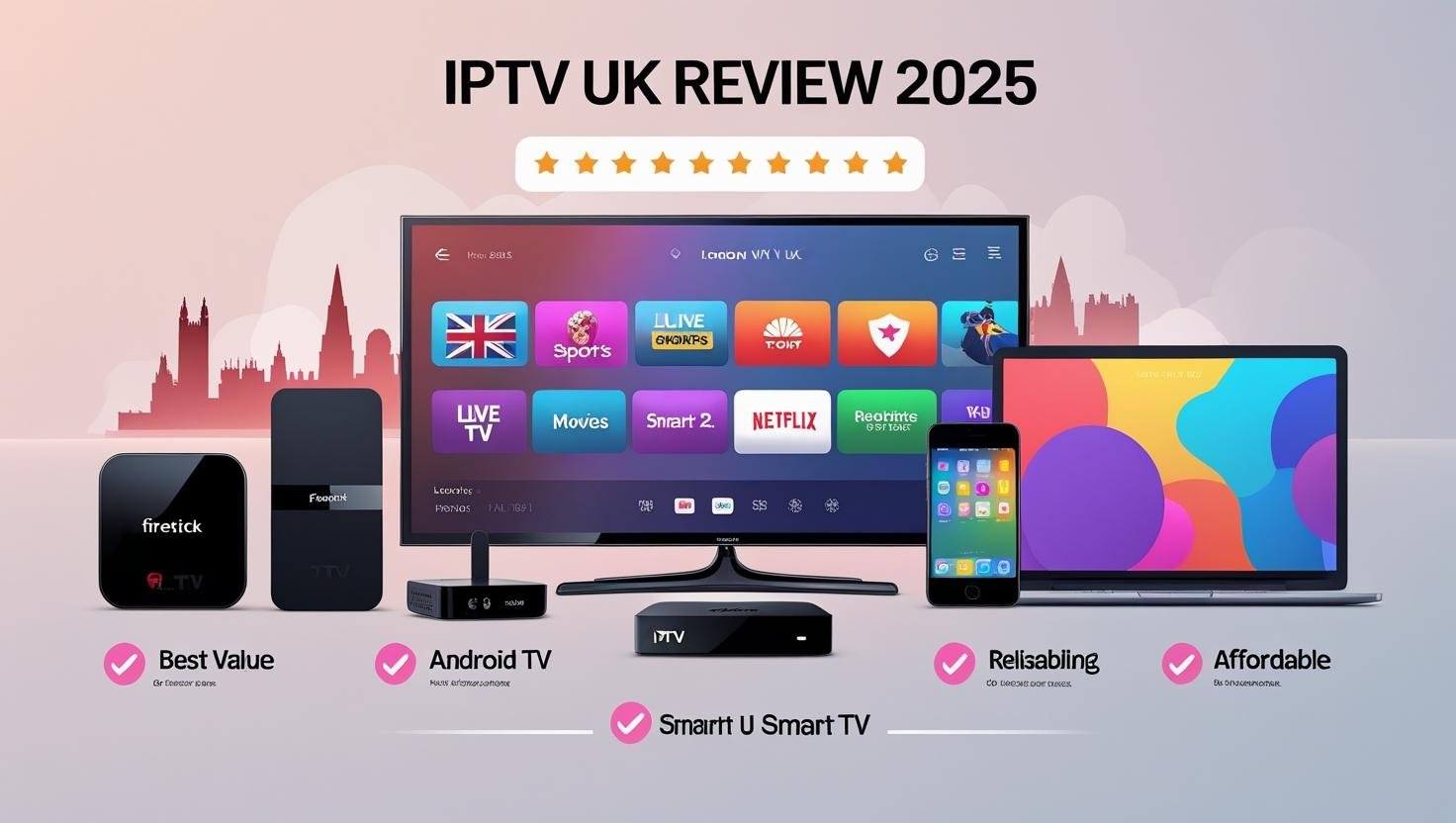
IPTV UK Review 2025: Everything You Need Before You Subscribe

Introduction: The Rise of IPTV in the UK

In 2025, Internet Protocol Television (IPTV) has become a dominant force in the UK’s entertainment landscape. IPTV’s versatility, affordability, and extensive content selection are displacing traditional cable and satellite providers. Whether you’re a sports enthusiast, movie buff, or someone seeking diverse international content, IPTV caters to all. IPTV UK Review 2025.

What is IPTV?

IPTV delivers TV shows online without using traditional cable or satellite technology. This technology allows users to stream live TV, on-demand content, and even catch-up services, all via an internet connection.

Benefits of IPTV Over Traditional TV Services

  • Cost-Effective: IPTV often comes at a fraction of the cost of traditional cable packages.
  • Flexibility: Watch content on various devices, including smart TVs, smartphones, and tablets.
  • Extensive Content: Access to a broader range of channels, including international ones.
  • On-Demand Viewing: Enjoy shows and movies at your convenience without adhering to a broadcaster’s schedule.

Top IPTV Providers in the UK for 2025

IPTV UK Review 2025. Based on recent user reviews and industry analyses, here are some of the leading IPTV providers in the UK

1. MolyIPTV

  • Strengths: Comprehensive UK channel lineup, including Sky Sports, BBC, and ITV.
  • User Feedback: Praised for its stable streams and minimal buffering during peak hours.
  • Device Compatibility: Works seamlessly on Firestick, Android TV, and other platforms.

2. DoneIPT

  • Strengths: Specializes in live sports, offering extensive coverage of events like the Premier League and Champions League.
  • User Feedback: Users appreciate the multiple stream sources per channel, ensuring uninterrupted viewing.
  • Device Compatibility: Compatible with various devices, ensuring flexibility for users.

3. DoxDoxIPTV

  • Strengths: Extensive Video On Demand (VOD) library, catering to movie and series enthusiasts.
  • User Feedback: Known for its vast content library and user-friendly interface.
  • Device Compatibility: Supports a wide range of devices, providing versatility.

Key Features to Consider When Choosing an IPTV Provider

When selecting an IPTV service, it’s essential to evaluate the following features:

  • Channel Selection: Verify that the supplier provides a thorough selection of channels that suit your tastes.
  • Stream Quality: Look for providers that offer HD or 4K streaming for optimal viewing experiences.
  • Device Compatibility: Check if the service is compatible with your preferred devices.
  • Customer Support: Opt for providers that offer responsive customer service to address any issues promptly.
  • Trial Period: A free trial allows you to test the service’s reliability and content offerings before committing.

Legal Considerations and IPTV

Even while IPTV is legal in and of itself, some services could provide illegal access to content protected by copyright. Verifying that the IPTV provider has the required licenses to broadcast the channels they provide is essential. Subscribing to unauthorized services can lead to legal repercussions and potential fines. 

Setting Up IPTV in the UK

Setting up IPTV is relatively straightforward:

  1. Select a Supplier: Choose an IPTV service provider based on your requirements.
  2. Install the App: Download and install the IPTV application on your device.
  3. Subscription: Subscribe to a plan that suits your viewing habits.
  4. Configuration: Enter the provided credentials to access the content.
  5. Enjoy: Start streaming your favorite channels and shows.

Troubleshooting Common IPTV Issues

While IPTV offers a seamless viewing experience, users might encounter occasional issues:

  • Buffering: Ensure a stable and fast internet connection. Using a wired connection can reduce buffering.
  • Channel Freezing: Restart the app or device to resolve temporary glitches.
  • Audio/Video Sync Issues: Adjust the audio settings or try a different stream source.

User Testimonials

  • John D.: “The wisest move was to switch to IPTV. All of my favorite networks cost a fraction of what I do.
  • Sarah P.: “The sports coverage is unparalleled. I never miss a match now.”
  • Mike T.: “Setting up was a breeze, and the content quality is top-notch.”

Pricing Overview

IPTV subscription pricing varies based on the provider and the package chosen:

  • Basic Plans: £10–£15 per month, offering essential channels.
  • Premium Plans: £20–£30 per month, including additional channels and features.
  • Family Plans: £35–£50 per month, catering to multiple users with diverse preferences.

Conclusion

The way that people in the UK watch television has been completely transformed by IPTV. With its affordability, vast content offerings and flexibility. It’s a compelling alternative to traditional TV services. However. It’s essential to choose a reputable provider to ensure a legal and high-quality viewing experience. IPTV UK Review 2025.

Frequently Asked Questions

  1. Is IPTV legal in the UK?

Yes, IPTV is legal in the UK.  Ensure that the provider has the necessary licenses for the content they offer.

  1. Do I need a VPN to use IPTV?

Using a VPN can improve security and privacy when streaming. Though it is not required.

  1. Can I watch IPTV on multiple devices?

Yes. Most IPTV services allow streaming on multiple devices simultaneously. Depending on the chosen plan.

  1. What internet speed is required for IPTV?

A minimum of 10 Mbps is recommended for HD streaming. While 25 Mbps or higher is ideal for 4K content.

  1. Are there free IPTV services available?

Some providers offer iptv free trials .  But it’s essential to ensure they are legal and safe to use.


Best IPTV UK Apps & Devices for Smooth Streaming in 2025

Introduction: The IPTV Boom in the UK

Streaming is no longer just a luxury—it’s a way of life in the UK. As traditional cable providers like Sky and Virgin Media continue to raise prices, IPTV (Internet Protocol Television) has emerged as the smarter, cheaper, and more flexible solution.

In 2025, IPTV has become the go-to platform for sports, movies, series, and live TV, offering better affordability and accessibility than cable. But to get the smoothest experience, you need the right apps and devices.

This guide will cover the best IPTV UK apps & devices in 2025, explaining their features, benefits, and how they work together to deliver buffer-free, lightning-fast streaming.


What is IPTV UK?

IPTV (Internet Protocol Television) delivers TV channels, movies, and shows via the internet rather than through satellite or cable. Unlike Sky or Virgin Media, IPTV offers on-demand viewing, global content, and no binding contracts.

How it works:

  1. You subscribe to an IPTV service.
  2. Install an IPTV app on your device.
  3. Stream live channels, sports, and movies instantly using your internet connection.

In 2025, IPTV is popular because it’s:

  • Affordable (from £10–£15/month vs. £70–£120 for cable).
  • Flexible (watch on any device, cancel anytime).
  • Feature-rich (HD/4K streams, catch-up TV, international channels).

Why Devices and Apps Matter for IPTV UK

Even the best IPTV service won’t perform well without the right apps and devices.

  • A good app ensures smooth navigation, playlists, and features like EPG (Electronic Program Guide).
  • A reliable device ensures buffer-free streaming, high speed, and compatibility with IPTV apps.

Think of IPTV like a car: The service is the engine, but the app is the steering wheel, and the device is the vehicle itself. For the journey to be as smooth as possible, all three must cooperate.

Best IPTV UK Apps in 2025

Here are the most popular and reliable IPTV apps in the UK for 2025:

1. TiviMate

  • User-friendly interface
  • Supports multiple playlists
  • Advanced EPG (TV Guide)
  • Works best on Android TV & FireStick

2. IPTV Smarters Pro

  • Cross-platform (iOS, Android, FireStick, Smart TV)
  • Multi-screen support (watch 2–3 channels at once)
  • Catch-up and VOD support

3. XCIPTV Player

  • Customisable design
  • Light and fast
  • Works with multiple IPTV providers

4. Perfect Player

  • Minimalist, simple interface
  • Supports M3U playlists and XMLTV EPGs
  • Lightweight for older devices

5. OTT Navigator

  • Highly customisable
  • Channel grouping
  • Powerful filters for large playlists

Best Devices for IPTV UK in 2025

1. Amazon FireStick (4K & 4K Max)

  • Affordable (£30–£50)
  • Easy to set up
  • Supports most IPTV subscription apps
  • Portable – use it on any TV with HDMI

2. Android TV Boxes

  • More powerful than FireStick
  • Support external storage and advanced apps
  • Great for heavy IPTV users
  • Prices: £50–£150 depending on model

3. Smart TVs (Samsung, LG, Sony)

  • IPTV apps built-in (IPTV Smarters, Smart IPTV)
  • No extra device required
  • Sleek, easy to use
  • Higher upfront cost but long-term convenience

4. Mobile Devices (iOS & Android)

  • Portable IPTV streaming on the go
  • Great for commuters and travelers
  • Use with IPTV Smarters or XCIPTV

5. PC & Laptops

  • Stream via browsers or apps like VLC
  • Best for multitasking and bigger screens
  • Works with both Windows and Mac

Security & VPNs for IPTV UK

ISPs may geo-restrict or monitor certain IPTV services. A VPN (Virtual Private Network):

  • Protects your privacy.
  • Prevents ISP throttling.
  • Unlocks international content.

Best VPNs for IPTV in the UK (2025):

  • ExpressVPN
  • NordVPN
  • Surfshark

IPTV Setup Tips for Smooth Streaming

  1. Use a wired Ethernet connection instead of Wi-Fi when possible.
  2. Close unused background apps on FireStick or Android boxes.
  3. Keep IPTV apps updated for bug fixes.
  4. Clear cache regularly.
  5. Use a VPN for stable and private connections.

Legal & Safe IPTV Apps in the UK

Not all IPTV free trial  apps are legal. To stay safe:

  • Use official app stores (Google Play, Amazon Appstore).
  • Stick to trusted apps like IPTV Smarters, TiviMate, Perfect Player.
  • Steer clear of dubious, free IPTV apps that can be infected.

FAQs About IPTV UK Apps & Devices

1. What’s the cheapest way to watch IPTV in the UK?

The cheapest choice is to use an Amazon FireStick with IPTV Smarters Pro.

2. Do I need a VPN for IPTV UK?

Yes, it’s highly recommended for privacy and to avoid ISP throttling.

3. Can IPTV work on older TVs?

Yes, with a FireStick or Android TV box connected via HDMI.

4. Is IPTV legal in the UK?

The apps themselves are legal, but some IPTV providers may not be licensed. Always choose reputable services.

5. What internet speed is best for IPTV UK?

At least 20 Mbps for HD and 50 Mbps for 4K streaming.

6. Which device is best overall?

The FireStick 4K Max strikes the perfect balance between price, performance, and portability.

Conclusion: Selecting 2025’s Top IPTV Apps and Devices

In 2025, IPTV UK offers affordable, flexible, and powerful streaming solutions that leave traditional cable far behind. But to enjoy the smoothest experience, you need the right apps and devices.

  • For smooth streaming, use IPTV Smarters Pro or TiviMate.
  • Get an Amazon FireStick 4K Max or Android TV Box for best performance.
  • Secure your connection with a reliable VPN.

With these setups, you’ll unlock buffer-free, lightning-fast IPTV streaming in the UK—all at a fraction of the cost of Sky or Virgin Media.