
IPTV for Every Household: Retirees, Students, and Families

What is IPTV? Plain-English explanation

IPTV means Internet Protocol Television: video delivered over the internet rather than by satellite dish or cable. That delivery method can carry legal, licensed services (broadcaster apps, ISP-managed TV, paid SVOD) — or illegal pirate services that resell unlicensed streams. The delivery style doesn’t determine legality; rights do. IPTV for All Homes.

Delivery vs rights: why that difference matters

  • Delivery = how the video reaches you (IP packets over broadband).
  • Rights = whether the service has permission to distribute the content in the United Kingdom.
    So, an iptv subscription from an authorised UK provider is legal; an anonymous seller on social media offering “all channels for £5” almost certainly is not. Legal services protect you from outages, malware, and legal risk.

Common IPTV formats and players

  • Native apps on Smart TVs: BBC iPlayer, ITVX, All 4, Netflix, Disney+.
  • Streaming sticks / devices: Amazon Fire Stick, Chromecast with Google TV, Roku.
  • Front-end players: TiviMate (Android TV), IPTV Smarters Pro (Android/Fire TV) — these are players that load playlists (M3U/Xtream) or provider APIs; the legality depends on the source.
  • ISP-managed IPTV: BT TV, Sky Stream, Virgin Media — these are licensed services with clear support.

Why IPTV works for different households

Retirees: simplicity and catch-up

Retirees typically want simplicity, good readability and plenty of catch-up or classic content. IPTV for All Homes. They benefit from:

  • Big-font UIs and single-device simplicity (Smart TV or one Fire Stick).
  • Catch-up apps like BBC iPlayer and BritBox for classics.
  • Minimal monthly cost.

Students: budget and portability

Students need cheap, portable solutions:

  • Use phone/tablet apps and a small Fire Stick or Chromecast.
  • Rotate subscriptions via iptv uk free trial offers and student discounts.
  • Prioritise portability — watch on the move between halls and flats.

Families: multi-room streaming and parental control

Families require:

  • Multiple simultaneous streams and robust parental controls.
  • Short-term passes (e.g., NOW Sports pass) for big events instead of long contracts.
  • Front-end EPGs (TiviMate) for easy channel navigation if using an IPTV provider.

Key benefits everyone shares

Cost, choice and device flexibility

IPTV lets you pay for what you use: keep free catch-up apps, add one or two paid pillars (Netflix, Prime, Disney+) and buy seasonal passes for sport. Devices range from low-cost sticks to full Smart TVs. IPTV for All Homes.

Content variety: local, niche and international

IPTV ecosystems offer local UK programming, international channels (useful for multicultural households), and niche content via FAST (Free Ad-Supported TV) apps like Pluto TV and Tubi.

Devices, apps and front-ends: match to needs

Smart TV vs streaming stick vs set-top box

  • Smart TV: easiest for retirees — minimal extra hardware.
  • Streaming stick (Fire Stick/Chromecast): best value and portability for students.
  • Android TV box / Shield: best for families and power users who want TiviMate/advanced EPG and stronger codec support.

Recommended apps and players

  • Official: BBC iPlayer, ITVX, All 4, Freeview Play, Netflix, Amazon Prime Video, Disney+.
  • Players: TiviMate for polished EPG-driven playlists (Android TV); IPTV Smarters Pro for flexible playlist/Xtream API support on Fire/Android (use only with licensed sources).

Step-by-step: Build your household IPTV setup

Below is a practical 800-word walkthrough you can follow end-to-end to set up a legal, safe, and optimised IPTV system tailored to retirees, students, or families. This is the core, actionable piece — follow the steps carefully.

Step 1 — Audit viewing needs and budget

Grab recent statements and list current TV and streaming spend (Sky, Netflix, Amazon, mobile data). Meanwhile, for one week, note who watches what and when: live sport, news, kids’ shows, box sets. Classify each item as Must-have (live sport, BBC news), Nice-to-have (first-run films), or Rarely-used (premium movie channels). This clarifies priorities and the likely cost savers.

Step 2 — Choose legal sources and avoid pirate iptv subscriptions

Start with legal building blocks: BBC iPlayer, ITVX, All 4, My5, Freeview Play (all free). Add one or two paid pillars depending on taste: Netflix (broad drama), Amazon Prime Video (movies + channels), Disney+ (family franchises). For sport, prefer official passes (NOW Sports, BT, DAZN) or short-term season passes. If you’re tempted by a third-party iptv subscription provider, demand company details, invoices, and proof of rights — if they can’t provide these, walk away. Never buy “pre-loaded” sticks or accept APKs from unknown sites. IPTV for All Homes.

Step 3 — Pick devices and install apps

Device choice matters by household:

  • Retiree: Smart TV or Fire Stick. When setting up, increase font size, enable “simple mode” if available, and pin core apps to the home screen. Install BBC iPlayer, Freeview Play, and maybe BritBox.
  • Student: Fire Stick or Chromecast plus phone apps. Keep credentials portable and use student offers. Install Netflix, Prime, and carry the Fire Stick between locations.
  • Family: Android TV box or Fire Sticks for each TV. For main TV, consider NVIDIA Shield or an Android TV box supporting TiviMate (gives an excellent EPG when using a legal playlist). Install parental controls and create profiles (Netflix, Disney+).

For a Fire Stick: plug into HDMI, sign into Amazon, go to the Appstore, search & install each app. For Android TV boxes: use Google Play for apps like TiviMate and official streaming apps — avoid sideloading unknown APKs.

Step 4 — Configure profiles, parental controls and accessibility

Set up user profiles for children and adults in Netflix/Disney+/Prime. In TV settings, enforce PIN locks on purchases. For young retirees, set larger text and voice control (Alexa/Google Assistant). Use routers’ parental controls or third-party tools (e.g., OpenDNS) to set time limits or site restrictions. IPTV for All Homes.

Step 5 — Optimise network for streaming

A stable network matters more than anything:

  • Prefer Ethernet for the main living-room TV; use a powerline adapter if needed.
  • If Wi-Fi, use 5GHz and a modern router (Wi-Fi 5 or Wi-Fi 6). Position the router centrally or use mesh nodes for larger homes.
  • For families with multiple concurrent streams, aim for at least 100 Mbps down if you want multiple 4K streams; for HD stacks, 25–50 Mbps is typically fine.
  • Enable Quality of Service (QoS) to prioritise TV devices during evenings.

Step 6 — Test during peak times, iterate and manage costs

Before cancelling legacy services, run a 48–72 hour test: stream live channels, watch a 4K title, and stream simultaneously to two or three devices. Time tests for evening peak hours. If using any iptv uk free trial, note the start and end date and set a calendar reminder to cancel if it’s not needed. After tests, compare quality and cost, then decide whether to fully switch. For families, trial seasonal sport passes only when tournaments are active. Every 3 months, review subscriptions to remove under-used services and rotate trials to keep costs low. IPTV for All Homes.

Sample stacks: retiree, student and family configurations

Retiree stack (simple & comfy)

  • Device: Smart TV or Fire Stick.
  • Apps: BBC iPlayer, Freeview Play, BritBox, YouTube.
  • Cost: minimal — maybe BritBox or ITV Hub+ if desired.
  • Focus: readable UI, easy remote.

Student stack (portable & cheap

  • Device: Fire Stick / Chromecast, phone apps.
  • Apps: Free apps + Netflix Basic or shared Prime, rotate trials.
  • Cost: low — prioritise discounts & trials.

Family stack (multi-room & sport-ready)

  • Devices: Fire Stick per TV or Android TV box + TiviMate on main.
  • Apps: Freeview Play, Netflix/Disney+, Prime, NOW Sports when needed.
  • Cost: moderate — use short-term sport passes to save.

Legal, safety & TV licence reminders

  • TV Licence: In the UK, watching live TV or using BBC iPlayer requires a valid TV Licence. On-demand-only users (Netflix etc.) generally do not require a licence, but mixing live streaming and iPlayer does.
  • Avoid illegal services: Don’t buy anonymous playlists, pre-loaded sticks, or pirate iptv subscrition — they risk malware, data theft and legal trouble.
  • Use official stores (Amazon Appstore, Google Play, Samsung/LG) for apps.
  • Secure payments: Pay by card or PayPal for consumer protections.

Troubleshooting common issues

  • Buffering: switch to Ethernet, 5GHz Wi-Fi, or lower quality. Check ISP speed.
  • App crashes: update app/firmware, clear cache, reinstall.
  • Login problems: reset passwords, check subscription status, region locks.
  • EPG missing: use native app guides or TiviMate with a legitimate EPG source.

Money-saving and trial strategies

  • Use iptv uk free trial offers on official sites only and set calendar reminders.
  • Rotate subscriptions by binge-watching one service at a time.
  • Use NOW-style monthly passes for sport and cancel after the season.
  • Share family plans within household limits to split costs.

Future-proofing: codecs, Wi-Fi and accessibility

  • Prefer devices with HEVC (H.265) or AV1 decoding for efficient 4K streaming.
  • Upgrade routers to Wi-Fi 6 or use mesh to support many simultaneous streams.
  • Look for devices with voice control and good accessibility features for retirees.

Conclusion: quick checklist & takeaways

Checklist before switching:

  1. Audit who watches what and tally monthly costs.
  2. Start with free legal apps (BBC iPlayer, ITVX) and one paid pillar.
  3. Use official British iptv uk free trial offers and test during peak hours.
  4. Choose devices from official retailers (Fire Stick, Chromecast, Android TV).
  5. Avoid pirate iptv subscriptions, pre-loaded sticks and sideloaded APKs.
  6. Secure devices, use Ethernet/5GHz Wi-Fi and enable parental controls.
  7. Keep a calendar reminder for trial ends and quarterly subscription reviews.

IPTV can serve retirees, students, and families well — when done legally and thoughtfully. Pick devices and subscriptions that match needs, secure your network, and use trials smartly. Enjoy more choice, better budgets, and modern convenience. IPTV for All Homes.

FAQs

Q1 — Do I need a TV Licence to use IPTV in the UK?
A: Yes — if you watch live TV (including via IPTV) or use BBC iPlayer you need a TV Licence. On-demand-only services like Netflix generally do not require a licence.

Q2 — Are apps like TiviMate and IPTV Smarters Pro illegal?
A: No — they are legal front-end players. Legality depends on the streams you load; use them only with licensed providers.

Q3 — What’s the cheapest legal setup for students?
A: A cheap Fire Stick + free apps (iPlayer, Freeview Play) + one paid pillar on rotation (use official iptv uk free trial offers) is often cheapest.

Q4 — Should retirees avoid streaming sticks?
A: Not necessarily — retirees benefit from Smart TVs for simplicity, but a Fire Stick with a simplified launcher works too. Provide a short cheat sheet and set large fonts.

Q5 — How can families manage sport without a Sky contract?
A: Use modular passes like NOW Sports for the season or event-specific passes offered by rights holders — buy only when you need them.

Best IPTV UK 2025: The Ultimate Streaming Guide

 In 2025, more households than ever are choosing Internet Protocol Television for its lower cost, flexible plans, and watch-anywhere convenience. Acronyms (M3U, EPG, HLS), device options (Fire TV, Android TV, Apple TV), conflicting legal claims, and drastically disparate plan quality are some of the noises that come with the boom. This guide cuts through the confusion. You’ll learn how IPTV works, how to set it up properly, which devices and apps are best, what speeds you really need, how to stay on the right side of the law, and exactly how to pick a reliable provider that won’t leave you buffering at kick-off. Best IPTV UK 2025 Guide.

What Exactly Is IPTV?

IPTV (Internet Protocol Television) delivers live TV channels and on-demand video over the same broadband connection you use for web and apps—no satellite dish, no coax run to the street cabinet, and usually no engineer visit. Your player requests tiny video segments in real time; the server sends just what you need, when you need it.

Three core modes:

  • Live TV — linear channels in an EPG you can zap through.
  • Catch-up/Restart — shows from the last 24–72 hours, often with “start from the beginning.”
  • VOD — box sets and films you can pause, resume, and binge.

Because everything runs as an app, you can watch on smart TVs, streaming sticks, phones, tablets, laptops, and even projectors—often using the same login (subject to your plan’s concurrent stream limit).

How IPTV Works (in plain English)

Most services use HTTP Live Streaming (HLS) or MPEG-DASH, which chop video into small, time-stamped segments. Your player uses Adaptive Bitrate (ABR) to raise or lower quality as your real-time bandwidth changes, trading minor quality dips for fewer stalls. For sports, 50/60fps channels provide smooth motion; premium events may offer 4K with HDR on compatible devices. Best IPTV UK 2025 Guide.

Typical per-stream bandwidth (add headroom for other home use):

  • HD 720p/1080p: ~10–20 Mbps
  • 4K (2160p): ~25–50 Mbps
  • High-frame-rate sports: toward the upper end of HD/4K ranges

Is IPTV Legal in the UK?

The technology is legal. Legality hinges on content rights. Some providers are fully licensed to distribute the channels and VOD they sell; others are not. Signs a service might be unlicensed include opaque ownership, constantly changing portals, unrealistic channel counts, and payment methods that avoid traceability.

If staying within applicable law is essential for you—especially for premium sports and first-run films—choose transparent providers that clearly disclose licensing and terms. Note that using a VPN for privacy does not grant rights to view content.

2025 Pricing Snapshot (UK)

Prices vary by iptv provider and plan. Here’s what UK viewers typically see this year:

  • Budget monthly (£8–£15): HD focus, single stream, smaller VOD, basic catch-up.
  • Mid-range monthly (£15–£25): 2–3 streams, stronger EPG/catch-up, decent VOD.
  • Premium monthly (£25–£40+): 4K where available, priority servers, sports extras.
  • Annual discounts: Often 20–35% vs monthly (only commit annually after a robust trial).

Always weigh price against stability, EPG accuracy, app quality, and support. A cheap plan with broken channels and no catch-up is false economy. Best IPTV UK 2025 Guide.

Best Devices for IPTV UK (2025)

1) Fire TV Stick 4K / 4K Max

  • Why it’s great: Affordable, tiny, widely supported by IPTV apps.
  • Pro tip: For reliable sports nights, include a cheap USB-to-Ethernet adaptor.
  • Watch-outs: Manage storage; periodically clear cache/remove unused apps.

2) Chromecast with Google TV (4K)

  • Why it’s great: Clean interface, excellent voice search, strong codec support.
  • Pro tip: Keep apps lean to avoid storage bloat.

3) Android TV / Google TV Boxes (e.g., Nvidia Shield, Formuler, Xiaomi)

  • Why they’re great: More power, native Ethernet, better upscaling (Shield), flexible apps.
  • Best for: Power users, home cinemas, multi-screen households.

4) Smart TVs (LG webOS, Samsung Tizen, Sony Google TV)

  • Why they’re great: No extra device or remote.
  • Watch-outs: App availability and update longevity vary by brand and model year.

5) Mobiles, Tablets, Laptops

  • Why they’re great: On-the-go streaming; cast/AirPlay to bigger screens.
  • OTT Navigator, VLC, GSE, IPTV Smarters, and TiviMate (Android) are among the apps.

Top IPTV Player Apps (2025)

  • TiviMate (Android/Google TV/Fire TV): Elegant UI, multi-playlist, powerful EPG; optional premium unlocks PVR-like features and multi-screen.
  • IPTV Smarters Pro (Android/iOS/Fire TV/Smart TV): Cross-platform, VOD support, live catch-up, multi-screen.
  • OTT Navigator (Android): Deep filtering, grouping, power-user options.
  • Perfect Player (Android): Lightweight, simple; supports M3U/XMLTV.
  • VLC (cross-platform): Free, reliable player for M3U playlists (minimal EPG niceties).

Choose the app your household finds easiest to navigate—especially for kids and guests.

Step-by-Step Setup (UK)

A) Fire TV Stick (4K/4K Max)


  1. Get IPTV Smarters or TiviMate from the Amazon Appstore.
  2. Let the app fetch the EPG (guide); enable catch-up if offered.
  3. In Player/Settings, test decoder options and buffer size; keep ABR on.
  4. For sports, enable Match Original Frame Rate if your display supports it.

B) Chromecast with Google TV / Android TV

  1. Connect via HDMI; prefer Ethernet where possible (USB-C hub or Ethernet dongle).
  2. Install TiviMate, IPTV Smarters, or OTT Navigator from Google Play.
  3. Add your playlist or Xtream portal; load XMLTV EPG if required.
  4. Try both System Player and ExoPlayer, if they are available, and select the more fluid one.
  5. Set display to correct refresh rate; enable frame rate matching if your TV supports it.

C) Smart TVs (LG/Samsung/Sony)

        1. From the TV app store, install Smarters / Smart IPTV / official provider app.
  1. Enter credentials; allow a full EPG pull (can take a few minutes).
  2. If the store lacks your preferred app, add a streaming stick for better support.

D) Phones, Tablets, Laptops

  1. Install Smarters, GSE, VLC, or use the provider’s web/app portal.
  2. On laptops, VLC handles M3U well; if you want guide data, add EPG separately.
  3. Cast/AirPlay to your TV where supported.

Network Optimisation: Your Buffer-Free Blueprint

Great IPTV is built on a great home network. Five high-impact wins:

  1. Wire the main screen. Ethernet > Wi-Fi, especially for live sport and 4K.
  2. If you must use wifi, choose 5 GHz (or Wi-Fi 6/6E); stay away from 2.4 GHz for large bitrates.
  3. Your router should be positioned high, in the middle, and away from appliances and thick walls.
  4. Tune your router:
    • Enable QoS to prioritise the TV device.
    • Manually set a quiet 5 GHz channel if your building is congested.
    • Keep firmware updated.
  5. Reduce network congestion during peak hours by pausing game downloads and cloud backups while games are in progress.

Rebooting your router and main streaming device once a week is a good habit for quick, stable streaming. Best IPTV UK 2025 Guide.

Performance Targets (Reality-Checked)

  • Reliable HD (1080p): Aim 10–20 Mbps per active stream.
  • 4K/HDR: Aim 25–50 Mbps per stream, plus headroom.
  • Peak-time test: Try your trial during Friday night or a big match—this is the real stress test.

Sports: Keeping Latency and Stutter Down

  • Ethernet first. If not possible, ensure excellent 5 GHz signal.
  • Keep Adaptive Bitrate on; a brief quality dip beats a freeze.
  • To free up RAM, shut down any background apps on the stick or box.
  • Use nearby VPN locations only if you need a VPN; far servers add delay and lower throughput.
  • IPTV will likely lag behind broadcast by a few seconds, but LL-HLS/DASH is becoming closer every year.

Security, Privacy, and VPNs

  • Install from official stores (Amazon/Google) where possible.
  • Create secure, one-of-a-kind passwords and don’t give your login information to others outside your home.
  • A VPN can help with privacy and sometimes smoother routing. Test both ways; VPNs can also reduce speed if misconfigured. A VPN does not change content licensing.

How to Choose a Solid UK IPTV Provider (2025)

1) Start with a trial (or refund window).

  • During peak testing times, keep an eye on buffering, channel stability, EPG accuracy, and VOD freshness.

2) Match plan to your household.

  • Streams: Buy for peak usage (e.g., lounge + bedroom + phone).
  • Resolution: HD for most; 4K for big screens and stable fibre.
  • Content scope: Sports/kids/international packs only if you’ll use them.

3) Check the experience.

  • EPG should be accurate and quick to navigate.
  • Catch-up availability (24–72 hours) matters for busy schedules.
  • VOD should be well-tagged, with working subtitles and consistent audio tracks.

4) Confirm device support.

  • Native apps for your main device or robust M3U/Xtream support in a reputable player.

5) Support & transparency.

  • Look for responsive support channels and clear terms. Beware of providers with only opaque chat handles and no policies.

6) Upgrade gradually.

  • Monthly → quarterly → annual, only after your setup proves stable.

Troubleshooting: Fast Fixes

  • Buffering/freezes
    • Switch to Ethernet; move to 5 GHz if wireless.
    • Increase player buffer; close other streaming apps.
    • Reboot device/router; update firmware/app.
  • Audio out of sync
    • Toggle hardware decoding.
    • Adjust A/V sync in the app or soundbar/AVR.
  • EPG missing/wrong time
    • Refresh XMLTV; confirm time zone/offset.
    • Allow a full guide download and parsing.
  • Single category fails
    • Often a source-side issue; test another device; contact support with channel/time.
  • App crashes/low storage
    • Clear cache; uninstall unused apps; reboot.

Accessibility & Family Features

Modern IPTV apps increasingly support:

  • Closed captions/subtitles with adjustable size/contrast.
  • Multiple audio tracks (including described video where available).
  • Profiles, favourites, parental controls.
  • Large fonts/high-contrast themes on many platforms.

Not simply viewers with particular needs benefit from these features. Best IPTV UK 2025 Guide .

Cost Scenarios (What UK Homes Really Pay)

  • Solo viewer, HD-only: £10–£15/mo. Optional £8/year player license.
  • Family (2–3 streams, HD + occasional 4K): ~£15–£22/mo. Consider Ethernet for lounge; optional VPN £3–£6/mo.
  • Sports-first household (2 streams, 50/60fps, 4K capable): ~£20–£30/mo. Prioritise wired setup and quality player app.

Even after adding a one-off £10–£20 Ethernet adapter or upgrading your router, many households still save hundreds vs traditional bundles.

Quick-Start Checklist (Print This)

  1. Must-haves: Channels, sports, VOD, languages; concurrent streams (1/2/3/4).
  2. Broadband test at peak: Target 10–20 Mbps per HD and 25–50 Mbps per 4K stream.
  3. Shortlist providers with trials and clear documentation.
  4. Try it at peak hours and record any buffering or EPG problems.
  5. Network tuning includes firmware updates, QoS, Ethernet/5 GHz, and fewer background downloads.
  6. Set reminders for renewals and only upgrade to quarterly or yearly after a month without any issues.

Where IPTV Is Heading (2025 → 2030)

  • Lower latency live streams (LL-HLS/DASH at scale).
  • Smarter recommendations tuned to your household rhythms.
  • At lower bitrates, new codecs (AV1/VVC) provide the same quality.
  • Cloud DVR and shared watch rooms syncing friends/family.
  • Deeper accessibility (dynamic audio, better subtitle standards).

In short: more personal, more portable and more performant.

The most common queries

1) What speed do I need for IPTV?
Plan 10–20 Mbps per HD stream and 25–50 Mbps per 4K stream—plus headroom for other devices.

2) Is IPTV hard to set up?
Not really. Install an app, enter credentials, load the EPG, and you’re watching in minutes. The biggest win is wiring your main TV.

3) Do I need a VPN?
Not necessarily. A VPN can help with privacy and sometimes routing. But it can also reduce speed. Test with and without. It doesn’t grant content rights.

4) Which device should I buy first?
Most users use the Fire TV Stick 4K/4K Max or Chromecast with Google TV (4K). Heavy users might prefer a Shield or Ethernet-equipped Android TV box.

5) Can IPTV services fully replace my cable/satellite?
For many households. Yes especially when paired with one or two OTT services you love for originals.

6) Why does sport buffer more than films?
Sports frequently operate at greater frame rates and reach their peak during peak hours. Wire your main device, keep ABR on, and reduce competing bandwidth.

7) How do I avoid bad providers?
Look for trials/refunds, accurate EPG, responsive support, and clear terms. Massive, unreal channel lists and frequent portal modifications should be avoided.

Conclusion: Make TV Work for You

Best IPTV UK 2025” isn’t a single provider—it’s a smart setup: the right device (preferably wired), a clear understanding of your household’s needs, a trial-proven plan, and a tuned home network. Do those things and you’ll enjoy smooth HD/4K, dependable sports nights, rich VOD libraries, and multi-room viewing without multi-room fees—usually for a fraction of traditional TV costs. Best IPTV UK 2025 Guide.

Start small: wire your main screen. Test your shortlist during real prime time. Tweak a few settings. Then lock in a longer plan once you’re confident. The real promise of IPTV in 2025—control, quality, and value—is delivered by that methodical approach—on your terms.

IPTV FREE TRIAL

The Complete Guide on Setting Up IPTV on Any Device

The process of configuring IPTV on the device of your choice will be covered in this guide. You’ll be able to set up your IPTV service and begin streaming in minutes thanks to the simple, step-by-step guidance.

A Beginner’s Guide to IPTV and How It Operates

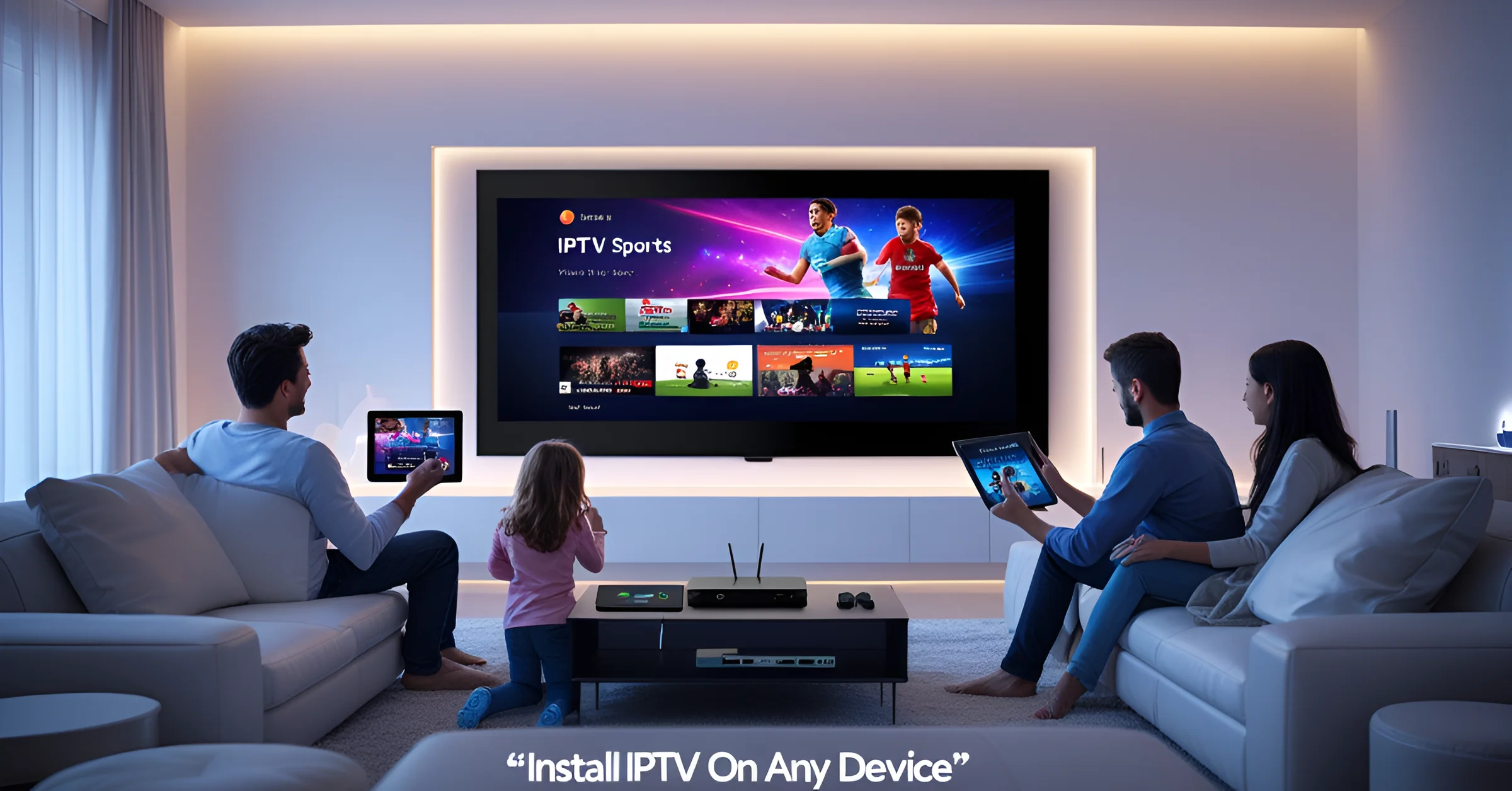
Install IPTV on any device and begin streaming live TV, films, and shows. Television material is transmitted by IPTV via an internet connection rather than via conventional means like satellite or cable. You can now view your favorite channels and material on several devices without the need for any more hardware.

Advantages of IPTV Over Conventional Television

  • Availability of thousands of live channels, films, and television shows
  • compatible with PCs, Android, iOS, Firestick, and Smart TVs
  • No long-term agreements or cable costs
  • Excellent streaming with support for 4K and HD

Step 1: Select an IPTV Service Supplier

You must subscribe to a reputable IPTV provider before you can configure IPTV on any device. A login and password, Xtream Codes, or an M3U URL will be provided by the supplier for you to use in order to access the service.

Advice on How to Choose the Best IPTV Service Provider

  • Seek out a service that provides a large range of channels, such as international content, sports, and movies.
  • Make that HD and 4K streaming are supported by the provider.
  • Verify that it works with several devices.
  • Think about suppliers who provide customer service and simple setup guidelines.

Step 2: Enhance the Streaming Quality of IPTV

Take into account the following advice to enhance streaming quality for a seamless IPTV UK experience:

  • Verify Your Internet Connection: For high-quality streaming, a steady internet connection is essential. Experts recommend a minimum speed of 20 Mbps for HD content and at least 50 Mbps for 4K streaming.
  • Improve Performance with a VPN: Some ISPs limit IPTV traffic, which causes buffering and sluggish streaming. By assisting in getting over these limitations, a VPN can guarantee a more seamless encounter.
  • Turn off background apps: If other devices on your home network are consuming excessive amounts of bandwidth, it might affect how you stream. Close downloads and background apps to conserve resources.

Depending on the device you’re using, the installation procedure differs. Here are detailed instructions for many platforms:

Configuring a Smart TV for IPTV

  1. Open the app store on your Smart TV.
  2. Look up IPTV applications like TiviMate or IPTV Smarters Pro.
  3. Launch the app after installing it.
  4. Enter your IPTV service’s login information (Xtream Codes or M3U URL).
  5. Explore the available channels after logging in, then begin streaming.

Configuring Firestick for IPTV

  1. Navigate to Settings on your Firestick’s home screen, then choose My Fire TV.
  2. Select Developer Preferences and turn on “Apps from Unknown Sources.
  3. Return to the home screen and use the Amazon App Store to look for the Downloader app.
  4. After Install IPTV on Any Device and launching Downloader, type in the IPTV app’s URL.
  5. Launch the IPTV app after installing it.
  6. Enter your IPTV login information and begin viewing.

Setting up IPTV on iOS and Android

  1. Visit the Apple App Store or Google Play Store.
  2. Look for GSE Smart IPTV, XCIPTV, or IPTV Smarters Pro.
  3. Open the program after installing it.
  4. Input the login information given by your IPTV provider.
  5. Choose a channel or on-demand material and begin streaming.

Establishing IPTV on a PC or Mac

  1. Get the VLC Media Player from the official website.
  2. Select Open Network Stream under Media after launching VLC.
  3. Input the URL of the M3U playlist that your IPTV service gives you.
  4. Browse through the available channels by clicking Play.

Queries That Are Often Asked

  • Is IPTV a subscription service?
    To view live TV and on-demand material, you must have a membership with a service.

  • Is IPTV available across several devices?
    Although providers vary in how many devices they support, most Best IPTV services allow users to connect multiple devices.

  • Why does my IPTV have buffering?
    A sluggish internet connection, ISP throttling, or server problems could all lead to buffering. Using a VPN or rebooting your router could be beneficial.

  • Is IPTV permitted by law?
    IPTV is lawful when used with licensed providers who have the necessary rights to distribute content.

With IPTVOnlive, you may begin streaming now

Are you looking for a trustworthy and cost-effective IPTV service? In amazing HD and 4K quality, IPTVOnlive provides access to more than 50,000 live channels, videos, sports, and on-demand content. IPTVOnlive is the ideal option for uninterrupted streaming across all devices due to its user-friendly installation procedure, 99. 9% uptime guarantee, and exceptional customer assistance.

Are you prepared to say goodbye to cable and experience non-stop entertainment? With IPTVOnlive, you can begin your free trial right now and enjoy the finest in 4K IPTV streaming!

In conclusion

Getting things ready Regardless of the device you’re using, installing IPTV is a straightforward procedure that only takes a few minutes. You can quickly begin streaming live television, movies, and series by following this tutorial.

Check out various UK IPTV providers that offer a wide variety of channels, top-notch streaming, and outstanding customer service if you’re looking for a dependable IPTV service.

IPTV FREE TRIAL